


Ask most swimmers what matters in a winter wetsuit and you'll hear the same list: thickness, water temperature, how long you can stand the shock of getting in. Almost nobody mentions what happens after you climb out. That's a gap worth closing, because the minutes right after you exit cold water are often when your body loses the most heat, not while you're still swimming.
Physiologists call this afterdrop. It changes how a winter wetsuit should be built, how it should fit, and what you should do the moment your swim ends.
The swim isn't the whole story
While you're moving through the water, your muscles are generating heat and your circulation is pumping blood through your arms and legs to fuel the stroke. That movement keeps warmer blood cycling even through cold hands and feet. The second you stop and get out, heat production drops fast. At the same time, the cold blood that's been sitting in your limbs starts flowing back toward your core.
Researchers at the University of Portsmouth's Extreme Environments Laboratory, who've studied cold-water immersion for years, have documented this pattern again and again: core temperature can keep falling after someone leaves cold water, driven by returning cold blood and the sudden loss of the muscular heat that swimming provided. You've probably felt it. You get out feeling fine, even warm, and three or four minutes later you're shivering harder than you did in the water.
A wetsuit's job doesn't end when you touch the shore. Its construction, how it fits, and what you do in those first minutes out of the water all affect how much heat you actually lose.
Thickness matters less than placement
Here's a common assumption worth challenging: thicker neoprene equals a warmer suit. It's not that simple. Your body doesn't lose heat evenly. Your trunk, where your vital organs sit, needs steady insulation. Your shoulders need to move freely, and thick neoprene there costs you more in fatigue and stroke mechanics than it gains you in warmth.
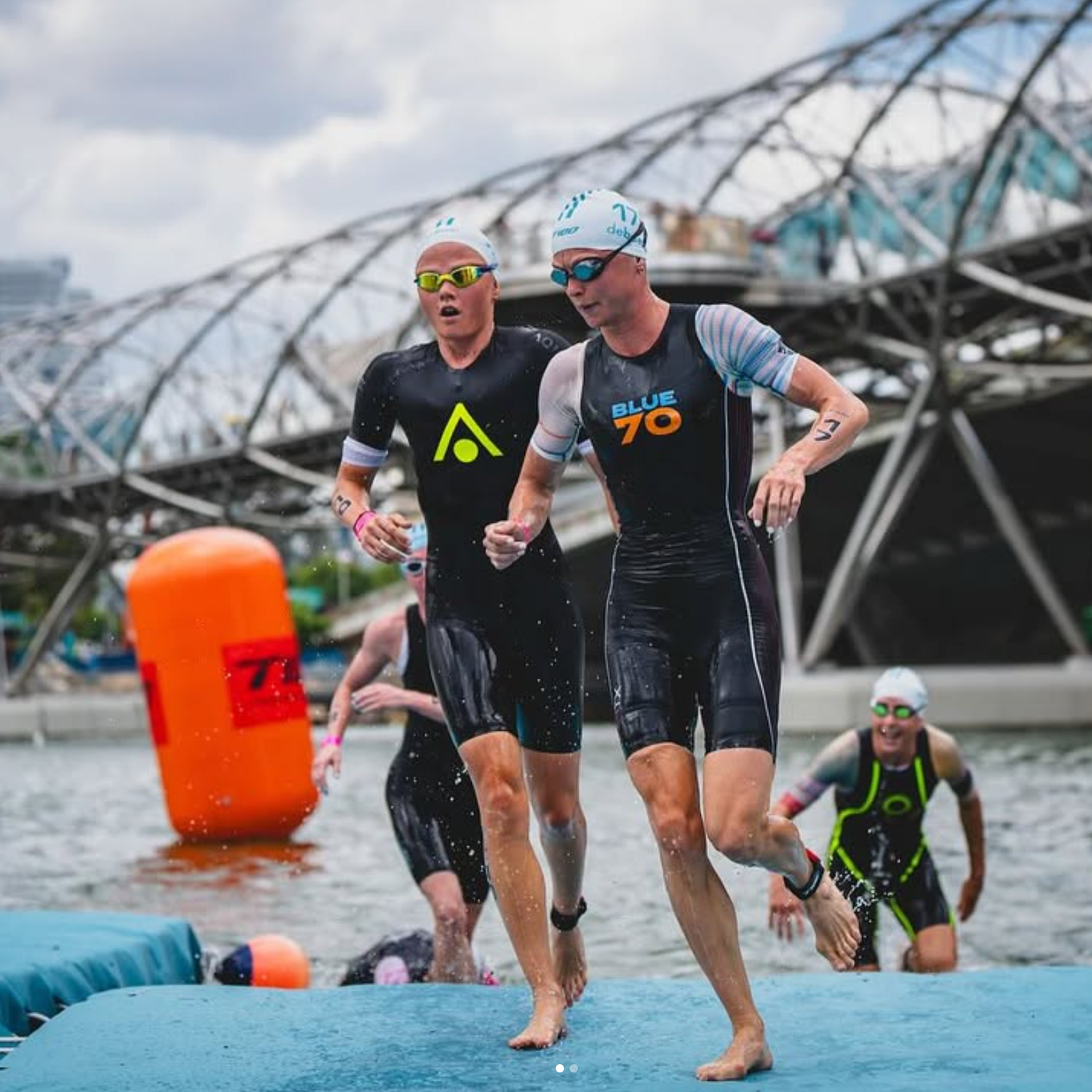
This is exactly why a suit built for pure race speed, with thin, flexible neoprene through the shoulders and a permeable panel over the forearms meant to preserve feel for the water, isn't the right tool for a cold winter swim. That panel lets a bit of water pass through on purpose, giving you feedback on your catch. Great for racing. The opposite of what you want once water temperature drops into the mid-50s Fahrenheit or lower.
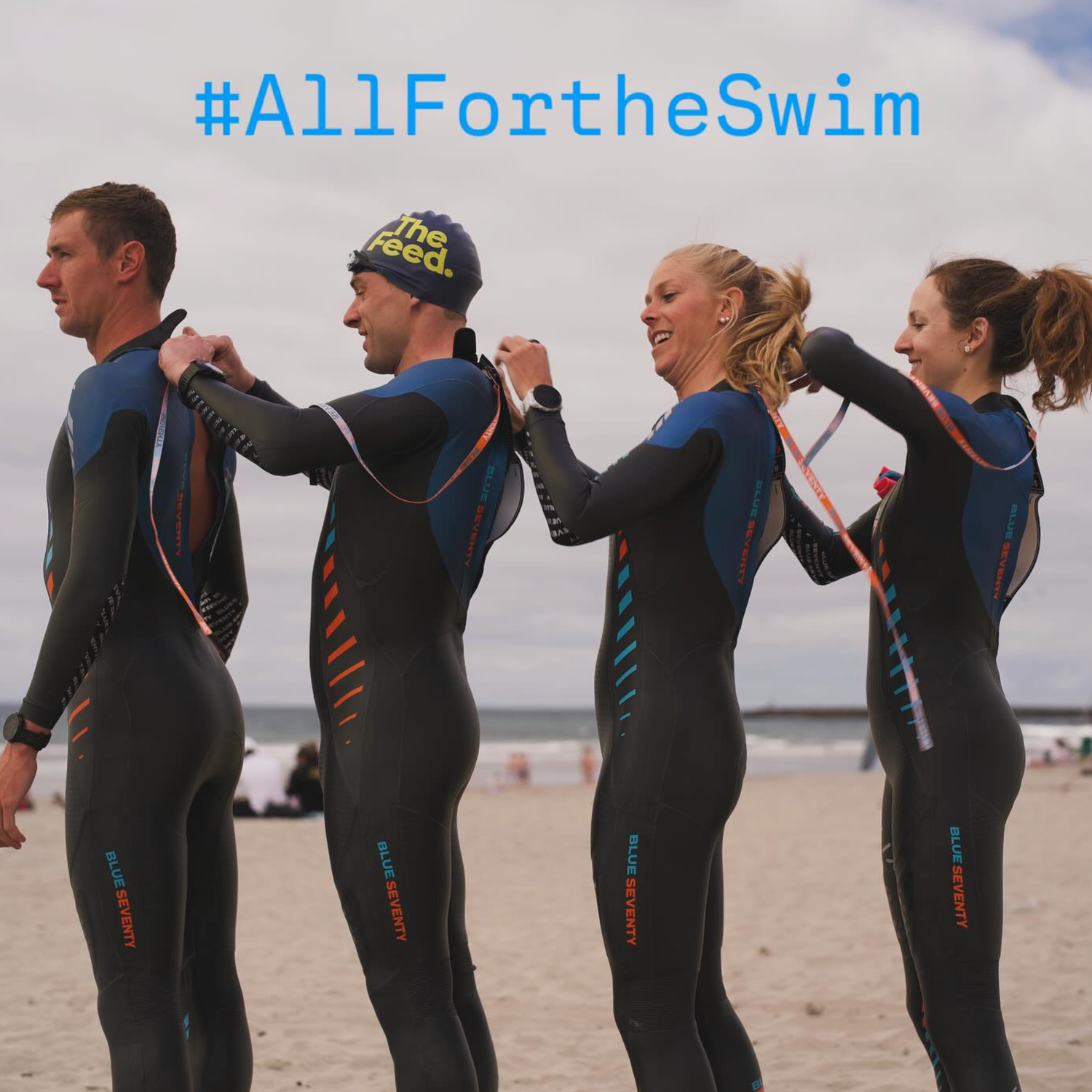
A suit built for cold water needs to prioritize coverage and insulation over the torso and core, while keeping the shoulders as mobile as the design allows. That's the thinking behind Blue70's Thermal Reaction. It uses a full Zirconium jersey lining, a synthetic wool material, through the interior rather than simply piling on extra millimeters of neoprene everywhere.
What the lining is actually doing
Zirconium lining traps a layer of warmed water and air against your skin more effectively than a standard nylon interior. Every Blue70 wetsuit, thermal or not, uses Yamamoto neoprene graded at 38, 39, or 40 cell, and higher cell counts mean more flexibility. Thermal construction pairs that neoprene with the interior lining to hold heat instead of relying on raw thickness alone.
Worth being precise here: a wetsuit doesn't keep you dry. It's designed to let a thin layer of water in near your skin, and your body warms that layer. That warmed water becomes part of your insulation, working alongside the neoprene itself. Once you understand that, fit stops being just a comfort question. It becomes a thermal one.
The seal is the feature nobody talks about
A wetsuit that flushes, meaning water keeps moving in and out around the neck, wrists, or ankles, loses much of its thermal advantage no matter how good the neoprene is. Every bit of cold water replacing that warmed layer resets the insulation you just spent effort building up.
Blue70's approach to fit is straightforward: a suit should feel snug on dry land and more comfortable once you're in the water, where buoyancy and pressure change how the neoprene sits against your body. Loose at the neck, wrists, or ankles on land? Expect flushing on a cold swim, which undermines the exact protection you bought a thermal suit for. An improperly donned suit, especially around the shoulders, costs you energy too. Energy your body needs for heat production during the swim and recovery after it.
- Use a fitting guide before your first cold swim of the season
- Take advantage of Blue70's Test Swim option, where a suit stays exchangeable even after you've swum in it, as long as it comes back clean and dry with tags attached
- Pay close attention to neck, wrist, and ankle seals specifically, not just overall size
Getting the seal right matters more in winter than any other season. A marginal fit that's tolerable in a 75°F lake becomes a real liability at 50°F.
Managing the exit, not just the swim
Given what afterdrop does, your transition plan after a cold swim deserves as much thought as your suit choice.
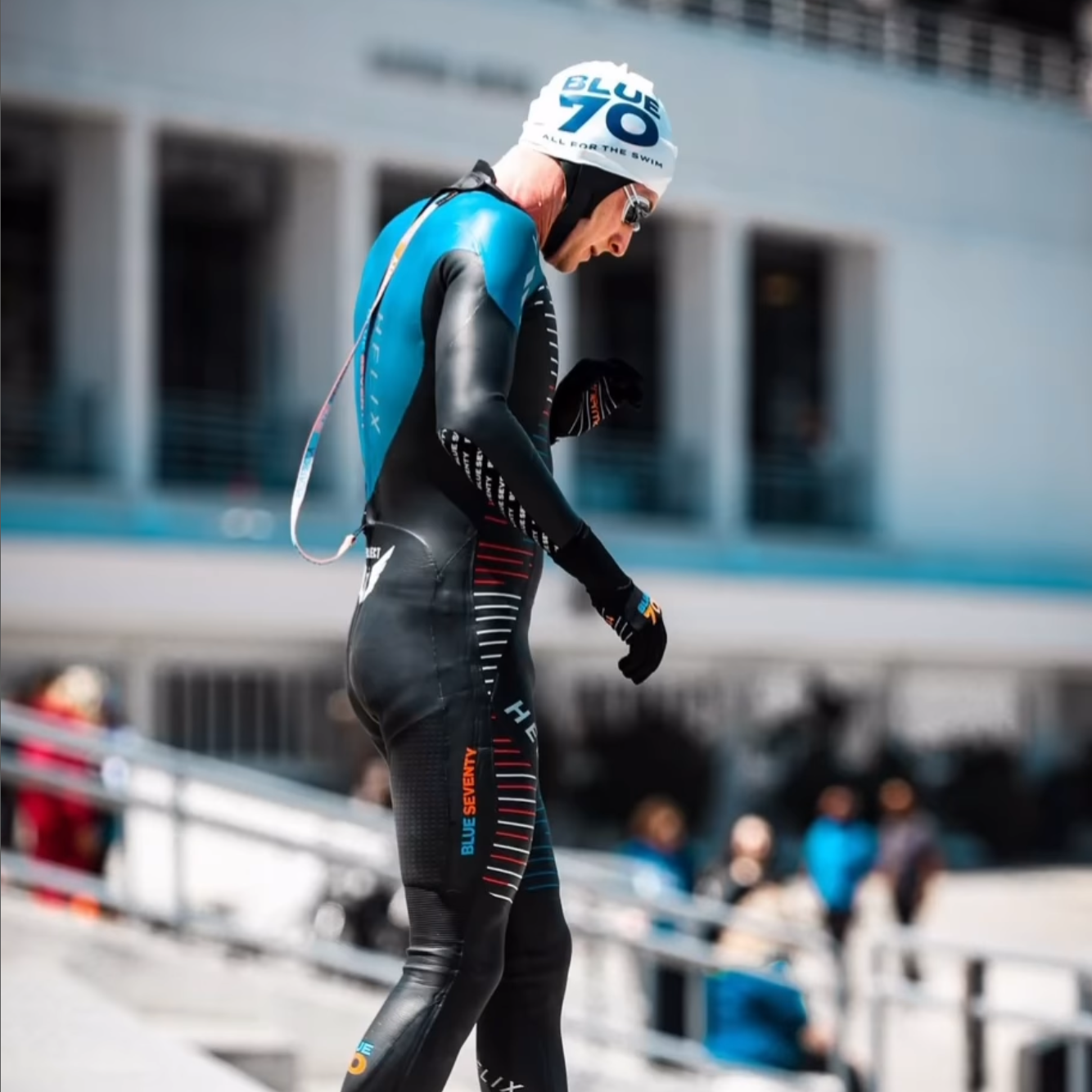
- Get out of your wet suit quickly. Wet neoprene against skin in cold air keeps pulling heat away even once you're out of the water.
- Have dry layers ready before you finish, not after. Hats and gloves matter more than people expect, since your body prioritizes core temperature over extremities during afterdrop.
- Keep moving gently after exit, if conditions and safety allow. Light movement helps redistribute that returning cold blood instead of letting it pool.
None of this replaces good judgment. Cold water swimming carries real risk. Extending your season into colder water should always include gradual acclimatization and an honest read on your own limits, not just the right gear.
What changes over a season, and what doesn't
Swimmers who train through winter often notice the same water feels more manageable in January than it did in November. That's a real adaptation, generally linked to changes in peripheral blood flow response along with genuine psychological habituation to the initial shock of cold water.
What doesn't change is afterdrop itself. Even well-acclimatized swimmers keep experiencing core cooling after they exit. They've just gotten better at handling it. Suit choice and transition habits stay relevant no matter how many cold swims are behind you.
A short checklist before your next cold swim
- Check water temperature against your suit's design intent. Once conditions approach or drop below the mid-50s Fahrenheit, a dedicated thermal suit with full torso coverage starts to earn its place over a lighter race suit.
- Check the seal at your neck, wrists, and ankles on dry land before you get in. Gaps mean flushing, and flushing means a shorter thermal window.
- Check your transition plan. Dry layers, a fast way out of wet neoprene, and a few minutes of gentle movement matter as much as what you're wearing in the water.
Winter swimming rewards people who plan for the whole event, not just the stretch between entry and exit. A wetsuit built with core-focused insulation, like Blue70's Thermal Reaction, gives you the right tool for the swim itself. What you do in the ten minutes after you climb out decides whether that tool actually did its job.
Take a look at the Thermal Reaction and run through the fitting guide before your next cold-water session, so you know your suit is sealing the way it should. Happy swimming.