


Sixty-five degree water is where wetsuit decisions get interesting. It is cool enough that many swimmers want the added thermal protection and body-position support of a swim-specific wetsuit, but it is not so cold that one answer fits everyone. At this temperature, the best choice depends on how you swim, how long you swim, and how the suit fits once you are moving.
That is why 65°F is less of a temperature question than most people think. It sits right in the middle ground, where race-day goals, training habits, shoulder freedom, and neck comfort all matter. A suit that matches your swim will feel settled and natural. A suit that misses the mark can feel distracting within minutes, even if the water itself is well within your comfort range.
Why 65°F is a key temperature for wetsuit choice
Blue70’s own guidance gives useful markers on both sides of this range. Once water drops below about 56 to 58°F, a purpose-built thermal wetsuit adds meaningful warmth. Once water climbs above about 70 to 72°F, a full suit can feel too warm over longer swims, which is where sleeveless suits or swimskins start to make more sense.
That places 65°F right in the decision zone. For most swimmers and triathletes, a full wetsuit is the right starting point. From there, the better question is which full suit fits your actual use: short races, weekly open-water training, longer distance sessions, or a first season of learning to stay relaxed outside the pool.
This is also the temperature where fit problems show up early. If the suit is not worked high enough through the legs and hips, the shoulders take the strain. If the neckline sits wrong, breathing and sighting feel less smooth. If your stroke changes because the suit feels restrictive, you waste energy that should be going into forward motion.
Why fit matters so much in cool water
Many swimmers assume discomfort in 65°F water comes from temperature alone. In practice, fit and donning technique often decide whether the swim feels controlled or chaotic.
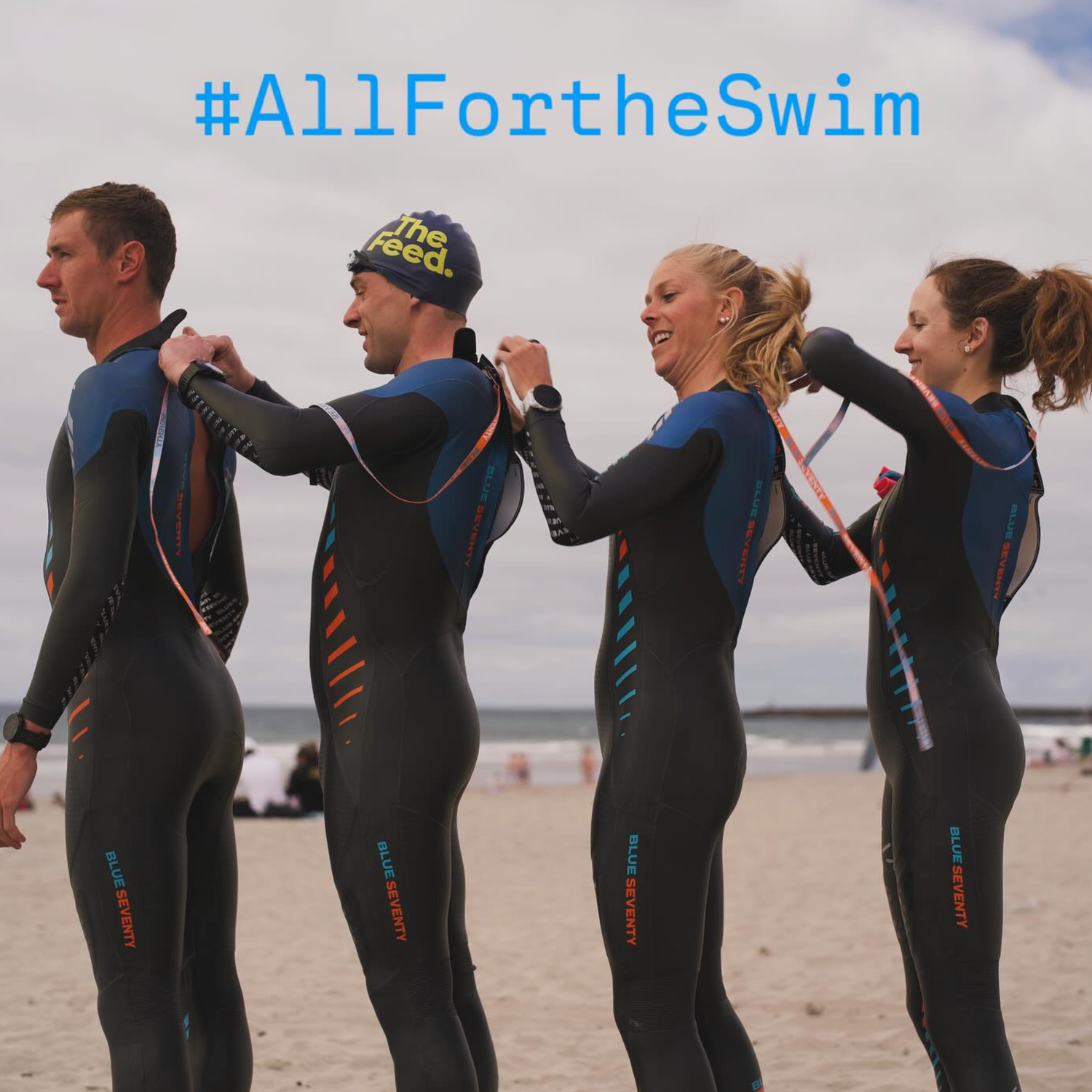
A swim-specific wetsuit should feel snug on land. In the water, it should settle. If it still feels tight across the shoulders after you have put it on properly, or if the neck starts to bother you before the swim gets going, the issue may be the size, the pattern, or both.
That matters because restriction changes the stroke. A suit that pulls on the shoulders shortens reach, changes timing, and raises effort. In cool water, that extra effort often makes a swimmer feel colder over time. A better-fitting suit supports cleaner rotation, steadier breathing, and a body line that rides higher in the water.
Blue70’s design philosophy has always been clear on this point: buoyancy equals speed. Better body position helps reduce drag and wasted motion. For many swimmers, especially newer open-water athletes, that change in position is the biggest difference they feel the moment they start swimming.
What kind of wetsuit makes sense at 65°F
Most athletes looking for a wetsuit for 65°F water should start with a full suit, then narrow the choice by training frequency, swim length, and race goals. Blue70’s lineup covers those needs well.
Fusion for first races and shorter frequent swims
The Fusion ($420) is a strong option for first-time triathletes, newer open-water swimmers, and athletes who want a dependable full suit without jumping straight to a top-end race model. Blue70 redesigned the Fusion in 2021 with a lower-sitting neckline for comfort without losing the watertight seal.
That neckline detail matters more than people expect. In 65°F water, small distractions become big ones. If the neck feels smoother and less intrusive, breathing settles sooner, sighting feels easier, and the whole swim becomes easier to manage.
Reaction for regular open-water training
The Reaction ($680) suits athletes who swim in open water regularly and need a balance of performance, comfort, and durability. Blue70 recommends it for frequent, longer swims, which makes it a smart choice for committed age-groupers and open-water swimmers who put steady mileage into their wetsuit.
If you swim once a week or more in your suit, this matters. A wetsuit should support your stroke over time, not just feel good in the first five minutes. At 65°F, longer exposure brings fit details into sharper focus, and the Reaction sits in a sweet spot for swimmers who train and race in the same suit.
Helix for race-day priorities
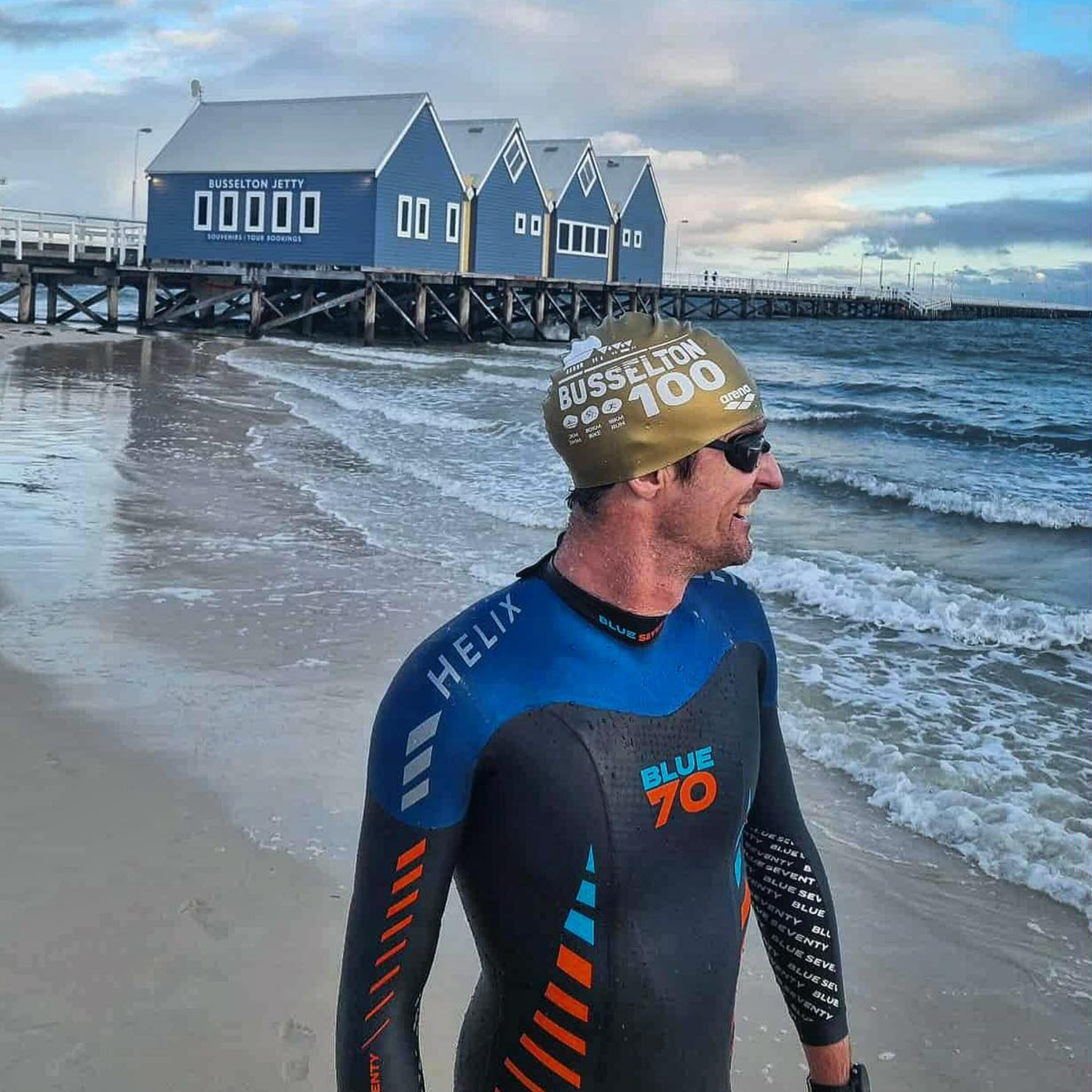
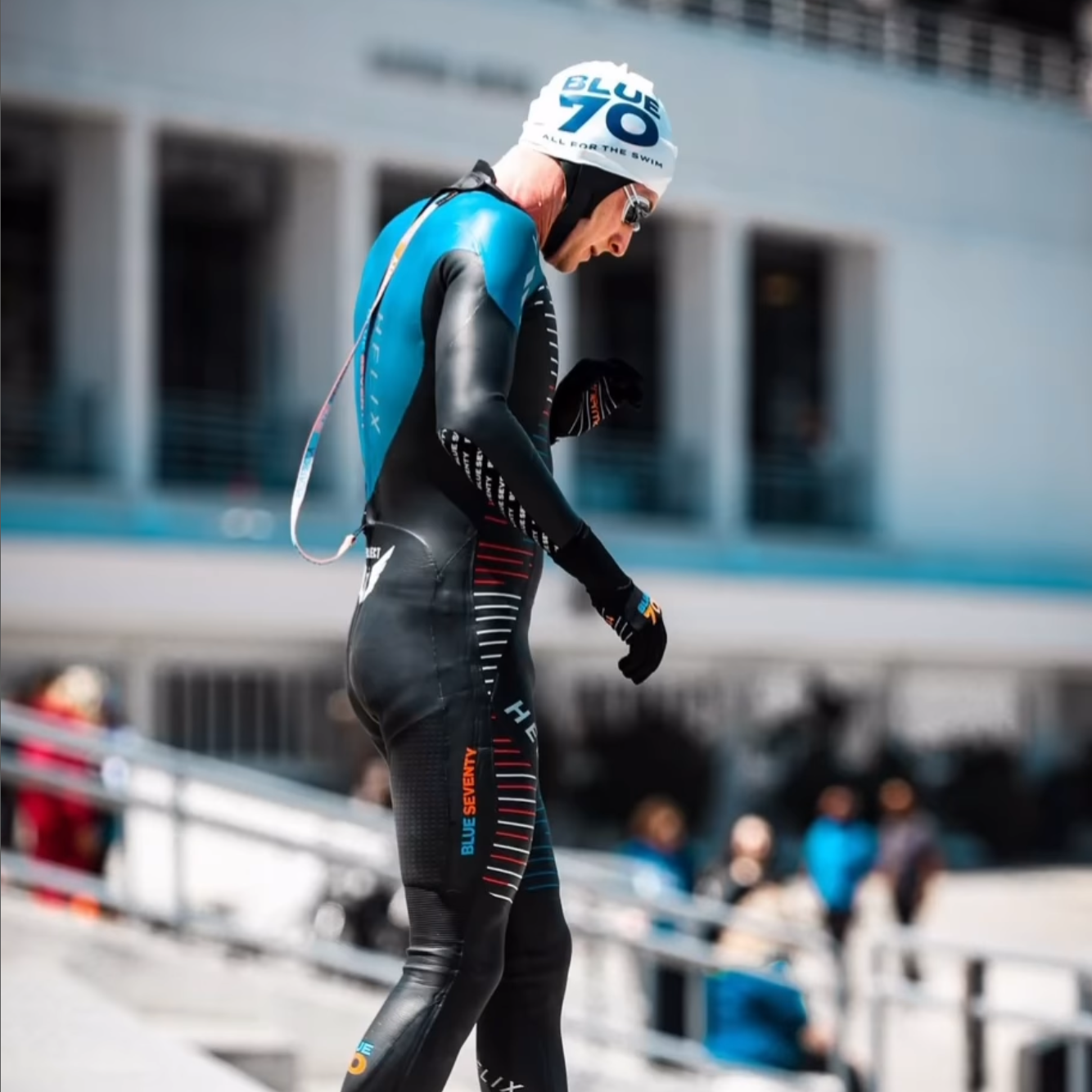
The Helix ($995) is Blue70’s flagship race suit, built for swimmers who want every part of the suit aimed at race-day performance. It uses very thin neoprene through the arms and shoulders for freedom of movement, includes the permeable catch panel that helps preserve feel for the water, and uses LIFT buoyancy panels to support body position.
At 65°F, the Helix makes sense when shoulder freedom, stroke feel, and buoyancy placement matter most. Blue70 is also open about the trade-off: the same thin neoprene that gives the suit its race-day feel is not ideal for heavy training use. That kind of honesty helps athletes choose the right tool for the job.
Thermal Reaction for colder-running swimmers
The Thermal Reaction ($785) does not become mandatory at 65°F, but it can make sense for swimmers who run cold, train for longer periods, or spend the edges of the season in cooler water. It is fully lined with Zirconium jersey for added warmth and is built for cold-water swimming.
Temperature never works alone. Wind, swim duration, air temperature, and individual cold tolerance all influence comfort. Some swimmers feel steady at 65°F in a standard full suit. Others do better with extra thermal support, especially in long sessions.
How your swim changes the answer
Two swimmers can stand on the same dock, step into the same 65°F lake, and need different wetsuits. The difference is not the thermometer. The difference is the swim.
- Short race swim: flexibility, speed, and transition feel may lead the choice.
- Long training session: comfort, neck fit, and shoulder freedom often matter more.
- Weekly open-water use: durability becomes part of performance.
- First season outside the pool: calm, confidence, and body position support should lead.
If you are honest about how the suit will spend most of its life, the decision gets easier. A suit chosen for one or two race mornings should not automatically become the answer for months of steady training.
Women’s fit changes the experience
Women often feel fit problems first, especially in cool water where tension shows up quickly. A suit that pulls through the bust or torso, rides awkwardly through the hips, or crowds the neckline can make the swim feel harder than it should.
Blue70’s Femme Fit design addresses key fit areas including the bust, torso, wrists, and ankles. It also uses a lowered neckline for comfort and reduced chafing, along with an extended zipper length that makes entry easier and accommodates wider hips.
Those are practical design details, not cosmetic ones. A suit that fits properly lets a swimmer settle faster, breathe more naturally, and focus on the water rather than on the gear.
A practical way to choose a wetsuit for 65°F water
If you are narrowing down your options, work through these questions in order.
- How long will you be in the water? A twenty-minute race and a seventy-minute training swim do not ask the same thing from a suit.
- How often will you use it? Frequent use puts durability higher on the list.
- Do you run cold? Personal tolerance matters at 65°F.
- Are you buying for racing, training, or both? Your main use should guide the model.
- Does the fit stay comfortable after ten minutes? Early impressions matter less than how the suit feels once the stroke settles.
Common mistakes swimmers make at 65°F
Most mistakes at this temperature are simple. They start with choosing by temperature alone and ignoring the rest of the swim.
- Buying only by water temperature: 65°F points you toward a category, not a final answer.
- Ignoring donning technique: if the suit is not pulled high enough through the legs, hips, and torso, the shoulders carry the cost.
- Choosing a race-first suit for heavy weekly training: training volume should shape the decision.
- Overlooking neckline comfort: breathing and sighting feel better when the neck sits correctly.
What materials and buoyancy do at this temperature
Blue70 wetsuits use Yamamoto 38, 39, and 40 cell neoprene, with higher cell numbers bringing more flexibility. That matters most in the shoulders, where freedom of movement affects fatigue and stroke quality.
Buoyancy also plays a direct role. A wetsuit helps lift the hips and legs into a stronger line, which supports better body position in the water. That reduction in drag is one reason wetsuits feel so different from a regular swimsuit in open water. For newer swimmers, it can be the feature they notice first.
That is what Blue70 means by buoyancy equals speed. The suit is designed to improve hydrodynamics and support a better position in the water. The result is usually a smoother, more economical swim.
Test the suit where it matters
A dry try-on tells you part of the story. A real swim tells you the rest.
At 65°F, a useful test answers a few simple questions. Does the neck stay comfortable? Do the shoulders stay free? Does the suit support the body line you want? Do you still feel relaxed in the stroke once effort rises?
Blue70’s Take a Test Swim policy gives you room to answer those questions in the water. If the wetsuit is returned clean, dry, unmodified, and with tags and accessories, you can still return or exchange it. That makes the choice more practical, because wetsuits should be judged by how they swim, not just by how they feel in the house.
Blue70 wetsuits to consider for 65°F water
- Fusion ($420): a dependable choice for first-time racers, newer open-water swimmers, and shorter frequent swims.
- Reaction ($680): a smart pick for frequent open-water use and longer sessions.
- Helix ($995): built for race-day performance, freedom through the shoulders, and buoyancy placement.
- Thermal Reaction ($785): worth a look for swimmers who run cold or train through cooler parts of the season.
Those prices come from the Blue70 US product catalog provided in the brand materials dated 2026-07-25.
Final take
For most swimmers, 65°F water points toward a full swim-specific wetsuit. The better decision comes from matching that suit to your swim length, training frequency, fit needs, and race goals.
If you get the fit right, 65°F can feel like a sweet spot: cool enough to benefit from a wetsuit, warm enough to focus on rhythm, body position, and clean open-water swimming. Start there, and the wetsuit becomes what it should be, a tool that supports the swim instead of distracting from it.
If you want a next step, use the size charts, review the fit guide, or take a test swim and judge the suit where it counts.