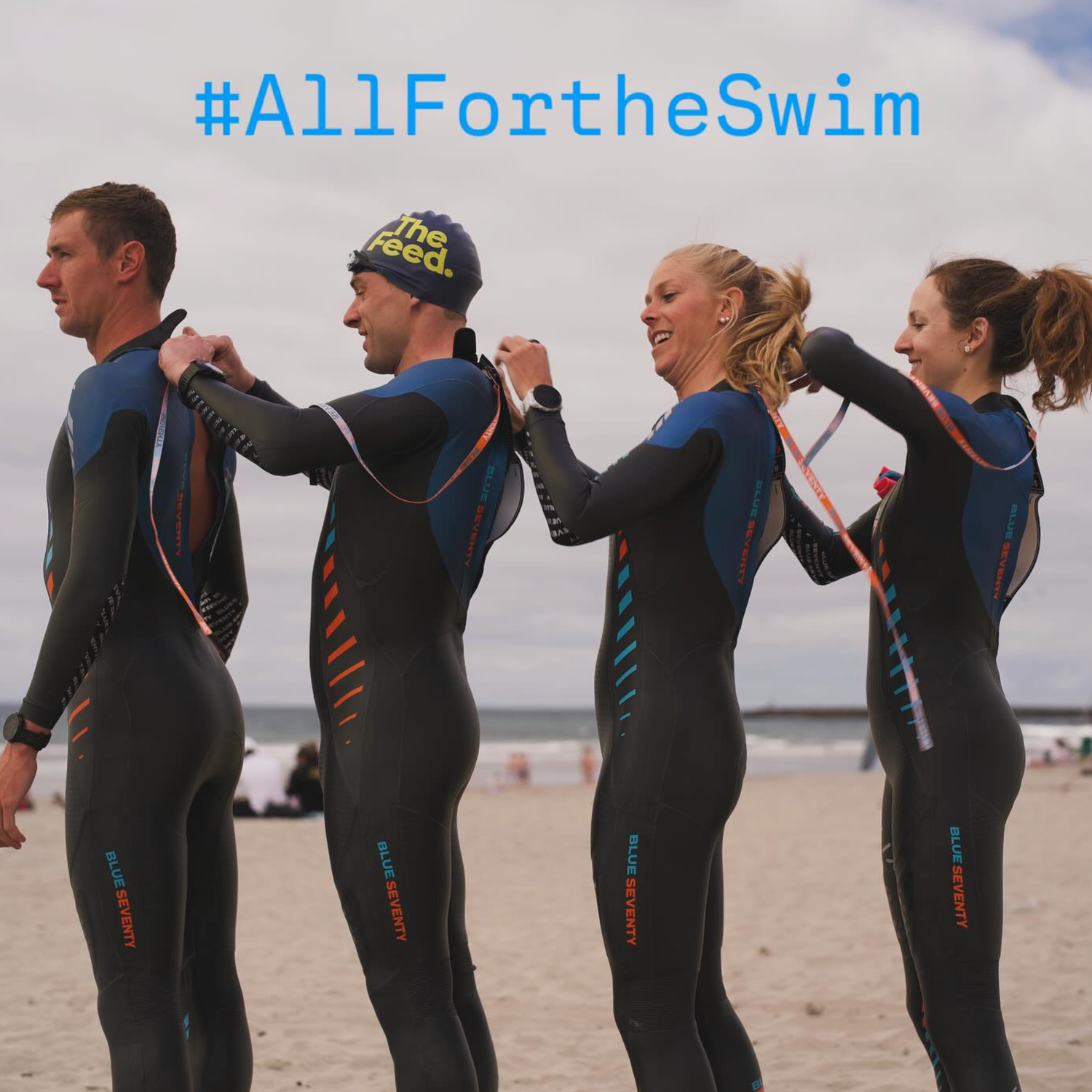



Watch any transition area twenty minutes before a race start and you'll see the same scene repeated a dozen times: a swimmer hopping on one foot, tugging at a sleeve, muttering at a zipper that won't quite reach. Most people treat putting on a wetsuit as a test of strength. It isn't. It's a technique problem, and once you understand why neoprene behaves the way it does, the whole process gets a lot less frustrating.
Get the donning process wrong often enough and you pay for it twice: once in wasted energy before you've even touched the water, and again in repair costs when a fingernail opens a small tear at the ankle or wrist. Blue70's warranty specifically excludes fingernail punctures and heel tears from coverage, which tells you something. These aren't rare accidents. They're the predictable result of fighting the material instead of working with it.
Why Neoprene Pushes Back
Wetsuit neoprene is a closed-cell foam. That cell structure is exactly what gives the material its buoyancy and its insulating properties, and it's also why neoprene doesn't stretch the way a cotton t-shirt does. Pull hard on dry neoprene and you're fighting its own structure. Catch a fingernail mid-pull and you can rupture a cell wall outright.
So when a suit feels like it's resisting you, it is. That's not a flaw. That's the same property keeping you warm and floating higher in the water twenty minutes later. The job isn't to overpower the neoprene. It's to get it moving in the direction it's willing to go.
The Friction Nobody Mentions
Here's the part most swimmers never get told: skin grips neoprene far more than most people expect, especially dry skin. That grip is the real source of the tugging and bunching that happens at the two narrowest points on any wetsuit, the ankle and wrist openings. Fight that friction with brute force and the material loses, usually at the seam or the cuff.
The Bag Trick
Slide a plastic bag over each foot and hand before pulling on the suit. Grocery bags work. Produce bags work. Dedicated donning gloves work too. The plastic creates a slick surface, so your foot or hand glides through the neoprene opening instead of catching against it.
Try it once and you'll notice the difference immediately. A leg that normally takes thirty seconds of tugging slides on in one motion. No bags handy? A thin layer of water-based lubricant at the wrists and ankles does something similar, cutting the skin-to-neoprene drag enough to matter.
Work From the Ankles Up
A common mistake is treating a wetsuit like a shirt: grabbing the neckline and hauling the whole thing up and over in a few big pulls. That drags the fabric unevenly and leaves extra material bunched behind the knees before you've reached the torso.
Work in stages instead:
- Roll each leg on like a stocking, smoothing the neoprene up in small sections rather than one long pull. Get it fully seated to the crotch before starting the other leg.
- Pull the suit up to the waist and check there's no fabric trapped behind the knees. Trapped fabric there restricts your kick once you're in the water.
- Work one arm in at a time, using the same small-increment approach instead of pulling both sleeves on simultaneously.
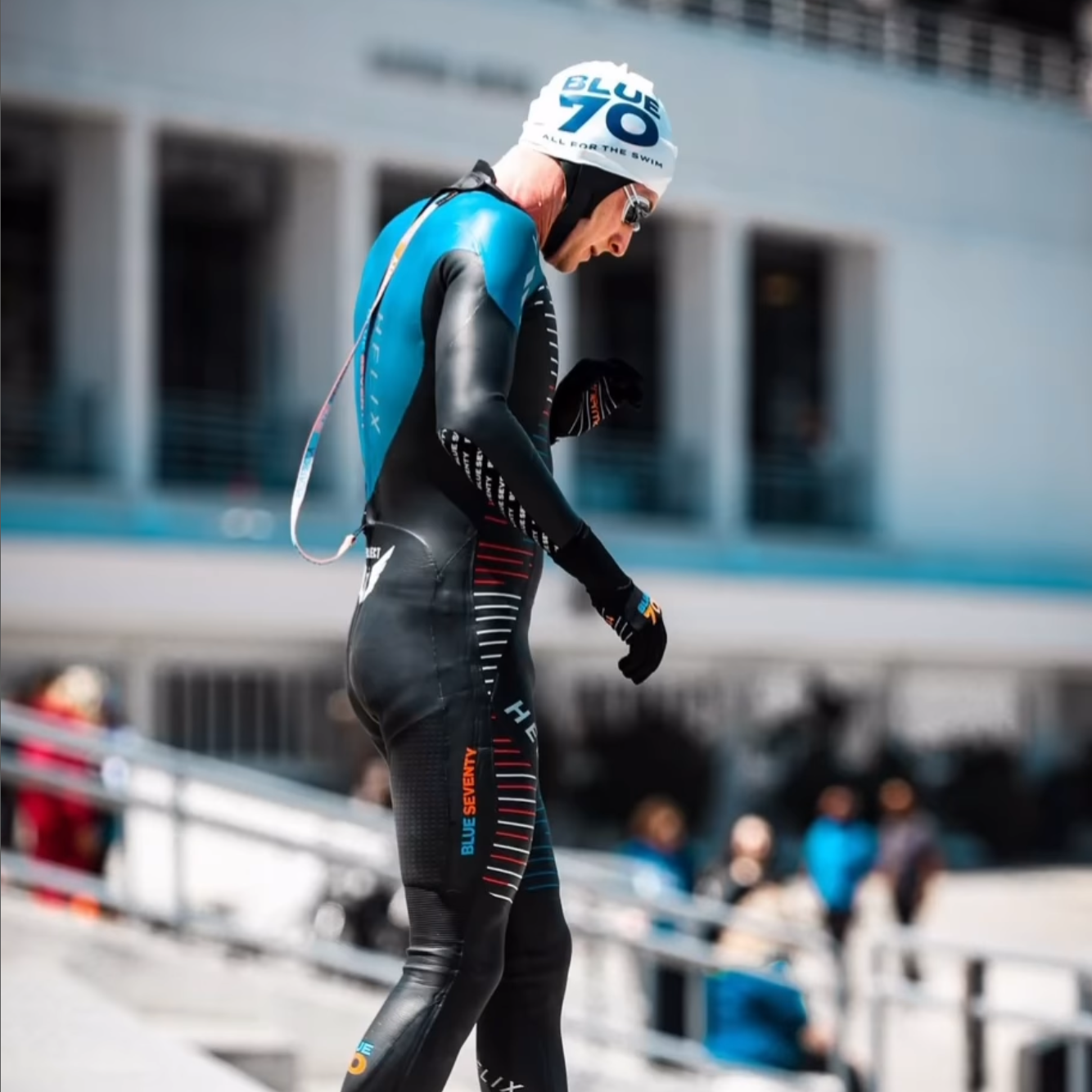
- Settle the shoulders last, pulling the suit up and back so the material sits high in the armpit and across the top of the shoulder blade, not low on the bicep.
That last step matters more than it sounds. The shoulders and underarms are where swimmers feel the most fatigue mid-swim, and they're also where a poorly donned suit bunches the worst. Seat it correctly here and you keep the freedom of movement the wetsuit was built to give you through the catch and recovery phases of your stroke.
Snug on Land Is Supposed to Happen
New wetsuit owners often panic standing in a driveway, suit tight everywhere, convinced they bought the wrong size. That tightness is the design working as intended. Neoprene is buoyant and a bit rigid out of water. Once you're swimming, the suit flexes with your stroke, and the water itself takes some of the compression off the material.
A suit that feels loose on land will ride up and feel loose in the water too, and that defeats the point of the watertight seal at your neck, wrists, and ankles. If a wetsuit goes on without any real effort and still feels loose on the pool deck, check the sizing. That's not a lucky fit. That's the wrong size.
Race Morning: Protect Your Timeline
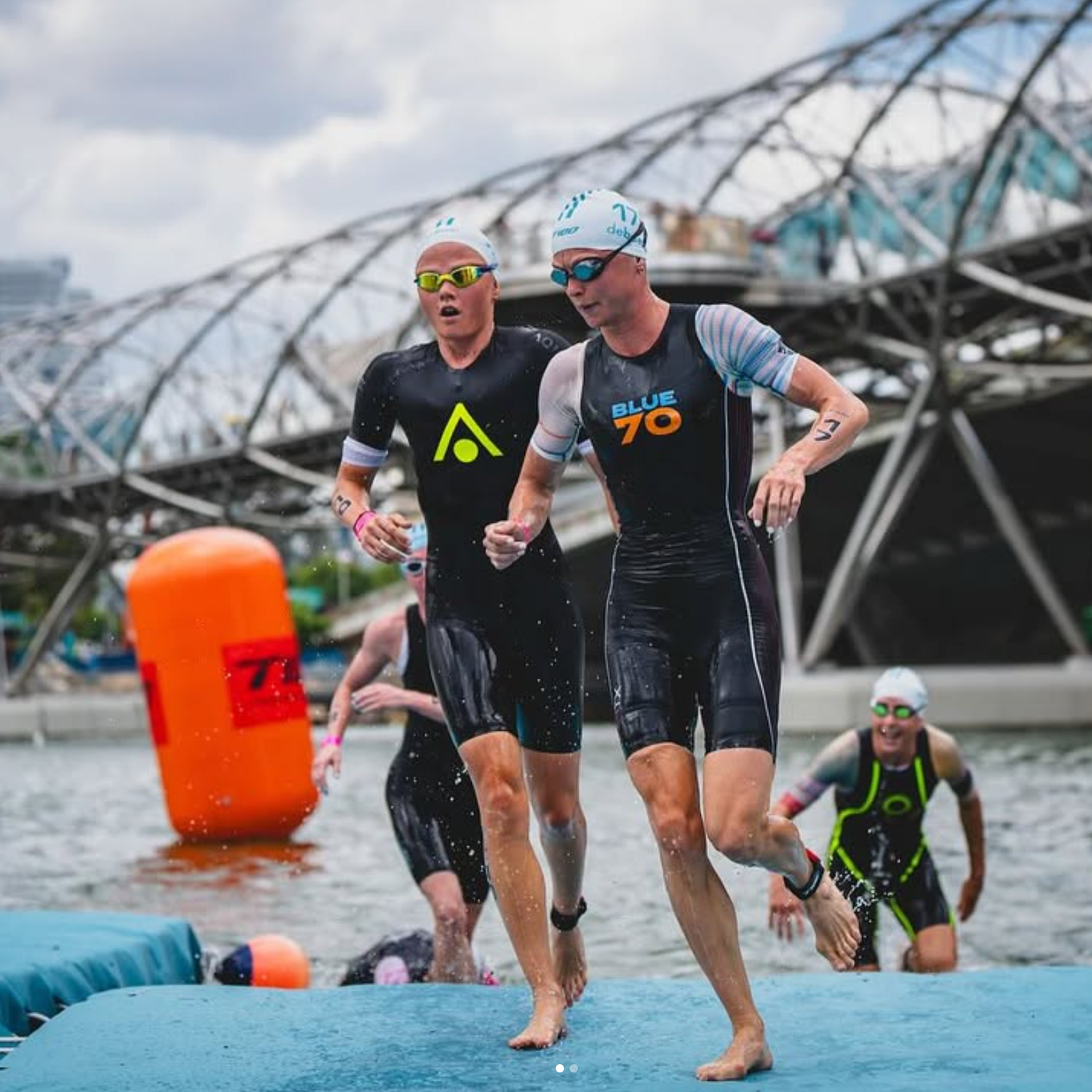
Transition areas are stressful enough without a ten-minute wetsuit battle added to the mix. A few habits built in the weeks before race day cut down both wasted time and damage risk.
- Do a full dress rehearsal at home at least once before race morning, more than once if the suit is new. The first time you put on a wetsuit should never be in a transition tent with the start fifteen minutes out.
- Apply a thin layer of lubricant at the neck, wrists, and ankles before dressing. It reduces friction going in and speeds up the exit coming out, which matters when every second in T1 counts.
- Keep your fingernails trimmed in the days before the swim specifically because of the suit. It sounds minor until you're standing at the water's edge looking at a tear at the wrist.
Practice the exit as much as the entry. A suit that peels off cleanly in transition is just as much a function of how evenly it was stretched going on as it is of the suit's design.
What This Means for How Long a Suit Lasts
Blue70 builds its wetsuit range around a trade-off between flexibility and durability. The Helix uses very thin, highly flexible neoprene through the shoulders and arms to maximize feel for the water, which also makes it the most sensitive suit in the lineup to rough handling during donning. The Reaction uses a higher-grade neoprene built to tolerate more frequent handling and longer training swims without the same wear pattern. Either way, good donning technique extends the life of any suit, because most early damage happens in locker rooms and parking lots, not in the open water.
A wetsuit doesn't need to be forced on. It needs a method: bagged or lubricated hands and feet, incremental rolling instead of yanking, shoulders seated last, and a dry-land fit that's snug on purpose. Build that habit once and every swim after it starts calmer, with less wear on your gear.
If you're still working out the right size, Blue70's fitting guide and size charts walk through the measurements that make this whole process easier before the suit even arrives. And if you're not sure a suit is right until you've swum in it, the Test Swim policy lets you try it in open water and still exchange it, as long as it comes back clean and dry within the return window.