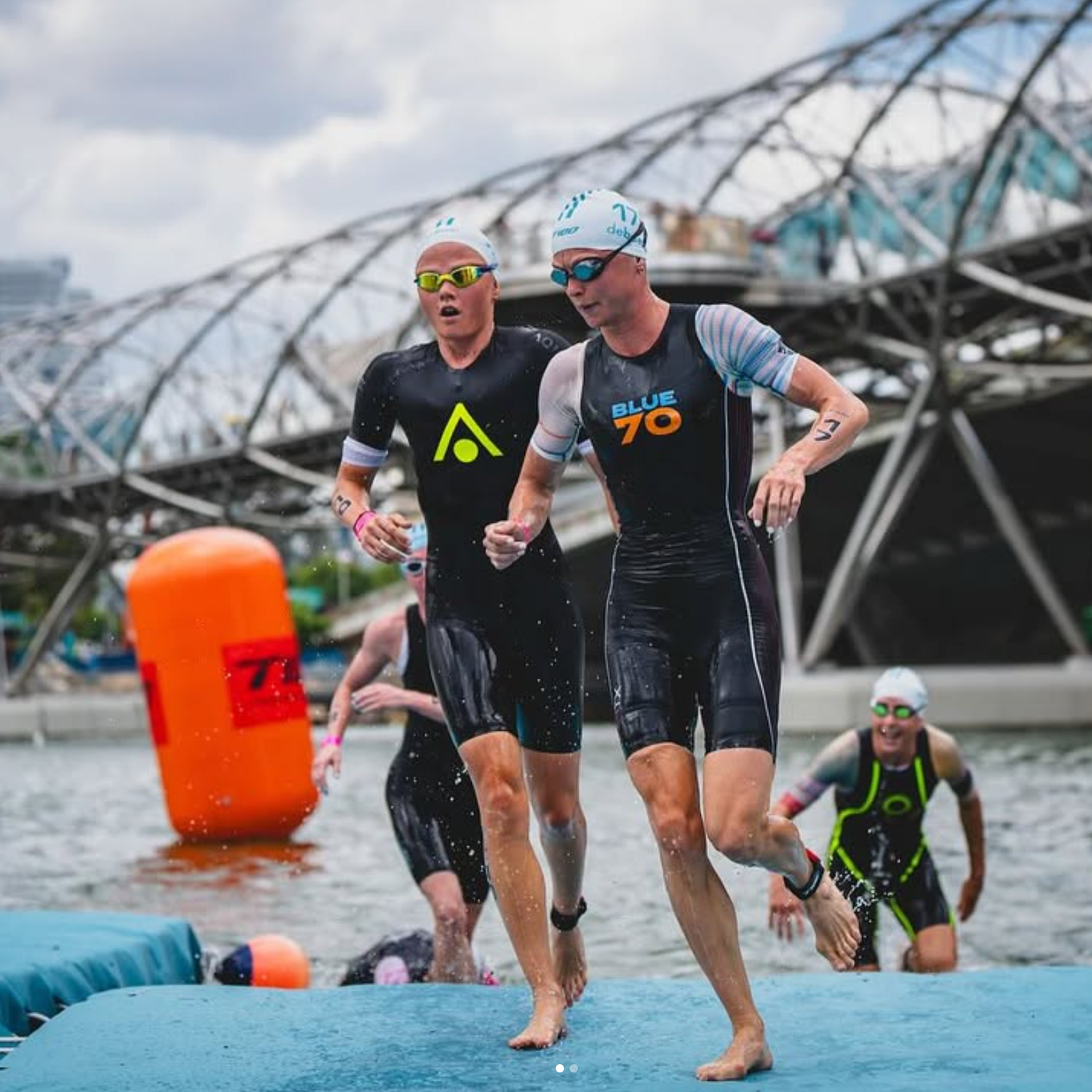



Most triathletes practice wetsuit removal exactly once. Standing on dry grass in the driveway, peeling neoprene off dry skin while balanced on one leg. Then race morning arrives, and everything changes.
You exit the water at a dead sprint. Your heart rate is elevated. Your hands don't quite respond the way they did in the driveway. And 15 to 20 seconds disappear before the suit even clears your ankles.
Most advice on this topic starts at the ankle straps and works upward. This one starts earlier, in the final strokes of your swim, where the real groundwork for a fast exit gets laid or lost.
Your Body Isn't the Same Body That Started the Swim
Transition speed is a chain, and the weakest link is usually the handoff between swim exertion and the fine motor control T1 demands. Two things work against you in that moment, and neither one is about technique.
- Blood shunting. During sustained swimming, blood gets redirected toward your working muscles and away from your skin surface. When you stand up and start moving toward the mat, that shunting reverses. Many athletes feel a rush of lightheadedness at the exact moment they need steady hands for a zipper pull.
- Grip fatigue. After a swim leg of any real distance, fine motor control in your fingers drops from the repetitive load of stroke after stroke. Fumbling with a zipper cord or a snug wrist cuff isn't clumsiness. It's a predictable result of a forearm that's been working for the better part of an hour.
The practical takeaway: your removal technique needs to hold up under a compromised grip and mild disorientation, not just look sharp when you're calm and dry.
Reach for the Zipper Before You Stand Up
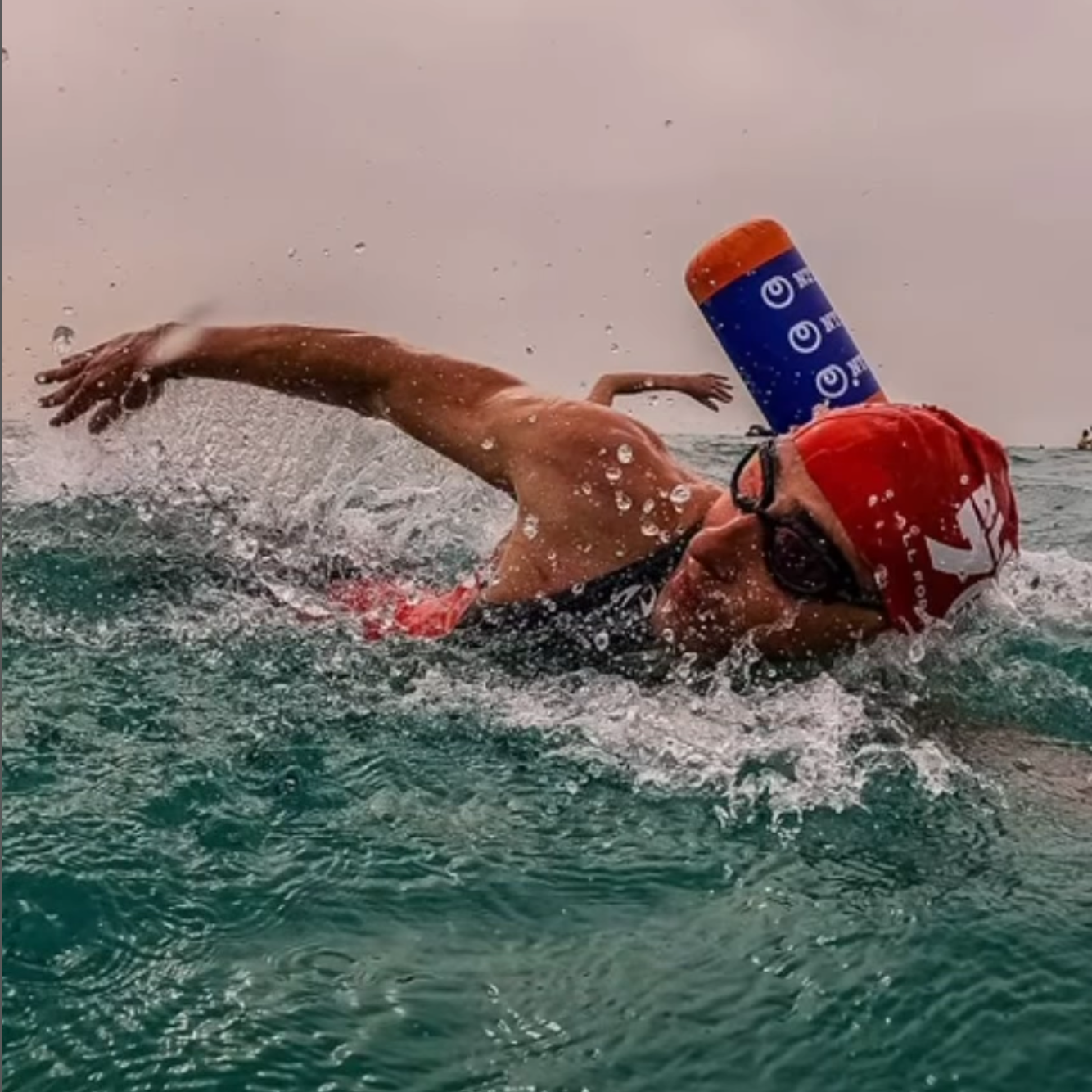
Common advice says grab the zipper cord as you exit the water. A better adjustment: start reaching for it during your last few strokes, while your arms are still moving in a swim rhythm and before your legs take over the job of balance and running.
That reach-back motion resembles a modified stroke recovery, a pattern your shoulders already know well. Doing it while you're still horizontal, before your body has to reorient to running, keeps the movement in familiar territory. By the time your feet find the bottom, the zipper should already be down and the neck seal loosened.
Shoulders First, Waist Second. Never Both at Once.
The shoulder-first peel is standard coaching. Reach back with one hand, pull the neoprene down and over one arm, repeat on the other side, then work down to the waist. That part isn't new. What's easy to miss is why the order matters more than the speed of any single step.
Neoprene has almost no give lengthwise once it's wet. A wetsuit like the Helix or Reaction is built with especially flexible neoprene through the shoulders so it doesn't restrict your catch during the swim, but that same flexible panel becomes a liability if you try to remove the suit out of order. Pull at the waist before both arms are fully free and you'll end up with a bunched, twisted mess at the elbows that costs more time to untangle than it saved.
Treat it as two strict stages. Arms free first. Everything else second. Athletes who try to speed things up by working the waist and shoulders at the same time almost always take longer, because they end up backtracking to free a stuck arm.
The Hips Are Where Most Time Actually Gets Lost
Ask most age-groupers where their transition slows down and they'll point to the shoulders. In practice, it's usually the hips and thighs. That's a fit problem more than a technique problem.
A correctly sized wetsuit should feel snug on dry land precisely because that snugness is what makes it controllable in the water: firm enough to grip and roll down in one motion, not so tight you're wrestling it. If your suit rides up or bunches at the hip during a practice run, that's a sizing signal worth acting on. Check your fit against a size chart, and take advantage of a Test Swim before race day. Fit problems discovered on race morning don't get solved by better technique in transition.
Two adjustments help no matter your fit:
- Roll instead of yanking. Pulling straight down concentrates force on one section of neoprene and raises your odds of a snagged fingernail or an uneven drag that slows the whole motion. Rolling the material down in one continuous motion, the way you'd roll off a compression sock, spreads the force out and moves faster in practice.
- Stand on the leg opening instead of reaching for it. Once the suit is down at the knees, planting one foot on the leg opening while pulling the other leg free uses your body weight instead of grip strength. That matters when your hands are already tired from the swim.
Train the Sequence Tired, Not Just Calm
Most triathletes rehearse wetsuit removal a handful of times before a race, always fresh, always dry, always calm. That builds a motor pattern that doesn't match what actually happens on race morning.
A better approach borrows from how sprinters practice starts: rehearse under conditions closer to what your body will actually face. Swim the last few hundred meters of a planned open-water session at race effort, exit the water, and run your full removal sequence right away. Wet. Breathing hard. Slightly off-balance. Time it. Then compare that number to how you perform the same sequence dry and rested on land.
For most swimmers, that gap is bigger than expected. The gap is the real target for improvement, not the polished dry-land number. Repeat this drill across a training block, zipper first while still swimming, shoulders before waist, roll instead of yank, and the sequence holds up even when your body isn't cooperating the way it did in practice.
What This Means for Race Morning
Fast wetsuit removal isn't one clever trick performed at the ankle straps. It's a sequence that starts before you stand up, accounts for the fact that your grip and balance are compromised, and depends on a suit that fits well enough to cooperate instead of fight you.
Practice the sequence tired. Check your fit before race week, not during it. Treat the last few strokes of your swim as the actual start of transition, because by the time your feet hit the sand, half the work should already be done.
Take a Test Swim in your wetsuit before race day. It won't affect your ability to return or exchange it, and it's the one rehearsal that tells you whether your fit will hold up when it counts.