


Buying advice for a first triathlon wetsuit usually starts with price and works backward from there: here's what $325 buys you, here's what changes at $995. That approach skips the real question. An entry-level wetsuit doesn't need to be a stripped-down version of a race suit. It solves a different problem.
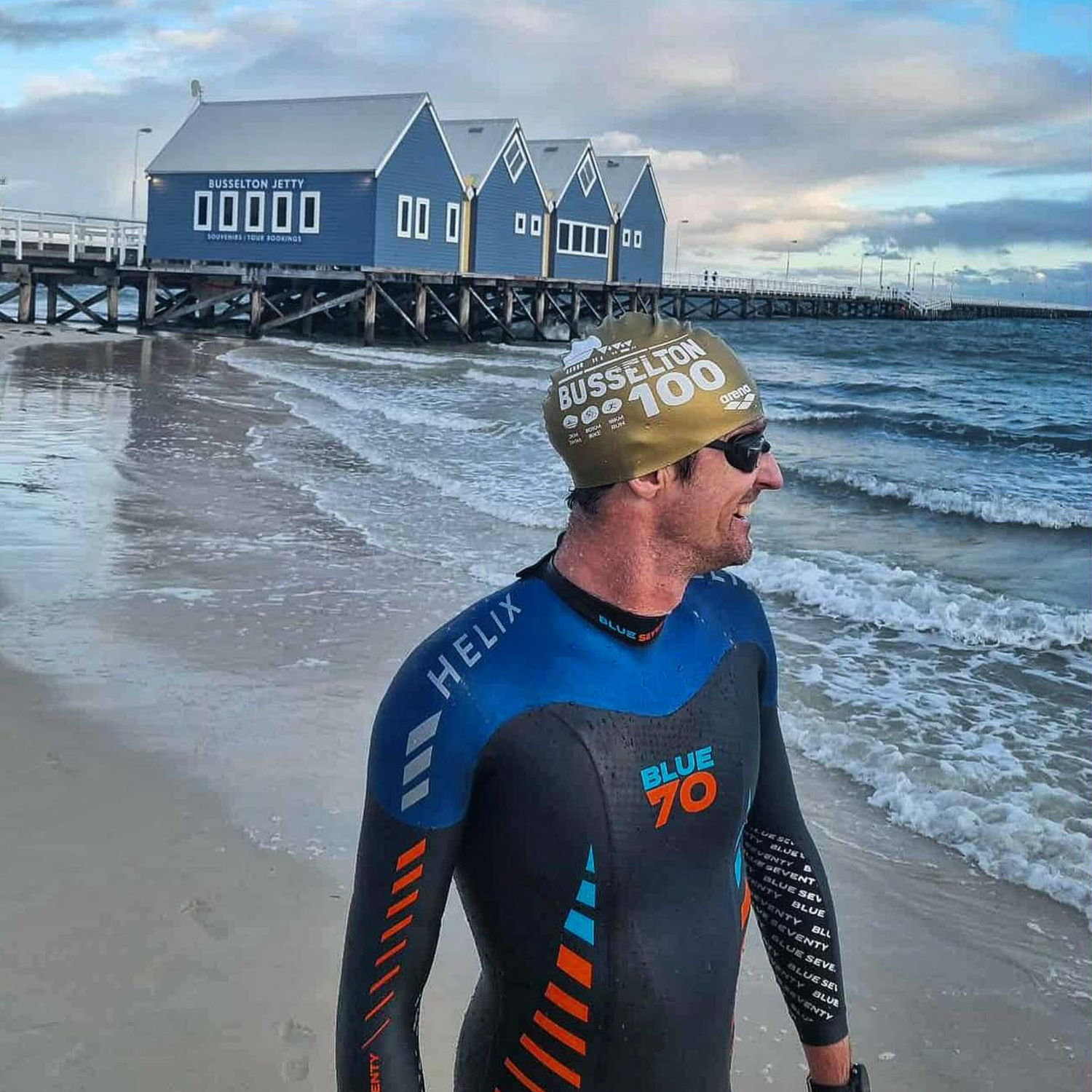
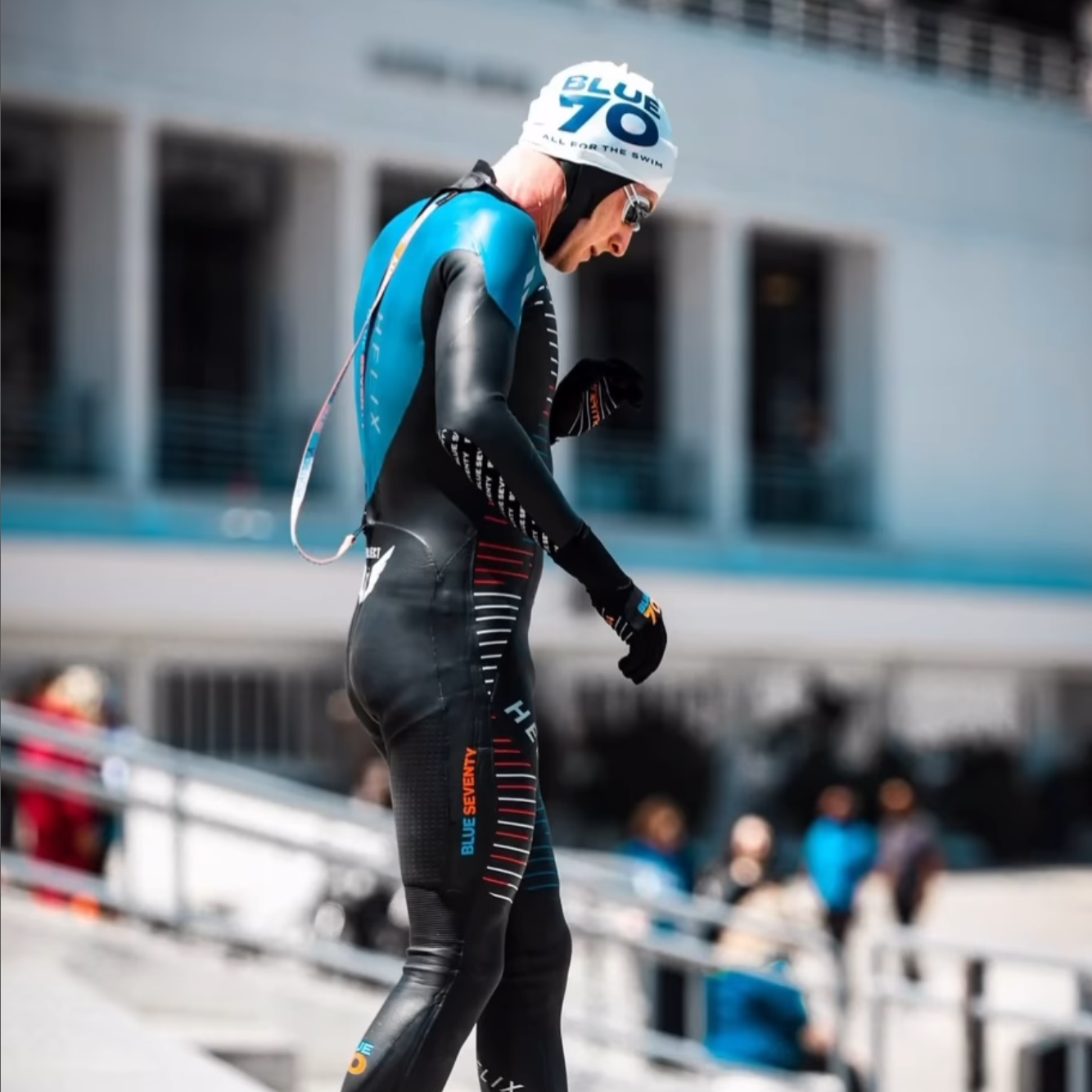
A flagship suit like the Helix is built for a swimmer who already has a stroke. Its thin, high-cell-count neoprene through the shoulders is designed to disappear, to stay out of the way of technique that's already sound. A first-time triathlete standing on a beach at 6 a.m., heart rate climbing before the gun even goes off, needs something different. They need a suit that does work their technique can't do yet on its own. That's a fit and buoyancy question first. Flexibility comes second.
Why Beginners Gain More From a Wetsuit Than Advanced Swimmers
Buoyancy equals speed in the water. But it doesn't equal speed evenly across every swimmer, and that detail rarely makes it into buying guides.
A swimmer with underdeveloped body position tends to swim hips-low, legs dragging behind the chest like dead weight. Neoprene lifts the hips and legs, flattening the body line and cutting frontal drag. For a swimmer who already holds a flat, rotated position through years of technique work, that lift is a small bonus. For a swimmer who hasn't built that position yet, it's a correction to the entire stroke.
This is the logic behind how Blue70 frames wetsuit selection: around frequency, skill level, and distance, not purely around budget. A beginner in a well-fitted entry-level suit can see a bigger jump in body position than an advanced swimmer spending three times as much on thinner, more flexible neoprene. The expensive suit refines a position that's already close to correct. The entry-level suit builds one that wasn't there to begin with.
Fit Comes Before Flexibility
Three things determine whether an entry-level wetsuit delivers on that promise, and none of them is price.
A snug, consistent fit through the torso
Buoyancy only works if the neoprene sits against the body without gapping. A loose suit lets water flush through, adding drag and canceling out the lift the suit is supposed to provide. This matters even more at entry-level price points, where simpler panel patterning makes correct sizing the single biggest factor in performance. Guessing a wetsuit size from a regular clothing size isn't a shortcut worth taking.
Shoulder mobility good enough to avoid fatigue
Entry-level neoprene runs thicker through the arms than flagship material, so a swimmer with a long, hard-catching stroke will feel more resistance than they would in a race suit. The fix usually isn't spending more money. It's donning the suit correctly: working the material up the legs in small pulls, clearing excess fabric out of the crotch, and seating the shoulders last so no bunched neoprene interferes with the catch.
Durability for how beginners treat a new wetsuit
First-time buyers lose more suits to fingernail punctures and heel tears during donning than to any flaw in the neoprene itself. An entry-level suit priced as a first purchase, not a lifetime investment, takes some of the pressure off that learning curve. Blue70's Sprint, priced at $325 and described by the brand as one of its top-rated entry-level wetsuits, is built with that learning curve in mind, not solely to hit a lower price point.
The Two-Minute Dry-Land Test
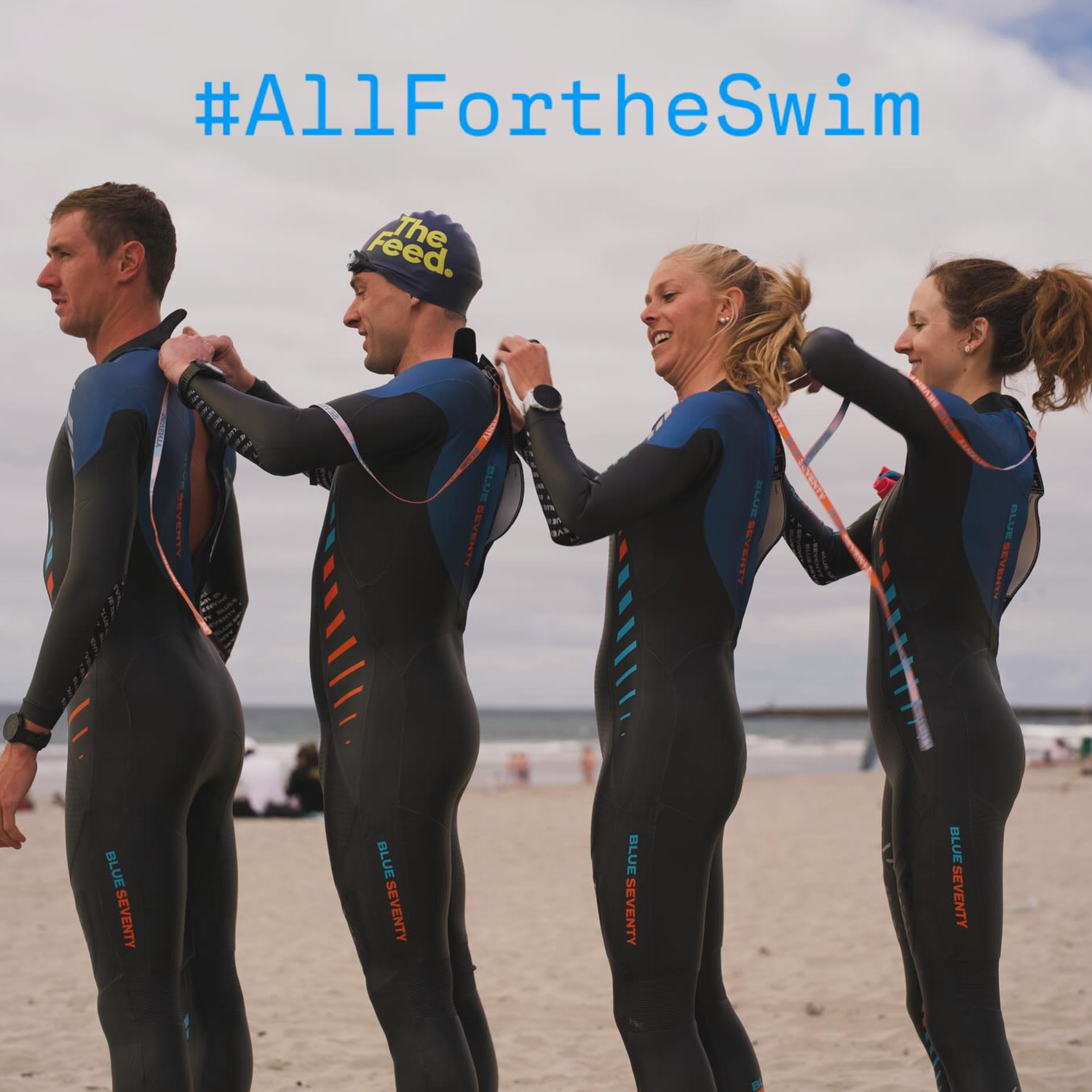
One check costs nothing and takes two minutes. After zipping up on dry land, raise both arms overhead and rotate the shoulders as if mid-catch. The suit should feel tight and restrictive doing this. That's correct. A wetsuit that feels comfortable standing still in front of a mirror is likely sized too big, because neoprene stretches once it warms up with body heat and takes on water. It needs to start tight on land to function once wet.
A dry-land check only tells you so much, though. It can confirm torso compression and zipper closure. It can't tell you how a shoulder that felt snug in the store will hold up through forty minutes of open water. That's the gap Blue70's Test Swim policy is built to close. Swim in the suit, and if it comes back clean, dry, and tagged within 30 days, it can still be exchanged or returned. For a first-time buyer unsure of sizing, that removes the two most common mistakes people make: overbuying out of caution, or underbuying and spending a whole season fighting a suit that doesn't fit right.
Matching the Suit to Your Training Week
A first-time triathlete often buys a thin, flagship suit because they've read that less neoprene means faster swimming, then trains in it twice a week for four months before race day. Thin, flexible neoprene built for race-day feel breaks down faster under repeated donning, doffing, and exposure to chlorine or saltwater.
Blue70 says this plainly about its own Helix: the suit's thin, highly flexible neoprene wears out more quickly under heavy training use, which is why the brand points frequent swimmers toward the Reaction or Fusion instead. That kind of transparency about trade-offs is uncommon in wetsuit marketing. A suit's intended role matters more than where it sits on a price list.
If someone's long open-water sessions happen in the same suit they'll race in, a suit built for frequent use, like the Reaction at $680 or the Fusion at $420, will outlast a delicate flagship model by a wide margin. Most beginners won't notice the flexibility difference nearly as much as a competitive age-grouper would. They will notice a suit falling apart by August.
Pricing the Decision Correctly
Instead of asking "what's the cheapest suit that gets me through the race," ask three questions, in this order.
- How many times will this suit get wet before race day? Weekly open-water training through a full season points toward a durability-first suit like the Reaction or Fusion. A handful of practice swims before one race points toward a true entry-level suit like the Sprint.
- What does current body position look like in the water? Known issues with sighting, hip drop, or leg drag mean buoyancy distribution matters more right now than shoulder flexibility.
- Is sizing a confident decision or a guess from a general clothing chart? If it's a guess, that's reason enough to buy from a retailer offering a genuine test-swim and exchange policy, and to actually use it.
None of these questions involve a dollar figure. That's deliberate. Price should be the last filter applied, after fit, frequency, and current skill level have narrowed the field. A $325 suit that fits correctly and matches training volume will outperform a $995 suit that's sized wrong or built for a stroke the swimmer hasn't developed yet.
Care Habits That Extend a First Wetsuit's Working Life
Entry-level neoprene forgives more than race-day material, but it isn't indestructible. Rinse fresh water or saltwater off immediately after every swim. Dry the suit inside-out on a wide hanger, never a wire one, since wire stresses the seams over time. Keep fingernails away from the neoprene during every donning and removal.
None of that costs anything. It's the difference between a suit still performing well into a second season and one with seam separation by August. Blue70's warranty, like most in the category, excludes damage from fingernail punctures, heel tears, and improper storage, which makes these habits a financial decision as much as a practical one.
Starting Point for a First Wetsuit
An entry-level triathlon wetsuit is the right tool for a swimmer whose limiting factor is body position and confidence, not shoulder flexibility. Buy for fit first. Buoyancy distribution and durability come second. Let price follow from an honest read of how often the suit will actually get wet this season.
If sizing still feels uncertain after that, take a Test Swim in it. A wet, warmed-up fit tells you more in twenty minutes than a dry-land mirror check ever will.
Happy swimming.