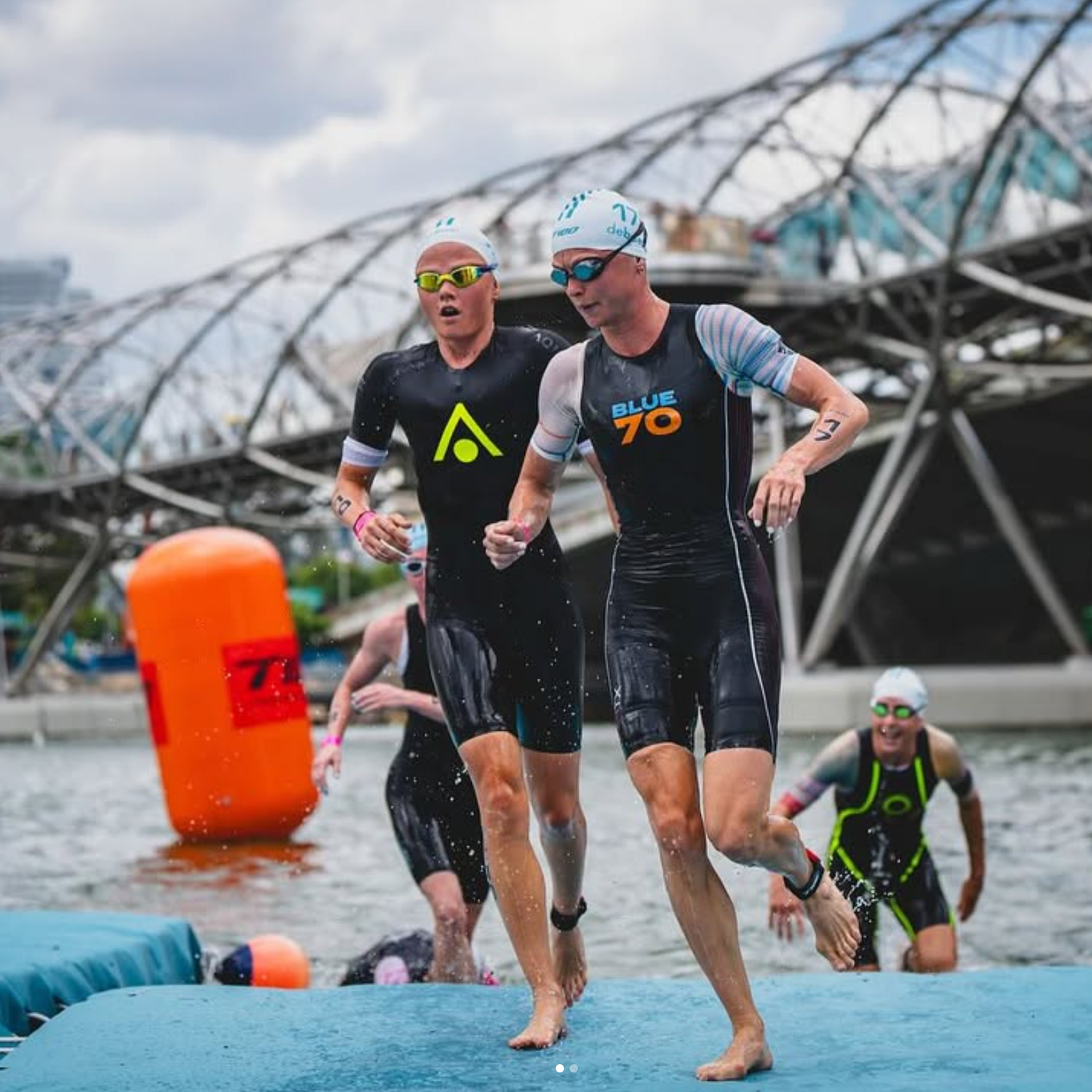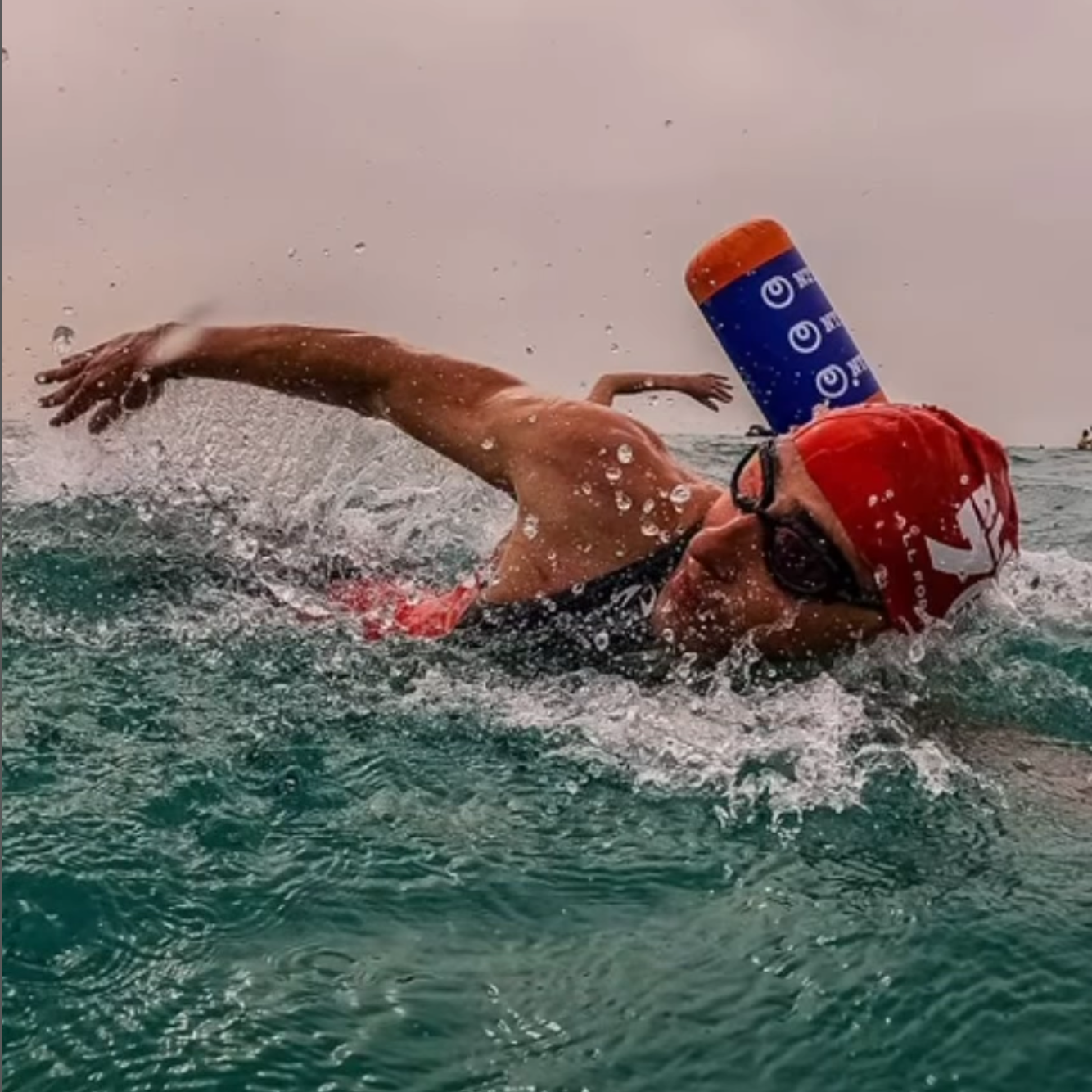



Most swimmers assume wetsuit neck chafing is just part of open-water swimming. You finish a race or long training session, peel the suit off, and find that familiar raw line around the neck. The usual response is simple: apply more anti-chafe balm next time and hope for the best.
That approach can help, but it usually misses the real problem. In a swim-specific wetsuit, neck chafing is often less about the skin itself and more about fit, posture, and movement. The collar is just where those issues show up first.
If you think about neck irritation as a clue rather than a random annoyance, the solution becomes much clearer. Instead of only trying to reduce friction at the surface, you can fix what is causing the rubbing in the first place. That usually means a more comfortable swim, less wasted energy, and a better overall experience on race day.
Why Neck Chafing Happens
A wetsuit should feel snug on land and more comfortable once you are in the water. That close fit is part of what helps a suit support body position and move with you through the stroke. But there is a big difference between snug and abrasive.
When the neck starts rubbing, it is usually because the collar is moving against the skin more than it should. That movement tends to come from a few common causes.
- The suit is sitting too low through the legs, hips, or torso
- The shoulders are under tension because the suit has not been pulled fully into place
- The swimmer lifts the head too high while sighting
- The neckline shape does not suit that athlete’s body or sensitivity
- Stroke mechanics create excess rotation or side-to-side shifting
- The suit is the wrong size or fit profile
Different causes, same symptom. That is why simply coating the neck with more product does not always solve the issue.
Stop Treating It Like a Skin-Only Problem
Here is the contrarian view: most neck chafing conversations start too late. By the time you are thinking about friction creams and tape, you are already reacting to a problem that may have started when you first put the suit on.
In many cases, the collar is not the true source of the problem. It is the messenger. If the wetsuit is sitting low, if the head is craning up every few strokes, or if the upper body is carrying too much tension, the neck will feel it first.
The better sequence is this:
- Check the fit
- Make sure the suit is on correctly
- Look at your posture and sighting mechanics
- Then use anti-chafe protection as the finishing touch
That order matters. If you skip straight to skin protection, you may get temporary relief without ever solving the underlying issue.
Why Donning the Suit Properly Changes Everything
The most common cause of neck chafing is surprisingly simple: the wetsuit is not fully pulled up.
If there is extra material sitting low in the calves, quads, hips, or torso, that tension has to go somewhere. Usually it travels upward, pulling down on the shoulders and creating extra pressure and movement at the neckline. Then every stroke turns that tension into rubbing.
This is why one swimmer can love a suit while another struggles in the exact same model. The difference is often not the wetsuit itself. It is how the suit was positioned before the swim even started.
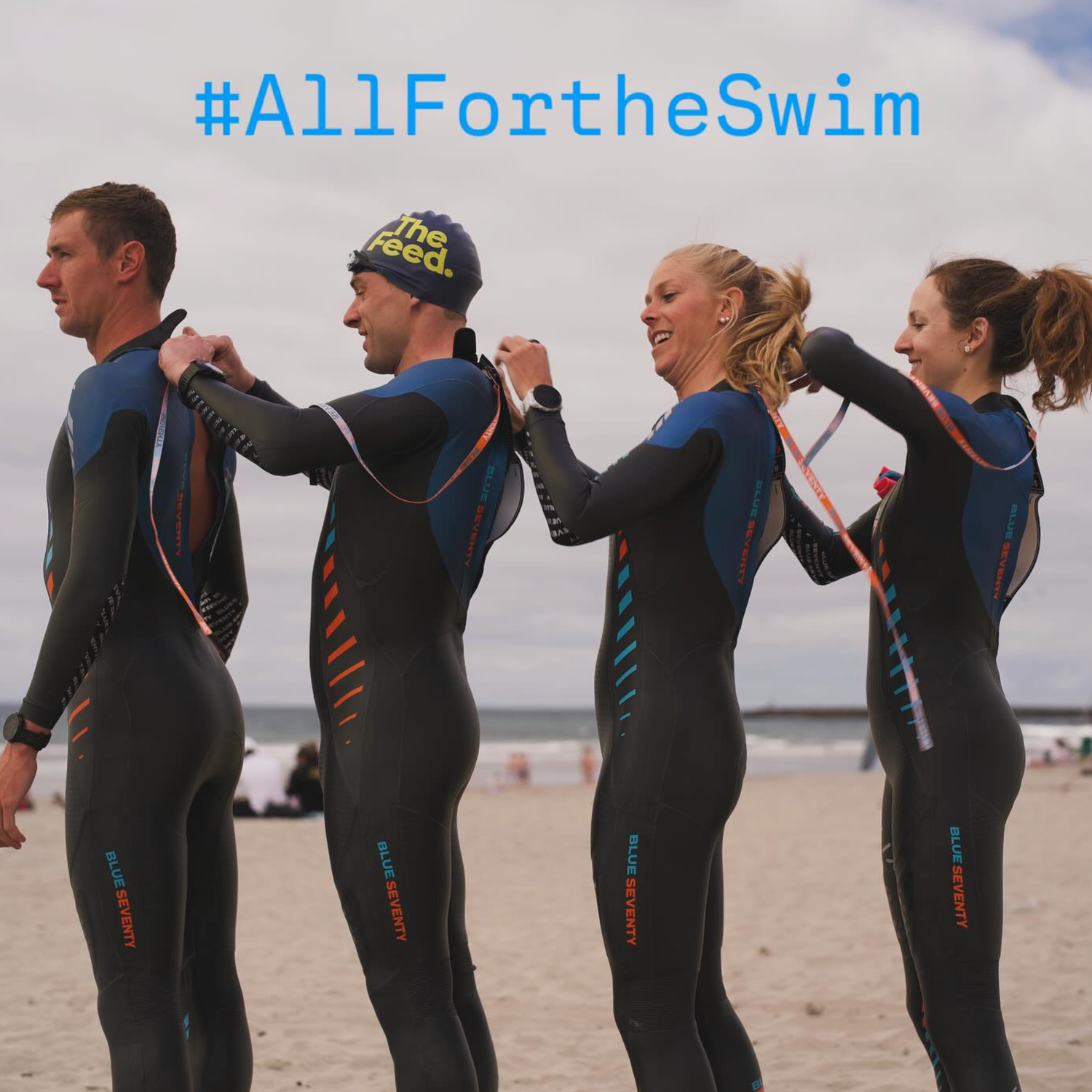
When you put your wetsuit on, do not rush it. Work it upward in small stages and make sure each section is fully seated before moving on.
- Pull the suit high from the ankles
- Remove slack through the calves and knees
- Seat the suit fully over the hips
- Work the torso upward before setting the shoulders
- Make sure the arms and shoulders feel free before zipping up
If the suit is sitting low, the neck almost always tells you.
The Open-Water Factor: Sighting Can Create Neck Rub
Many swimmers only notice neck chafing in open water, not in the pool. That usually points to one thing: sighting mechanics.
When swimmers sight by lifting the whole head high, the collar gets pressed and dragged in ways it does not during normal pool swimming. That repeated motion can create irritation surprisingly quickly, especially over longer distances.
A high head lift tends to do three things at once:
- Increase pressure at the front of the collar
- Change the angle of contact along the sides of the neck
- Disrupt body line, which can make the whole suit shift more
A cleaner cue is to keep the movement compact: eyes forward, chin low, quick peek, then back to line. That tends to be better for body position, and it often helps reduce rubbing around the neckline too.
Shoulder Tension Makes the Problem Worse
Another underappreciated factor is upper-body tension. When swimmers get anxious, cold, or overly aggressive early in a race, they often shrug the shoulders and tighten through the neck and traps. Inside the suit, that changes how the collar sits and moves.
A neckline that felt fine during warm-up can start feeling abrasive once tension builds. This is especially common at the start of a triathlon, in choppy water, or anytime breathing becomes rushed.
That is why neck chafing is not just about the suit. Sometimes it is also about how the swimmer is carrying stress inside the suit.
When the Fit Is the Actual Issue
Some neck irritation can be improved with better setup. Some cannot. If the wetsuit is the wrong size or the fit profile is not right for your shape, the collar may never settle the way it should.
Watch for these signs:
- The collar sits unusually high under the jaw
- The neckline folds, gaps, or shifts excessively
- Turning to breathe feels restricted
- You get both neck rubbing and early shoulder fatigue
- The problem continues even after careful donning and test swims
A well-fitted wetsuit should feel compressive and secure, not distracting. In the water, it should become more natural as your stroke settles and the neoprene moves with you.
For women, upper-body fit can be especially important. blueseventy’s Femme Fit approach refines patterning in critical areas like the bust, torso, wrists, ankles, and neckline. That includes a lowered neckline for comfort and reduced chafing, along with an extended zipper length for easier entry and faster transitions.
The key point is that neck comfort rarely starts and ends at the neck. It is connected to how the whole upper body fits inside the suit.
How Wetsuit Design Has Evolved
Modern swim-specific wetsuits are built around movement. That may sound obvious, but it is important at the neckline because the neck is constantly involved in breathing, rotating, and sighting. A suit has to stay secure there without feeling restrictive or abrasive over hundreds or thousands of strokes.
That is why subtle design details matter so much. Neckline height, edge finish, panel shape, and how tension is carried through the upper torso all influence comfort.
In the blueseventy line, the Fusion redesign introduced a lower-sitting neckline for comfort without losing the watertight seal. That kind of update reflects a broader truth: comfort is not separate from performance. A swimmer who is not distracted by the suit is better positioned to swim smoothly and stay relaxed under pressure.
A Practical Fix: What to Do If Your Neck Keeps Getting Rubbed
If neck chafing has become a pattern, do not just keep repeating the same routine and hope it improves. Work through the issue step by step.
1. Re-do how you put the suit on
Before changing anything else, put the wetsuit on again more carefully. Most athletes underestimate how much better a suit feels when it is fully seated through the lower body and shoulders.
2. Check the collar on land
The neckline should feel close and secure, but it should not feel like it is pressing into your throat or riding too high under the jaw. If it already feels strained before you swim, something is off.
3. Look at your sighting form
If the problem mainly shows up in open water, your sighting technique deserves attention. A compact sight is usually easier on both your body line and your neck.
4. Relax the upper body
Use simple cues during swimming:
- Shoulders down
- Long neck
- Full exhale
- Easy recovery over the water
Less tension usually means less collar movement.
5. Add anti-chafe protection
Once fit and mechanics are in a good place, apply a swim-appropriate anti-chafe product in a thin, even layer around likely friction points. This is the finishing step, not the foundation.
6. Test it in real conditions
Open water reveals things the pool does not. Sighting, chop, uninterrupted swimming, and race-day effort all change how a suit feels. That is why a proper test swim matters so much.
blueseventy’s Take a Test Swim policy lets you swim in a wetsuit and still return or exchange it if it comes back clean, dry, unmodified, with tags and accessories. For athletes trying to dial in fit, that is one of the best ways to make a confident decision.
Race-Day Prevention: A Better Routine
If your neck is prone to rubbing, race morning is not the time to wing it. A calm, repeatable process gives you the best chance of starting comfortably.
The night before
- Trim fingernails so you are less likely to nick the neoprene while dressing
- Pack your anti-chafe product
- Review your wetsuit setup routine
Before the swim
- Give yourself enough time to put the suit on properly
- Work the neoprene upward patiently
- Settle the shoulders before closing the zipper
- Check that the collar feels secure, not strained
- Warm up if the session or event allows
During the swim
- Keep sighting compact
- Avoid shrugging the shoulders
- Breathe rhythmically and stay relaxed through the upper body
After the swim
If the neck is still irritated, treat that as useful feedback. Ask yourself whether the suit felt low, whether you were lifting the head too much, whether tension crept into the shoulders, or whether the fit itself needs to change.
Choosing a blueseventy Suit with Neck Comfort in Mind
No one wetsuit is right for every swimmer, but some design details are especially relevant if neck comfort is a priority.
Fusion
The Fusion is a strong option for athletes who want comfort, versatility, and a suit suited to frequent use. Its lower-sitting neckline is particularly relevant for swimmers who are sensitive to collar pressure.
Reaction
For swimmers doing frequent, longer swims, the Reaction is designed for performance and regular use. If neck discomfort tends to appear as fatigue builds over training sessions, moving into a suit designed for that load can help.
Women’s wetsuits with Femme Fit
For female athletes who have struggled with upper-body fit, a women-specific pattern can make a real difference in how the collar sits and moves through the stroke.
The goal is not to choose based on one isolated problem. It is to choose a suit that matches how often you swim, how long you swim, and how your body moves in the water.
Comfort Matters More Than People Think
No wetsuit can guarantee a faster swim. But a more comfortable, better-positioned suit can absolutely help you swim with less distraction and less wasted tension.
When the neck is not bothering you, it is easier to:
- Settle into rhythm early
- Breathe naturally
- Keep the shoulders relaxed
- Sight with better control
- Finish the swim without that raw, burning feeling around the collar line
That does not just make the swim nicer. It supports better execution when it counts.
Final Takeaway
Wetsuit neck chafing is usually not random, and it is rarely just bad luck. More often, it is a signal that something about the fit, setup, or movement pattern needs attention.
The best solution is usually a combination of:
- Better donning
- More accurate fit
- Smarter sighting mechanics
- Less upper-body tension
- Anti-chafe protection used as a final layer, not the first fix
That is the swim-specific way to solve the problem. Instead of treating the neck alone, look at how the whole system is working. When the suit fits correctly and moves with you, comfort improves where it matters most: in the water.
If you want to dial in your fit before your next race or open-water session, Take a Test Swim and make sure your wetsuit feels right when you are actually swimming.