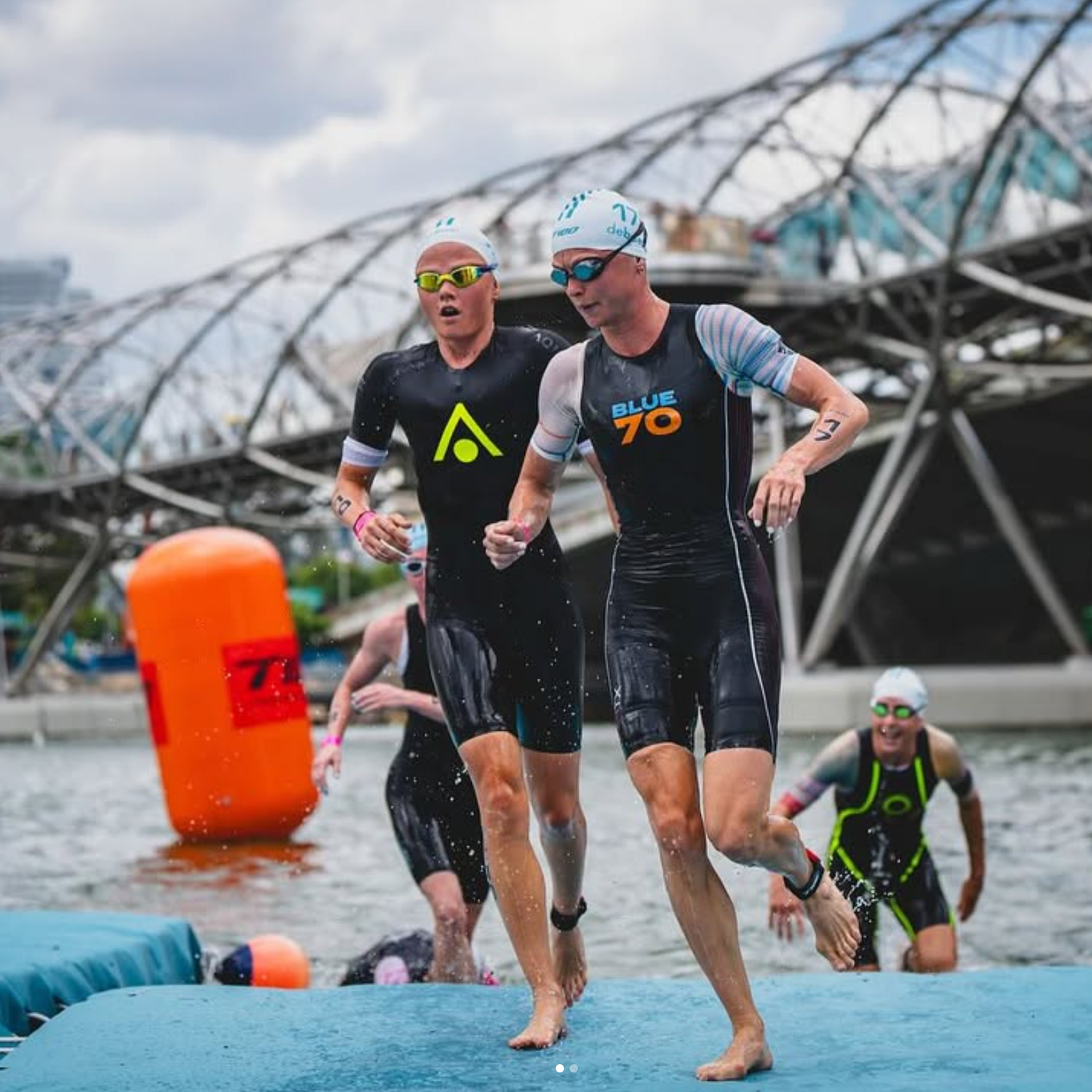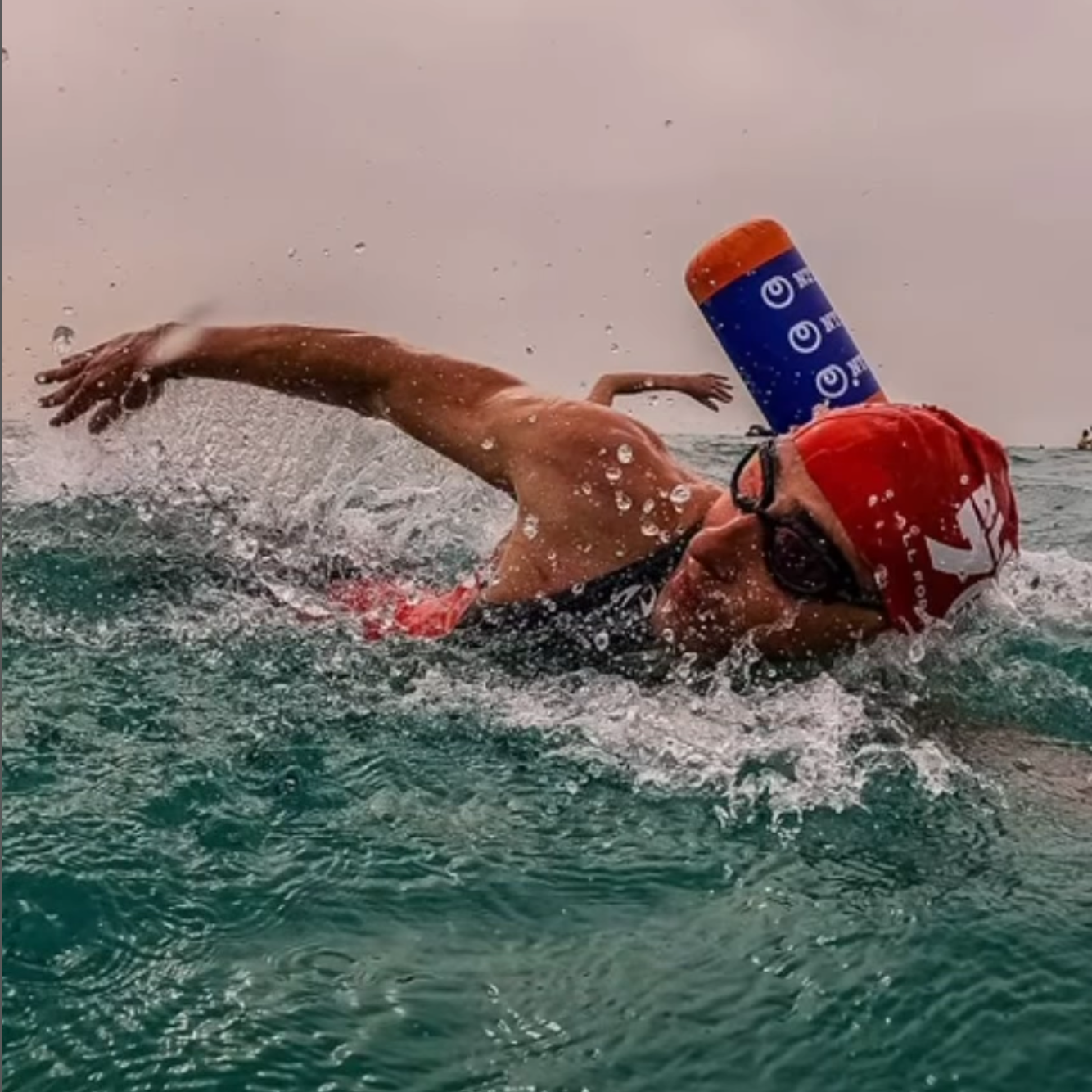



Most triathletes pack a wetsuit like they'd pack a beach towel. Roll it, stuff it in a duffel, zip the bag, done. That habit ignores what neoprene actually is: a closed-cell foam bonded between thin layers of fabric, held together by adhesive and stitching that can crack, separate, or crease under conditions that have nothing to do with swimming.
The damage that shortens a wetsuit's working life often happens before an athlete reaches the venue. Cargo holds run cold. Tarmacs run hot. Bags sit compressed under other luggage for hours. None of that shows up in a warranty claim story. It shows up in the neoprene.
What Compression Does to Foam Over Time
Yamamoto neoprene, the material used across every blueseventy wetsuit in 38, 39, and 40 cell grades, gets its flexibility from a closed-cell foam structure. Countless tiny gas-filled cells compress and rebound as the body moves through the water. That rebound is what gives a suit its stretch and its buoyancy. It's also what makes sustained compression a problem.
A stroke cycle compresses and releases neoprene in under a second. A suitcase compresses it for hours. Foam recovers from short bursts of pressure far more completely than from prolonged pressure. That's why a wetsuit balled up under other bags for a long flight can come out with crease lines that take several swims to relax, if they relax at all.
The fix isn't complicated. Fold the suit along the lines it's already built to bend at: shoulders, hips, knees. Then give it the most padded, least weight-bearing spot in the bag. Small choice. Real difference over a season of travel.
Temperature Swings the Suit Doesn't See on Race Day
Checked baggage compartments run colder than the passenger cabin. Add in ground handling, a hot tarmac in Kona, a freezing ramp during a European winter race, an unheated van between airport and hotel, and a suit can cycle through several temperature extremes before it even reaches the hotel room.
Neoprene foam tolerates a fair amount of this on its own. The adhesives bonding neoprene to its jersey lining, and the glue holding seams together, are more sensitive. Repeated cycling between hot and cold stresses those bonds the same way years of ordinary use eventually does, just compressed into a single trip instead of spread across a season.
A dedicated wetsuit travel bag won't change the ambient temperature a suit is exposed to. What it can do is slow the rate of change, and rate of change matters more to adhesive stress than the peak temperature alone.
The Moisture Problem Nobody Packs For
Here's what actually happens before most race trips. The wetsuit gets rinsed after a final open-water session, packed while still slightly damp, and sealed into a bag for the flight. Almost nobody packs a bone-dry suit. There usually isn't time.
A sealed, non-breathable bag traps that residual moisture against the neoprene and lining. Two things follow from this.
- Salt and chlorine sitting against glued seams accelerate the adhesive breakdown that heat cycling already causes. These effects compound rather than act on their own.
- A sealed bag without airflow is a better environment for odor-causing bacteria than an open one. That's why a wetsuit pulled from a suitcase after a long travel day often smells worse than one left open on a rack.
A properly designed wetsuit bag, built with ventilation or an airflow path rather than a full seal, protects the suit from outside water and abrasion while still letting trapped dampness escape instead of concentrate.
Dry Doesn't Have to Mean Airtight
There's a useful distinction buried in the term "dry bag." A wetsuit travel bag needs to keep external water and mess contained, away from the rest of the luggage. It doesn't need to be fully sealed against air movement, and in most cases shouldn't be.
This echoes something wetsuit owners already understand about the suits themselves. Neoprene isn't a waterproof barrier. It's designed to let a thin layer of water in, which the body then warms for insulation. The travel bag's job is different. It's containment and protection, not a seal against every molecule of air. The right bag combines a water-resistant exterior with enough structure to prevent the suit from being crushed by whatever's packed around it, plus room for air to move so a still-damp suit isn't stewing for an entire travel day.
Small Objects, Small Punctures
Zippers, race belt buckles, and shoe cleats are common travel companions for a wetsuit, and common sources of small punctures and lining abrasion. A wetsuit's jersey lining is thin by design, thinner still on race-focused suits built with more flexible neoprene, which makes it more vulnerable to a hard edge pressing against it for hours at a stretch.
blueseventy's warranty terms exclude damage from fingernail punctures and heel tears because these are common, avoidable failure points during ordinary use. The same logic applies during travel, just with different objects doing the damage. A suit sharing undivided luggage space with hardware-heavy gear faces the same category of risk. A separate compartment removes that contact entirely.
A Short Routine, Not a Long Checklist
None of this requires an elaborate pre-trip ritual. It requires a few specific habits, done the same way every time.
- Rinse the suit in fresh water after the last swim before travel, and let it air-dry as fully as time allows, inside-out first to reach the lining, then right-side-out.
- Fold along the suit's built-in flex points instead of compressing it into a random ball.
- Pack it in its own bag, separate from hard-edged gear like race belts, shoes, and goggles.
- Place that bag in the most padded, least-compressed section of the luggage.
- On trips with connections or long ground transport, plan for the suit to sit packed longer than a single direct flight, and weigh airflow accordingly.
None of this guarantees a suit arrives in exactly the condition it left in. Long-haul travel is hard on gear generally. But addressing compression, temperature cycling, and trapped moisture, rather than water resistance alone, targets the mechanisms that shorten neoprene life instead of the ones that happen to be visible at a glance.
Why This Matters More Than It Looks Like It Should
Athletes racing several times a season put a wetsuit through more travel cycles than someone racing once a year. A single trip packed carelessly might leave no visible mark. Repeat that habit across a full season of flights, and the cumulative effect shows up as reduced shoulder flexibility, softened adhesive, seams that seep instead of seal.
A wetsuit's working life doesn't pause between the last training swim and race morning. It starts the moment it goes into the bag.