


A rash guard under a swim wetsuit is a trade-off. It can reduce skin irritation, but it changes how the suit fits and how water moves through the neoprene before it does anything to stop chafing. Blue70 builds swim-specific wetsuits to sit close against your skin. That close fit is part of the design. Add a layer underneath, and you need a clear reason for it.
Swimmers ask about this most often when chafing shows up after a long open-water session or when they borrow or rent a suit. The discussion always starts with fit. A suit that is too loose or too tight will rub. A rash guard may cover the symptom without fixing the real problem. Putting a layer between your skin and the neoprene changes several things at once.
How a Rash Guard Changes the Fit
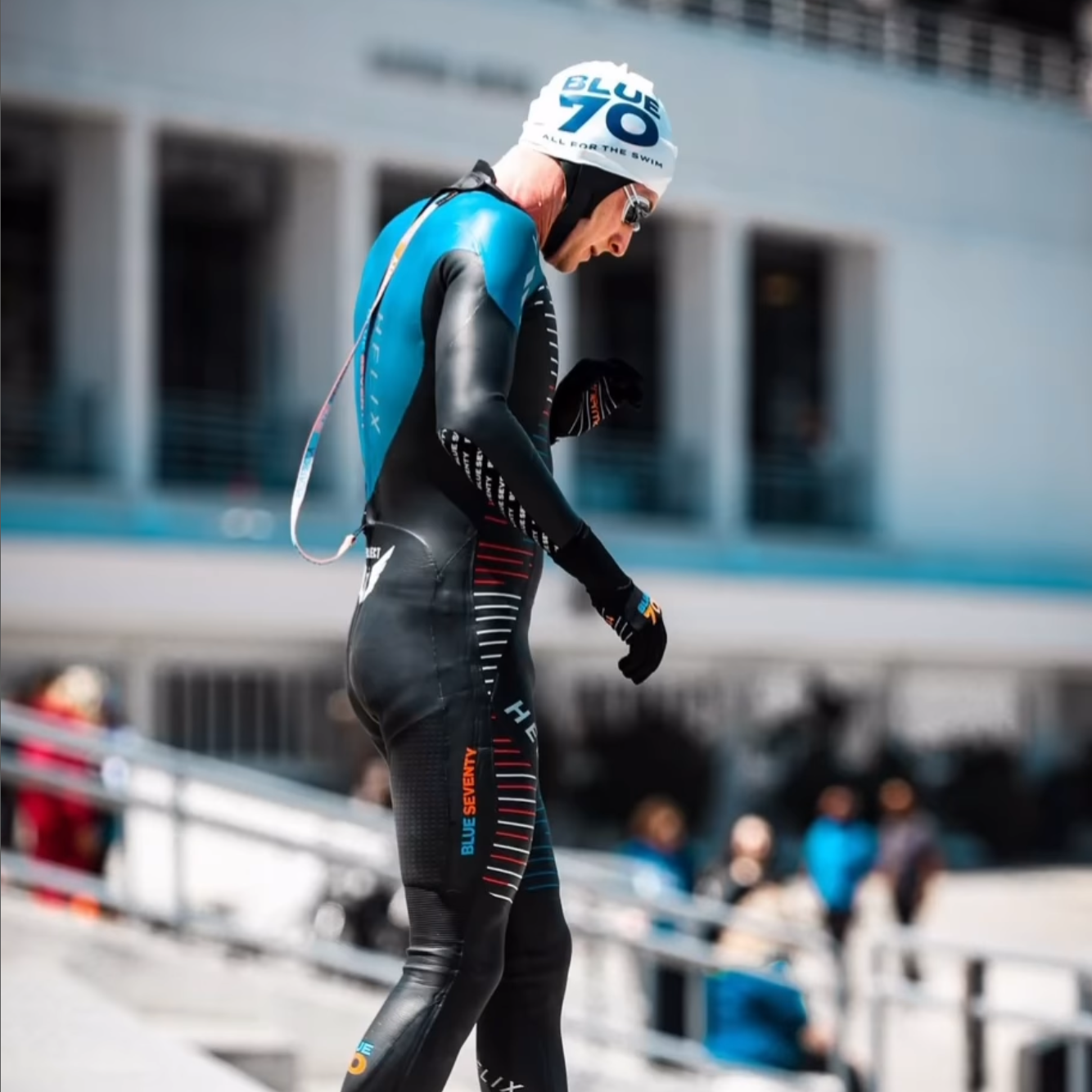
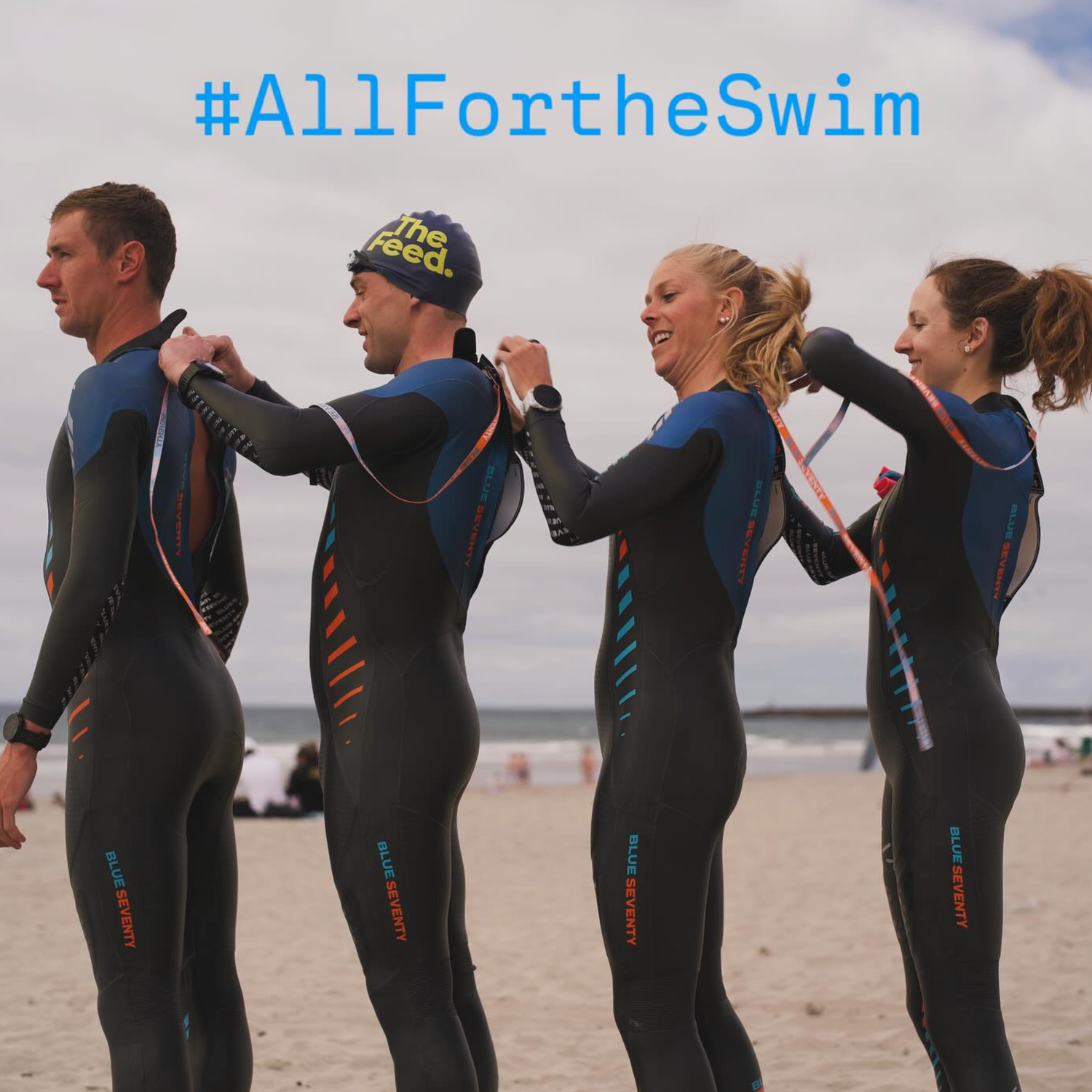
A correctly sized swim wetsuit should feel snug on dry land and more comfortable once water enters. The suit is designed to let a thin layer of water in, which your body warms against the neoprene. That system works best when the neoprene can move with your shoulder and torso. Put a rash guard underneath, and you insert a second fabric layer into that system.
The shoulders are the most common failure point. An improperly donned suit, especially one with excess tension, causes fatigue. Swimmers often describe that fatigue as a shortened stroke and a dropped elbow. A rash guard that fits too tight can restrict the same movement. A loose one can fold under the arms or at the bottom of the zipper, creating a pressure point that rubs for the rest of the swim.
Movement, salt, sand, and chlorine cause most wetsuit chafing. If you plan to use a rash guard to stop chafing, the layer has to stay flat. Seams become pressure points. Flatlock construction and a close fit reduce that risk. Anything with a thick waistband or rear zipper will create ridges under the suit.
Where Water and Neoprene Meet
Blue70 wetsuits use Yamamoto 38, 39, and 40-cell neoprene. Higher cell numbers mean more flexibility. That flexibility works best when the suit can move with your body. A rash guard changes the inner surface the neoprene lies against. In a full suit, the arms and shoulders rely on that flexibility to preserve a long, relaxed stroke.
The neckline matters more than most swimmers expect. Blue70 redesigned the Fusion in 2021 with a lower-sitting neckline for comfort without losing the watertight seal. A rash guard with a high collar can interfere with that seal or create a fold that rubs at the base of the neck. Keep the collar below the suit's neckline if you add a layer.
A wetsuit improves body position. Buoyancy equals speed. That benefit depends on the suit fitting close enough to let the neoprene work as a smooth surface. A wrinkled rash guard can create small pockets that hold water, which adds drag and changes how the suit feels on the catch.
Temperature Sets the Terms
Water temperature is the clearest signal. Below roughly 56 to 58°F, a purpose-built thermal wetsuit adds meaningful warmth. The Blue70 Thermal Reaction is fully lined with Zirconium jersey for cold water. In that range, a rash guard may add a little warmth, but it also changes the fit of a suit that already has a thermal liner. If you need more warmth, a thermal suit is the more predictable change than adding a layer under a non-thermal suit.
Above roughly 70 to 72°F, a full wetsuit can already be too warm over longer swims. A rash guard adds another layer of insulation and can push you past comfort. At that point, a sleeveless suit or a swimskin is the more useful change.
Between those thresholds, the decision depends on your own comfort and the length of the swim. If you run warm, skip the extra layer. If you run cold, try a thin layer on a short swim before committing to it for a race.
When a Rash Guard Makes Sense
Some swimmers use a rash guard as a barrier when renting or borrowing a suit, or when their skin reacts to standard neoprene linings. Anyone with a persistent skin reaction should consult a clinician. If you go this route, choose the thinnest, smoothest layer you can find. Flatlock seams and a close fit reduce the chance of the layer itself causing hotspots.
Open-water swimmers sometimes use a thin layer as a barrier against sun or stinging organisms in ocean swims. A rash guard may reduce sun exposure on covered skin, but it does not replace sunscreen on exposed areas. That is a practical reason, separate from fit.
The layer has to work under the same suit you plan to race in. A layer that feels fine on dry land can bunch or pull once water enters and you settle into a stroke.
Test Swim Before You Decide
Blue70's return policy includes a test swim. You can swim in a wetsuit and still return or exchange it if it comes back clean, dry, unmodified, and with tags attached. The same logic applies to testing a rash guard under a suit. Do a short, easy swim, then check three things:
- Shoulder mobility: Can you rotate fully without feeling the layer pull?
- Neck comfort: Does the collar sit below the suit's neckline and stay flat?
- Water pooling: Do you feel folds or pockets under the arms or at the zipper?
Try one stroke cue. Swim 200 yards with the rash guard, then take it off and swim the same 200 yards. Pay attention to your shoulder rotation and whether you can hold a long body line. The difference is clear within a few minutes. If the suit feels better without the layer, that is your answer.
If the chafing or fit problem keeps returning, address the suit's size or donning method first. Check the size chart and take a test swim with and without the layer.
Care and Longevity
Rinse both pieces after every swim. Salt crystals and chlorine break down neoprene and elastic fibers over time. Dry the suit inside out first, then right side out, away from direct heat. A rash guard should air dry flat. Heat and wringing shorten its useful life.
Use the same fingernail caution you would when donning a wetsuit. Pinch and pull with your fingers, not your nails. The weak points on a rash guard are the seams and the collar. Check them before a race.
Lining Materials Keep Moving Forward
Swim-specific wetsuit linings have moved from basic nylon to lower-friction, warmer materials. The Zirconium jersey in the Thermal Reaction is one example. As linings get softer and more comfortable against the skin, the case for a separate rash guard weakens for most swimmers. The future likely holds more suits that feel good enough on bare skin that an under-layer becomes a niche choice for specific needs.
That does not mean rash guards will disappear. They will keep a role for sun protection, barrier use, and swimmers with specific skin sensitivities. But for fit and performance, the suit itself remains the primary tool.
If you are deciding whether to add a rash guard under your wetsuit, start with fit. Check the size chart and take a test swim with and without the layer. Your shoulders and neck will give you the answer within a few minutes. Happy swimming.