


Ask most swimmers what makes a wetsuit sustainable and they point to a material label. Ask how many swims per week their suit needs to survive, and the answer gets vague. That second question matters more than the first. A wetsuit that fits, gets rinsed, and gets repaired stays out of a landfill longer than one bought for the wrong training volume.
blueseventy started as Direct Innovations in 1993 and made one of the first triathlon wetsuits. The brand became blueseventy in 2005, and the product line now spans race-day suits, cold-water suits, and entry-level options. Along the way, race suits got thinner and more flexible through the arms and shoulders. Durability became a quieter concern. Closing that gap is where sustainability begins.
What Neoprene Actually Does
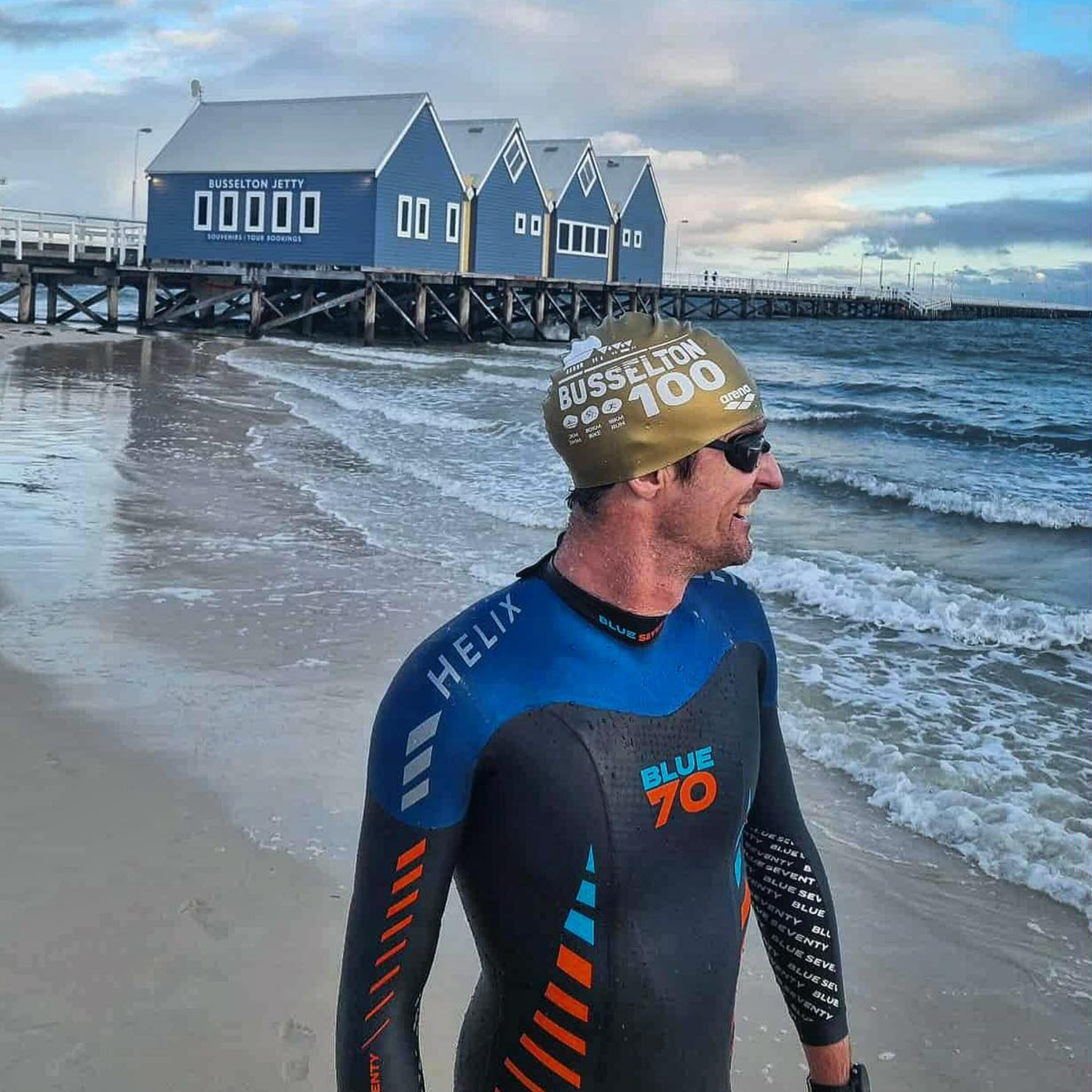
Every blueseventy wetsuit uses Yamamoto neoprene in 38, 39, and 40-cell grades. A higher cell count means more flexibility. A 40-cell panel moves with your shoulder through the catch instead of fighting it, and panels get placed so the hips and legs sit higher without restricting the stroke, which lifts the legs, cuts drag, and keeps the effort on your pull. The suit itself traps a thin layer of water against your skin. Your body warms that layer, and the closed-cell foam slows heat loss. Neoprene handles normal swim use well, but heat, chlorine, salt, sunscreen, body oils, and sharp fingernails all wear it down faster. A suit left wet in a hot car or dried in direct sun breaks down sooner than one rinsed after each swim and dried flat in the shade.
The Materials Conversation Keeps Evolving
Across the category, suppliers now mention limestone-based foams, natural rubber blends, and recycled or plant-derived linings. The chemistry varies a lot. A material labeled sustainable does not automatically mean the finished suit has a lower footprint. Manufacturing energy, foam density, linings, and shipping all contribute, and those numbers are rarely published. Ask for the same detail you would from any environmental claim: what percentage of the material is recycled or plant-derived, what data supports the carbon number, and whether durability got tested or traded away.
blueseventy's published specs stick to performance materials and verified details. The Yamamoto neoprene grades are the core material story. The Thermal Reaction suit adds a Zirconium jersey lining, a synthetic wool that provides thermal protection without bulk. If you compare suits, let that be your template for the questions above.
Race-Day Speed vs. Weekly Mileage
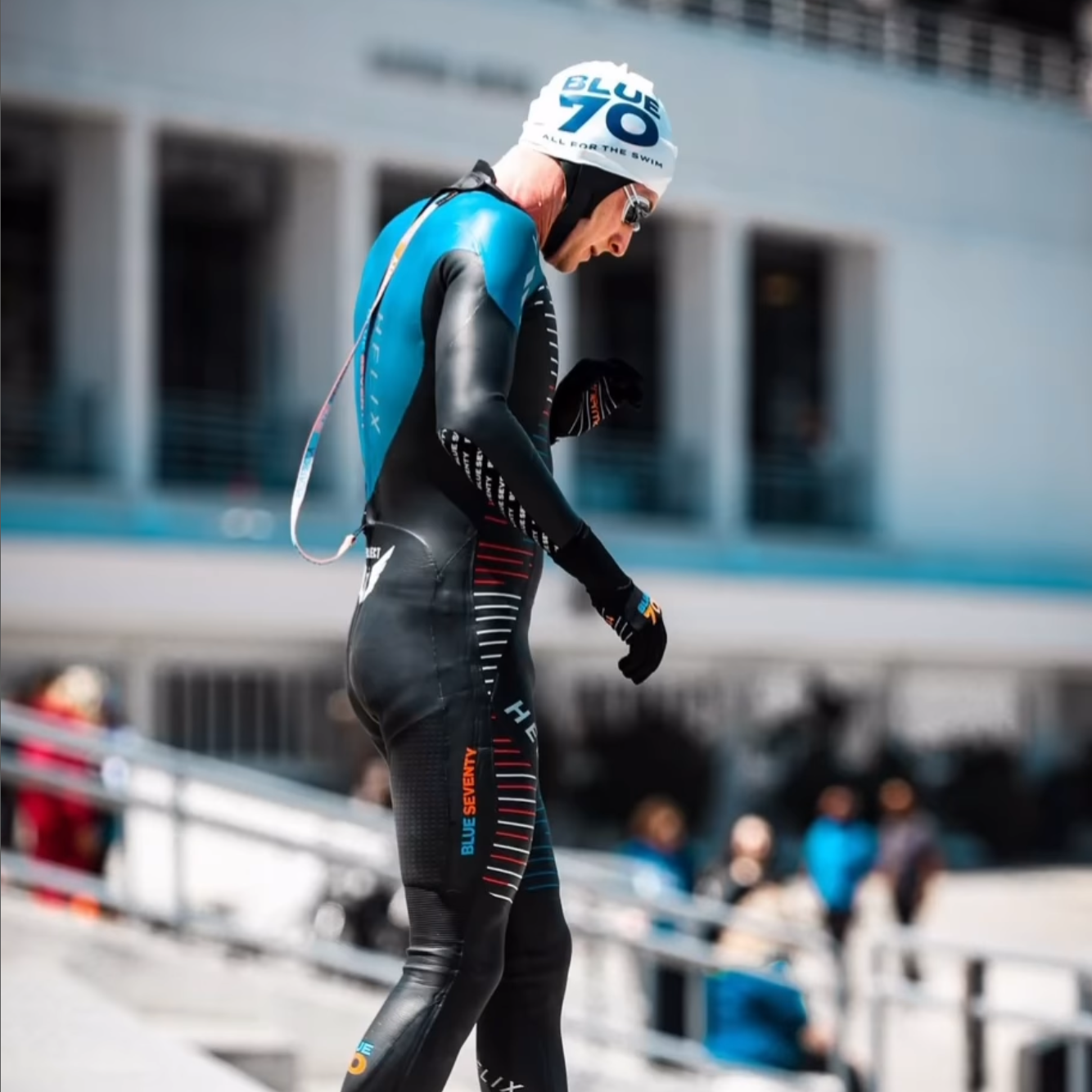
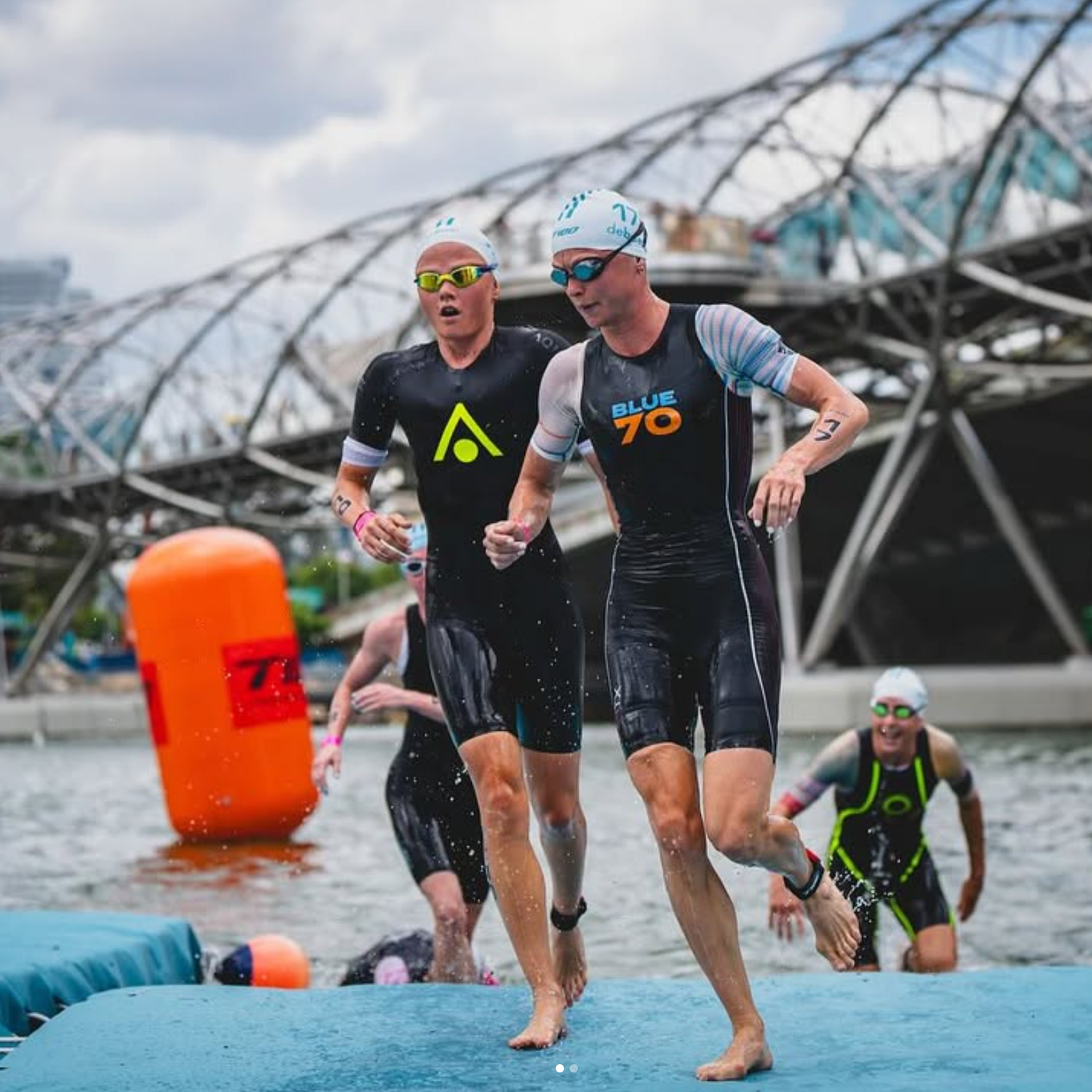
blueseventy separates race suits from training suits on purpose. The $995 Helix uses thin, flexible neoprene in the arms and shoulders plus a permeable catch panel to preserve feel for the water. That design helps reduce drag and shoulder fatigue on race day. The trade-off is clear: this thin neoprene will break down more quickly if you train in it every week.
If you race a few times a year and do most of your training in a pool, the Helix can stay race-ready for several seasons. If you swim open water weekly, the $680 Reaction or $420 Fusion is the more durable choice. The Reaction uses higher-grade neoprene and handles longer swims. The Fusion, redesigned in 2021 with a lower-sitting neckline, handles shorter frequent swims. Choosing a training suit over a race suit is a sustainability decision before it is a budget one.
Fit Keeps Suits in Service
A wetsuit that fits poorly gets abandoned. The material footprint of an unused suit is waste, no matter how carefully the neoprene was sourced. Get the fit right the first time. blueseventy offers a 30-day Test Swim policy. You can swim in a wetsuit and still return or exchange it if the suit is clean and dry.
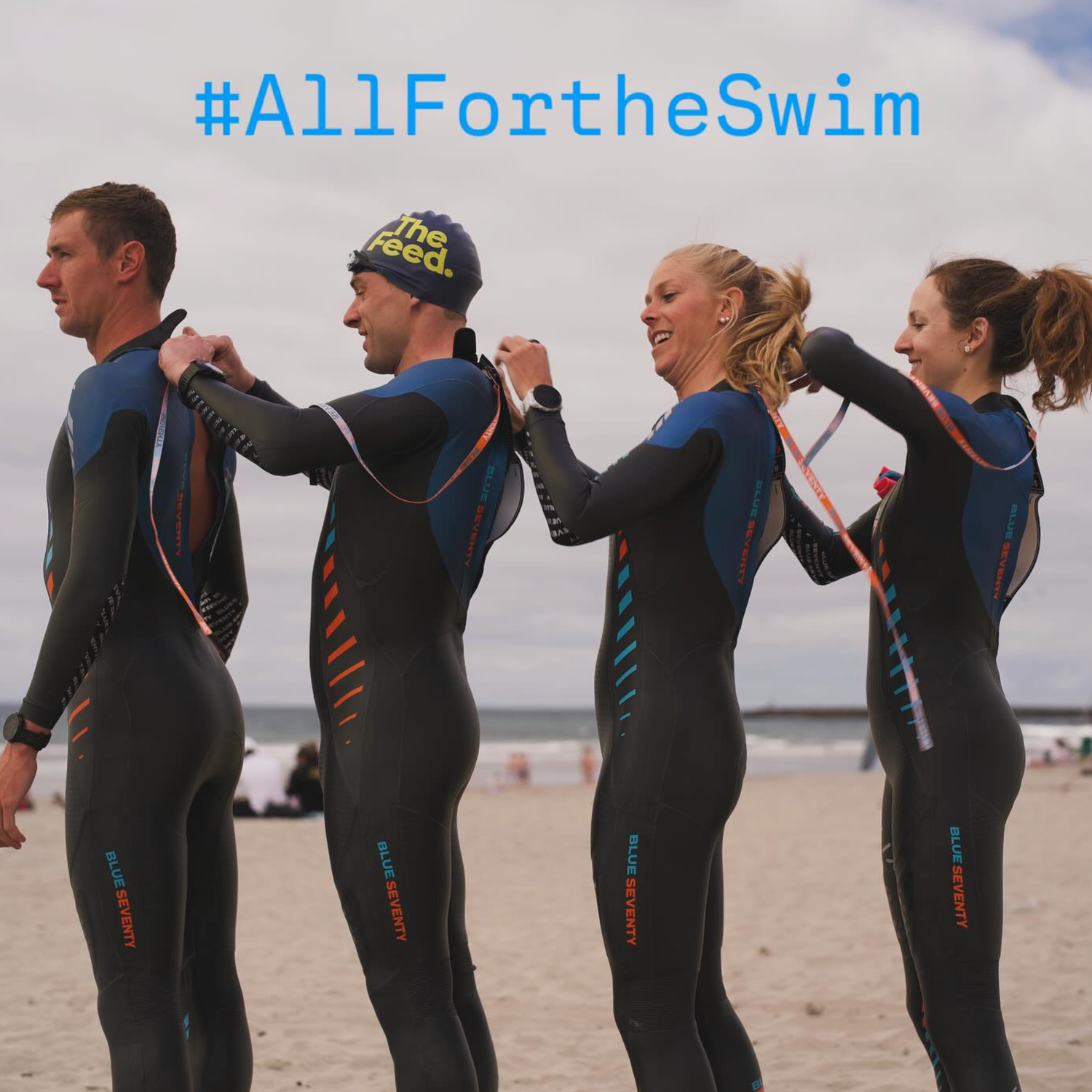
The suit should feel snug on dry land and more comfortable in the water. An improperly donned suit, especially one pulled too tight across the shoulders, causes early fatigue. Use the pads of your fingers to pull the suit up, not your nails. Fingernail punctures and heel tears are common handling damage, and the one-year warranty excludes both because they come from donning, not manufacturing.
For women, Femme Fit is available on every women's wetsuit. The pattern changes in the bust, torso, wrists, and ankles. The neckline sits lower, and the zipper extends for easier entry and faster transitions. A suit that chafes or restricts gets retired early, so a fit designed around women's proportions extends the useful life of the suit.
Care and Repair
After every swim, rinse the suit in fresh water. Salt crystals and chlorine dry out neoprene over time. Dry it flat or over a wide rail in the shade, not on a hot driveway or across a sharp hanger. Fold lines become weak points, so store the suit loosely.
For small cuts and fingernail punctures, clean the area and apply a neoprene cement designed for wetsuit repair. blueseventy's care line includes Aquaseal neoprene cement. Follow the cure time on the package. A quick repair keeps a small puncture from becoming a long tear.
Manufacturing defects take a different path. The one-year warranty covers materials and manufacturing defects for the original owner. It does not cover heat damage, chlorine damage, sharp-object damage, or use outside swimming. Surfing, scuba, and kayaking void the warranty. SwimRun use is only covered on the Alliance SwimRun suit.
End of Life
Eventually a suit loses buoyancy or the neoprene breaks down beyond repair, and at that point you should not put it in your curbside recycling bin because most municipal programs do not accept neoprene. Check whether a local surf shop, swim retailer, or community reuse program accepts old wetsuits for repair or repurposing. If you cannot find a take-back option, keep the suit in service through repair as long as it still provides buoyancy.
A Practical Checklist
- Match the suit to your weekly swim volume. Race suits are for racing; training suits are for weekly mileage.
- Get the fit right before you commit. Use the fit guide and Test Swim policy.
- Rinse after every salt or chlorine swim. Dry in shade, flat or on a wide rail.
- Repair punctures with neoprene cement before they tear.
- Save the warranty for defects, not handling damage.
The approach works because it starts with the suit you already own. That suit has an immediate environmental advantage: it exists, it fits, and it can be maintained. Keeping it in service is the most direct way to reduce wetsuit waste. Material innovation will continue, but the present-day answer is less flashy. Choose a suit that matches your training, treat it well, repair damage early, and replace it only when it stops doing its job.
If you are choosing a suit, start with the fit guide and size charts. If you have questions about which model matches your weekly swim volume, email us at us@blueseventy.com or use the store locator. Happy swimming.