


Ask most swimmers what a wetsuit does and you'll get the same answer: it makes you float, and floating makes you fast. That's true as far as it goes. But it skips the part that actually decides how much speed you get out of the suit.
Buoyancy is the raw material. What you do with it, in training, over weeks of open-water swims, decides whether it turns into real seconds off your split or just a more comfortable swim. Two swimmers can wear the same wetsuit and get completely different results from it. The difference usually isn't the neoprene. It's what happens between the shoulders and the hips once the suit is zipped up.
What Buoyancy Actually Changes
Drag in the water scales with two things: the size of the shape you're pushing through it, and your speed squared. A swimmer whose hips and legs sit low creates a long, angled profile, more of a wedge shoving water aside than a shape slicing through it. Lift the hips and legs toward the surface, and that wedge flattens into something closer to a torpedo. Same stroke, same swimmer, less water in the way.
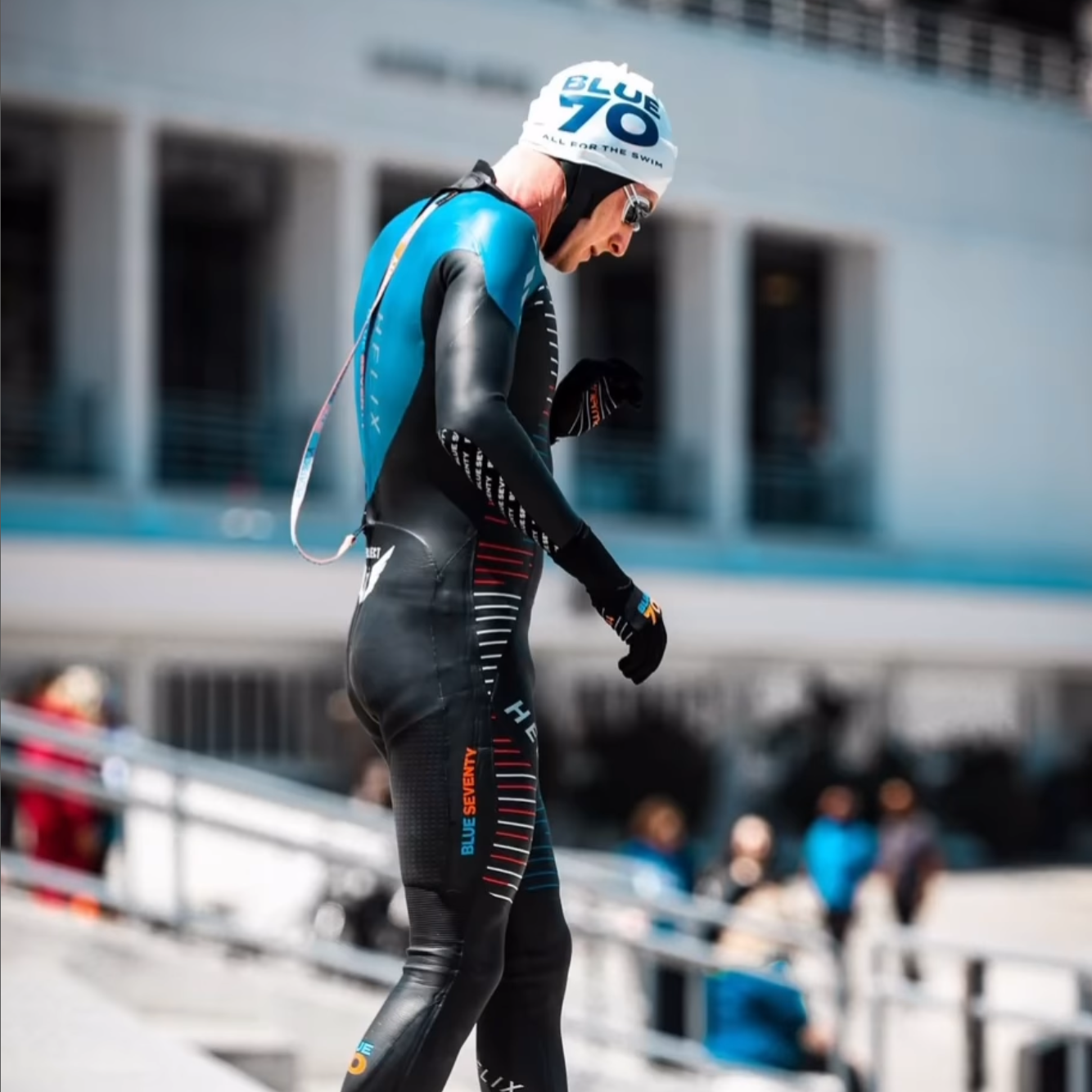
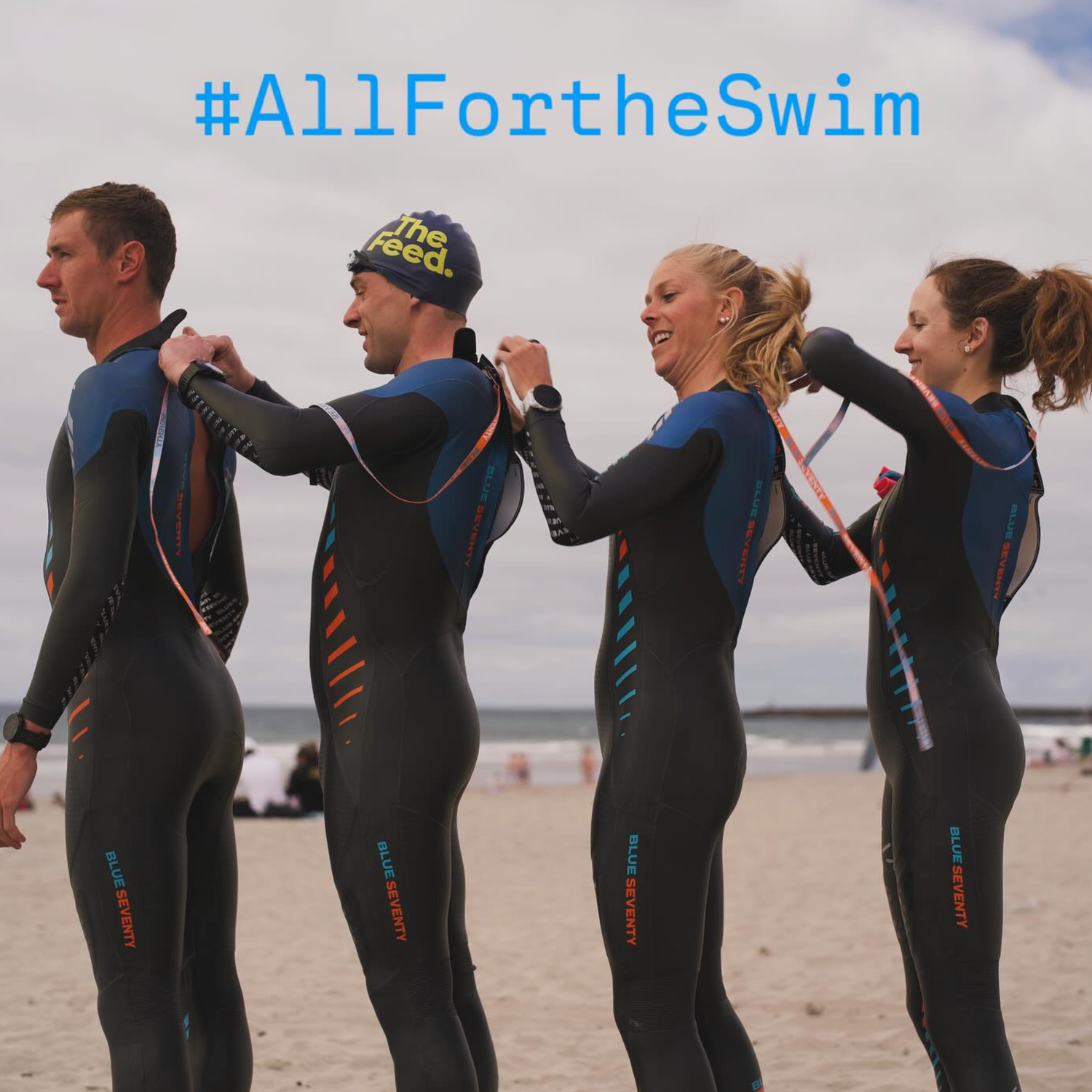
A wetsuit does this lifting passively. Higher-buoyancy panels through the hips and legs, like the LIFT panels Blue70 has built into the Helix since 2018, correct the leg-sink most swimmers fight without a suit. That correction is the mechanism. Speed is what happens after, and only if the swimmer knows what to do with the new position.
This is also why beginners and weaker kickers tend to feel the biggest jump the first time they swim in a wetsuit. Their unassisted position is usually the furthest from ideal, so the suit is correcting the largest problem in the water. A swimmer who already holds a high, flat position gets a smaller gain, not because the suit works less, but because there's less to fix.
The Part Most Training Plans Skip
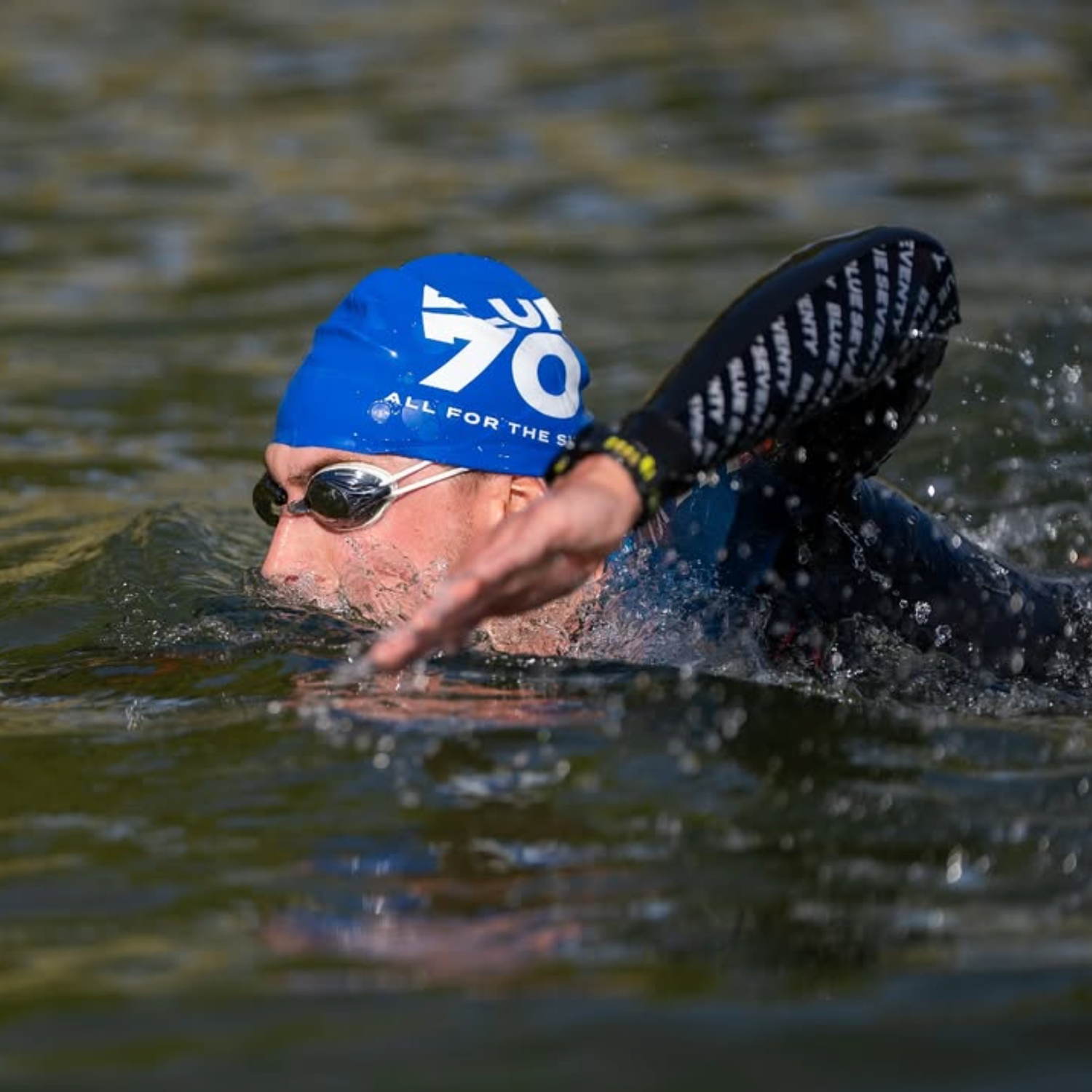
Buoyancy shows up the moment you zip the suit. Knowing what to do with it doesn't. A wetsuit lifts you passively. It doesn't teach your stroke to hold that lift, rotate through it, or stop your head from fighting it.
Swimmers who show up on race day in a wetsuit they've barely trained in often float higher than they're used to, and then work against it instead of with it. The head rides too high. The kick, built for a lower body position, overworks against buoyancy instead of alongside it. Rotation shortens because the torso feels locked in place.
None of that is a suit problem. It's a rehearsal problem, and the fix is simple: swim in the wetsuit before race day, specifically to feel the new position rather than just to check the fit.
A four-week lead-in works for most triathletes and open-water swimmers heading into a big race:
- Weeks 1 and 2: One open-water session a week, wetsuit on, no pace goals. The only job is noticing where the hips sit and letting the head settle into a neutral line instead of lifting to sight every few strokes.
- Week 3: Add rotation drills. Full-sleeve wetsuits reduce shoulder mobility more than sleeveless designs do, so this is where a swimmer finds out whether the catch and recovery still move through their normal range, or whether the suit is fighting the stroke.
- Week 4: Race-pace intervals in open water, including at least one set with sighting under fatigue, so the first time you sight hard in a wetsuit isn't during the actual race.
Fit belongs in this conversation, and not just as a comfort issue. A suit that's snug on land and settles comfortably once water fills the shoulder is doing its job. One that restricts the catch or the finish of the pull will cost more in mechanics than it returns in buoyancy, no matter how good the neoprene is.
Why the Kick Should Change With the Suit
Raising the legs changes what the kick needs to do. Without a wetsuit, part of every kick fights gravity's pull on the lower body just to hold position. With a suit already doing that job, the same kicking effort becomes available for propulsion, or for triathletes, becomes effort you simply don't have to spend.
That second option matters more than it sounds. A kick working overtime to maintain leg position is a kick burning glycogen you'll want on the bike leg. Swimmers who train specifically in their wetsuit often shift toward a narrower, higher-cadence kick that supports rhythm and rotation rather than fighting to stay afloat, because the neoprene is already handling that job.
This is a training adjustment, not a gear change. Shorter, quicker kick sets done in the wetsuit, aimed at rhythm instead of raw force, help the legs unlearn a habit the suit has already made unnecessary.
Water Temperature Changes the Right Answer
Above roughly 70 to 72°F, a full wetsuit can start costing more than it gives back. Not because the buoyancy stops working, but because heat stress starts eating into stroke power before a swimmer consciously feels tired. Stroke rate and output both decline under heat stress well before fatigue registers.
That's part of the reasoning behind sleeveless wetsuits as their own category, rather than simply "less material." In warm water, the shoulder freedom of a sleeveless suit can matter more for holding stroke mechanics late in a swim than the extra buoyancy a full sleeve provides. Below about 56 to 58°F, the calculation flips, and a purpose-built thermal suit, like Blue70's Thermal Reaction with its Zirconium jersey lining, adds meaningful warmth a standard suit can't.
The fastest suit for a given swim isn't always the one with the most coverage. It's the one that lets your stroke stay unchanged for that water temperature, over that distance, for your body's own heat output.
Fit Is a Speed Variable, Not Just a Comfort One
The standard fit advice gets repeated so often it's easy to stop thinking about why it matters: snug on land, comfortable in the water. An oversized suit doesn't just feel sloppy. It lets water flush through with every stroke, and that water adds drag exactly where you're trying to move fastest. A suit that's too tight through the shoulders shortens the stroke's reach and forces earlier turnover to compensate, changing the entire timing of the pull.
Both problems look like "the wetsuit didn't work" from the outside. Neither one is actually about buoyancy. Both are about whether the suit lets your normal stroke happen unchanged. A proper fitting, checked against a size chart and tested in open water before race day, does more for your swim time than most equipment upgrades you'll make in a season.
Putting It Together
The sequence that gets swimmers the most from a wetsuit looks like this: choose the right suit for your training frequency and water temperature, fit it correctly, then spend real open-water time in it before race day, specifically to feel what the new position does to your rotation, your kick, and your sighting.
Buoyancy was never the finish line. It's the starting position for a stroke you still have to swim well.
Find your fit with Blue70's size charts, then take a Test Swim in open water. It won't affect your ability to exchange or return the suit within 30 days.