


Ask most triathletes what decides their swim leg and the answer comes fast: the wetsuit. Thickness, buoyancy, fit through the shoulders. All of that matters. But the swim leg also gets decided by smaller choices made weeks earlier, choices that rarely make it onto a checklist because they don't feel like gear decisions at all.
A goggle that fogs at minute eight. A buoyancy short bought and never used. A wetsuit fit that hasn't been checked since spring training started. A transition sequence that's never once been rehearsed wet. None of these show up in a product review. All of them show up on race morning.
Goggles matched to the light you'll actually race in
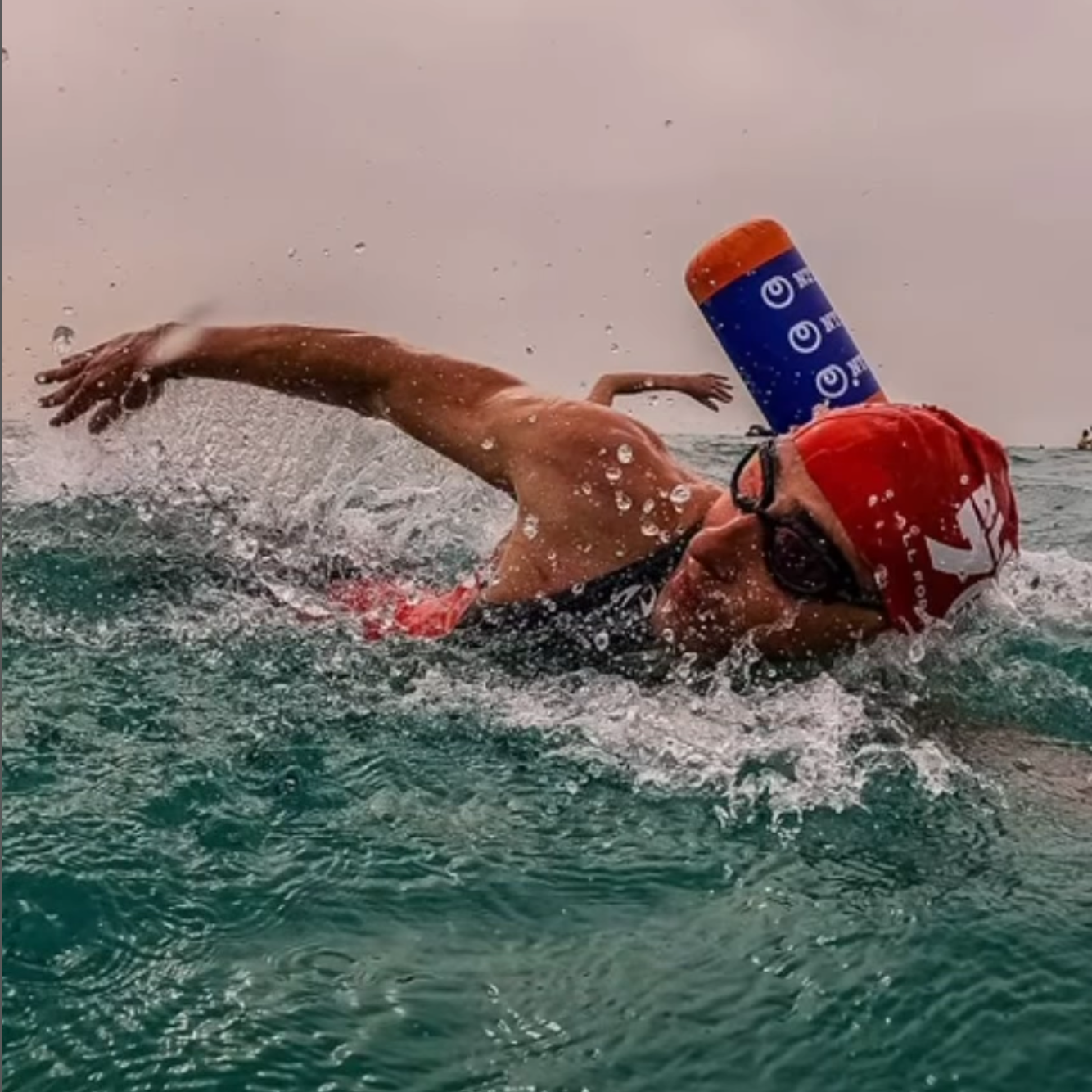
Ask ten triathletes what goggles they're racing in and most will say whatever's in the bag. That's a gamble, and open water light is exactly why. A sunrise start throws glare low across the water. A midday start bounces sun straight off the chop. An overcast morning flattens contrast until the buoy just disappears into gray. Three different races, three different visual problems. One tint rarely solves all three.
Blue70's Contour Goggle line offers multiple lens options for this reason. A dark or mirrored tint built for bright midday starts isn't the right call for a gray, overcast lake swim. The fix is simple, and almost nobody bothers with it: swim at least one open-water session in race-week light, wearing the exact goggles you plan to race in. Not the backup pair. Not last year's pair.
Fit needs the same test. A goggle that seals fine in a 78-degree pool can leak in cold, choppy open water once your face is cold and your head is tilting for every breath. Twenty minutes in open water tells you what a pool never will.
Care matters here too. Anti-fog coatings wear down with handling, sunscreen, and hot water rinsing. Treat that coating as something that fades over the goggle's life, not something permanent. Rinse in cool fresh water after every swim and let the lenses air dry out of direct sun.
Training with buoyancy shorts instead of racing in them
Buoyancy shorts get bought and almost never used the way they're meant to be used. Most race organizations restrict buoyancy aids on race day, so check your event's rules before assuming otherwise. The real value was never race morning. It's training.
Lifted hips change body position enough that a swimmer feels, immediately, what a better-aligned stroke is supposed to feel like, long before a full wetsuit ever comes into the picture. Blue70's LIFT Buoyancy Short uses NBR foam through the hip and glute area for exactly this purpose. Built into a training block, two or three sessions focused purely on catch and rotation, without fighting sinking hips, give a swimmer a physical reference point worth returning to.
That reference point matters once wetsuit season starts. A well-fitted wetsuit does a broader version of the same job: supporting body position so the swimmer isn't burning energy just staying level.
Rechecking wetsuit fit before you assume it still fits
A wetsuit that fit perfectly in March can feel different by September. Training load changes body composition over a season. Repeated use, folding, and sun exposure change how neoprene behaves too. The fit logic is simple: a suit should feel snug on dry land and more comfortable once you're in the water, because buoyancy and water pressure change how the material sits against your body.
A suit that feels loose on land will gap in the water. Gapping means water flushing in and out with every stroke. Over a long swim, that flushing adds drag, and drag adds fatigue you didn't budget for.
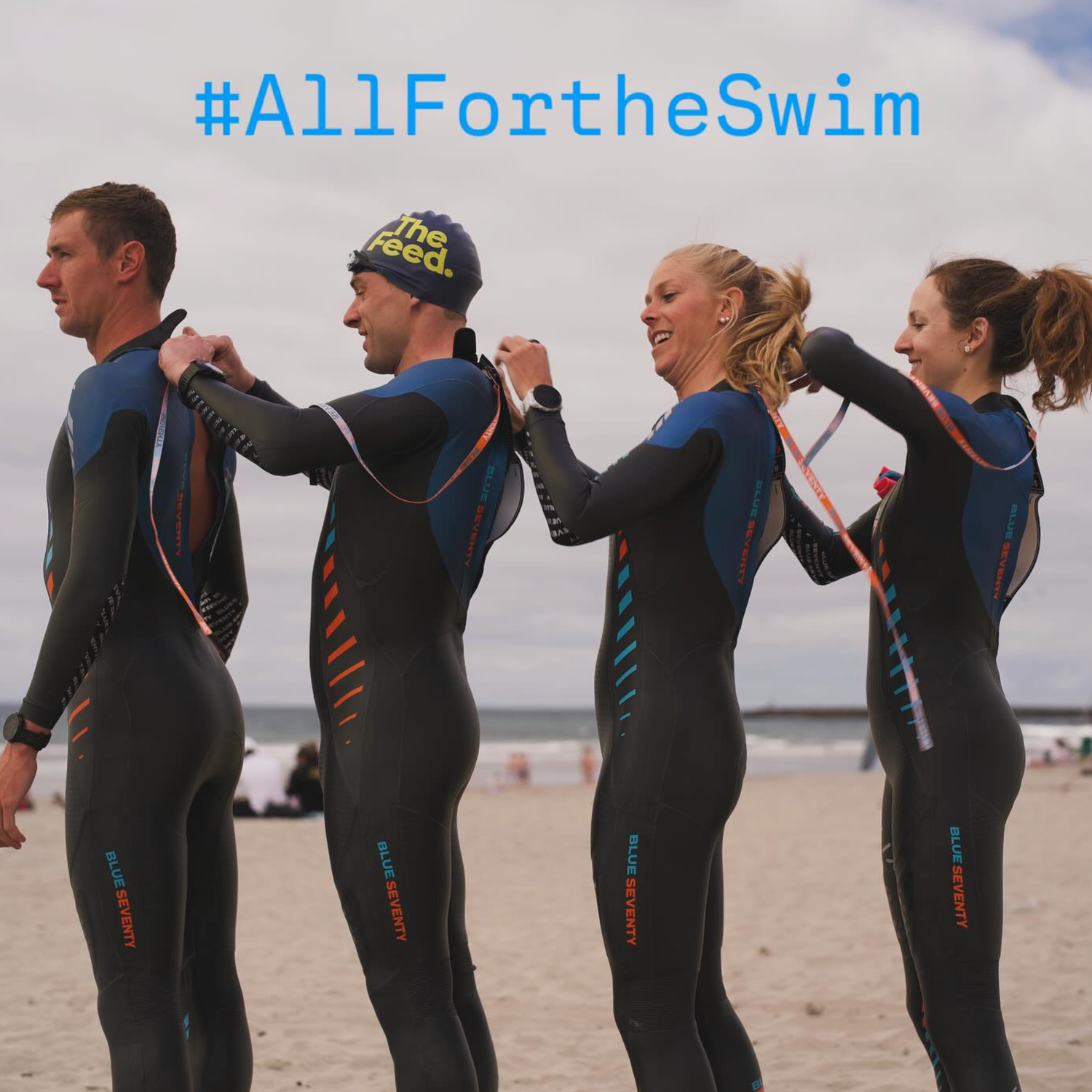
Shoulders deserve the closest attention of all. An improperly donned suit through the shoulders is one of the most common causes of early fatigue in a swim leg, because every stroke fights the material instead of moving with it. Two weeks before race day, not the morning of, run a full dry-land check:
- Work the suit up methodically from the ankles
- Clear air pockets as you go, not after
- Seat the shoulders last, once everything below is settled
Two weeks gives you time to size up, size down, or exchange the suit if something's off. The morning of the race gives you nothing.
Rehearsing the wetsuit exit, not just the swim
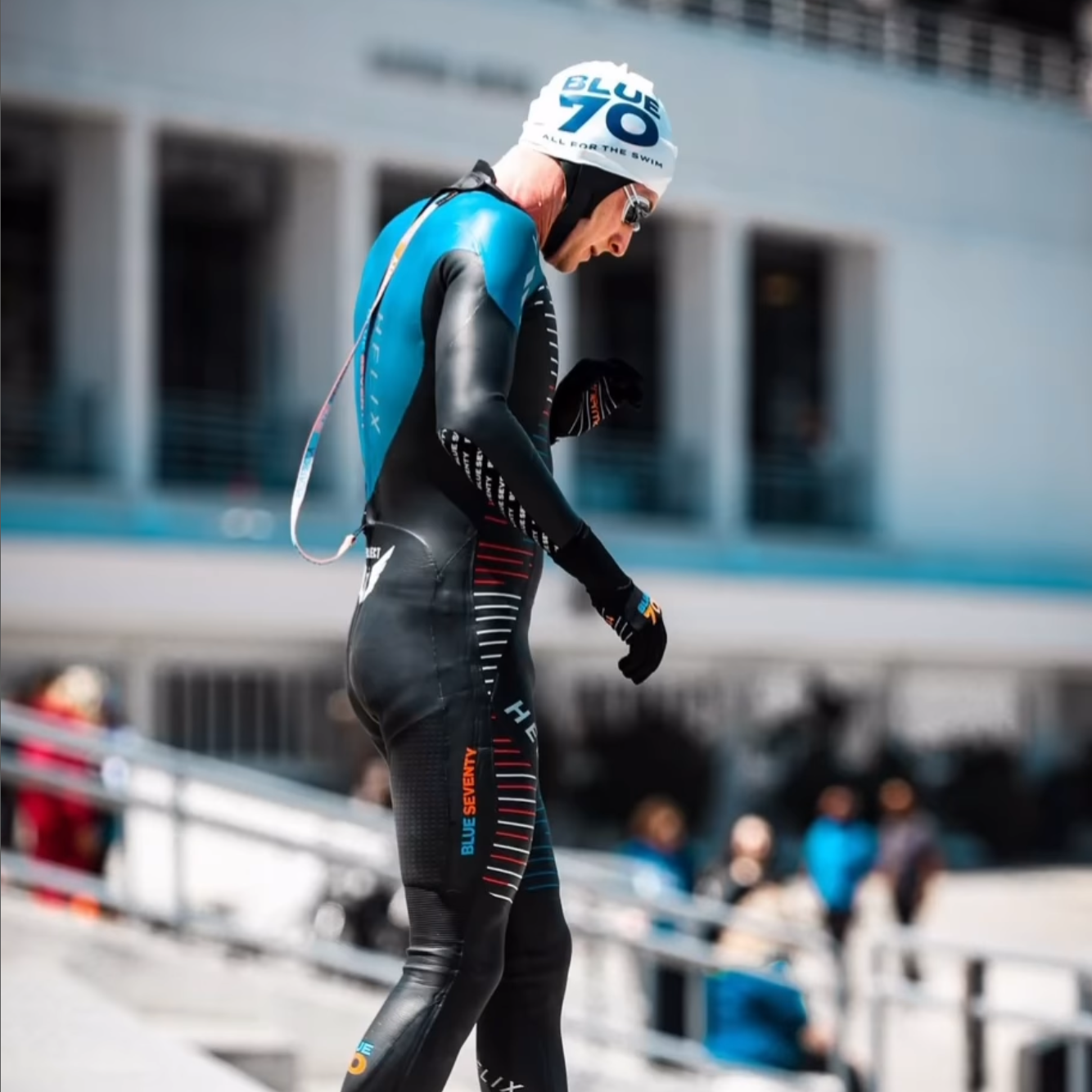
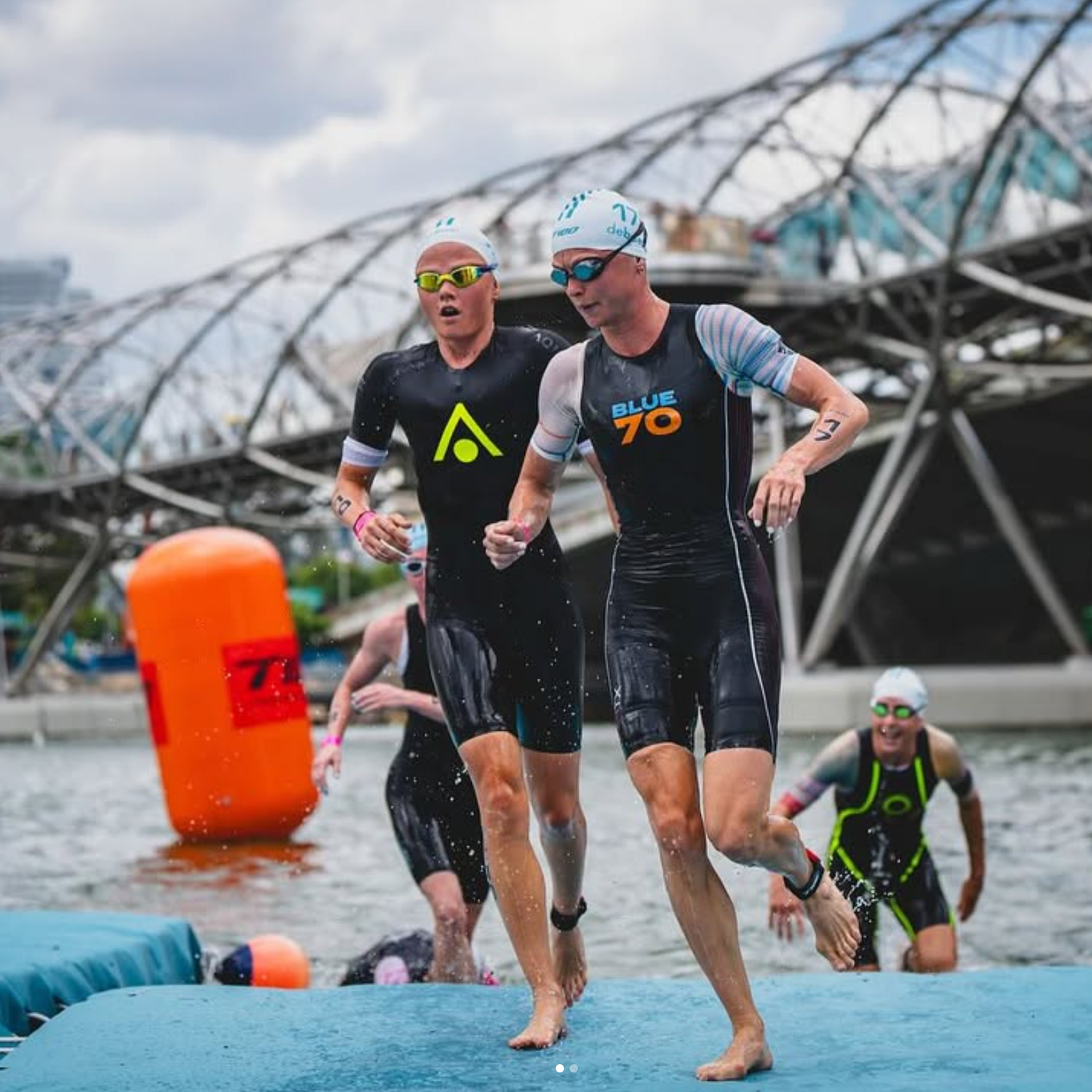
Wetsuit removal speed is trainable. Most triathletes never actually practice it. The mechanics aren't complicated:
- Unzip while still moving toward transition
- Get both arms free before reaching for the ankles
- Roll the suit down instead of yanking it
Five or six practice runs in the weeks before a race, ideally right after a training swim when the neoprene is wet and behaves the way it will on race day, remove seconds of fumbling. Across an age-group field, those seconds add up.
The physical setup in transition carries its own weight. Position the suit so the ankle cuffs face the direction you'll be moving. Set goggles and cap so they come off in one motion. Clear anything between you and the bike that forces a second thought. None of this touches fitness. All of it touches how calm you feel standing at the start line.
Protecting the suit between sessions
Neoprene damage follows a predictable pattern: fingernail punctures during donning, heel tears from stepping on the suit while pulling a foot through, zipper damage from forcing a zip that's caught on the lining. None of it counts as a manufacturing defect, which means none of it is covered under warranty.
Trim and file fingernails before every session. Use plastic bags over bare feet when pulling the suit past the ankles. Work a stuck zipper free gently instead of forcing it through.
Rinsing matters just as much as donning technique. Chlorine and salt water both degrade neoprene over time. Rinse in fresh, cool water after every swim, then hang the suit inside-out away from direct sunlight. A suit rinsed and dried properly after each session holds its flexibility and its seal noticeably longer than one left balled up in a wet gear bag until the next swim.
Building the full kit, not just the suit
None of this replaces the core decision: choosing the right wetsuit for how often you train and the water temperature you'll actually swim in, whether that's a suit built for frequent training like the Reaction, a shorter-swim suit like the Fusion, or a cold-water suit like the Thermal Reaction. But the wetsuit is one part of a larger kit.
Goggles matched to actual race-day light. A buoyancy short used as a training tool instead of a forgotten purchase. A fit check done with enough lead time to fix problems. A transition sequence rehearsed wet, not imagined dry. Consistent rinsing and drying between sessions.
Swimmers who look calm at the start line usually aren't wearing the newest gear on the rack. They're wearing gear they've already tested, adjusted, and rehearsed with, long before the horn ever sounds.
If your own fit check raises questions, Blue70's fitting guide is a good place to start. And there's no downside to testing a suit in open water before committing. That's exactly what Take a Test Swim is built for.