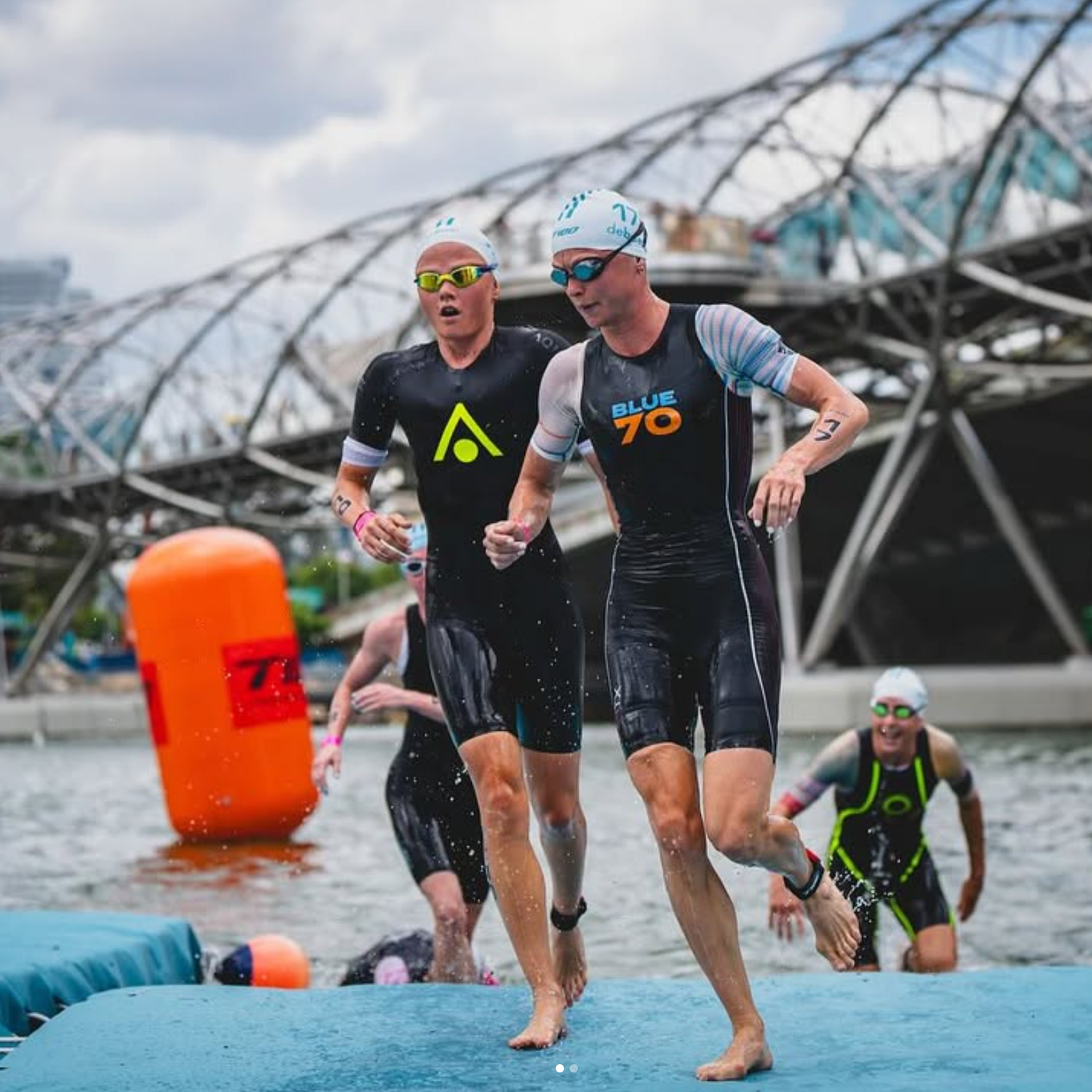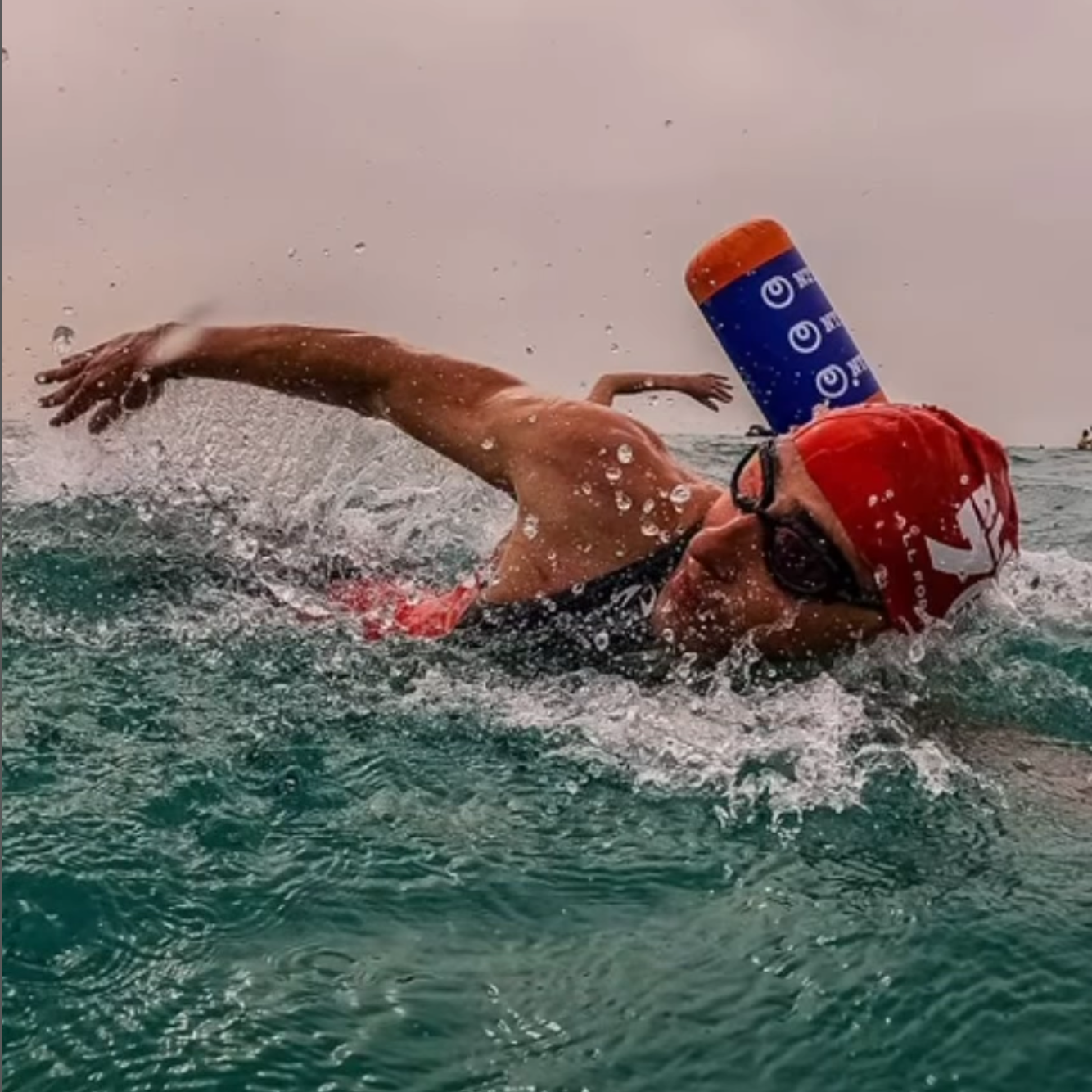



Ask most triathletes about wetsuit care and they'll tell you about rinsing after a swim, maybe drying it inside out, keeping it out of direct sun. Almost nobody mentions what happens to the suit after it's dry and back in the closet. That's the gap. How you fold and store a wetsuit between swims shapes its lifespan just as much as how you rinse it, and it's the part nobody talks about.
Neoprene has memory. Fold it the same way, in the same place, often enough, and it stops springing back. This isn't a minor cosmetic issue. It's a foam structure problem, and it plays out in the closet, not the water.
Neoprene Is a Foam, Not a Fabric
Yamamoto neoprene, the material used in Blue70 wetsuits at 38, 39, and 40-cell grades, is a closed-cell foam. Each cell is a sealed pocket of gas suspended inside a rubber compound. That structure is what gives a wetsuit its stretch and its buoyancy. Higher cell counts mean smaller, more numerous cells and more flexibility, which is why 40-cell neoprene in a suit's shoulders feels nothing like the denser neoprene built for durability in a training suit.
Here's where storage comes in. Those cells respond to sustained pressure by staying compressed. Fold a suit along the same line every week for a season, and you're crushing the same row of cells over and over. Eventually the foam stops recovering along that line. You get a visible crease, usually across the chest, behind the knee, or over the shoulder blade, right where suits get folded for shipping or travel. Once that cell structure has collapsed, no amount of conditioning brings the loft back. The suit still swims fine. It's just lost buoyancy and flex exactly where you need both.
Packing for a Race and Storing for the Off-Season Are Different Jobs
People treat these as the same task. They aren't.
Packing for transport means getting the suit into a bag without stressing the panels for the few hours before a race. Rolling wins here. Lay the suit flat, tuck the arms in, and roll from ankle to neck the way you'd roll a sleeping bag. A roll bends the neoprene across a curve instead of concentrating pressure at one crease, and it works trapped air out of the surface texture without forcing a fold line. If your transition bag also holds goggles, a cap, and a race belt, roll the wetsuit last so it isn't compressed under harder gear for hours.
Long-term storage is a slower problem. The goal is preventing memory creases from forming at all over weeks or months. The best method isn't a fold or even a tight roll. It's hanging. A wide, padded hanger, not a wire one that will crease the shoulders, lets the suit hang under its own weight with no fold line anywhere. If closet space won't allow hanging, a loose roll stored on its side is the next-best option, since no single line carries repeated weight. What you want to avoid entirely is folding the suit into the same halves or thirds and stacking it under other gear for weeks. That's exactly how a permanent crease gets trained into the neoprene.
Three Storage Habits, Ranked by Risk
- Hanging on a padded hanger: best for home storage between sessions. Lowest risk of crease damage.
- Loose rolling: ideal for race travel and transition bags. Low risk, since the bend is distributed.
- Flat folding on the same lines: fine for a single overnight trip, but never for the off-season. Highest risk of permanent crease damage.
If you take one rule from this article, make it this: don't leave a wetsuit folded flat for more than a day or two. A day at a race expo won't hurt it. An entire off-season folded in a drawer is how a suit develops a crack across the chest panel before its second summer.
Zippers and Thin Panels Fail on Their Own Timeline
Blue70's one-year warranty covers manufacturing defects, but it doesn't cover heel tears, fingernail punctures, or zipper damage caused by force rather than normal wear. Folding technique has a direct effect on both of those failure points.
Roll or fold a suit with the zipper pull pressed against another fold of neoprene, and over a season of packing you can wear the metal teeth into the panel material sitting next to it. The fix takes ten seconds: zip the suit fully before rolling, and lay the zipper track along the length of the roll instead of across it, so the hardware never presses into the neoprene beneath it.
The permeable catch panel across the forearm and the LIFT buoyancy panels used in the Helix are built thinner than the rest of the suit on purpose. Thinner neoprene there preserves feel for the water and supports body position in the swim. That same thinness is exactly why those zones need protecting from repeated fold pressure. When you roll a suit, keep the forearm and chest panels on the outside of the curve, not pressed on the inside, where compression concentrates.
A Five-Minute Check Before You Put a Suit Away
Before storing a wetsuit for the off-season, lay it flat and run a hand across the chest, the back, and behind the knees. Look for any crease that doesn't relax back to flat within a few seconds. That's a preview of where a crack will eventually open. Find one, and it's time to switch that suit from folding to hanging or loose rolling for the rest of its life. Note where the crease sits, too, so you don't rebuild it in the same spot next time you pack for a race.
A Crease Is a Speed Problem, Not Just a Cosmetic One
A failing fold line isn't only about appearance. Buoyancy equals speed: a wetsuit lifts the hips and improves body position, and that lift comes from the loft built into the neoprene's cell structure. A collapsed line across the lower back, a common result of flat-folded storage, means reduced lift exactly where a suit is designed to correct position in the water. You paid for the flexibility and buoyancy that Yamamoto neoprene provides. Bad storage habits are one of the quiet ways to lose that performance without ever tearing the suit or skipping a rinse.
Quick Reference for Your Kit Bag
- Race morning: roll ankle-to-neck, zipper tucked flat along the roll, pack it last.
- Home storage: hang on a padded hanger, or loose roll if hanging isn't possible.
- Never leave a suit flat-folded for more than a day or two.
- Each off-season, check the chest, back, and knee creases before the suit goes into storage.
Fit, rinsing, and proper drying get most of the attention in wetsuit care advice. Folding rarely does, probably because it seems too small to matter. But it's one of the few habits fully within your control that decides whether your suit still performs at full buoyancy next season, or starts showing wear lines before you've swum in it more than a handful of times. If you're not sure whether your current suit already has fold damage, our fitting and wear guide walks through what to check before your next race.