


Ask a room full of triathletes how tight a wetsuit should be, and you'll get a dozen different answers - most landing somewhere around "tight, but not too tight." Fair enough. But that answer treats fit like a single feeling you're supposed to recognize on the spot, the way you'd know a shoe pinches. Wetsuit fit doesn't work like that at all.
A properly fitted wetsuit actually feels different at four separate moments: on the hanger, standing on dry land, the second you hit the water, and once you're a few hundred meters into the swim. It's supposed to change. Understanding that sequence is the difference between trusting your suit on race morning and spending the first buoy line tugging at your shoulders wondering if you sized it wrong.
Forget "Tight." Think in Stages Instead.
Neoprene isn't fabric - it's a closed-cell foam, and that changes everything about how it behaves under tension. Yamamoto neoprene, the material used across Blue70 wetsuits in 38, 39, and 40 cell grades, is prized because a higher cell count traps more nitrogen gas per unit of material. More trapped gas, more flexibility, without losing structural support. The upshot: the suit's resistance to your body isn't fixed. It shifts depending on stretch direction, water temperature, and how "worked in" the neoprene already is.
That's exactly why a suit that feels aggressively tight in your bedroom can feel totally reasonable once you're horizontal in open water with your arms stretched overhead. The suit isn't loosening up on you. Your body is simply moving through the ranges of motion the neoprene was built for, and compression that felt restrictive standing still stops mattering the moment you're not standing still anymore.
So here's the mental shift worth making before you buy or judge a wetsuit: stop evaluating fit standing upright. A wetsuit isn't something you wear. It's something you swim in. Judge it that way.
The Four Phases of Fit - And What Each One Should Feel Like
1. On the hanger, it should look small
If a wetsuit looks like it'll fit you comfortably before you've even stepped into it, it's too big. This is where a lot of first-time buyers go wrong - sizing a wetsuit the way they'd size a jacket. Neoprene needs to go on under real tension to seat correctly against your body. A suit that slides on with zero resistance isn't going to compress that thin layer of water against your skin the way it's designed to, and that compression matters for both warmth and body position in the water.
2. On dry land, it should feel snug - almost uncomfortably so
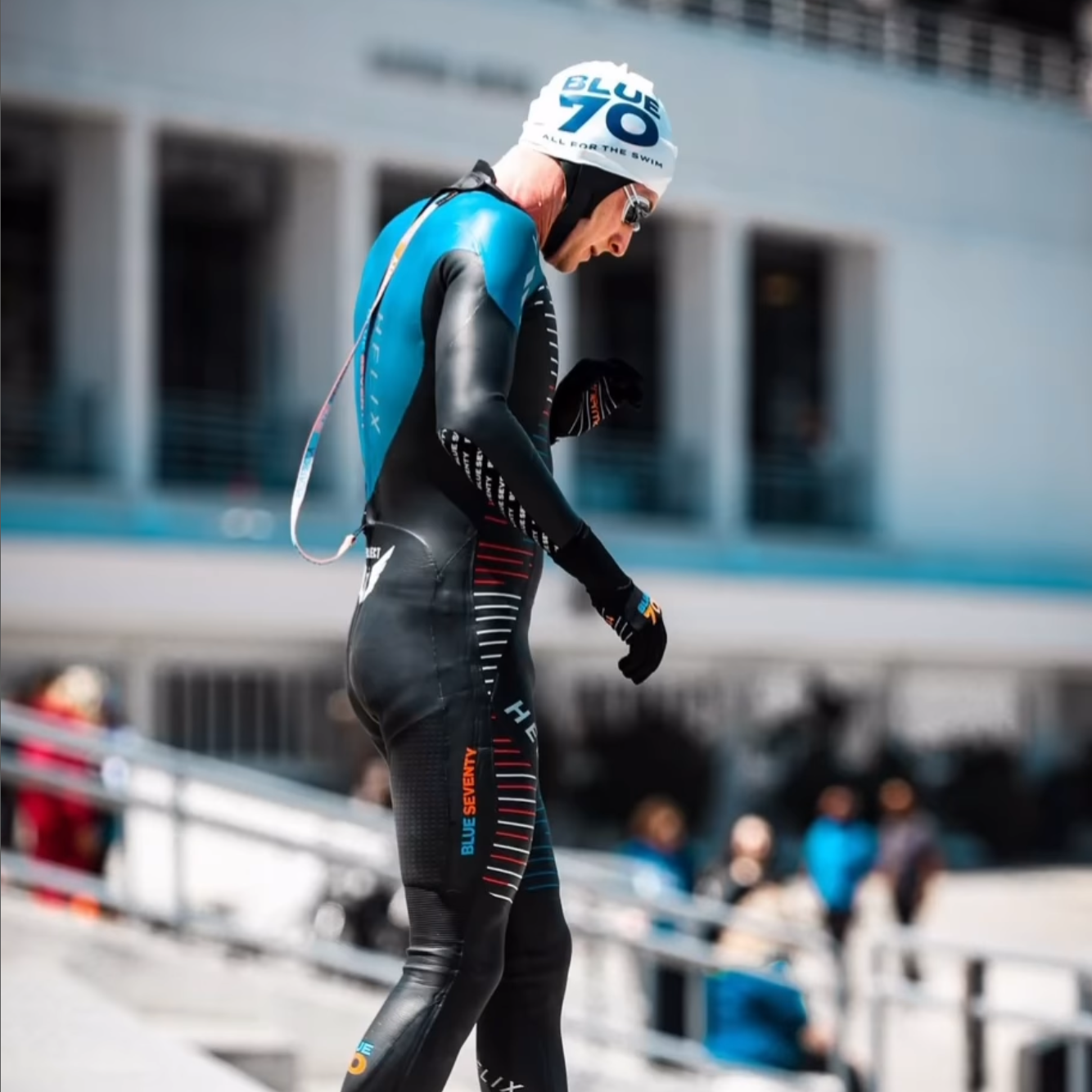
This is the stage that makes people nervous, so let's normalize it clearly: a well-fitted wetsuit should feel tight through the torso and close around the shoulders while you're standing on the beach or pool deck. It should feel like something you wouldn't want to wear for the next hour. That's not a red flag - that's correct. Dry land isn't the environment the suit was built for. If it feels genuinely comfortable just standing there, it's almost certainly going to feel loose and sloppy once you're moving through water, letting water flush in and out with every stroke and undercutting both the insulation and the sleek profile you paid for.
3. At water entry, the tightness should ease
Once you're in the water, buoyancy takes weight off your joints, and the suit redistributes across a body that's suddenly horizontal instead of vertical. If you feel a jolt of constriction at the neck or chest the instant you hit the water, don't panic - that's often just a normal transitional sensation, not proof you bought the wrong size. Give it a few strokes before you decide anything.
4. Mid-swim, you shouldn't be thinking about the suit at all
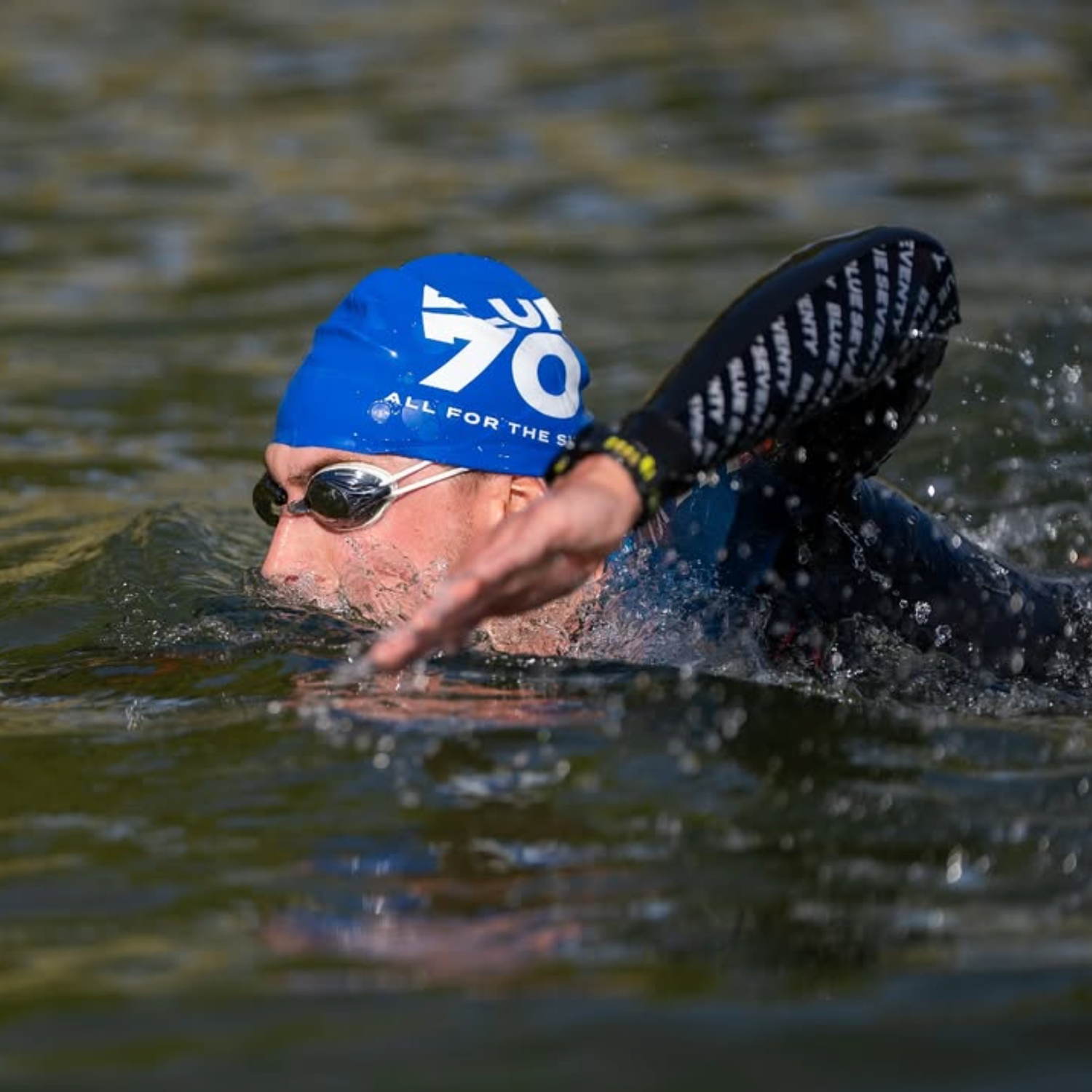
This is the real test, and it's the one a land-based try-on can never fully replicate. If you're 300 meters in and still very aware of your wetsuit - chafing at the neck, a boxed-in feeling through the shoulders, a general sense of fighting the material with every stroke - something in the fit chain broke down somewhere, even if the size tag said exactly what you needed.
The Two Mistakes That Actually Cause Most Fit Problems
In our experience working with swimmers at every level, the most common fit complaints usually aren't about size at all. They come down to two things: how the suit was put on and shoulder freedom.
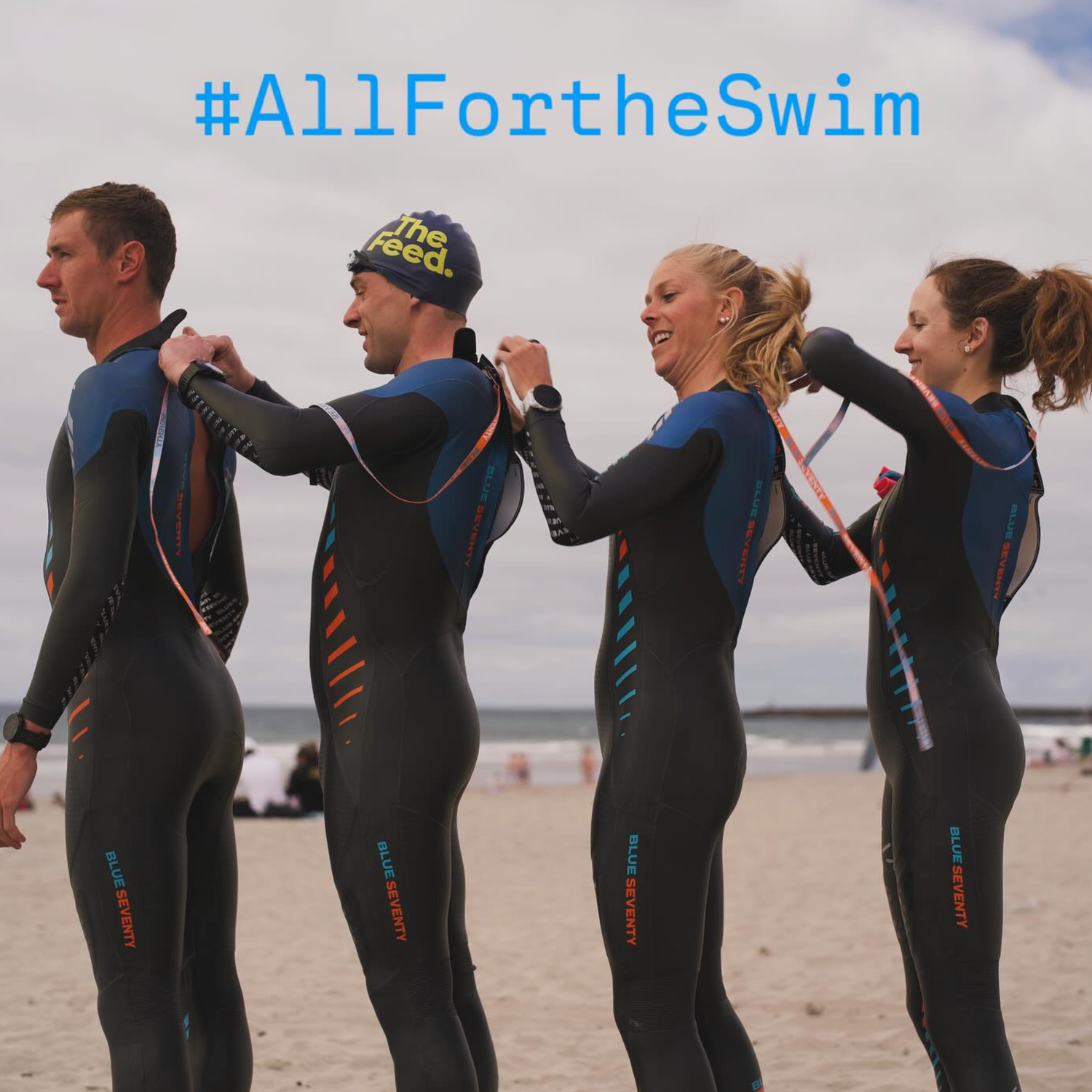
Donning technique matters just as much as the number on the label. A correctly sized wetsuit put on carelessly will fit poorly, full stop. Neoprene bunched up at the underarm, a collar left twisted, extra material still gathered around the shins - all of that creates pressure points and restriction that have nothing to do with sizing. Take your time working the suit up your body, smoothing as you go, and make sure the shoulders are properly seated before you zip up. Rushing this last step is probably the single most common reason a well-fitted suit ends up feeling like a poorly fitted one.
Shoulder mobility, more than overall snugness, is what actually predicts how you'll feel mid-swim. A suit can be perfectly snug through the torso and still wear you out if the shoulders and upper arms restrict a full catch and recovery. It's worth separating this from the general tight-versus-loose debate, because it's a distinct problem: swimmers who feel completely fine standing on the beach but feel gassed by the second buoy are almost always describing a shoulder issue, not a torso sizing issue.
It's also part of why swimmers who train frequently often gravitate toward a suit like the Reaction rather than the thinnest neoprene available everywhere on the body. Durability through high-wear zones like the shoulders holds its flexibility across more sessions - which matters more over a full training week than it does for a single race.
Why the Cut Matters Just as Much as the Size
A generic sizing chart built around height and weight gets you into the right neighborhood, but torso length, shoulder width, and hip-to-waist ratio vary enough between two swimmers of identical height and weight that the "correct" size on paper can fit two completely different bodies in two completely different ways.
That's a big part of why Femme Fit sizing exists as its own pattern rather than a scaled-down version of a men's cut. Differences in bust, torso length, wrist and ankle taper, and hip-to-waist ratio change where a suit needs room and where it needs compression - not just how much material gets used overall.
The practical takeaway: don't just check your size against a chart and call it done. Check whether the actual cut matches your proportions, not just your stats.
Why Testing It in the Water Isn't Optional
Since so much of correct fit only reveals itself in phases three and four - the parts that happen in the water - a land-only fitting really only tells half the story. That's exactly why the Test Swim policy exists: you can swim in a Blue70 wetsuit and still return or exchange it, as long as it comes back clean, dry, with tags and accessories intact.
It's not a formality. It's an honest acknowledgment that fit assessment on a fitting room floor has real limits. If you're torn between two sizes, or debating a standard cut versus a women's-specific pattern, get it wet before you decide. A suit that feels borderline on land often sorts itself out clearly after a single lap.
A Fit Checklist Worth Running Before Race Day
Instead of relying on a single "tight or loose" gut check, walk through the full sequence:
- Hanger check: Does it look like it should be too small for you? Good - that's expected.
- Land check: Snug through the torso, close at the shoulders, mildly uncomfortable to just stand around in. Expected.
- Donning check: Did you smooth out bunching at the underarms, shins, and collar, or rush the last few inches of zip?
- Entry check: Give it thirty seconds of swimming before judging any constriction at the neck or chest.
- Stroke check: At 300+ meters, are you still thinking about the suit, or has it disappeared from your attention entirely?
- Shoulder check, specifically: Full extension on the recovery, full reach on the catch, no sense of the neoprene fighting you.
Buoyancy equals speed - but only if the suit lets your stroke mechanics stay unchanged. A wetsuit that fits well doesn't just feel right. It disappears from your awareness completely once you're actually swimming in it. That disappearing act, more than any single tightness sensation, is the real signal you're looking for.
Not sure where you land on sizing? Use the wetsuit sizing tool to get into the right range, then take advantage of the Test Swim guarantee to confirm it where fit actually counts - in the water.