


Here's how most swimmers decide whether a swim is too cold: they check the temperature, compare it to some number in their head, and go from there. It's not a bad instinct. But it skips over the one thing that actually determines how a cold swim feels - how acclimatized you are and how long you'll be in the water, not the reading on the buoy.
Picture two swimmers walking into 58°F water on the same morning, wearing identical wetsuits. One has been in open water three times a week since March, building tolerance session by session. The other hasn't touched anything but a heated pool since October. Same suit. Same lake. Two entirely different swims.
That gap is really the whole story. Thermal protection isn't a single purchase you make and forget about - it's a system, and the wetsuit is just one piece of it, even though it's the piece that gets all the attention.
Cold Isn't a Fixed Number - It Moves
Water temperature guidance gets treated like a hard rule, but your body's actual response to cold shifts constantly based on things that have nothing to do with the thermometer.
- Your acclimatization history. Swimmers who train in open water all season consistently say temperatures that once felt brutal in April start feeling almost normal by August. Cold tolerance is trainable - and it fades again if you skip a few months.
- How you handle the first minute. That initial gasp and heart-rate spike on entry often rattles a swim more than the sustained cold that comes after. Experienced open water swimmers tend to settle faster, and that changes everything that follows.
- How long you're actually in there. A 20-minute training swim and a 70-minute race leg are not the same challenge, even in identical water. Heat loss adds up the longer you're exposed.
- What's waiting for you on exit. A strong swim can unravel fast if you climb out into cold wind with no plan. The transition matters as much as the swim.
None of this means water temperature charts and wetsuit-legal cutoffs don't matter - they absolutely do, and you should always pull those specific numbers from your race's current official rules, not a general guideline. But your gear decisions need to be paired with an honest look at your own conditioning this season, not just a chart taped to the wall.
What a Wetsuit Is Actually Doing Down There
It's worth being precise here, because it's easy for wetsuit marketing to overpromise. A wetsuit does not keep you dry. It is not a flotation device. What's actually happening is more specific - and more interesting, honestly: the suit lets in a thin layer of water against your skin, your body heats that layer, and the neoprene's job is to slow how fast it loses that heat to the cold water around you.
Thickness, cell structure, and interior lining all change how well that insulation holds up. But the basic job is always the same - manage heat loss, don't eliminate it.
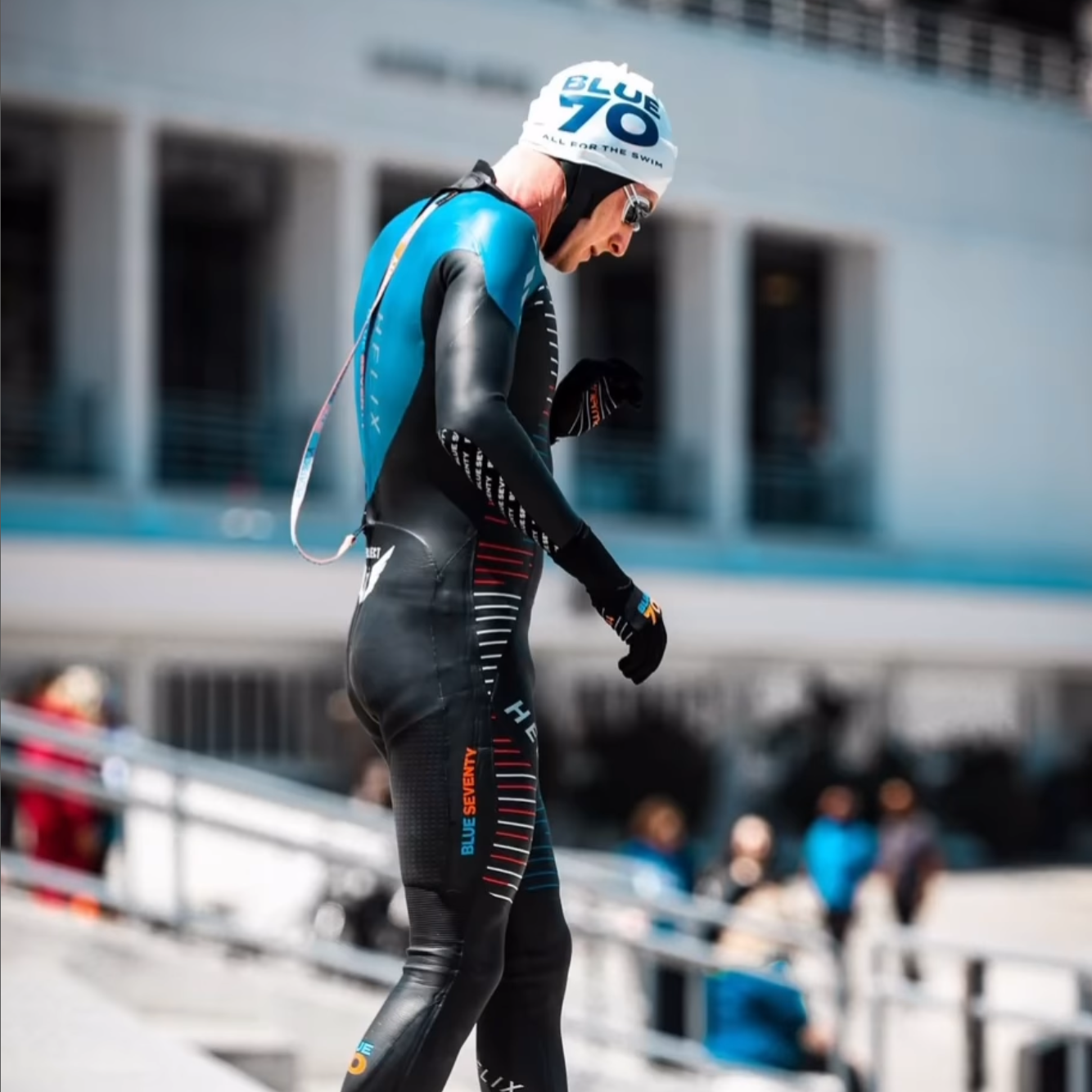
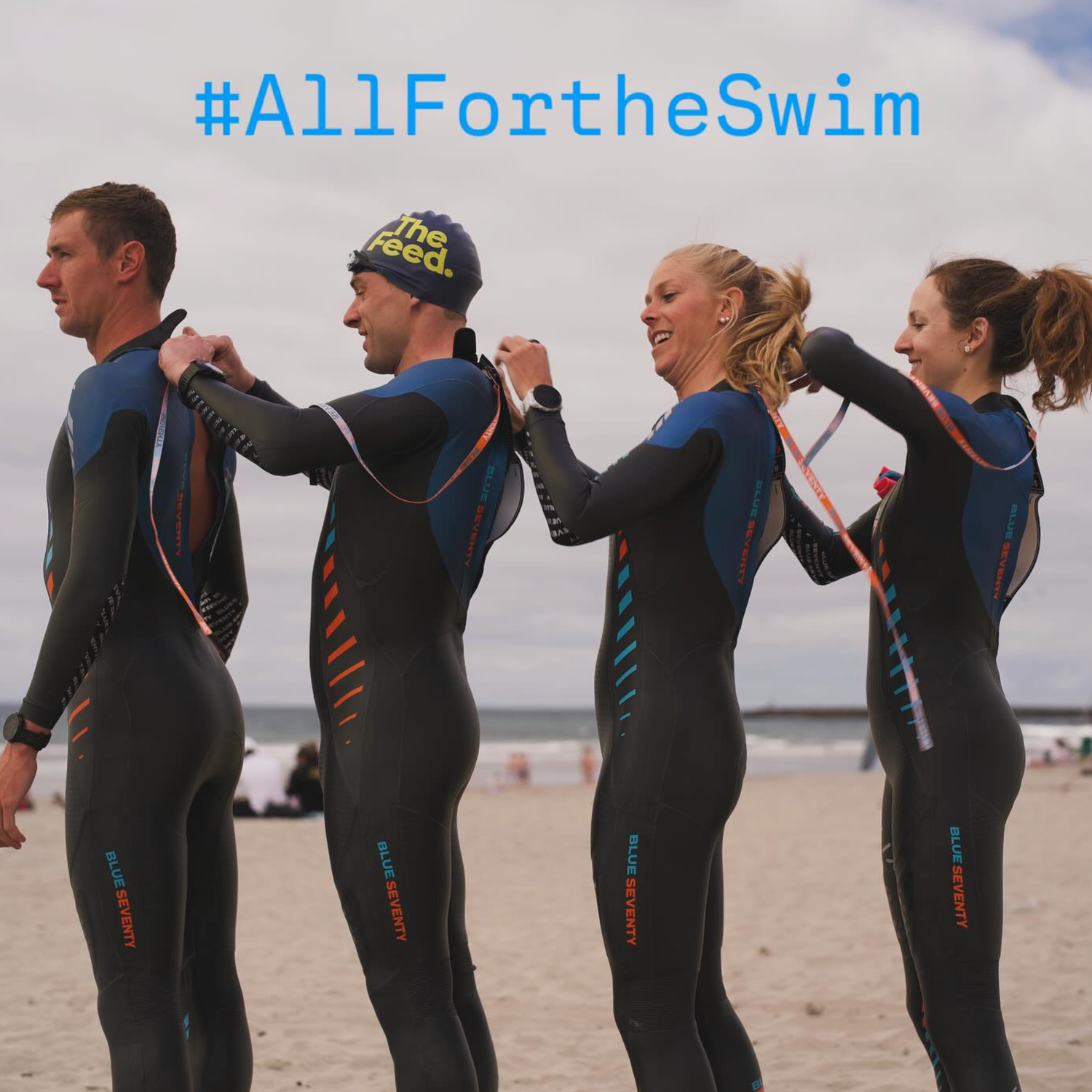
That's exactly why a purpose-built cold-water suit isn't just a thicker version of a race suit - it's a different tool entirely. Blue70's Thermal Reaction is a good example: it's fully lined with Zirconium jersey, a synthetic wool lining that adds real warmth compared to the smooth-skin interior most race suits use. Once you drop below roughly 56-58°F, that kind of construction starts to matter a lot more than raw neoprene thickness. One suit is built to resist heat loss over a long, cold swim. The other is built for flexibility and speed in more forgiving water. Neither is "better" - they're just solving different problems.
The Part Nobody Talks About: Your Hands
Open water coaching spends a lot of energy on core temperature and almost none on the parts of you that get cold first: hands, feet, head. And hand numbness isn't just unpleasant - it quietly wrecks your stroke.
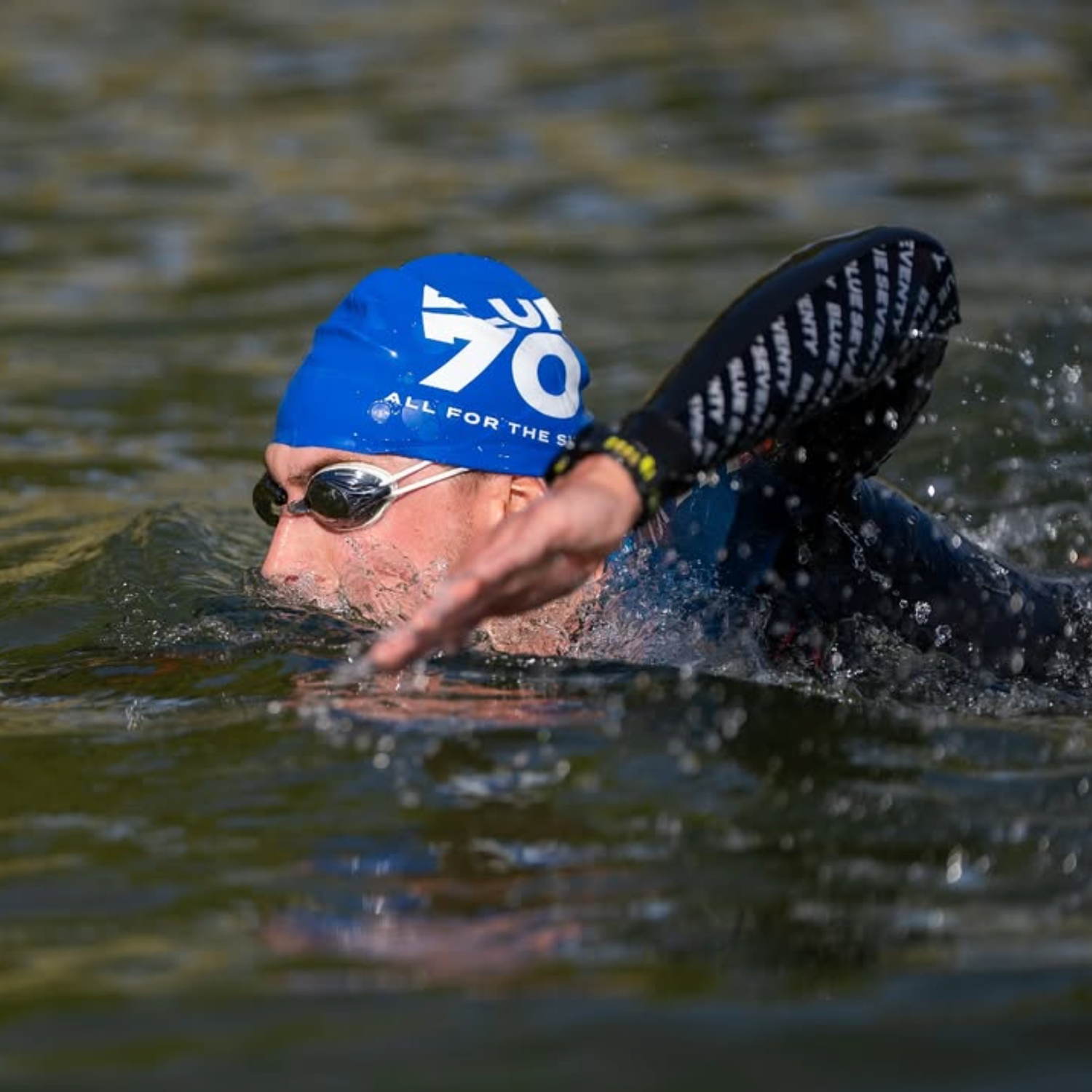
Here's why: your catch and pull rely on fine sensory feedback, the feel of water moving across your palm and forearm. Lose that feedback and you lose your read on whether you're actually holding water on each stroke. This is one of the more underrated effects of cold swimming - stroke rate tends to climb, not because a swimmer is trying harder, but because they can't feel a clean catch anymore and start compensating with shorter, faster, less effective strokes.
A few things that actually help:
- Practice in the cold, not just the warm. Don't save your first cold swim for race week. Rehearse sighting, stroke count, and pacing when the water's genuinely cold so you know what your stroke feels like once sensation fades.
- Treat accessories as part of the plan. Cap layering and neoprene extras, where race rules allow them, change how your extremities hold up over a long swim.
- Give yourself a cold-water block before the season really starts. The adjustment period should happen in training, not on race morning.
Fit Isn't Just Comfort - It's Thermal Performance
A wetsuit that's loose at the neck, wrists, or ankles isn't just less comfortable. It's pumping warm water out and pulling cold water in with every stroke and kick. This is probably the most common reason a swimmer blames their suit for feeling "not warm enough," when the real issue is fit.
There's a fitting principle worth repeating, because it catches a lot of first-time buyers off guard: a wetsuit should feel snug - even a little restrictive - standing on dry land. Once you're in the water, the neoprene compresses and starts working with your body's buoyancy the way it's supposed to, and that snugness turns into something functional rather than uncomfortable. A suit that feels easy and relaxed in your living room is almost certainly too loose once you're actually swimming in it. In warm water, that costs you a bit of drag. In cold water, it costs you heat - and you'll feel it by the second half of the swim, exactly when you can least afford it.
Build a Cold-Water Season, Not Just a Cold-Water Swim
If you're planning to stretch your open water season into the shoulder months, or you know your race might hand you cold water on the day, treat this like a training progression - not a last-minute purchase.
- Start earlier, and start short. Repeated brief sessions in cool water build real tolerance far better than one long swim after months away from open water.
- Keep a dedicated cold-water suit for training. If your race suit is thinner and built for speed, a heavier thermal suit protects both your comfort in training and the delicate neoprene of your race suit from unnecessary wear.
- Plan the exit, not just the swim. Cold stress tends to hit hardest after you're out of the water, when wet skin meets wind. Have warm, dry layers staged and know your plan before you get in.
- Never build cold tolerance alone. Swim with a partner or safety cover any time you're pushing into colder water than you're used to. Tolerance-building is not the same as eliminating risk - know the signs of real cold stress in yourself and whoever you're swimming with, and get out and warm up well before things get uncomfortable.
The Bottom Line
Picking a wetsuit for cold open water isn't really about matching a product to a number on a chart. It's the combination of the suit's construction, how precisely it fits, how acclimatized you genuinely are right now, and how long you'll be out there. A well-built cold-water suit - something like Blue70's Thermal Reaction, properly fitted and paired with real cold-water training - will do more for your swim than grabbing the thickest suit you can find the week of your race.
If you're heading into colder water this season, start with fit. Take a Test Swim in the suit you're considering - swimming in it doesn't affect your ability to return or exchange it - and pay attention to more than just warmth. Notice how the suit performs once your hands and feet start to feel the water. That's usually where cold-water wetsuit decisions are actually won or lost.