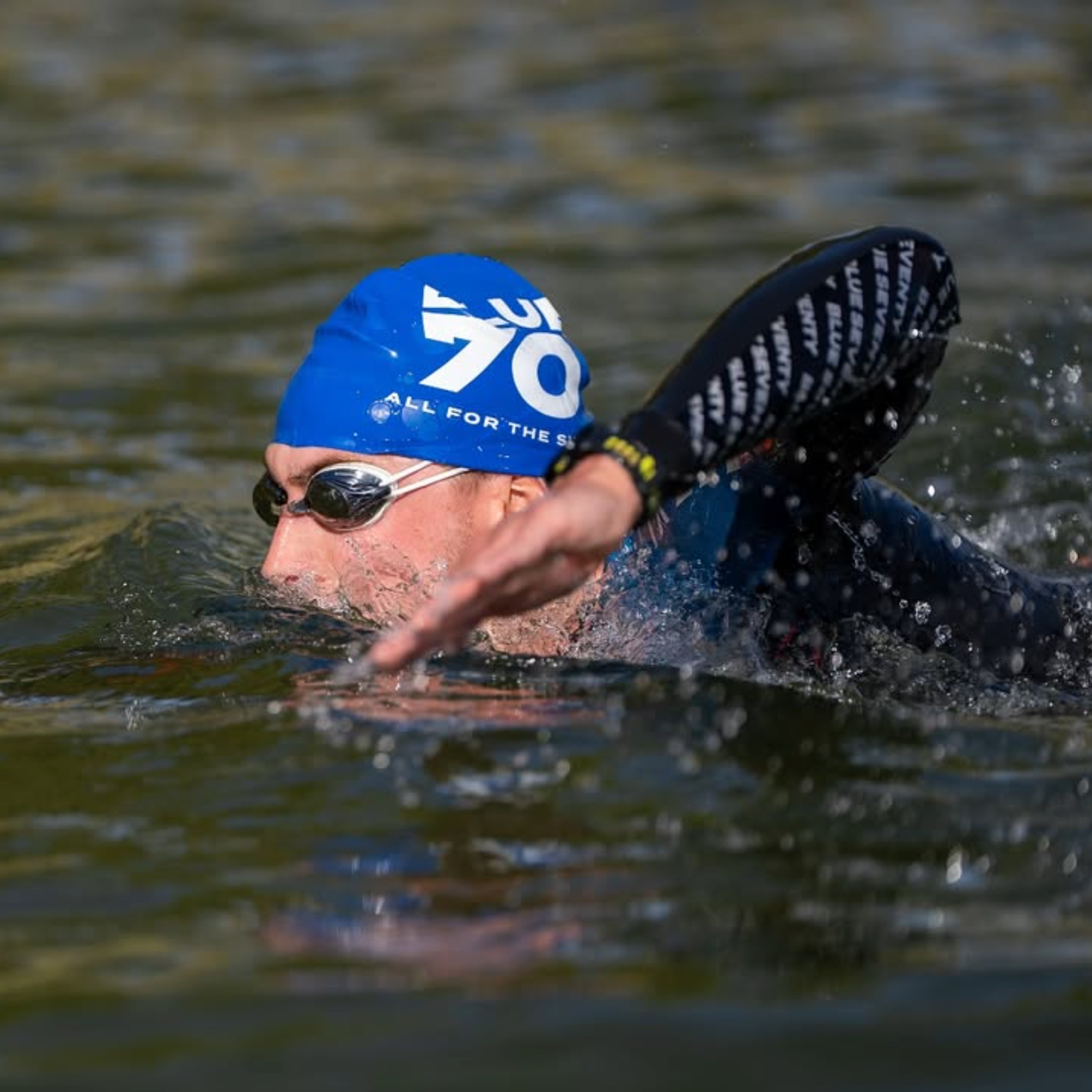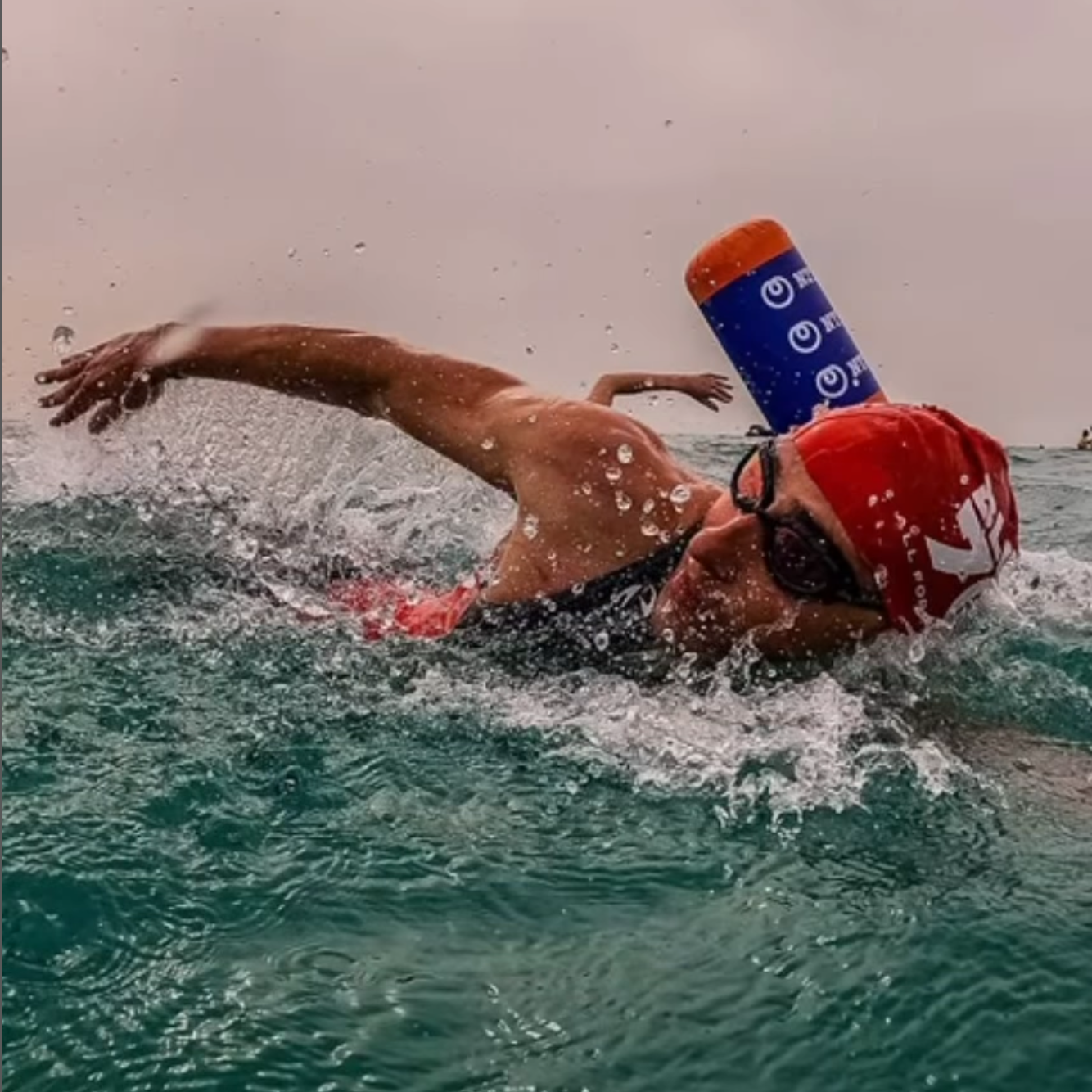



Snorkeling looks like a lazy afternoon activity. Face in the water, fins kicking, breathing through a tube while a reef drifts by underneath. But the position your body needs to hold to snorkel well is nearly identical to the one a competitive swimmer spends years training into: flat, face down, hips riding near the surface instead of dragging toward the bottom. That overlap gets ignored by most of the wetsuit industry, and it's worth fixing before your next trip.
Dive wetsuits solve a different problem than the one a snorkeler actually has. They're built for a body that spends long stretches upright, often carrying 30 pounds of tank and regulator gear. Snorkeling involves none of that. It's horizontal, it's at the surface, and it's powered by the same kick and body line a distance swimmer uses in open water. A suit designed for standing and sinking isn't solving the same problem as a suit designed to keep you flat and moving.
Shoulder mobility and the real cost of a dive cut
Pick up a thick, dive-style wetsuit and reach overhead the way you would for an easy freestyle pull or a relaxed snorkel glide. The restriction shows up right away. Dive suits prioritize torso insulation and abrasion resistance over shoulder range, because divers aren't rotating their arms through hundreds of strokes the way swimmers do.
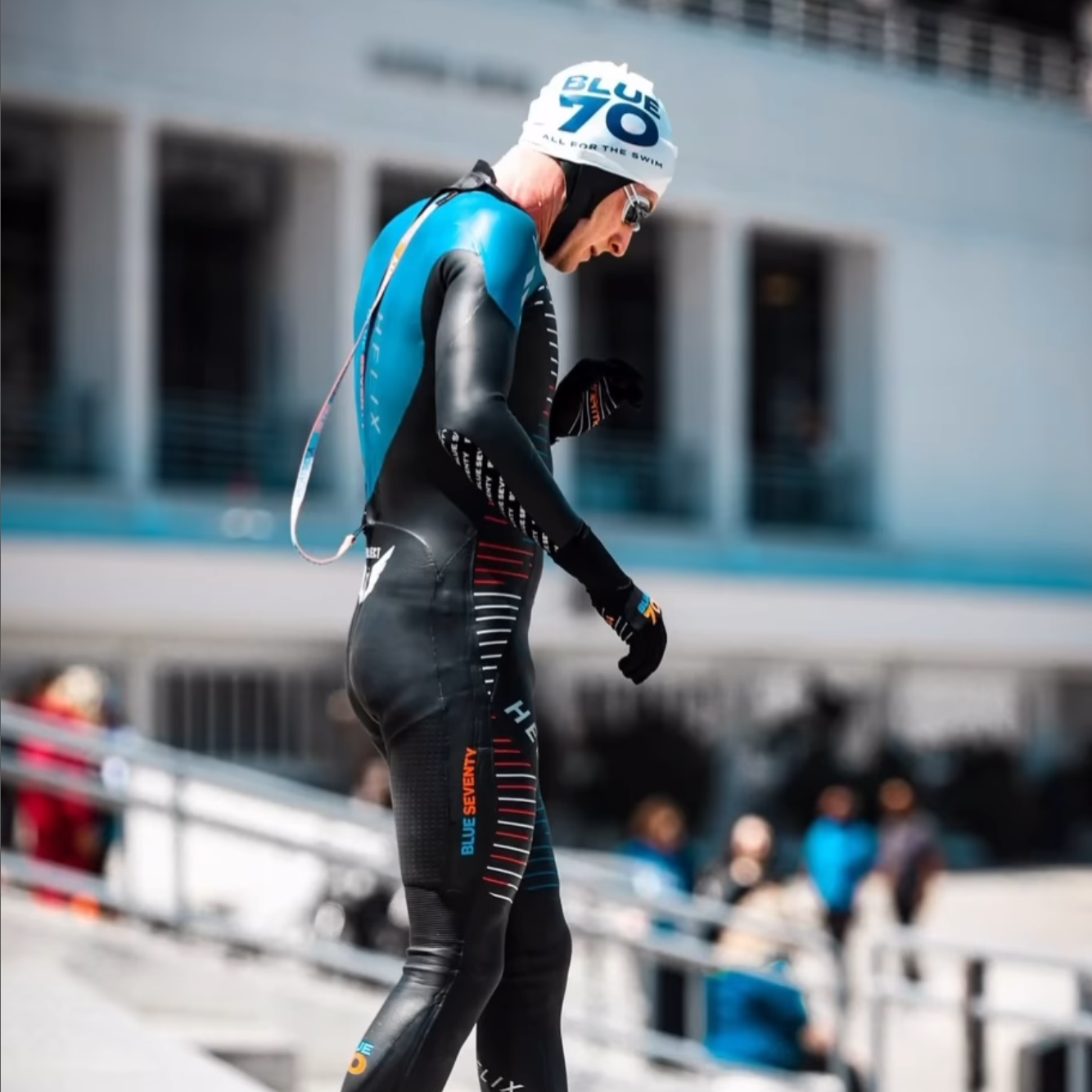
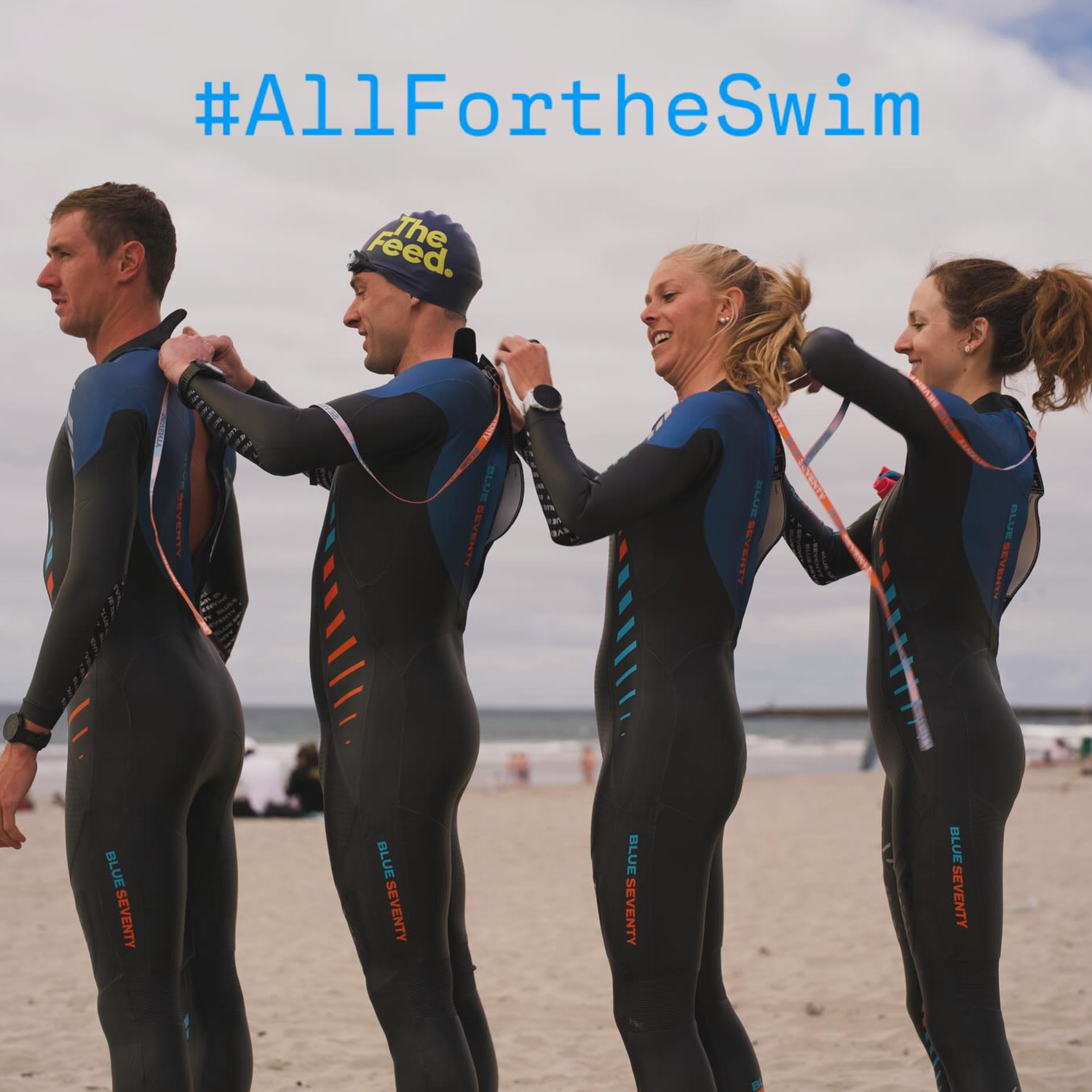
Blue70's Fusion and Reaction wetsuits use thinner, more flexible neoprene panels through the shoulders and arms for exactly the opposite reason. Restricted rotation forces the body to compensate somewhere else, usually at the hip or lower back, and that compensation costs energy over a long swim. A snorkeler reaching to steady themselves near coral, or pulling with one arm to reposition in a current, needs that same freedom. Two hours of stiff shoulders from a snorkel session feels a lot like the fatigue a swimmer gets from an ill-fitting suit on a long training day. The cause is the same: neoprene fighting the joint instead of moving with it.
Where buoyancy sits changes how you float
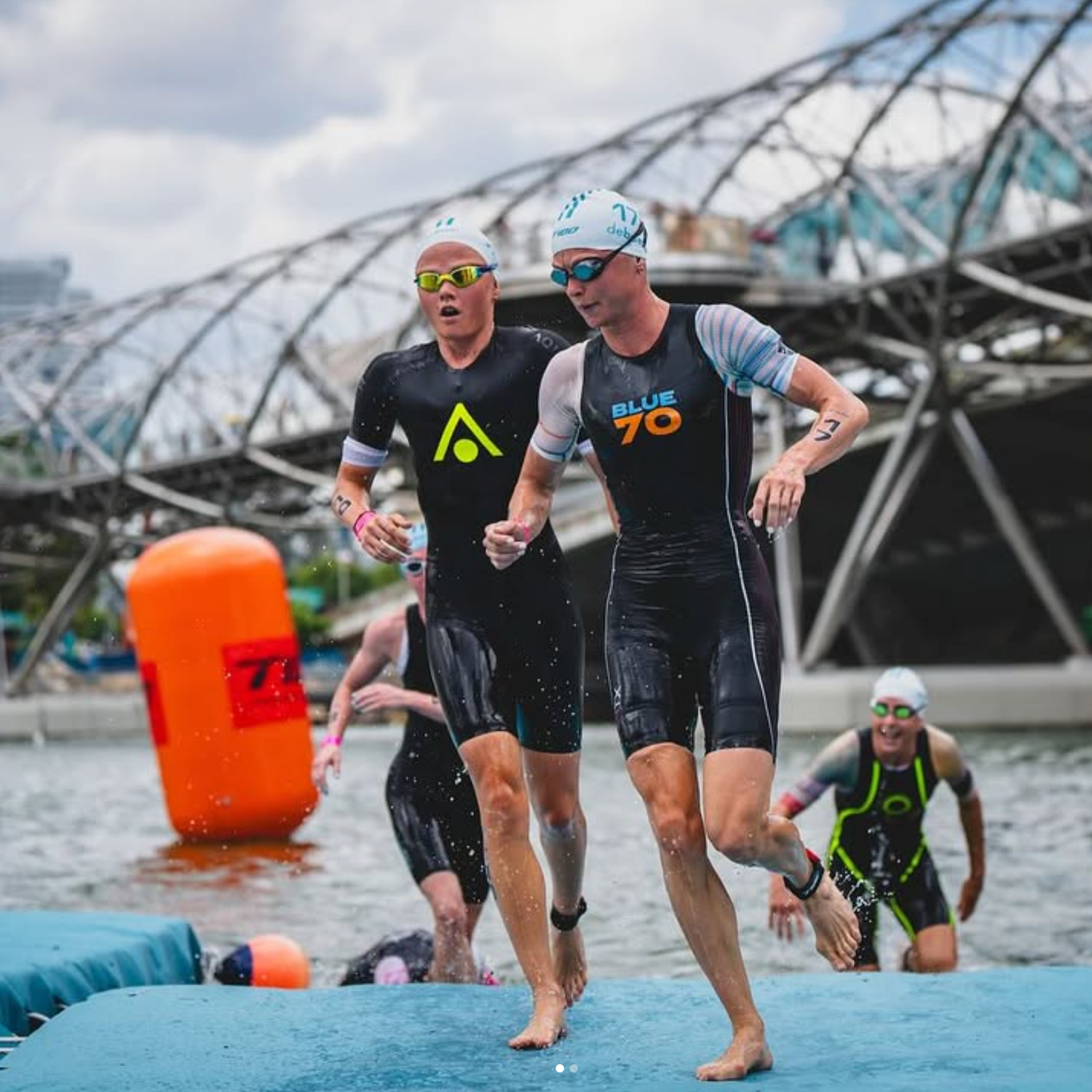
Wetsuit buoyancy isn't spread evenly across the suit. Swim-specific designs concentrate more lift through the hips and legs on purpose, since sinking hips create drag and force a swimmer to work harder just to stay level in the water. Snorkelers run into the identical mechanical problem the moment their legs drop and their fins start kicking down instead of flat.
A suit that lifts through the hips helps a snorkeler hold a flatter line without constant kicking effort. Less kicking effort means less fatigue. Less fatigue means a longer, calmer session breathing through a snorkel tube, which matters more for comfort than most people consider before they're thirty feet off the beach.
Match the suit to the water, not the activity label
Temperature planning for a snorkeling trip should follow the same logic open-water swimmers already use. Below roughly 56 to 58°F, a purpose-built thermal suit with a lined interior, like Blue70's Thermal Reaction, adds real warmth that a standard suit can't match. Above roughly 70 to 72°F, a full suit turns into more insulation than most people want for a few hours on the surface, and a sleeveless design becomes the more comfortable call.
This matters because snorkeling destinations vary wildly, since a reef in the Caribbean and a kelp bed off the California coast both draw plenty of snorkelers, yet they call for nearly opposite thermal strategies depending on water temperature and how long you plan to stay in it. Treating "snorkeling" as one category with one correct wetsuit thickness ignores the single variable that actually decides the question: the water you're getting into.
- Tropical reef, short sessions, above 72°F: sleeveless or a short john style
- Temperate coastline, half-day trips, 60 to 70°F: Fusion or Reaction
- Cold-water coastline, longer exposure, below 58°F: Thermal Reaction
Neoprene flexibility comes down to cell structure
Blue70 wetsuits use Yamamoto neoprene graded in 38, 39, and 40 cell. The higher the number, the more flexible the material. That's a physical property of how the neoprene gets foamed and cut, not a marketing line, and it explains why a 39-cell panel at the shoulder moves so differently from a stiffer panel of the same thickness.
For a swimmer, that flexibility lowers the energy cost of every stroke. For a snorkeler, it lowers the energy cost of reaching, adjusting in a current, or floating without the suit fighting natural posture, even though the sport looks nothing alike from the surface.
Fit comes first, every time
A wetsuit that's loose through the torso fills with water and loses much of its thermal value, no matter who designed it or what it was built for. The fit rule that applies to triathletes applies here too: a suit should feel snug on dry land and settle into something more comfortable once you're in the water. A gap at the neck or a loose chest lets water flush in and out continuously, and that constant flushing works against the insulation the suit is supposed to provide in the first place.
One detail specific to snorkeling deserves its own mention: the mask strap. A high, tight wetsuit collar can interfere with a mask seal or press uncomfortably against the strap running around the back of the head. Suits with a lower-sitting neckline, a change Blue70 made to the Fusion line in 2021 for comfort without losing the watertight seal, tend to sit better under a mask strap, even though mask compatibility had nothing to do with why the change was made.
Caring for a suit after the reef
Saltwater and sun exposure are harder on neoprene than most people expect. Rinsing a suit in fresh water after every ocean session removes salt crystals that otherwise sit in the material and speed up breakdown. Sunscreen and reef-safe oils left on the suit's surface degrade it too, so a rinse followed by a few minutes drying in the shade, not direct sun, does more for the suit's lifespan than almost anything else you can do.
Heat causes quiet damage as well. A wetsuit left on a car dashboard, or packed against hot gear in a bag, breaks down faster than normal wear and tear, and the damage often looks identical once it shows up weeks later. None of this is unique to snorkeling. But snorkeling trips tend to involve exactly this kind of casual post-swim handling: wet suit, hot car, long drive home.
What to check before you pack
If you already own a swim-specific wetsuit for open-water training or triathlon, pack that one. It's built around the same body position, the same kick, and the same need for shoulder mobility that snorkeling demands, and most dive-shop wetsuits were never built with any of that in mind.
One thing worth checking first: Blue70's standard wetsuit warranty covers manufacturing defects for swimming use and excludes non-swimming activities like scuba diving. Surface snorkeling sits much closer to swimming than diving does, since there's no tank, no depth pressure, and no vertical posture involved. But if your trip also includes scuba diving in the same suit, confirm coverage with Blue70 support rather than assume it carries over.
Check the water temperature at your destination against the ranges above before you decide what to pack. Rinse the suit in fresh water the moment you're back on the boat. And if you're shopping for your first suit and aren't sure how it should fit, Blue70's fitting guide walks through sizing before you ever get in the water.