


Most people walk into a store thinking a wetsuit try-on comes down to one simple question: Does it feel comfortable? That sounds reasonable, but it is not actually the best way to judge a swim-specific wetsuit.
A proper try-on is really the first part of your swim. It is where you start to learn how the suit will affect your shoulder movement, breathing, body position, and overall confidence in open water. If you only judge a wetsuit by how it feels standing still in a fitting room, you can miss the things that matter most once you begin swimming.
That is especially true for triathletes and open-water swimmers. A wetsuit is not everyday apparel. It is performance equipment. The fit has to support your stroke, help you hold good position in the water, and match how you actually train and race.
A dry-land fit can fool you
One of the most common mistakes athletes make is rejecting a good wetsuit because it feels too snug on land. A swim-specific wetsuit should feel close-fitting when dry. In the water, that same suit usually feels more natural and less restrictive than it did in the store.
Of course, snug is not the same as wrong. If a suit feels harsh through the shoulders, tight across the chest, or distracting at the neck, that could mean the size is off. But it could also mean the suit has not been put on properly. That happens all the time.
If the neoprene is sitting too low through the legs and hips, the shoulders end up paying the price. The arms feel loaded before you even take a stroke. Many athletes assume they need a larger size when what they really need is a better fit process.
This is why a store try-on matters. It helps separate real sizing issues from simple donning mistakes.
Think of the fitting room as a stroke check
The best way to approach a wetsuit try-on is to think like a swimmer, not a shopper. You are not just checking whether the zipper closes. You are checking whether the suit will let you swim well.
Ask better questions while the suit is on:
- Do my shoulders feel free enough to hold form over the full swim?
- Can I rotate and reach without fighting the suit?
- Does the neckline feel secure without becoming a distraction?
- Does the suit feel like it will support better body position in the water?
Those are the questions that actually matter on race day.
blueseventy wetsuits are built around a swim-specific philosophy: freedom from restriction, feel for the water, and race-day performance. Across the range, blueseventy uses Yamamoto neoprene in 38, 39, and 40 cell, with higher cell numbers offering more flexibility. Those material choices are not just technical talking points. They affect how the suit moves with your stroke and how your body feels after several minutes in the water.
What to pay attention to during a try-on
Shoulders come first
If the shoulders do not feel right, everything else becomes harder. A wetsuit that pulls through the upper body can shorten your stroke, create early fatigue, and make it difficult to stay relaxed.
When you are trying on a suit, do not just stand there and look in the mirror. Move a little. Reach both arms overhead. Mimic an easy freestyle recovery. Rotate gently through the torso. Set your forearm into an early catch position.
You are not looking for looseness. You are looking for controlled tension without restriction.
The neckline matters more than people realize
A good neckline should feel secure and tidy, but it should not feel aggressive. If the collar is pressing hard when you turn your head, bunching awkwardly, or sitting too high, something is probably off.
Neckline design can make a real difference here. The Fusion, for example, was redesigned with a lower-sitting neckline for comfort without losing the watertight seal. That kind of adjustment may sound small, but in open water small irritations can feel very big once your breathing rate rises.
Pay attention to pressure through the torso
A wetsuit should feel snug through the torso, but the pressure should feel even. If one area feels sharply compressed while another feels loose or collapsed, that is usually a sign the suit is not sitting correctly.
Breathing on land in a wetsuit will always feel a little different than breathing in normal clothing. That is expected. What you do not want is a suit that makes you feel trapped or distracted before you even get near the water.
Look for signs of balanced buoyancy
You cannot fully judge body position in a fitting room, but you can still notice whether the suit feels balanced. A swim-specific wetsuit is engineered for performance by helping improve body position and reduce drag. Or, to put it in simple swim language: buoyancy equals speed in the water.
Beginners often feel this as support through the hips and legs. More experienced swimmers tend to notice where the suit seems to support posture and streamline without disrupting timing or rhythm.
The right suit depends on how you actually swim
A good try-on should never stop at size alone. The better question is whether the model matches your swimming life.
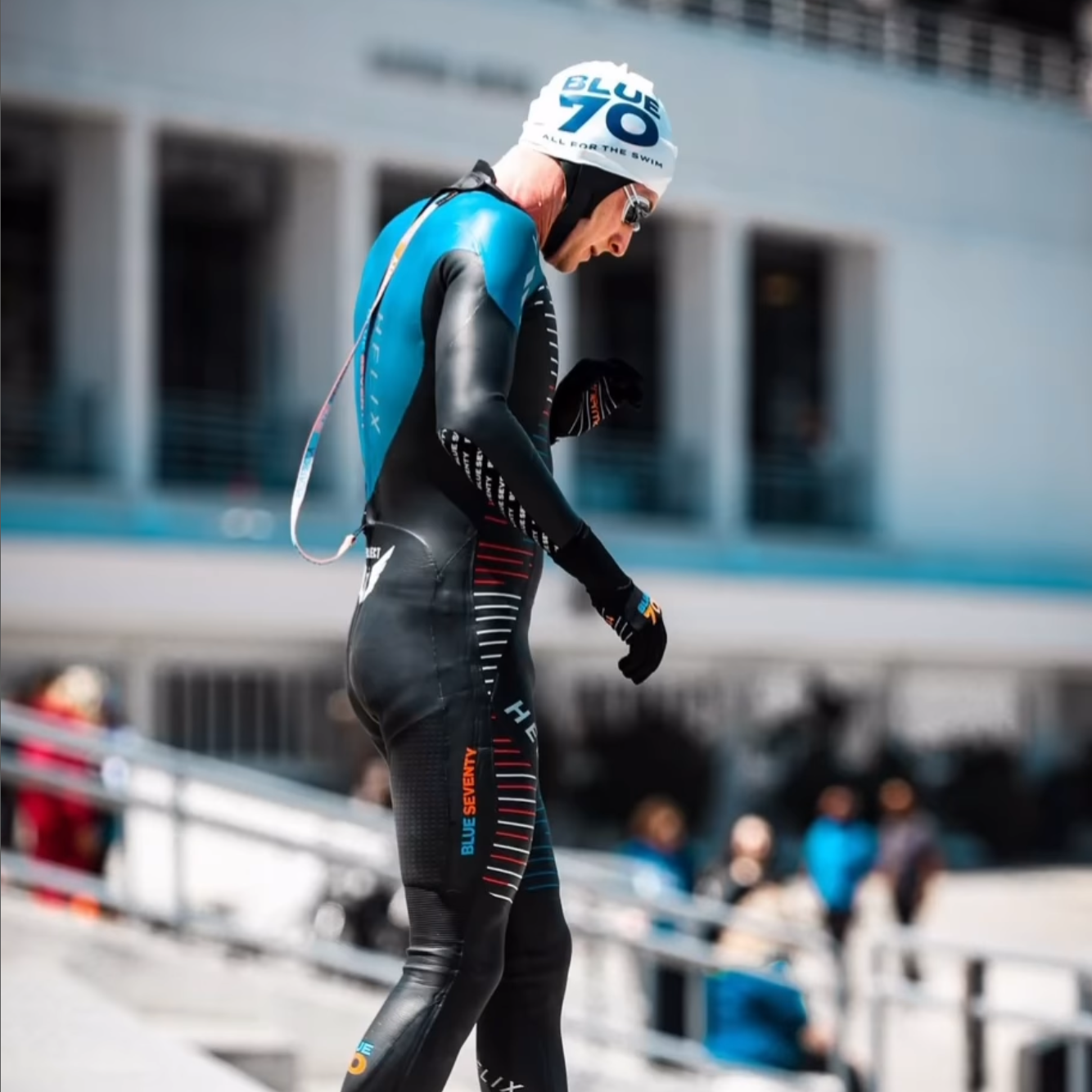
If you are focused on race-day performance, the Helix is blueseventy’s flagship suit. It is built for total race-day performance with extremely flexible neoprene in the arms and shoulders, a permeable catch panel to help preserve feel for the water, and LIFT buoyancy panels.
That said, there is an honest trade-off. The Helix uses very thin, highly flexible neoprene, and it is not the ideal choice for heavy training use week after week. It is a race tool first.
If you are swimming regularly in your wetsuit, the Reaction is often the smarter fit for frequent, longer swims. If your sessions are shorter but still frequent, the Fusion sits in a very useful middle ground and remains a best seller for good reason.
If you are buying your first suit, the Sprint is a strong starting point. For many newer swimmers and triathletes, the biggest gains come from improved body position and confidence in open water rather than chasing the most aggressive performance design right away.
Water temperature matters too. Below about 56-58°F, a purpose-built thermal suit adds meaningful warmth. The Thermal Reaction is fully lined with Zirconium jersey for added thermal protection in cold-water swimming.
On the other end, above roughly 70-72°F, a full suit can become too warm over longer swims. In those conditions, or for athletes who want an easier fit experience, a sleeveless option can be worth considering.
Most “bad fits” are really bad donning
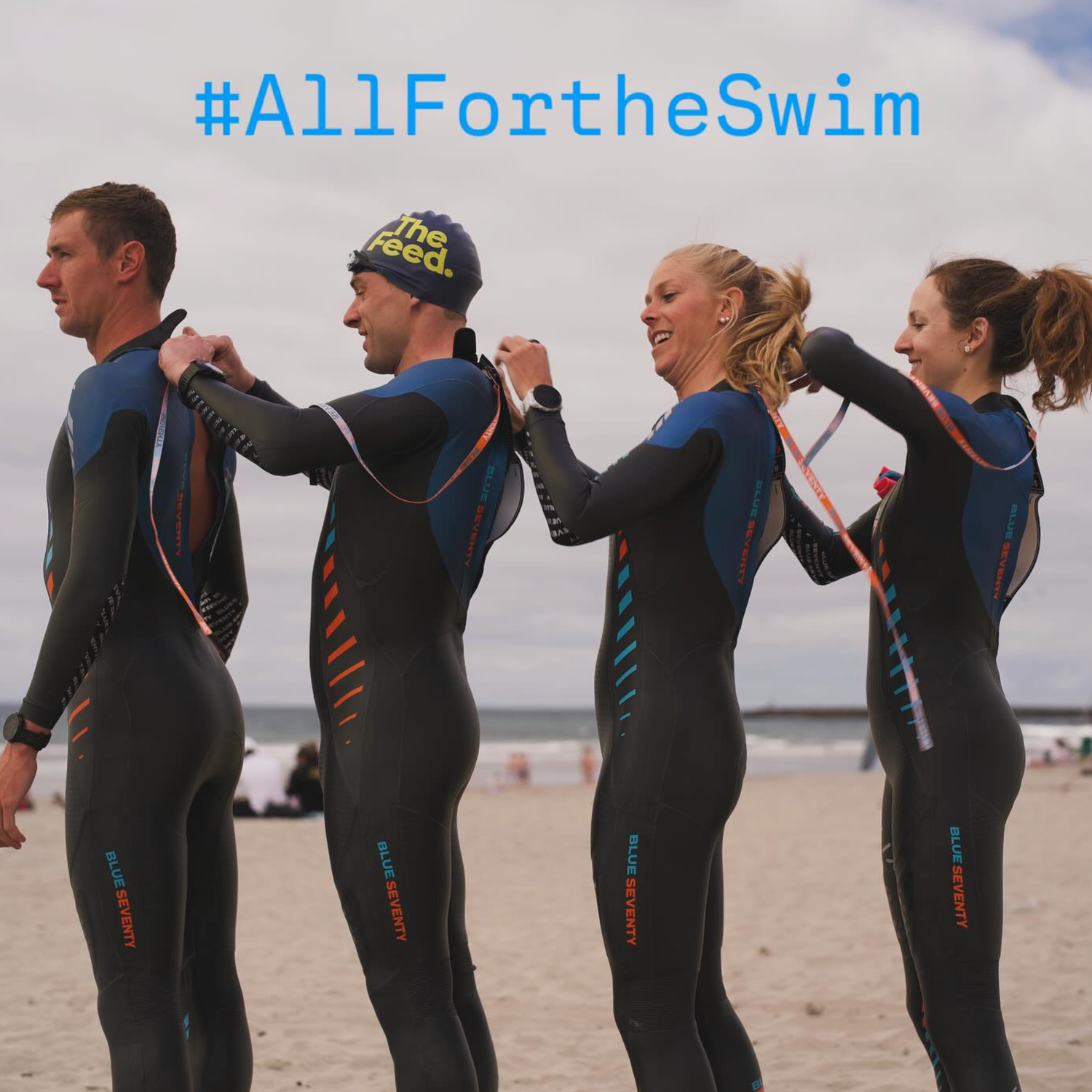
This is one of the biggest truths in wetsuit fitting. Many athletes put on a suit too quickly, decide it feels restrictive, and move on from a model that may actually fit them very well.
Before you judge the upper body, the lower half has to be seated correctly. If the suit is low through the legs or hips, the entire top half gets dragged downward.
A better donning process looks like this:
- Work the legs into place first.
- Bring the material up gradually from ankles to knees to hips.
- Make sure the suit is fully seated through the inseam and hips.
- Lift material through the torso before evaluating the shoulders.
- Smooth the arms so the shoulders are not carrying unnecessary tension.
Once that is done correctly, shoulder freedom often improves immediately. This is one of the biggest advantages of an in-store try-on with someone who understands swim-specific wetsuit fit.
For women, fit details can change everything
Women who have struggled with wetsuit fit before often know how frustrating it can be when a suit feels off in multiple places at once. That is where a thoughtful fit platform matters.
blueseventy’s Femme Fit refines pattern design in key areas including the bust, torso, wrists, and ankles. It also includes a lowered neckline for comfort and reduced chafing, plus an extended zipper length that makes entry easier, accommodates wider hips, and helps with faster transitions.
Those details are not minor. They can change how the suit sits on the body, how comfortable it feels when breathing and sighting, and how manageable it feels to get in and out of before and after a swim.
A practical in-store checklist
If you are heading in to try on a wetsuit, it helps to arrive with a plan. Before you start, know your height, weight, usual swim conditions, and how you plan to use the suit. That makes the fitting more accurate from the start.
Once the suit is on, use this quick checklist:
- Legs and hips: No major wrinkles, sagging, or loose pockets of material.
- Torso: Snug and even, without random pressure points.
- Shoulders: Reach and rotate without feeling blocked.
- Neck: Secure, flat, and free from sharp pressure when turning your head.
- Exit: Learn how to remove the suit carefully so you do not damage the neoprene.
That last point matters. Fingernail punctures, heel tears, and zipper damage from force are all common mistakes and are much easier to avoid when you slow down and learn the process properly.
The fitting room is not the final verdict
Here is the part many athletes need to hear: even a very good try-on in the store is only step one. The water always gives the final answer.
Wetsuits are meant to be swum in, not judged under bright shop lights. A suit that feels slightly unfamiliar on land can come alive in the water once the neoprene settles and your stroke begins to flow. That is why it helps to treat the fitting room as the start of the decision, not the end.
blueseventy makes that process easier with its Take a Test Swim policy. You can swim in a wetsuit and still return or exchange it, as long as it comes back clean, dry, unmodified, with tags and accessories.
The smartest process looks like this:
- Get fitted properly.
- Choose the model that matches your training and racing needs.
- Learn how to put it on correctly.
- Swim in it.
- Use real stroke feedback to confirm the fit.
What you should walk away knowing
A good store try-on should leave you with more than a size recommendation. You should come away understanding how a swim-specific wetsuit is supposed to feel, how to put it on correctly, what trade-offs exist between flexibility and durability, and what to watch for in your first real swim.
That is the real value of the experience. A wetsuit fitting is not just a retail task. It is an education in how you want to feel and move in open water.
Final thoughts
The best wetsuit try-on starts before you ever touch the water because it changes the way you evaluate the suit. Instead of asking whether it feels comfortable standing still, ask whether it seems ready to help you swim well. That is a very different standard, and it leads to much better decisions.
Get the fit right. Learn the donning process. Match the suit to your actual swim life. Then let the water confirm the choice.
If you want help taking the next step, check the fit guide or Take a Test Swim and let your first real swim tell you what the fitting room cannot.