


You can learn a lot about a swimmer by looking at how they store a wetsuit.
Some athletes rinse it, dry it properly, and hang it where air can move through the lining. Others peel it off after a lake session, stuff it into a transition bag, and deal with it days later. That choice does not stay in the gear room. It shows up the next time the suit goes on, especially through the shoulders, neckline, zipper, and lower legs.
A wetsuit storage rack is not just an organization tool. It is part of wetsuit care, and wetsuit care is part of performance preparation. If you want your suit to feel the same in August as it did in April, storage deserves more attention than it usually gets.
Why storage affects how a wetsuit ages
A swim-specific wetsuit is built for movement in the water, close fit on the body, and support for body position. blueseventy wetsuits use Yamamoto neoprene in 38, 39, and 40 cell grades, and higher cell numbers bring more flexibility. That flexibility feels great in open water. It also means the suit should be handled with some care once the swim is over.
Storage does not change the design of the suit, but it does affect how well that design holds up over time. Repeated stress in one area can leave marks. Narrow hanging points can pull on the upper suit. Sharp folds can create pressure lines. Heat and sunlight can age materials faster than most athletes realize.
None of this is dramatic when it happens once. It becomes a problem when it becomes your normal routine.
The overlooked point: storage is part of performance maintenance
Most conversations about wetsuit care stop at rinsing and repair. Both matter. Storage sits in the middle of every swim you do, which makes it one of the most repeated parts of ownership.
That is the useful way to think about a wetsuit rack. It belongs in the same category as careful donning, fresh-water rinsing, and drying out of direct sun. You are not storing a coat. You are storing a piece of swim equipment that was designed around flexibility, buoyancy, comfort, and feel for the water.
Good storage will not guarantee a faster swim. What it does is help preserve the fit, material behavior, and comfort that the suit was designed to provide.
One rack, two jobs
A good storage setup needs to handle two different phases:
- drying the wetsuit after a swim
- storing the wetsuit between sessions
Those are related, but they are not identical.
After a swim, the priority is airflow and drainage. Once the suit is fully dry, the priority shifts to reducing long-term stress on the neoprene and seams. Many athletes use the same position for both and never think about it again. That can work, but it is better to treat drying and storage as separate steps.
For example, draping a wetsuit over a wide bar is often a good way to dry it because the suit is supported across a broad surface. Leaving the suit sharply folded in that same spot for months is a different story. A crease that is harmless for a few hours is less helpful over a long off-season.
The most common storage mistake
The biggest mistake is simple: athletes hang a wetsuit like a jacket.
A standard clothing hanger puts the suit’s weight onto a small area. That is worse when the suit is still wet, because the lower half pulls down with more weight. Over time, that can create stress around the shoulders and upper chest, exactly where swimmers care most about comfort and freedom from restriction.
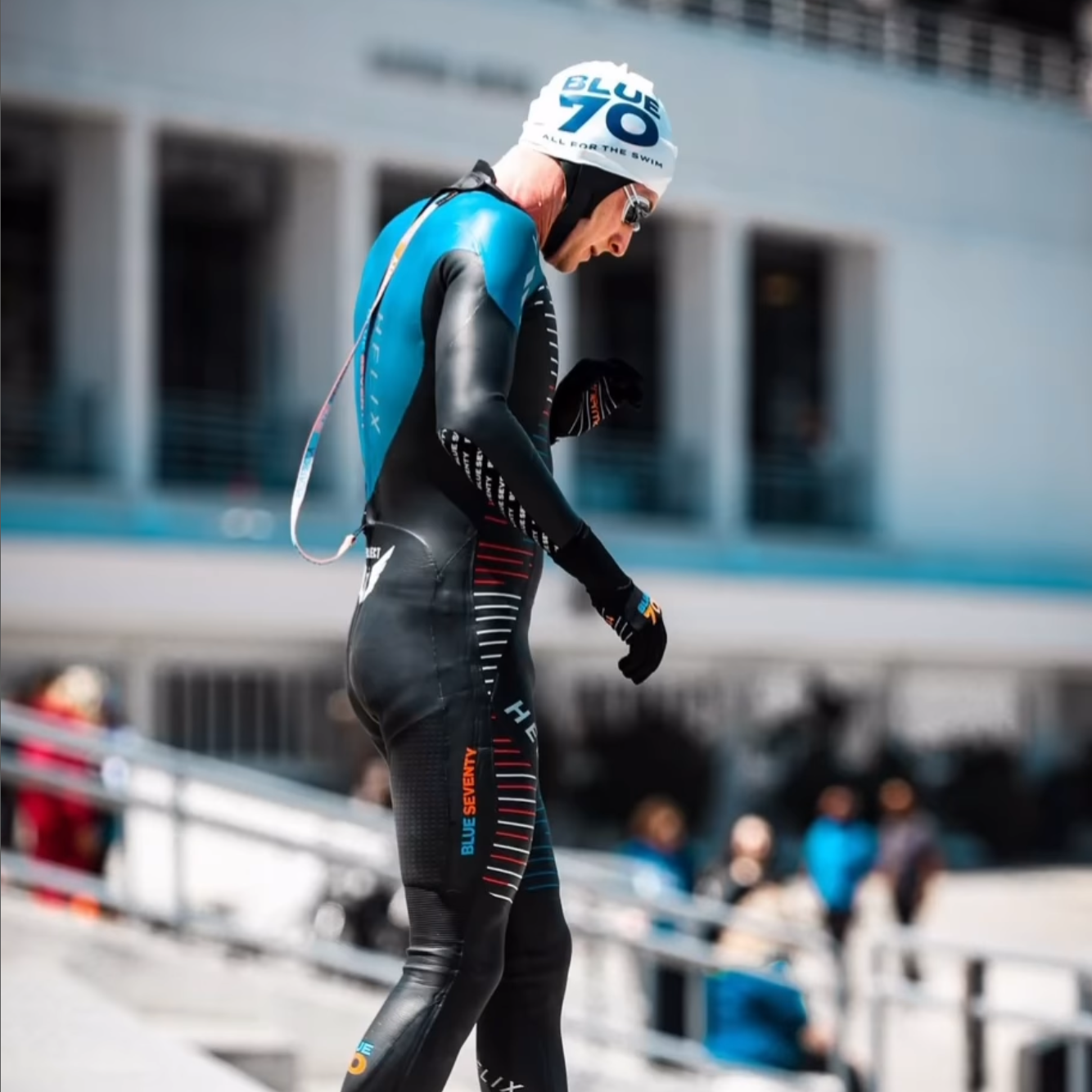
This matters even more in race-focused suits with thin, flexible upper-body neoprene. blueseventy has always been clear about trade-offs in high-end construction. The Helix is built for total race-day performance, with very thin and flexible neoprene in the arms and shoulders, and that kind of material should be treated carefully between swims.
What a good wetsuit storage rack should do
You do not need a complicated system. You need a setup that supports the suit well, allows air to move, and keeps the material away from heat and unnecessary pressure.
The best rack setups usually share a few traits:
- a wide support surface instead of a narrow hook
- smooth contact points that will not catch or nick neoprene
- good airflow around the suit while it dries
- a cool location out of direct sun
- enough space that the suit is not crushed by other gear
Wide horizontal bar
This is one of the best options right after a swim. Draping the suit over a broad, smooth bar reduces point loading and lets water drain. The wider the support, the better.
Broad-shouldered hanger
Once the suit is mostly dry, a broad hanger can work for shorter-term storage. The key is support across a larger area. Thin plastic or wire hangers are a poor match for neoprene.
Two-point support rack
A rack with two wide resting points can spread the load well and reduce the chance of one hard fold line forming in the same place every time.
How to dry a wetsuit before storing it
A wetsuit should be rinsed after every swim and fully dried before it goes into longer-term storage.
- Rinse the suit in fresh, cool water.
- Turn it inside out first so the lining can dry.
- Drape or hang it in a shaded place with airflow.
- Once the inside is dry, turn it right side out.
- Let the exterior dry fully before putting the suit away.
Do not store the suit damp in a trunk, backpack, tote, or sealed bin. That habit shortens the life of the suit faster than most athletes expect.
If you swim in chlorinated water, rinse the suit promptly. Chlorine is hard on neoprene over time. If you swim in salt water, make sure salt and sand do not stay in the suit while it dries.
Where to place your storage rack
The best storage location is cool, dry, and shaded. A closet, gear room, or interior wall space usually works better than a garage that gets hot in summer or cold in winter.
Avoid these spots:
- hot garages
- attics
- car trunks
- sun-facing windows
- areas next to heaters, dryers, or hot-water equipment
Heat matters. Compression matters too. A wetsuit should not be buried behind boxes, trapped under bike gear, or left crumpled under a pile of race bags.
Storage advice by wetsuit type
Different wetsuits get used differently, so storage should match the suit.
Flagship race suits
A suit like the Helix deserves careful handling because it is designed around race-day performance. It uses very thin, flexible neoprene in the arms and shoulders, a permeable catch panel to preserve feel for the water, and LIFT buoyancy panels. Broad support and indoor storage are the safest call here.
Frequent-use suits
The Reaction and Fusion often see regular weekly use. For these suits, consistency matters most. A reliable rinse, dry, and store routine is worth more than a perfect setup that only happens once in a while.
blueseventy’s own guidance is straightforward here. Athletes swimming once a week or more often often fit best in the Reaction for longer swims or the Fusion for shorter frequent swims, with durability playing a role in that choice.
Thermal suits
The Thermal Reaction is fully lined with Zirconium jersey for added warmth in cold water. That lining can hold moisture longer than athletes think, especially after a cold session. Give the inside full drying time before storing it.
Sleeveless suits
Sleeveless suits and short john styles can be easier to handle because there is less upper-body material, but they still need broad support, full drying, and protection from heat.
In-season storage and off-season storage are different
During race season, convenience matters. You want a setup that makes the next swim easy.
A practical in-season gear station usually includes:
- a place to rinse the wetsuit
- a drying position with airflow
- a resting position once it is dry
- space nearby for goggles, anti-chafe, and thermal accessories
That setup reduces rushed handling, and rushed handling is where a lot of avoidable wear begins.
In the off-season, the goal changes. Clean the suit thoroughly, dry it completely, and store it where nothing presses into it. A broad hanger can work well in a cool room. A loose fold in a large breathable container can also work if the fold is gentle and the suit is not trapped under other gear.
Habits that shorten wetsuit life
These are the storage habits worth cutting out:
- thin wire hangers
- narrow hooks through the neck or shoulders
- storing the suit wet in a bag or bin
- direct sun exposure
- heat from garages or car interiors
- tight folds along the same line every time
- heavy gear stacked on top of the suit
- salt, sand, or chlorine left in the material
Most wetsuit wear does not come from one major mistake. It comes from ordinary habits repeated all season.
A simple setup most swimmers can use
You do not need a custom-built wall system. Most athletes can create a solid wetsuit storage setup with a few smart choices:
- pick a cool, ventilated space
- use a wide bar for drying
- use broad support for storage
- keep the suit away from sunlight and heat
- keep it clear of rough surfaces and sharp gear
- store it only when fully dry
Simple works when you repeat it.
Final thought
A wetsuit storage rack sounds like a small detail until you put on a suit that has been cared for well and one that has not. The difference often shows up before you even reach the water.
The suit should slide on more cleanly, sit better across the shoulders, and feel ready for the job it was built to do. That is why storage matters. It protects the fit, comfort, and structure that support your training and race-day routine.
If you want help with the rest of the process, start with size charts, the fit guide, or blueseventy’s Take a Test Swim program. Storage works best when the suit fits right in the first place.