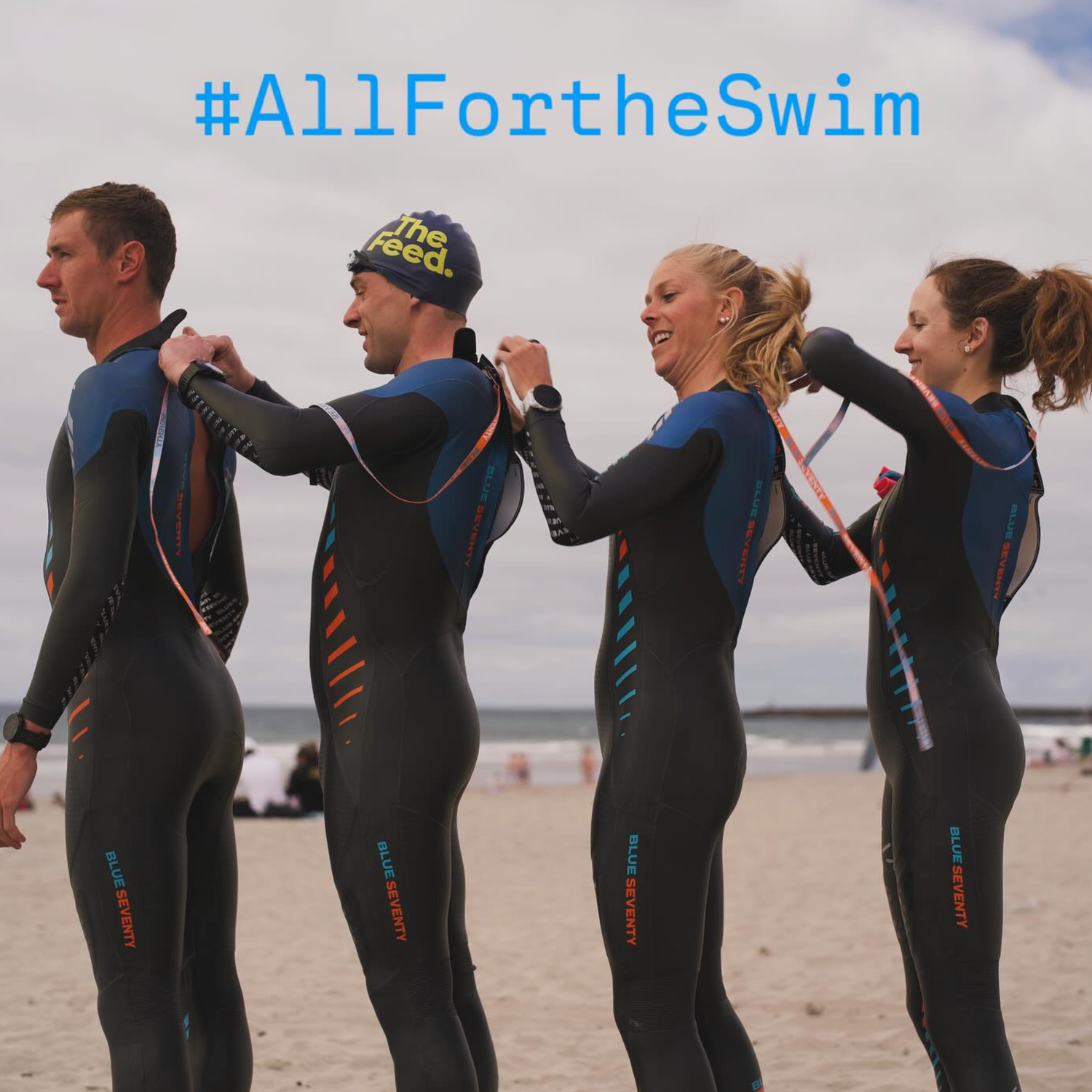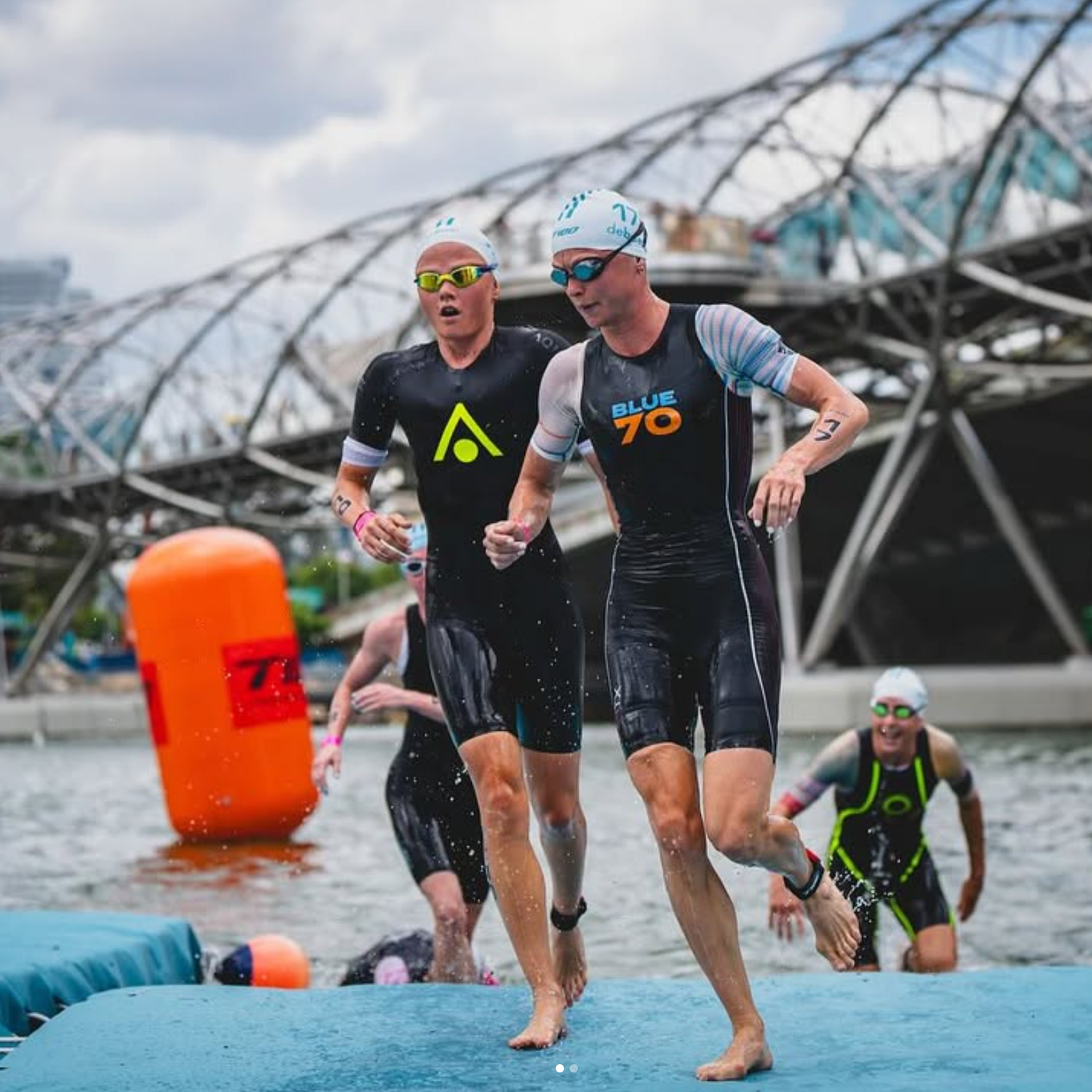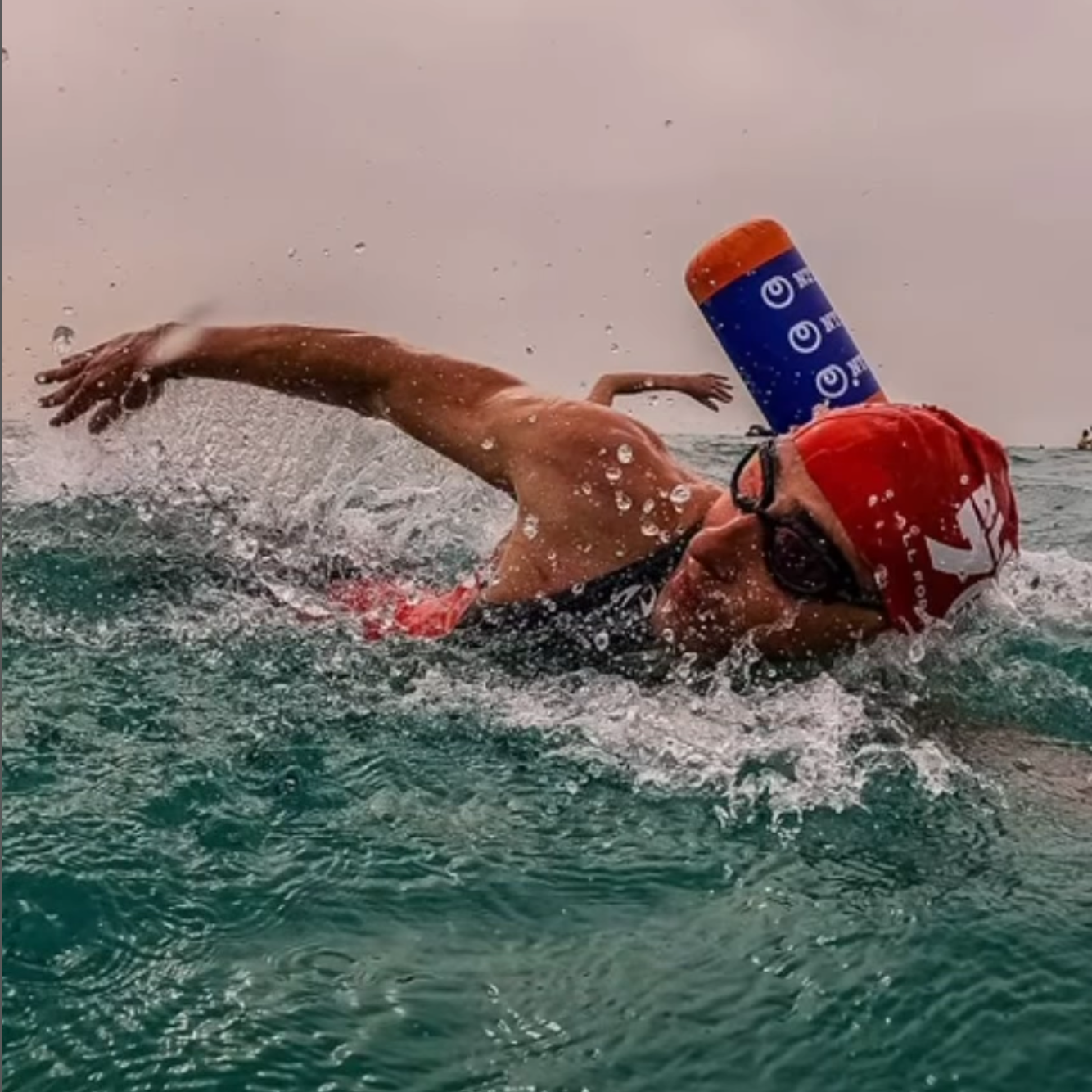



If you’ve ever called yourself “athletic” and still struggled to find a wetsuit that feels right, you’ve run into a very real problem: “athletic build” is not a fit category. It’s a convenient label, but it tells us very little about how a wetsuit will actually sit on your body once you start swimming.
In practice, that label can describe a swimmer with broad shoulders and big lats, a triathlete with powerful quads and glutes from cycling, an athlete with a long torso, or someone with a larger chest and narrower waist. Those are all very different fit scenarios. Two athletes can match on height and weight and still have completely different experiences in the same suit.
That’s why the right way to shop for a wetsuit is not to ask, “Which one is made for athletic people?” A better question is: where does your build create tension in the suit, and what does that do to your stroke, breathing, and body position?
Once you start there, wetsuit fit becomes much easier to understand-and much easier to get right.
Why the usual advice falls short
A lot of wetsuit advice stops at height, weight, and general body type. That’s a start, but for swimmers and triathletes it’s not enough. A swim-specific wetsuit has a more demanding job than simply covering the body. It needs to do three things at once:
- allow freedom through the shoulders and upper back
- support efficient body position in the water
- fit closely enough to limit excess water movement inside the suit
If one of those breaks down, the suit may still zip, but it won’t feel right in the water. That’s where a lot of strong, well-trained athletes get frustrated. They assume the problem is their body type, when the real issue is usually much more specific.
Think in terms of a tension map
One of the most useful ways to evaluate a wetsuit for an athletic build is to stop thinking about “tight versus loose” and start thinking about where the suit is under tension. That gives you a far more accurate picture of fit.
For most swimmers and triathletes, the trouble spots tend to fall into four zones:
- shoulders and lats
- chest and upper torso
- hips, glutes, and quads
- torso length
If you can identify which of those areas is causing trouble, you’re already most of the way toward the right suit.
Broad shoulders and developed lats
This is common in swimmers, former swimmers, rowers, and triathletes who spend time in the gym. It’s also one of the easiest fit issues to misdiagnose.
What it usually feels like
- your shoulders fatigue early
- your stroke recovery feels loaded or shortened
- the suit feels like it’s pulling down on the arms
- your upper back feels tight before you find a rhythm
What’s actually going on
Many athletes assume this means the suit is simply too small. Sometimes that’s true. But very often the bigger issue is that the suit has not been fully worked up through the legs, hips, and torso. When that happens, the shoulders end up carrying tension that should have been distributed lower in the suit.
In other words, what feels like a shoulder problem often starts with how the wetsuit was put on.
This matters even more for stronger athletes. If you produce a more forceful catch and pull, you load the suit harder every stroke. Small fit mistakes show up quickly.
What to do
- Pull the suit up gradually from the ankles.
- Seat it fully through the calves and knees.
- Work it high into the hips and crotch.
- Bring material up through the torso.
- Lift the suit into the armpits before zipping.
A suit should feel snug on land, but once it is positioned correctly it should not feel like it is dragging your arms down with every stroke.
If shoulder freedom is your top priority on race day, the Helix is designed around exactly that experience. It uses extremely flexible neoprene through the arms and shoulders, includes a permeable catch panel designed to preserve feel for the water, and features LIFT buoyancy panels to support body position. For athletes who are highly sensitive to restriction, those details are noticeable.
At the same time, it’s important to be honest about use case. The Helix is built for total race-day performance, and its very thin neoprene is not the ideal choice for heavy, frequent training use. If you swim regularly in open water and want a suit that is better suited to frequent, longer sessions, the Reaction is often the better match.
Larger chest, narrower waist
This is one of those fit patterns that can look fine on a size chart and still feel wrong in the water.
Common signs
- pressure across the chest when you take a deep breath
- a neckline that feels intrusive
- tightness high on the torso and looseness lower down
- difficulty settling into calm, rhythmic breathing
Why it happens
The suit is being asked to wrap a larger upper-body shape while still contouring closely through a narrower waist. If the patterning and fit are not right for that distribution, the athlete ends up compressed where freedom is needed most and loose where a close fit matters most.
That can affect more than comfort. In open water, any unnecessary resistance to breathing tends to feel bigger than it does in a fitting room. The combination of exertion, cold water, and race nerves can make a slightly intrusive fit feel much more serious once the swim begins.
A practical way to judge it
Don’t decide based only on how the wetsuit feels while standing still. Check whether the neckline is positioned correctly, then evaluate how your breathing feels when you actually swim.
The Fusion is especially relevant here because its redesigned lower-sitting neckline was built for comfort without losing the watertight seal. For athletes who are sensitive around the neck and upper chest, that can make a very real difference in how quickly the suit disappears once you get moving.
Powerful hips, glutes, and quads
Many triathletes have what most people would call an athletic build, but the defining feature is lower-body strength rather than upper-body size. Cyclists in particular often run into this pattern.
What it usually feels like
- getting the suit over the hips takes real effort
- the calves or ankles bunch up
- the whole suit feels like it sits low
- the shoulders end up feeling tight anyway
What’s actually happening
If too much tension is concentrated in the lower body, many athletes stop adjusting once the suit is on and zipped. But if the neoprene hasn’t been evenly distributed from the ankles upward, there may not be enough material available through the torso and shoulders. The result is a fit that feels restricted up top even though the original problem started below the waist.
This is also where race-day practicality comes in. A suit that is overly stressed around the calves and ankles may be harder to remove cleanly in T1.
What to do
- take your time during donning
- smooth bunching from the ankles upward
- make sure the suit is fully seated through the hips before zipping
- practice removing it before race day
For women, this is exactly where Femme Fit becomes so important. blueseventy’s women’s wetsuits use refined pattern design in key fit zones including the bust, torso, wrists, and ankles. The lowered neckline is designed for comfort and reduced chafing, and the extended zipper length makes entry easier, accommodates wider hips, and can help speed transitions.
[VERIFY: Femme Fit size count today]
The overlooked challenge: long torso, average limbs
Long-torso athletes often get pushed toward a simple height-and-weight answer, but torso length can completely change how a wetsuit behaves.
Typical symptoms
- the suit feels like it is pulling from shoulder to crotch
- the neckline rides high
- the zipper feels constantly tensioned
- the wetsuit technically fits, but never feels settled
Why this matters
Vertical tension affects the whole suit. Even if the chest, hips, and limbs seem within range, a long torso can create enough pull to influence breathing, shoulder freedom, and comfort. That’s why “I can zip it” is not a good standard for fit.
A zipped wetsuit is not necessarily a well-fitting wetsuit.
Why stronger athletes feel poor fit sooner
There’s a useful physiology point here that often gets missed: more muscle can make a bad fit feel worse, faster.
Athletes with a stronger upper body often:
- apply more force during the catch and pull
- reach harder into extension
- load the suit more aggressively every stroke
- notice respiratory restriction earlier
- pick up on local compression or binding more quickly
That means a fit issue that a less forceful swimmer might tolerate for twenty minutes can show up almost immediately for a stronger swimmer. If a suit feels wrong right away, that feedback is worth paying attention to.
Fit is only part of the equation
When people talk about wetsuits for athletic builds, they often focus entirely on stretch. Flexibility matters, but it is only half of the story. The other half is buoyancy placement.
A swim-specific wetsuit is designed to improve body position, reduce drag, and help the swimmer hold a more efficient line through the water. For many athletes, especially those coming into triathlon from cycling or running, that support can be just as important as shoulder mobility.
Beginners often see the biggest proportional gain from a wetsuit because improved body position changes the swim so noticeably. Put simply: buoyancy equals speed in the water. For more experienced swimmers, the conversation becomes more precise. They don’t just want lift. They want a balanced position without losing feel for the water.
That’s where the Helix stands out in the lineup. The combination of LIFT buoyancy panels and the permeable catch panel is designed for athletes who care about both alignment and front-end feedback through the stroke.
Full sleeve or sleeveless?
If your biggest challenge is through the shoulders, this is an important decision.
A full-sleeve suit usually makes sense when you want:
- added thermal protection
- more overall buoyancy
- maximum support for race-day body position
A sleeveless suit can make more sense when you want:
- more shoulder freedom
- easier entry and fit
- a solution for warmer water
- a lower-cost option
blueseventy’s guidance is consistent here. In water below roughly 56-58°F, a purpose-built thermal suit like the Thermal Reaction adds meaningful warmth. In water above roughly 70-72°F, a full suit can become too warm over longer swims, and a sleeveless option or swimskin may make more sense depending on conditions and event rules.
If you have a heavily developed upper body and repeatedly feel restricted in full sleeves despite correct size and proper donning, a sleeveless suit is not a compromise. It may simply be the right tool. The Reaction Sleeveless is a strong option for athletes who want easier fit and more open shoulders in warm-water conditions.
If you want to keep reading on that decision, see blueseventy’s story Why A Sleeveless Suit? if available in your Stories feed.
How wetsuit design has evolved for real swimmers
One reason this conversation matters more now than it used to is that swim wetsuits have become far more swim-specific over time. That shift benefits athletic builds in a big way.
Swimming places unique demands on a wetsuit. Shoulder range, stroke rhythm, body position, and feel for the water all matter directly. A suit built for swimming has to reflect that.
blueseventy’s history has always centered on the swim, and that philosophy shows up in the way the range is built today:
- refined paneling based on swimming movement
- neoprene placement tuned for flexibility and support
- more thoughtful buoyancy distribution
- neckline shaping for comfort
- women-specific fit through Femme Fit
All blueseventy wetsuits use Yamamoto neoprene in 38, 39, and 40 cell, with higher cell numbers offering more flexibility. For strong swimmers and triathletes, that is not just a technical detail. It affects how freely the suit moves with you and how much fatigue builds over the course of the swim.
How to choose the right blueseventy wetsuit for your build
If you’ve identified your main fit challenge, the lineup becomes easier to navigate.
Choose the Helix if:
- you are focused on race-day performance
- shoulder freedom is a top priority
- you want premium flexibility, buoyancy support, and feel for the water
- you understand it is not ideal for heavy training use because of its very thin neoprene
Choose the Reaction if:
- you swim open water regularly
- you want strong performance for frequent, longer swims
- you want a better training-and-racing balance
Choose the Fusion if:
- you want a versatile mid-range option
- neckline comfort matters to you
- you use your wetsuit often, but generally for shorter swims
Choose the Sprint if:
- you’re buying your first triathlon or open-water wetsuit
- budget is the main consideration
- you still want a true swim-specific suit
Choose the Reaction Sleeveless if:
- your shoulders are the hardest area to fit well
- you swim in warmer water
- you want easier entry and a less restrictive feel
Choose the Thermal Reaction if:
- you are swimming in cold water
- added thermal protection is a priority
- you are typically in conditions below about 56-58°F
How to judge fit in the water
The best wetsuit test is not in front of a mirror. It’s in the water.
During a test swim, ask yourself:
- Can I take a full breath without feeling chest pressure?
- Do my shoulders stay relaxed through the first few hundred meters?
- Does the neckline disappear once I settle into rhythm?
- Do I feel supported through the hips and legs?
- Can I still feel the catch clearly?
- Do I finish feeling supported rather than fatigued by the suit?
That’s exactly why blueseventy’s Take a Test Swim policy matters. You can swim in a wetsuit and still return or exchange it if it comes back clean, dry, unmodified, and with tags and accessories. That removes a lot of guesswork for athletes who know that real fit only shows up once the swim starts.
Final takeaway
If you have an athletic build, the answer is not to look for a vague marketing label that promises to fit “strong bodies.” The real goal is to find a swim-specific wetsuit that matches your proportions, your stroke, and the water you actually swim in.
Start with the real question:
- Are your shoulders the issue?
- Is your chest creating pressure up top?
- Are your hips and quads affecting how the suit sits?
- Is torso length the missing piece?
- Do you need race-day performance, frequent training durability, or both?
Once you answer those, the right choice becomes much clearer.
A good wetsuit should feel snug on land and better in the water. It should support body position, preserve freedom from restriction, and let you settle into your stroke instead of fighting the suit. That’s the standard to aim for.
Dive in: use the size charts, review the fit guide, and Take a Test Swim to evaluate fit where it matters most-while you’re actually swimming.