


When swimmers start looking for the best wetsuit for cold water swimming, the conversation usually goes straight to warmth. That makes sense, but it also misses the bigger picture. In real open-water use, the best cold-water wetsuit is not simply the one that feels the most insulated. It is the one that helps you keep your stroke together, manage your breathing, and hold a good body line when the water gets cold.
That distinction matters more than most buyers realize. Cold water does not just make you uncomfortable. It changes how you swim. It can tighten your shoulders, shorten your stroke, raise your effort level early, and make it harder to settle into rhythm. So if a wetsuit adds warmth but costs you freedom through the shoulders or creates pressure across the chest, it is solving one problem while creating another.
From a swim-specific perspective, the best cold-water wetsuit needs to do several jobs at once. It should provide added thermal protection, yes, but it should also preserve the qualities that matter once the swim begins: freedom from restriction, stable body position, and confidence in the water.
Why “Warmest” Is Not Always the Right Answer
There is a common assumption that colder water always calls for the warmest possible suit. In practice, that can be too simplistic. The better question is not, “What is the warmest wetsuit?” but rather, “What wetsuit helps me swim best in cold water?”
That shift in thinking leads to better gear choices. A cold-water wetsuit still needs to let you rotate cleanly, breathe comfortably, and maintain your stroke without feeling like you are wrestling the suit. If it does not, you often feel the cost quickly. Cadence gets choppy. Your catch starts slipping. The shoulders load up. You begin thinking about the wetsuit instead of the water.
That is why the right suit depends on more than temperature alone. It also depends on:
- how long you will be in the water
- how often you swim outdoors
- whether you are training or racing
- your personal cold tolerance
- how relaxed or tense your stroke becomes in colder conditions
A swimmer doing regular winter sessions has different needs from a triathlete preparing for one cold early-season race. Both need thermal protection, but both also need a suit that supports the actual swim.
What Cold Water Does to Your Stroke
One of the most overlooked parts of wetsuit selection is that cold water is not just a gear issue. It is also a physiology and mechanics issue. As the water temperature drops, swimmers often notice the same pattern: they tense up, breathe more shallowly, and lose some of the easy rhythm they have in milder conditions.
That means a good cold-water wetsuit has to help preserve sound movement patterns. It should support your body position, keep your shoulders moving freely, and avoid unnecessary pressure through the torso. A suit that fits well and moves with you can make it easier to settle into the swim. A suit that is too restrictive usually amplifies the exact problems cold water already creates.
This is also where buoyancy matters. Better buoyancy supports better body position, and better body position can help reduce drag. As we often say, buoyancy equals speed in the water. That is not a guarantee of outcome. It is a simple truth about swimming mechanics. When your legs and hips ride higher, it becomes easier to move through the water efficiently.
For many swimmers, especially newer open-water athletes, that support becomes even more noticeable in cold conditions, when tension and disrupted rhythm can otherwise make the swim feel much harder than it should.
What to Look for in a Cold-Water Wetsuit
If you are trying to choose the best wetsuit for cold water swimming, focus on a combination of design priorities rather than a single headline feature.
1. Purpose-built thermal protection
Once water temperatures drop below about 56-58°F, a purpose-built thermal suit adds meaningful warmth. That is the zone where standard fullsuits may no longer feel like enough for regular swimming.
Within the blueseventy line, the Thermal Reaction is the dedicated cold-water choice. It is fully lined with Zirconium jersey, a synthetic wool lining designed to provide added thermal protection for colder swims. If your season includes consistently cold open-water sessions, that kind of construction matters.
2. Shoulder freedom
Cold water already encourages stiffness. A wetsuit should help you swim through that, not lock it in further. If the shoulders feel overloaded in the first few minutes, the issue is often fit, donning, or simply the wrong model for your stroke and use case.
Freedom from restriction is not a luxury feature in a swimming wetsuit. It is central to maintaining reach, rotation, and a relaxed recovery when conditions are working against you.
3. Buoyancy in the right places
A good cold-water suit should support your position in the water without making the stroke feel disconnected. Better body line can help you conserve energy, which is especially useful in colder conditions where tension tends to drive effort up.
4. A snug fit that improves in the water
A properly fitted wetsuit should feel snug on land and more natural once you are in the water. That snugness is important because too much looseness allows extra water movement inside the suit, which can reduce thermal efficiency and make the wetsuit feel less stable.
At the same time, too tight is a problem. If the chest feels compressed or the shoulders feel pinned down, you are not getting the benefit of a swim-specific fit. The right suit feels close and secure, not punishing.
For Most Swimmers, the Best Cold-Water Choice Is the Thermal Reaction
If the goal is specifically cold-water swimming, the clearest answer in the blueseventy range is the Thermal Reaction. It is built for this job. The fully lined Zirconium jersey construction is designed for swimmers who need more thermal protection than a standard suit can provide as temperatures drop.
It makes particular sense for:
- open-water swimmers extending their season
- triathletes training through colder months
- athletes preparing for cold race conditions
- swimmers regularly entering water below roughly 56-58°F
That does not mean every cool-water swim requires a thermal suit. It does mean that when cold water becomes a regular part of your season, it is worth using a suit designed specifically for that environment.
When a Thermal Suit Makes the Biggest Difference
A thermal wetsuit becomes especially valuable when the conditions are not occasional, but routine.
Regular cold-water training
If you swim outdoors consistently through late fall, winter, or early spring, extra thermal protection helps make those sessions more manageable and productive. You are not just trying to stay in the water. You are trying to swim well enough for the session to be worthwhile.
Race preparation
Triathletes often think carefully about bike and run setup for cold weather, but the swim deserves the same attention. A cold race start feels very different from a comfortable training day. Using a purpose-built thermal suit in training can help you prepare more specifically for those conditions.
Extending your season
Many swimmers stop open-water sessions not because motivation disappears, but because conditions outpace their equipment. The right thermal suit can keep more of the calendar open.
When a Thermal Wetsuit May Be More Than You Need
Not every fullsuit swim needs to be a thermal-suit swim. If your water is only moderately cool, your sessions are shorter, or temperatures are trending upward, a dedicated thermal option may be more than necessary. Above roughly 70-72°F, a fullsuit can become too warm over longer swims.
That is why the best wetsuit is always tied to the swim itself, not just the category label. Think about:
- water temperature
- exposure time
- swim intensity
- your own comfort and experience level
The right answer is the suit that matches the conditions honestly.
A Brief Look at How Cold-Water Swim Wetsuits Evolved
One useful way to understand today’s cold-water options is to look at how swim-specific design has evolved. Swimmers eventually outgrew the idea that cold water simply required “more suit.” What they needed was better construction for the actual demands of swimming in low temperatures.
blueseventy’s own history reflects that shift. In 2015, the Thermal Helix marked the first purpose-built cold-water swimming wetsuit in the line. In 2018, the Thermal Reaction launched, giving swimmers another dedicated option for lower-temperature conditions.
That progression matters because it shows how the category matured. Cold-water swimmers do not just need insulation. They need a wetsuit that respects both sides of the problem: thermal protection and swim performance.
Fit Mistakes That Show Up Fast in Cold Water
Even a well-designed wetsuit can feel wrong if it is not fitted or donned properly. Cold water exposes those mistakes quickly.
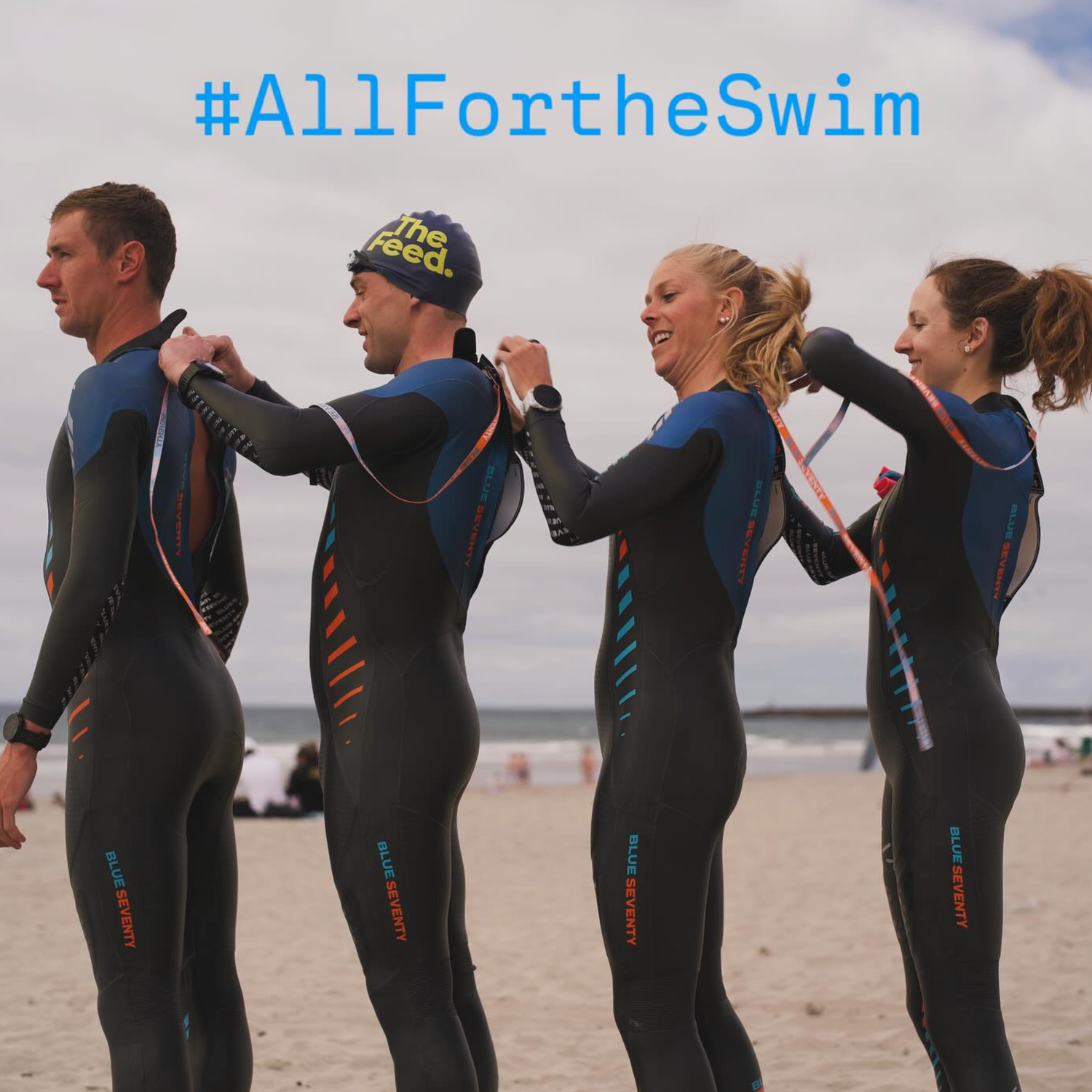
The most common issue is that the suit has not been fully worked into place through the legs, hips, and shoulders. When that happens, the shoulders get pulled down and every stroke starts to feel expensive.
Watch for these signs:
- shoulder fatigue early in the swim
- pressure on the neck
- difficulty taking a full breath
- bunching behind the knees or under the arms
- excess water movement inside the suit
A good fit should feel snug and swim-ready, then settle more naturally once you are moving through the water.
This is one reason the Take a Test Swim policy is so useful. You can actually swim in the wetsuit and still return or exchange it, as long as it comes back clean, dry, unmodified, with tags and accessories. For cold-water swimmers, that matters, because the real test of a wetsuit does not happen in front of a mirror. It happens twenty minutes into the swim.
Cold-Water Swimming Works Best as a System
The wetsuit is the centerpiece, but it is not the entire plan. Cold-water comfort and performance also depend on how you manage the rest of the session.
A few simple habits help:
- Enter the water gradually. Give your breathing time to settle before trying to swim hard.
- Keep the first few minutes smooth. Long exhalations and relaxed strokes are more useful than forcing pace early.
- Build session length progressively. Short, repeatable swims are a better way to build confidence than one overambitious outing.
- Plan your rewarming. Have dry clothes and warm layers ready as soon as you finish.
- Swim with support. Cold-water sessions are best approached with a partner, a group, or structured safety support.
A wetsuit should support the session. It should never be the entire strategy.
So, What Is the Best Wetsuit for Cold Water Swimming?
For swimmers who regularly train or race in colder water, the best answer is usually the blueseventy Thermal Reaction. Its fully lined Zirconium jersey construction is designed to provide added thermal protection in the temperatures where a standard fullsuit may not feel like enough.
But the bigger takeaway is this: the best cold-water wetsuit is the one that lets you keep swimming like a swimmer.
That means it should:
- provide added thermal protection appropriate to the conditions
- preserve shoulder mobility and rotation
- support efficient body position
- fit snugly without disrupting breathing or stroke rhythm
- match the length and purpose of your swim
If you want to feel that difference for yourself, start with the fit. Use the size charts, review the fit guide, and if you are between options, take it for a test swim. That is the fastest way to find out whether a cold-water wetsuit is merely warm-or truly built for the swim.