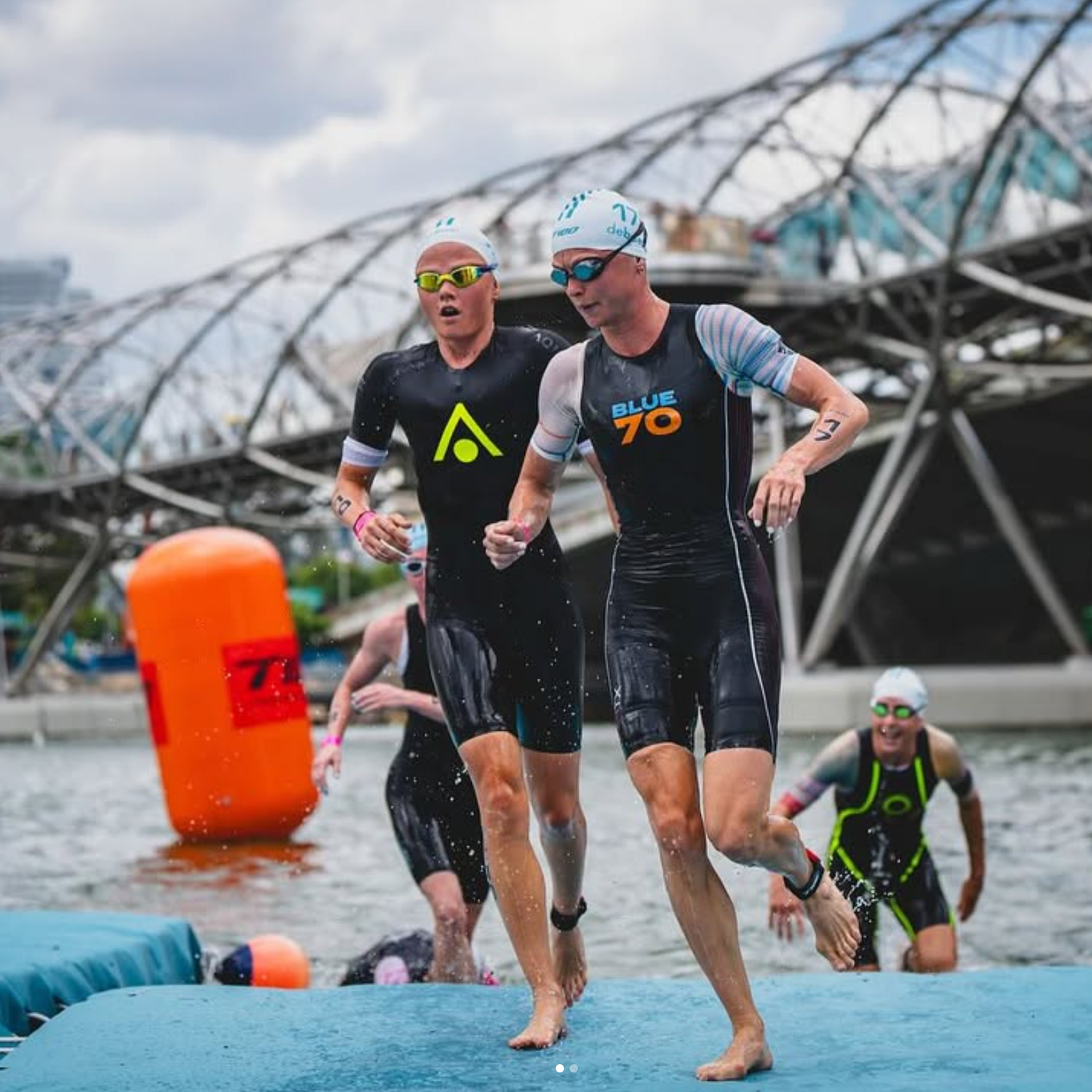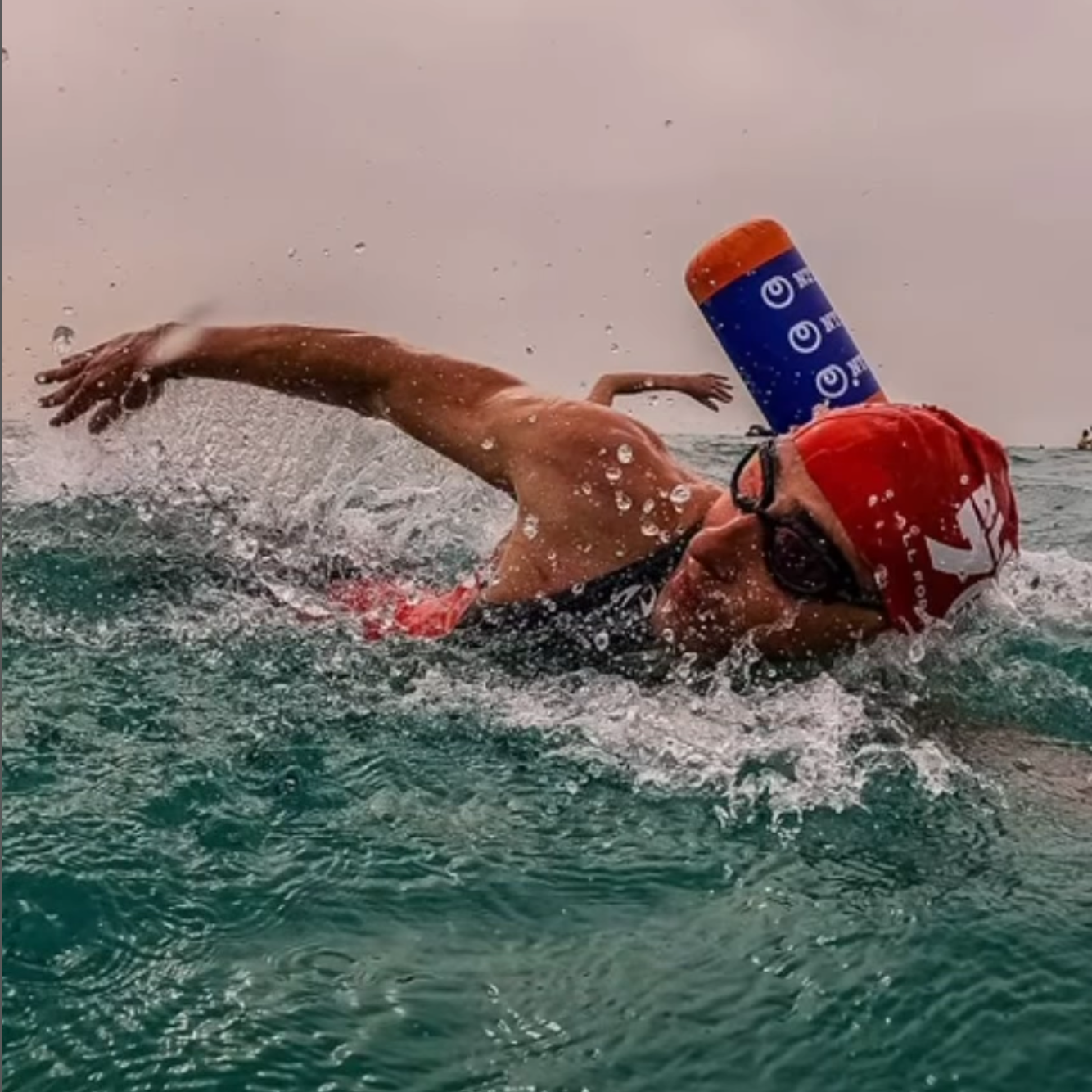



Ask any swimmer shopping for cold water gear and you'll hear the same numbers repeated everywhere: 5/4mm, 4/3mm, 3/2mm. Two figures, a slash between them, and an assumption baked in that thicker neoprene always means warmer swimming. That math works fine for a surfer sitting on a board waiting for a set, or a diver hanging motionless near a reef wall. It falls apart the moment you put a swimmer into continuous freestyle.
Swimming isn't a still-water sport. The stroke generates its own heat, the shoulder rotates through a full range of motion thousands of times per hour, and body position determines speed in a way that standing or floating simply doesn't. A wetsuit built around the surf and dive thickness formula ends up solving a problem swimmers don't really have (staying warm while barely moving) and creating one they very much do have: a shoulder that's fighting the suit on every single pull.
Where the Two-Number System Actually Comes From
The torso-and-limb thickness convention was built for low-intensity time in the water. A surfer paddling occasionally, or a diver drifting near-motionless at depth, isn't producing much muscular heat. Insulation has to do nearly all the work, so thickness becomes the main lever and flexibility takes a back seat.
That's a reasonable trade-off for those sports. It just doesn't carry over to a swimmer moving continuously for 30, 60, or 90 minutes.
Swimming Generates Its Own Heat
Moderate to vigorous freestyle sits at roughly 8 to 10 metabolic equivalents, according to the Compendium of Physical Activities, the reference researchers use to standardize energy expenditure across sports. Recreational surfing, most of which is spent sitting or paddling gently, runs closer to 3 to 6 METs. Scuba diving, with its controlled breathing and minimal exertion, sits lower still.
That gap matters more than most swimmers realize. Your muscles are already producing real heat during a swim. Add a surf-thickness suit on top of that, especially through the torso and back where core temperature regulation happens, and the problem flips entirely. It's no longer about staying warm. It's about shedding heat before it turns into fatigue.
Overheating on a long open water swim isn't a small annoyance. It can push you toward the same kind of physical distress as being too cold, just from the opposite direction. Researchers who study cold water immersion, including groups like the University of Portsmouth's Extreme Environments Laboratory, draw a hard line between static cold exposure and exercising cold exposure precisely because the body reacts so differently to each. Floating still in 58°F water and swimming hard through it for forty minutes are not the same physiological event.
Uniform Thickness Fights the Shoulder on Every Stroke
Freestyle asks the shoulder to move through a full range of motion, over and over, for the entire swim. That joint is the one most compromised by thick, uniform neoprene. A suit built to a single thickness spec, front to back, arm to torso, forces the shoulder to push against material resistance on every stroke. Multiply that by a 1,500-meter swim and you're looking at thousands of repetitions of a joint working against its own suit.
This is exactly why swim-specific wetsuits are built in zones instead of one uniform slab of neoprene. Consider how the panels typically break down:
- Torso and legs: thicker neoprene, where buoyancy and core warmth matter most and mobility demands are lowest
- Shoulders and underarms: dramatically thinner panels, often built with higher-cell Yamamoto neoprene (38, 39, or 40 cell) where a higher cell count means more flexibility
That contrast between panels lets the shoulder rotate freely instead of grinding through resistance on every pull. A single thickness number can't describe that kind of variation. Two numbers barely can. Swim-specific construction needs a map, not a ratio.
Buoyancy Depends on Placement, Not Just Thickness
Thickness and buoyancy are connected, but not in a straight line. Neoprene traps gas bubbles that make the material float, so more material in the right spots lifts the hips and legs and corrects the low, sinking position that costs so many swimmers speed. That's the physics behind the idea that buoyancy equals speed.
But there's a ceiling. Pile on too much thickness through the torso and you can lift the chest and shoulders higher than the hips, which flattens the stroke out in a different, equally unhelpful way. Beginners tend to see the biggest gains from correctly placed buoyancy, since their natural body position often sits lower in the water to begin with. Strong swimmers with already-efficient positions see smaller, more marginal benefits. What actually moves body position in the right direction is placement. Raw thickness on its own doesn't get you there.
Choosing a Cold Water Suit the Right Way
Blue70's Thermal Reaction was built around this exact distinction instead of a surf-style thickness spec. It's fully lined with Zirconium jersey, a synthetic wool material, which adds warmth without relying purely on extra millimeters of neoprene. That lining carries thermal work that thickness alone would otherwise have to shoulder, which frees the suit to stay closer to swim-appropriate flexibility through the arms.
As a general guide, water below roughly 56 to 58°F is where a purpose-built thermal suit starts to earn its place over a standard triathlon wetsuit. Above roughly 70 to 72°F, a full suit of any thickness tends to run too warm for longer efforts, and sleeveless or lower-coverage options make more sense. Neither of these thresholds has anything to do with hunting for the "right" two-number thickness code. Both come down to matching lining, panel construction, and neoprene grade to the water in front of you.
Questions Worth Asking Instead of Checking a Thickness Chart
- What lining does the torso use, and is it built for warmth or just for durability?
- Where does the neoprene grade change from torso to shoulder, and by how much?
- Does the manufacturer publish a water temperature range they actually stand behind?
- How is buoyancy distributed? A suit with LIFT-style panels through the hips and legs is solving the body-position problem directly.
One more thing to check before race day: wetsuit thickness rules for competition vary by sanctioning body, whether that's World Triathlon, USAT, or Ironman, and those rules change from season to season. Look up the current rulebook for your specific race rather than trusting a number you read somewhere online. It takes two minutes and saves you a headache at bag check.
Fit Comes Before Any of This
None of it matters if the suit doesn't fit right. A wetsuit should feel snug, almost restrictive, on dry land, then settle into something far more comfortable once you're moving and the neoprene starts working with you instead of against you. A suit that's bunched or loose at the shoulders will fatigue you no matter how well its thickness zones were engineered. If you're unsure how a suit should sit, Blue70's fitting guide walks through the checkpoints before you ever get near open water.
Shop by What a Suit Does, Not by Its Label
Next time you see a wetsuit marketed with a thickness ratio borrowed from surfing or diving, take it as a cue to look closer, not as a reason to buy. Swimming needs something different from a wetsuit: less resistance at the shoulder, buoyancy placed where it actually fixes body position, and a way to manage heat you're generating yourself, not just insulation against cold you'd otherwise feel while sitting still. That's a construction question. It was never really a millimeter question.
If you're shopping for a cold water suit this season, take a look at the Thermal Reaction collection. And since Blue70 offers a Test Swim policy, you can actually get in open water in it before deciding it's the one.
Happy swimming.