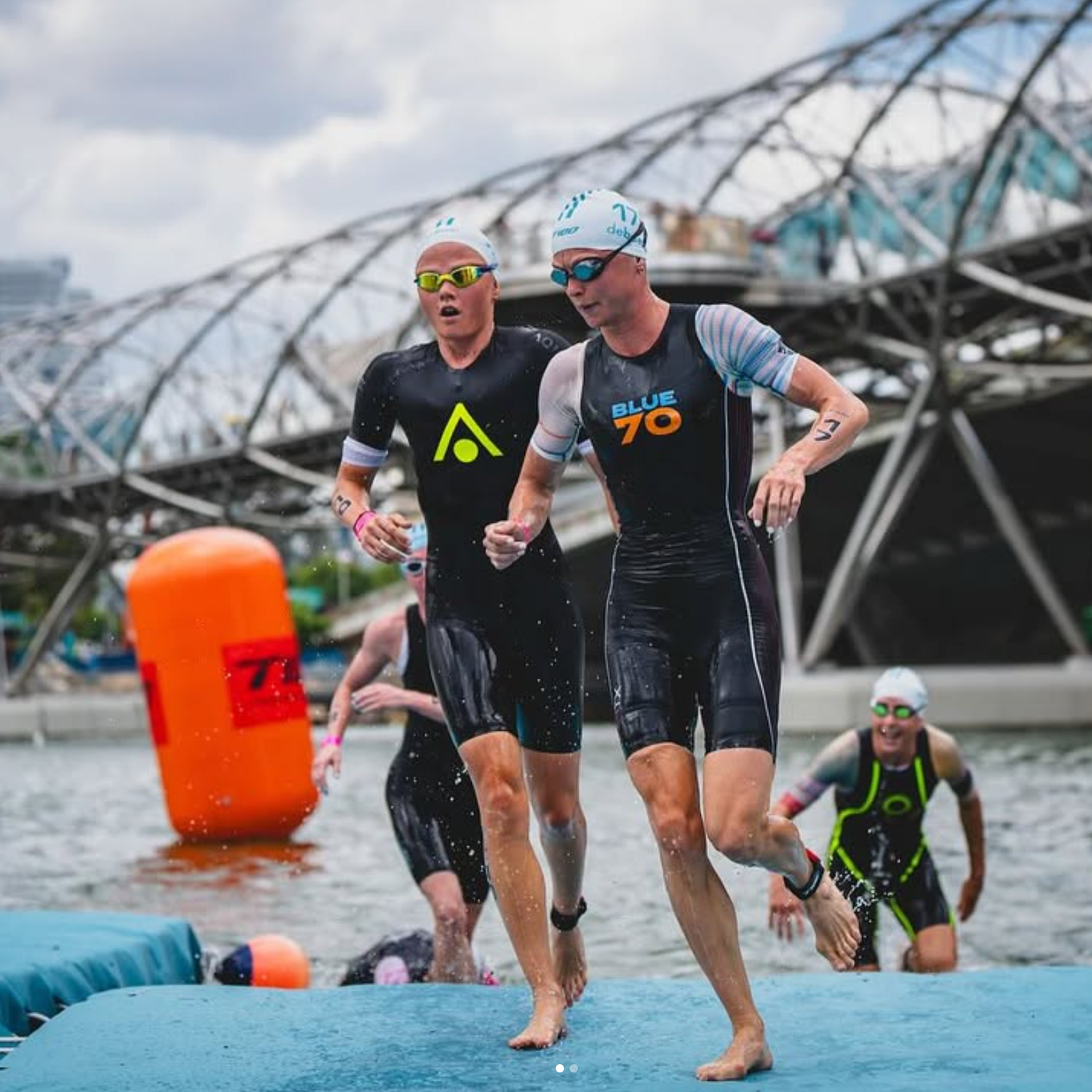



You've seen it happen at every race. One athlete comes out of the water and by the time they hit the timing mat, the wetsuit's already at their ankles. Twenty feet away, someone else is hopping on one leg, yanking at a cuff that won't budge, bleeding away ten or fifteen seconds they'll never get back.
Most transition advice treats the wetsuit strip like a party trick - the two-hand pull, the foot-on-the-suit move, "peel from the top down." None of that's bad advice. But it misses something bigger: the fastest, cleanest strips aren't won in those ten seconds at all. They're decided long before your hands ever touch the zipper.
Here's the chain of decisions that actually determines how your T1 goes - starting well before you hit the beach.
It Starts at the Warm-Up, Not the Water's Edge
Ask a veteran age-grouper what separates a smooth strip from a wrestling match, and most won't mention practice at all. They'll tell you to get water inside the suit before the gun even goes off.
A bone-dry wetsuit against bone-dry skin creates friction, and neoprene simply doesn't want to slide over itself - or over you - when everything's dry. That friction is exactly what turns a two-second ankle pull into a full-blown fight. A quick dip before the start, or scooping water down your neck and legs during warm-up, lets a thin layer of water do its job: lubricating things so the suit moves with you instead of against you.
It's a thirty-second habit with a payoff way out of proportion to the effort.
How You Put It On Decides How It Comes Off
Most triathletes think of donning and stripping as two unrelated tasks. They're not even close to unrelated. How you put the suit on determines how evenly it sits - and how evenly it sits determines how predictably it comes off later.
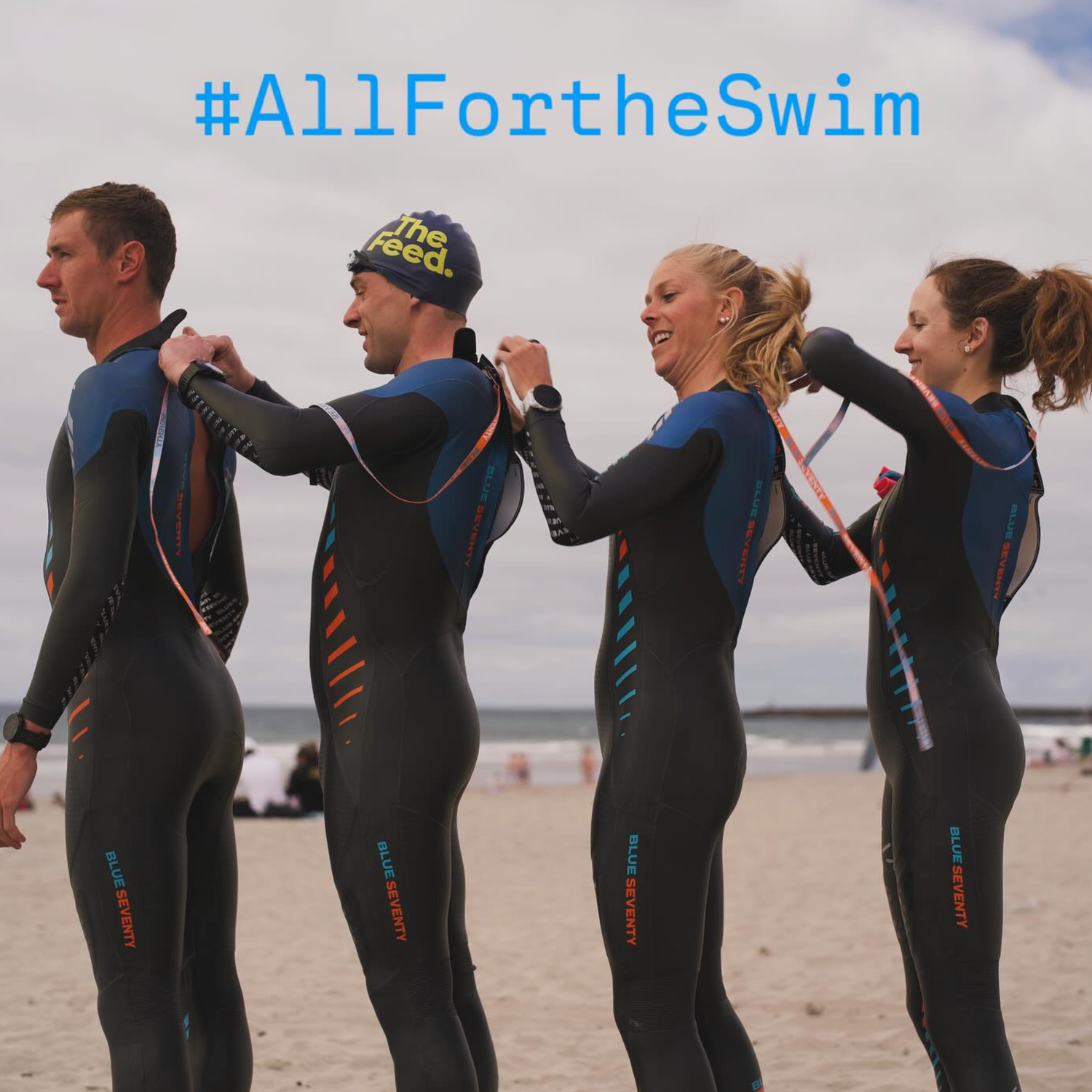
If your suit is bunched at the shoulders or twisted around the hip at the swim start, guess what's still bunched and twisted forty minutes later when you're trying to rip it off in a hurry, cold-handed and adrenaline-spiked, with a crowd of other athletes doing the same thing next to you? A suit that's been worked into place methodically - no folded neoprene at the ankles, no rolled cuffs at the wrists - tends to release the same way it went on: cleanly.
Fit discipline before the swim is transition speed after it. Spend the extra two minutes at your gear check getting the suit properly seated, not just "on." You won't notice the payoff until you're the one jogging past someone still hopping on one leg.
The Physiology Piece Nobody Mentions
Here's something that rarely comes up in transition tips: by the time you're actually stripping the wetsuit, you are not the same athlete who practiced it calmly in your driveway.
You've just finished a swim leg at race effort, likely in water cooler than your training pool, with blood pulled away from your hands and toward the muscles that got you there. Cold water is well known to blunt hand dexterity - it's exactly why everyone fumbles with zippers, goggle straps, and cap edges in transition. Layer in an elevated heart rate and race-day adrenaline, and a move that felt effortless during a relaxed practice swim suddenly becomes a real motor-skill challenge.
That matters because it changes what useful practice actually looks like. Rehearsing your strip fully rested and dry in the backyard tells you almost nothing about how your hands will behave when they're cold, shaky, and slightly clumsy. If you want practice that actually transfers to race day, try:
- Rehearsing the strip right after a hard open-water swim set - not before it
- Practicing in cooler water whenever you get the chance, not just pool-comfortable temperatures
- Doing it with your heart rate up, so your body's closer to the state it'll actually be in on race morning
This one shift - training the skill in the state you'll perform it, instead of the state that's simply easier to practice in - is one of the most overlooked variables in transition prep.
Get to Know How Your Suit Actually Behaves
A wetsuit's construction has a real effect on how predictably it releases from your body - something that rarely gets talked about outside of swim performance. Neoprene flexibility and panel placement through the shoulders and legs both shape how a suit responds in those final seconds of the strip.
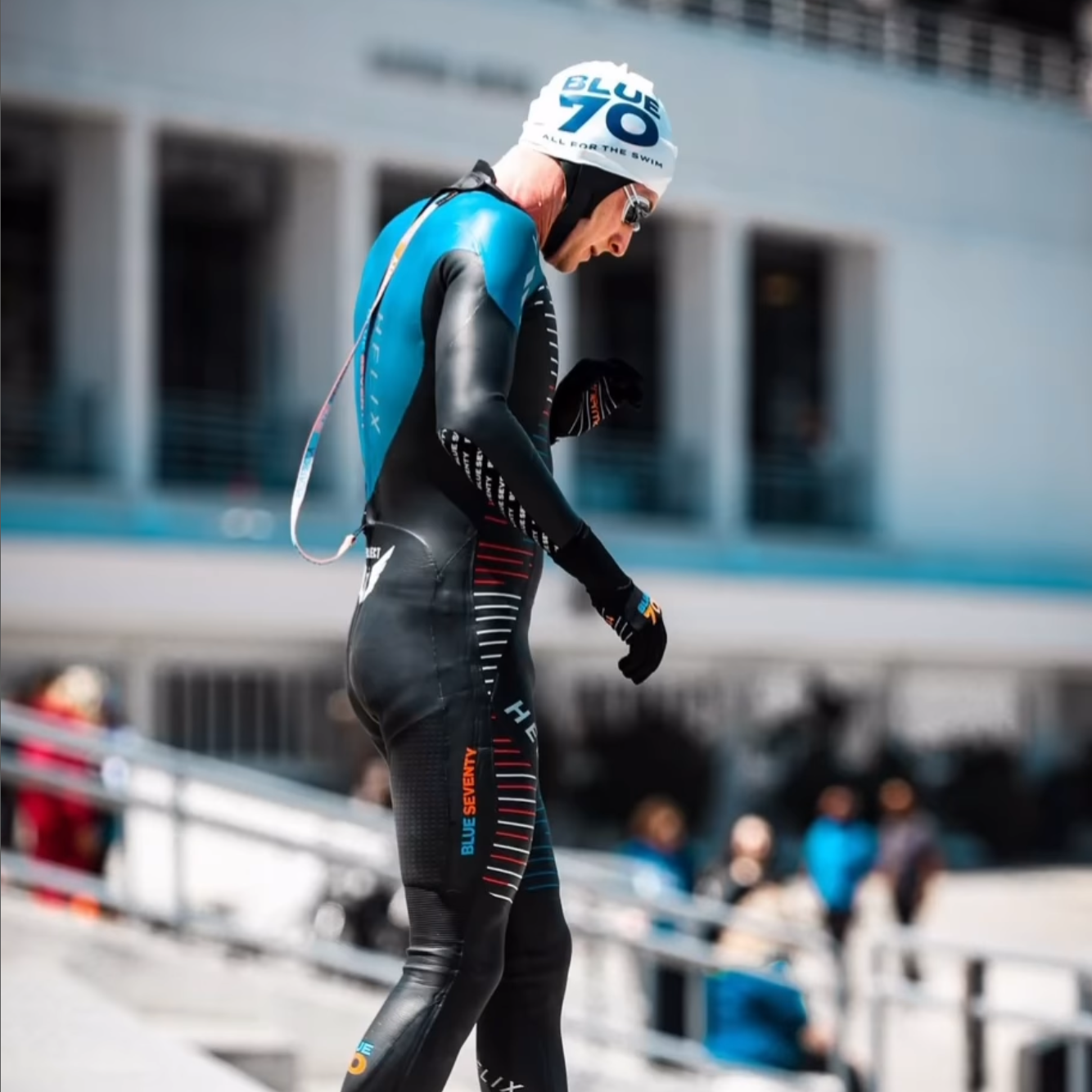
It's part of why Blue70 builds its wetsuits differently depending on their purpose. A race-day suit built with thinner, more flexible Yamamoto neoprene through the shoulders and arms is designed to move freely both during the swim itself and in the moments right after, when you're reaching back for the zipper or turning a sleeve inside out. Suits built for frequent training use rely on a tougher grade of neoprene that can handle being donned and stripped week after week - a deliberate trade-off, since a suit you're wearing for every training swim needs to survive that wear in a way a suit worn only on race day doesn't.
Knowing your suit - really knowing how it moves and releases - is part of race prep. A wetsuit you've worn twice will surprise you in ways one you've stripped fifty times in practice simply won't.
The Ankle Cuff Is (Almost) Always a Fit Problem
Of everywhere athletes lose time in transition, the ankle is the most common trouble spot - and it's rarely about technique. It's a fit issue wearing a technique disguise.
If a wetsuit's leg or ankle opening doesn't match your calf and ankle shape well, no amount of drilling will make the strip fast. This is one of many reasons proper sizing matters far beyond how the suit feels in the water: a well-fitted lower leg rolls off the ankle in a single motion, while a suit that's too snug through the calf has to be fought inch by inch - usually right as your balance is compromised and you're trying to move toward your bike.
If your ankles have been a recurring fight across multiple races, it's worth questioning fit before assuming it's just a practice gap. Blue70's size charts and fitting guidance exist to help you figure out exactly that - is it you, or is it the suit?
Putting It All Together
Here's a more complete way to prepare for your wetsuit strip than simply drilling the pull over and over:
- Pre-race: Get water inside the suit during warm-up to cut down on neoprene-on-skin friction from the first stroke.
- Donning: Take the extra couple of minutes to seat the suit properly at the shoulders, crotch, and ankles - an evenly donned suit strips more predictably.
- Fit check: If you're consistently fighting your ankles or wrists, treat it as a sizing question first, not just a skill gap.
- Practice conditions: Rehearse your strip after a hard swim effort, in cooler water when you can, so your hands and coordination are training under something closer to race-day conditions.
- Know your suit: Understand how your specific model moves and releases, rather than assuming every wetsuit behaves the same way.
The Real Takeaway
A fast wetsuit strip isn't a trick you pull out for ten seconds in transition. It's the last visible step in a sequence that starts with how you prepare the suit before you even get in the water, how carefully you put it on, whether it actually fits your body, and how realistically you've practiced under fatigue. Treat the strip as one isolated move, and you're only solving the smallest part of the puzzle. Treat it as the whole sequence it really is, and you'll be the one jogging toward your bike while everyone else is still fighting their ankles.
If you're not sure whether your current suit fits well enough to strip cleanly, our fit guide and size charts are a solid place to start - and remember, you can always take a Test Swim in a Blue70 wetsuit and still exchange it if the fit isn't quite right.
Happy swimming - and faster transitions.