


You know that moment halfway through a swim when a thin trickle of cold water slides down your arm, and you can’t find a tear anywhere? No gash. No flapping neoprene. Just an unsettling, persistent chill that makes you second-guess your suit. Chances are, you’ve met the pinhole - a near-invisible puncture that quietly drains warmth and disrupts the clean hydrodynamics you rely on.
Pinholes rarely end a season, but they absolutely nibble away at comfort. A suit that should be holding a stable, warm layer of water instead pumps small amounts of cold refreshment through that microscopic gap with every stroke. Over a 2K training loop or the swim leg of a 70.3, that steady cooling adds up, sapping your energy and pulling focus from the race.
Why a Tiny Hole Matters More Than You Think
Your wetsuit works because it traps a paper-thin layer of water against your skin, which your body heats. That’s your thermal envelope. At the same time, the suit’s buoyancy lifts your hips and legs, flattening your body position and reducing drag. We often say buoyancy equals speed, and it’s true - even a small compromise can cost you.
A single pinhole does two things every stroke:
- It accelerates water exchange. Instead of holding that warm layer, the suit continually pumps cold water through the puncture. You might not notice it on the first lap, but after 20 minutes your muscles feel heavier and your stroke feels less connected. That’s not the conditions changing - it’s the suit.
- It roughens the surface. Even a tiny perforation disrupts the smooth flow of water over your shoulders and chest. One pinhole won’t light up the timing mat, but accumulate a few across key areas, and you’re giving back some of the hydrodynamics that a properly fitted suit is designed to deliver.
Ignoring pinholes is like riding a bike that’s just slightly out of true. It works, but it’s costing you more effort than you realize. The fix is simple, and it restores the suit to the way it’s meant to perform.
Where Pinholes Come From
In my experience, the vast majority of pinholes trace back to one thing: fingertip pressure during donning. Gripping the suit too hard, especially with long or slightly rough fingernails, can create tiny tears in the outer jersey and the delicate neoprene skin beneath.
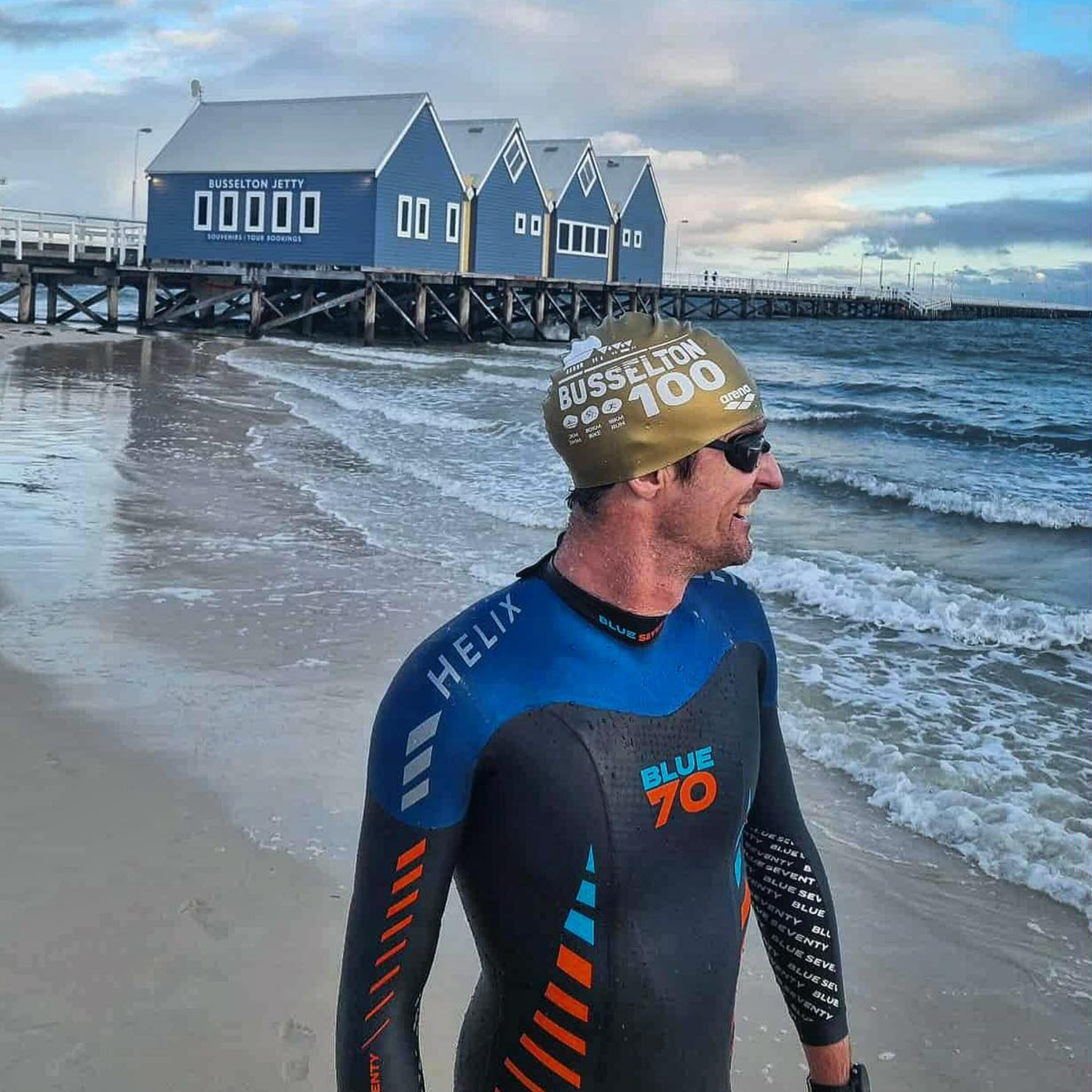
Here’s where an honest trade-off lives. Our Helix wetsuit uses incredibly flexible 40-cell Yamamoto neoprene through the arms and shoulders. That flexibility gives you a near-invisible shoulder rotation and a fatigue-free catch, but the material is thinner and more susceptible to fingernail punctures than the hardier neoprene you’d find in a dedicated training suit. That’s not a flaw - it’s a performance choice. It’s exactly why we tell swimmers who hit the water three or four times a week to look at the Reaction or Fusion if durability is their top priority. The right suit for your frequency of use is key.
Beyond fingernails, pinholes also come from:
- Brushing against barnacles or rough pool edges during entries and exits
- Stowing the suit unfolded on gritty surfaces or sharp zipper pulls in a transition bag
- Dragging heels or toes during a rushed wetsuit strip in T1
- Salt crystals or dried chlorine stiffening the neoprene surface, making it more brittle when stretched
How to Spot a Pinhole Before It Gets Worse
Pinholes are shy. They don’t flare open, and a suit can look immaculate when dry. The best way to find them is with a methodical approach - ideally after a good rinse, when the suit is clean but still damp.
- Hang it inside out in bright, raking light. Look for any spot where the smooth neoprene skin appears dimpled or interrupted. Fingernail marks often show as a faint crescent even if they haven’t fully punctured. If you see one, investigate.
- Do the water test. Turn the suit right-side out, pinch the neck and cuffs closed, and carefully fill it with water (a friend or a hose with low pressure helps). Watch for a slow weep - that’s a pinhole. A stream means something larger that needs a different repair.
- Stretch gently. Pull the material in all directions near any suspect spot. Many pinholes only open under tension, which is exactly when they leak during swimming.
Mark every leak you find with a small piece of masking tape, so you don’t lose them once you start handling the cement.
The 10-Minute Fix You Can Do at Your Kitchen Table
Pinhole repair is about patience, not skill. We stock Aquaseal neoprene cement precisely because it handles this kind of tiny job beautifully. Here’s how to do it right.
What You’ll Need
- Neoprene cement (a small tube goes a long way)
- A toothpick or fine applicator
- Rubbing alcohol and a lint-free cloth
- Masking tape
- A flat, clean surface
- Clean the area. Wipe around each pinhole with a little rubbing alcohol to cut any salt, chlorine, or skin oils. Let it dry completely - cement hates moisture.
- Stabilize the hole. Place a piece of masking tape on the inside of the suit directly behind the pinhole. This stops cement from gluing the interior surfaces together. For really tiny holes, you can also dab a bit of tape on the outside to control any spillover.
- Apply the cement sparingly. Dip the toothpick into the cement and transfer a tiny bead right into the pinhole. The goal is to fill the puncture, not paint the suit. Too much cement creates a stiff spot that won’t stretch with the surrounding neoprene, and that can feel more annoying than the leak itself.
- Let it cure - no shortcuts. Lay the suit open and flat, and leave it alone for at least the time recommended on the cement tube (usually 8-12 hours). Rushing this step is the number one reason a repair fails. A properly cured spot will be firm but remain flexible.
- Remove tape and test. Peel off the masking tape, stretch the area gently, and do another quick water test if you want total peace of mind. The suit should be watertight and move as freely as it did before the puncture.
If a pinhole has already elongated into a small tear - the classic fingernail slit along a forearm - you can still bridge it with cement, but I’d recommend reinforcing the inside with a wetsuit-specific fabric patch. Same cleaning rules apply, and you’ll need an overnight cure.
Prevention: Simple Habits That Add Seasons to Your Suit
Fixing a leak feels good. Avoiding one feels even better. After years of seeing suits come through our shop, I can tell you these four habits make a huge difference.
- Don with the pads of your fingers, not the tips. Pinching the neoprene between your fingernails and thumb is what causes almost all pinholes. Use the flat, padded part of your fingers to pull the suit up. Many swimmers swear by thin cotton gloves or even nitrile gloves during donning - it feels odd at first, but after a few sessions it’s automatic, and you’ll stop finding new punctures.
- Trim and file your nails before open-water sessions. A rough nail edge is the single most preventable cause of wetsuit damage in any tri club. A quick file on Saturday morning before a Sunday race is free insurance.
- Rinse, then dry flat. Salt and chlorine are slow abrasives. Rinse your suit inside and out with fresh water after every swim. Dry it inside-out first, then right-side out, draped over a wide hanger or laid across a drying rack. Never hang a wetsuit from the neck.
- Store loose, not crumpled. Cramming a damp suit into a tight transition bag creates pressure points that crack the neoprene skin over time. Roll or fold gently, no sharp creases.
When a Pinhole Is More Than a Pinhole
If you find a cluster of pinholes, or water is streaming in rather than weeping, it’s time to step back. Tears along seams, zipper failures, or cuts that go clean through the neoprene need a professional eye. Our warranty covers manufacturing and material defects for one year on suits like the Helix, Reaction, and Fusion - but fingernail punctures, heel tears, and wear-and-tear aren’t included. That means a little DIY care with cement isn’t just satisfying; it keeps your wallet happy too.
For anything bigger than a pinhole, or if you’re simply unsure, reach out to us at us@blueseventy.com before you reach for the glue. We see every kind of damage out there, and we’ll help you sort out whether it’s a kitchen-table fix or something that needs a pro.
The Little Ritual That Keeps You Swimming
Repairing a pinhole isn’t glamorous. But it’s the kind of quiet maintenance that separates a swimmer who fights their gear from one who trusts it. A suit that holds its thermal layer, delivers consistent buoyancy, and slips through the water without disruption is a suit you can forget about on race morning - and that peace of mind is worth a few minutes with a toothpick.
So tonight, after your next swim, hang your suit in good light and take a look. Five minutes now can turn a cold, distracting leak into a distant memory. And if you’re tired of chasing pinholes in a suit that’s past its prime, maybe it’s time to explore a new one - built for your training frequency and the kind of swimming you love. All for the swim.
Shop our wetsuit care accessories - and if you’re in the market for a fresh suit, take a look at the Helix, Reaction, and Fusion collections.