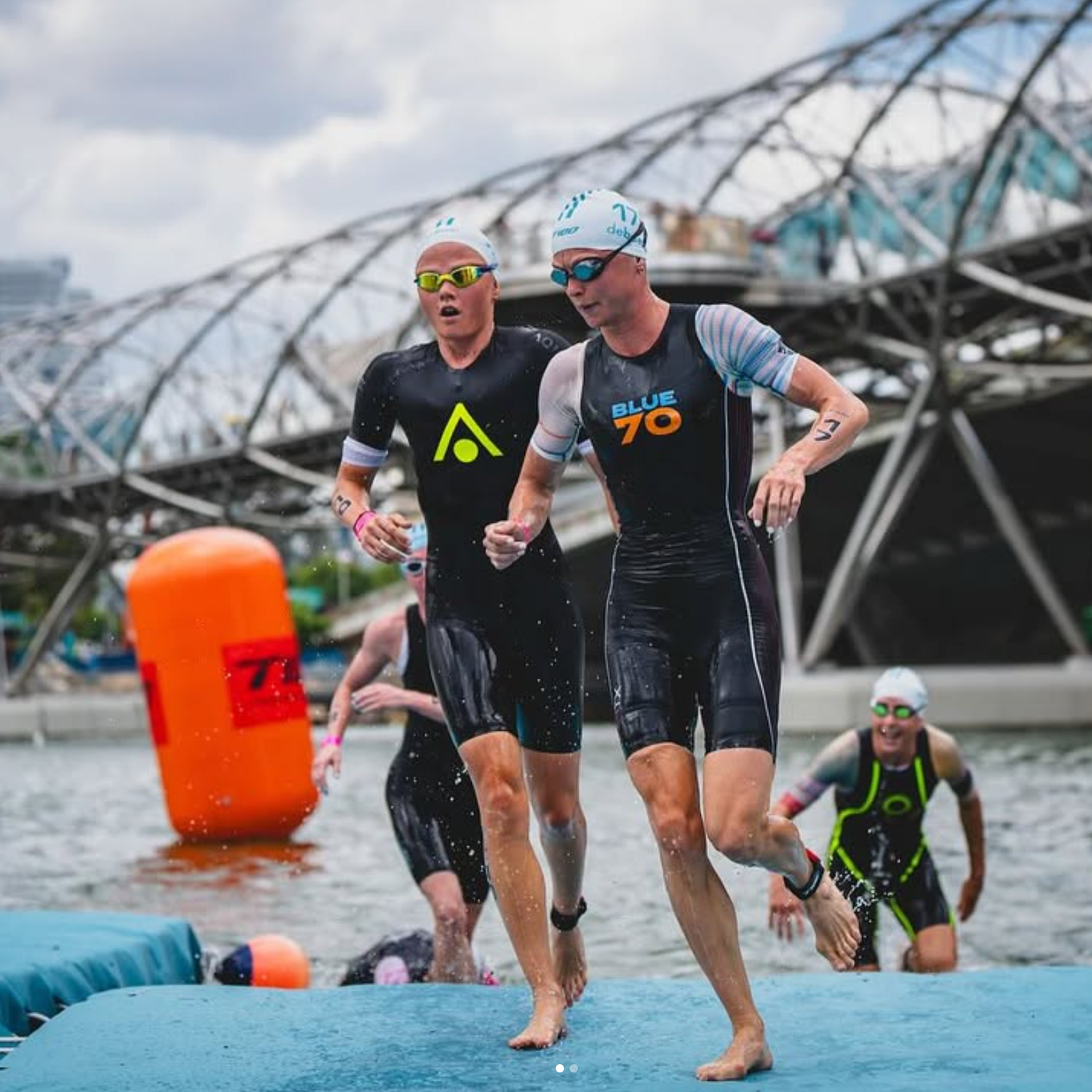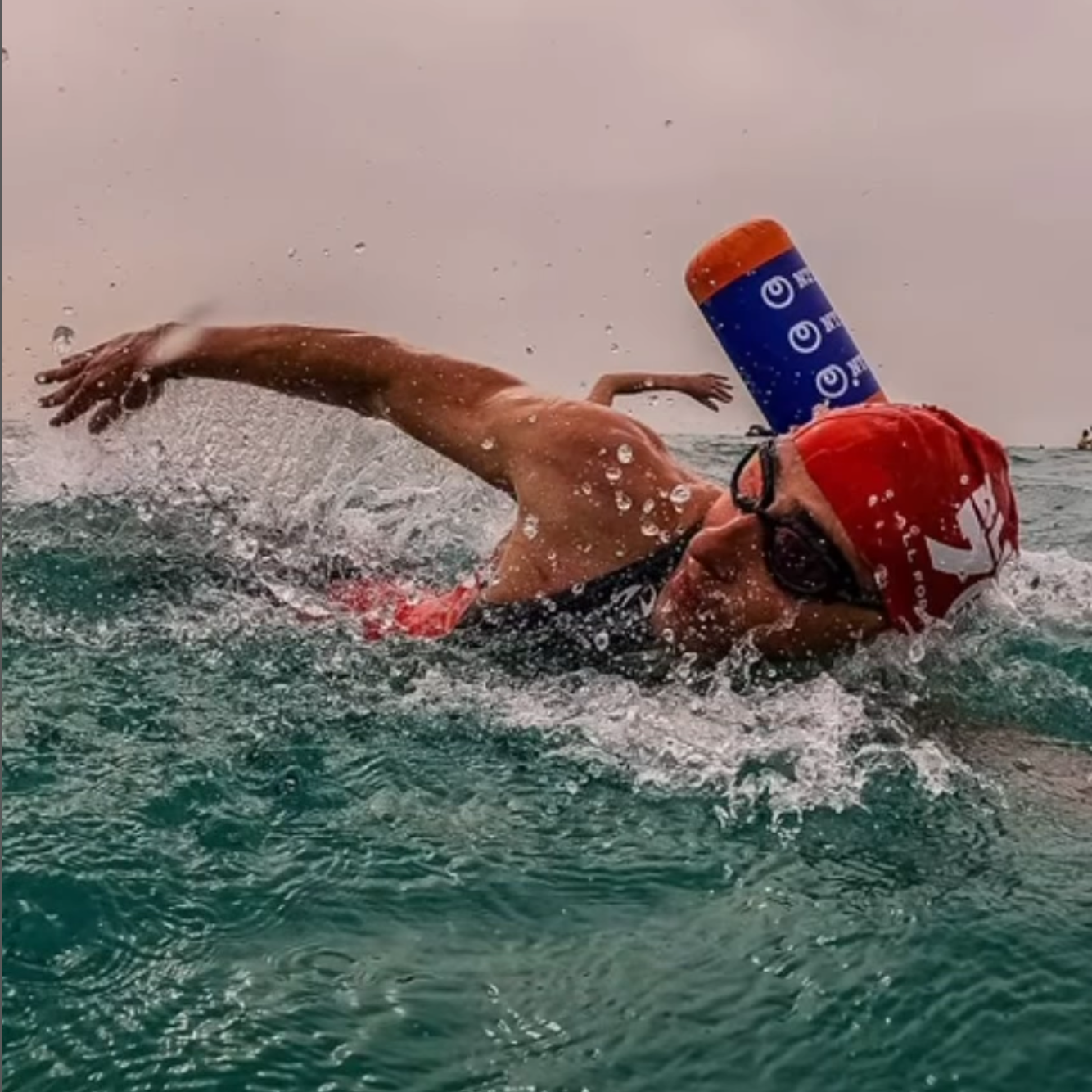



“Quick dry” sounds like a clear buying criterion for SwimRun. In practice, it describes only part of what athletes feel during a race. The real issue is water management between segments: how the suit handles retained water, airflow, heat buildup, and freedom of movement when you leave the water, start running, and prepare to swim again.
That distinction matters because SwimRun asks more from a wetsuit than a single open-water swim or a standard triathlon start. The suit stays on. You move from horizontal swimming to upright running, then back into the water, often several times. A suit that feels fine during one steady swim can become heavy, hot, or restrictive once repeated transitions enter the picture.
Blue70 approaches this category from a swim-first point of view. That means looking past surface claims and asking better questions about how a suit behaves over the full course. In SwimRun, a strong suit does not need to become dry between sections. It needs to keep working while wet.
What athletes usually mean by “quick dry”
A wetsuit is not designed to keep you dry. It allows a thin layer of water in, and your body warms that water for insulation. So when athletes ask for a quick-dry SwimRun wetsuit, they are usually talking about race feel rather than literal dryness.
Most of the time, they mean one or more of these four things:
- less water weight during the run
- less cling or drag once they exit the water
- less overheating on longer run sections
- a lighter, more settled feel before the next swim
Those are useful goals. They just point to a broader system of fit, drainage, material choice, and ventilation rather than a simple dry-versus-wet question.
Why SwimRun changes the conversation
In triathlon, your wetsuit comes off in T1. In a typical open-water session, the suit’s job ends when you leave the water. SwimRun changes the demands completely because the wetsuit has to perform through repeated cycles of immersion, running, cooling, and reheating.
That repeated cycle changes what athletes should look for. A suit that performs well in SwimRun usually does three things well:
- it limits how much excess water stays trapped inside the suit
- it lets water drain quickly after each exit
- it stays comfortable while damp during the run
The third point gets overlooked. A suit does not need to feel dry to feel fast. It needs to avoid turning sloppy, abrasive, or thermally awkward when the course shifts from water to land.
Drainage matters more than evaporation
This is the part many athletes miss. When people picture a quick-dry wetsuit, they often think about evaporation. They leave the water and want the suit to stop feeling soaked. But evaporation depends on air temperature, wind, humidity, and time. Drainage starts as soon as you stand up.
If the suit releases pooled water quickly, you feel the difference right away. If it holds water in loose areas through the torso, lower legs, or storage zones, the suit can feel heavy even when the outer surface is shedding water well.
That is why fit plays such a big role in perceived drying speed. A snug suit leaves less dead space. Less dead space means less extra water moving around with every step. You notice that on short, punchy run segments and on uneven ground, where sloshing and shifting become harder to ignore.
Fit is one of the biggest water-management factors
Many complaints about a wetsuit “staying wet” start as fit problems. If the suit sits low through the hips, leaves extra room in the torso, or bunches behind the knees, it tends to carry more water and move more during the run. That movement creates distraction and friction. Over time, it can also change how the suit feels when you re-enter the water.
A proper wetsuit fit should feel snug on land and more comfortable once you are in the water. For SwimRun, you also need the suit to stay composed when you switch to upright movement. A fit that works only in the swim is not enough.
Dead space is the enemy here. Extra material traps water. Trapped water adds weight and motion. Motion leads to rub points and wasted energy. Small issues accumulate quickly when the race includes multiple exits and re-entries.
Material choice affects the run as much as the swim
Blue70 wetsuits use Yamamoto neoprene in 38, 39, and 40 cell constructions, with higher cell numbers bringing more flexibility. In SwimRun, flexibility does more than support the stroke. It also affects arm swing, torso rotation, and how natural the suit feels when you run.
Athletes often think about flexibility only in terms of shoulder fatigue in the water. That matters, of course. But in SwimRun, the run changes the conversation. A suit that feels free through the shoulders and torso tends to interfere less with posture and cadence on land.
The inner lining matters too. Once a suit has been soaked, warmed by your body, then exposed to wind on shore, the feel of the interior becomes more noticeable. A comfortable wet interior can carry you through repeated transitions without becoming distracting. A suit that starts rubbing or cooling too sharply can alter your pacing decisions.
Thermal balance matters on mixed courses
Cold-water athletes face an extra layer of decision-making. Blue70’s Thermal Reaction is fully lined with Zirconium jersey for added thermal protection in cold water. Below about 56 to 58°F, a purpose-built thermal suit adds meaningful warmth. That matters for open-water comfort and exposure management.
In SwimRun, though, warmth is only half the calculation. You also need to think about what happens on the run. A suit that feels right during a cold swim can feel too warm on a long climb or an exposed run segment. The best answer depends on the balance between water temperature, run duration, effort level, and course profile.
That is why the warmest option is not always the best SwimRun option. The better target is thermal balance across the full event.
Why a purpose-built SwimRun suit matters
Blue70’s Alliance is the only suit in the line warrantied for swimrun use. That matters because SwimRun creates a different stress pattern than standard swimming. The suit has to handle repeated exits and entries, sustained movement on land, and the wear that comes from racing across mixed terrain while still wet.
If SwimRun is your main focus, using a suit designed and covered for that use is the cleanest starting point. The event asks the wetsuit to do two jobs well, not one.
How to make any SwimRun exit feel better
Athletes can improve the feel of a wetsuit between segments with better habits. The first minute after each swim is where drainage, posture, and heat management start to work for or against you.
Stand tall early
Once you clear the water, stand upright and let gravity move water down and out. Staying bent over keeps water pooled through the torso and thighs.
Reset the suit right away
If the suit has shifted low at the hips or bunched through the waist, fix it early. Small adjustments reduce trapped water and cut friction over the next run section.
Use ventilation before you overheat
If your suit design allows controlled ventilation, use it on longer run segments before heat buildup becomes a problem. Waiting until you already feel overheated usually means you waited too long.
Keep the opening run cadence tidy
Short, quick steps in the first minute help the suit settle without the bigger tugging forces that come with overstriding. Let the suit drain and stabilize before you push the pace.
Practice in realistic conditions
A windy shoreline, shaded trail, and warm exposed ridge all change how a suit feels between segments. Train in the kind of environment you expect on race day.
How “quick dry” affects pacing
The feel of the wetsuit after each exit can change pacing more than athletes realize. A suit that sheds water well and stays comfortable while damp tends to make the early part of the run feel more controlled. A suit that feels clammy, heavy, or hot can push athletes into poor decisions.
Those decisions usually show up in familiar ways:
- surging too hard to get comfortable
- opening the suit too early and losing control of temperature
- backing off pace because the suit feels oppressive on land
SwimRun rewards rhythm. A wetsuit that reduces the cost of each transition helps preserve that rhythm over the course of the day.
How to test a SwimRun wetsuit properly
Do not judge a SwimRun suit by one swim and a walk back to the car. Test it in a way that matches the event.
- Swim for 8 to 12 minutes at race effort.
- Exit and run for 10 minutes.
- Re-enter and swim again.
- Repeat the sequence once more if conditions allow.
During the session, pay attention to these questions:
- Does the suit feel lighter within the first minute of running?
- Do the lower legs hold water?
- Does the torso cool too sharply in the wind?
- Does the interior start rubbing once you heat up?
- Does the second swim entry feel smooth, or does the suit feel unsettled?
That tells you more than handling the suit on shore and guessing from the fabric alone.
Matching the suit to the athlete and the course
Quick-dry needs are not identical for every SwimRun athlete. Course design and pacing style change what matters most.
Short, fast events
A low-bulk, stable feel often matters most here. Athletes pushing the pace want a suit that stays out of the way in both the swim and the run.
Long-course SwimRun
Minor comfort issues grow over time. Water retention, heat buildup, and friction deserve more attention because the race gives them hours to become a problem.
Cold-water racing
Below about 56 to 58°F, thermal protection becomes a bigger factor. The right choice depends on swim length, run length, terrain, and the conditions you expect on land.
Newer SwimRun athletes
First-timers often choose based only on swim feel. That is understandable, but SwimRun demands more. The right suit also has to disappear on the run as much as possible.
Care matters after the race too
SwimRun exposes a suit to fresh water, salt water, sweat, dirt, and repeated handling in a wet state. Rinse the suit after each session, dry it fully before storage, and inspect high-stress areas for small nicks or tears. Minor damage can spread if it goes unnoticed.
If SwimRun is your main discipline, use the suit built for that use. In Blue70’s line, that means the Alliance.
A better question to ask before you buy
If you are shopping for a SwimRun wetsuit, do not stop at “How fast does it dry?” Ask how it manages repeated swim-to-run transitions. Ask how much water it retains, how quickly it drains, how stable it feels on land, and how comfortable it stays by the second and third re-entry.
That is where race-day value shows up. A good SwimRun wetsuit does not need to become dry between segments. It needs to stay light enough, cool enough, and flexible enough that you can keep moving well in both sports.
If you want a Blue70 suit made for that demand, start with the Alliance SwimRun. For fit help before race season, use the size charts or take a look at the fit guide.