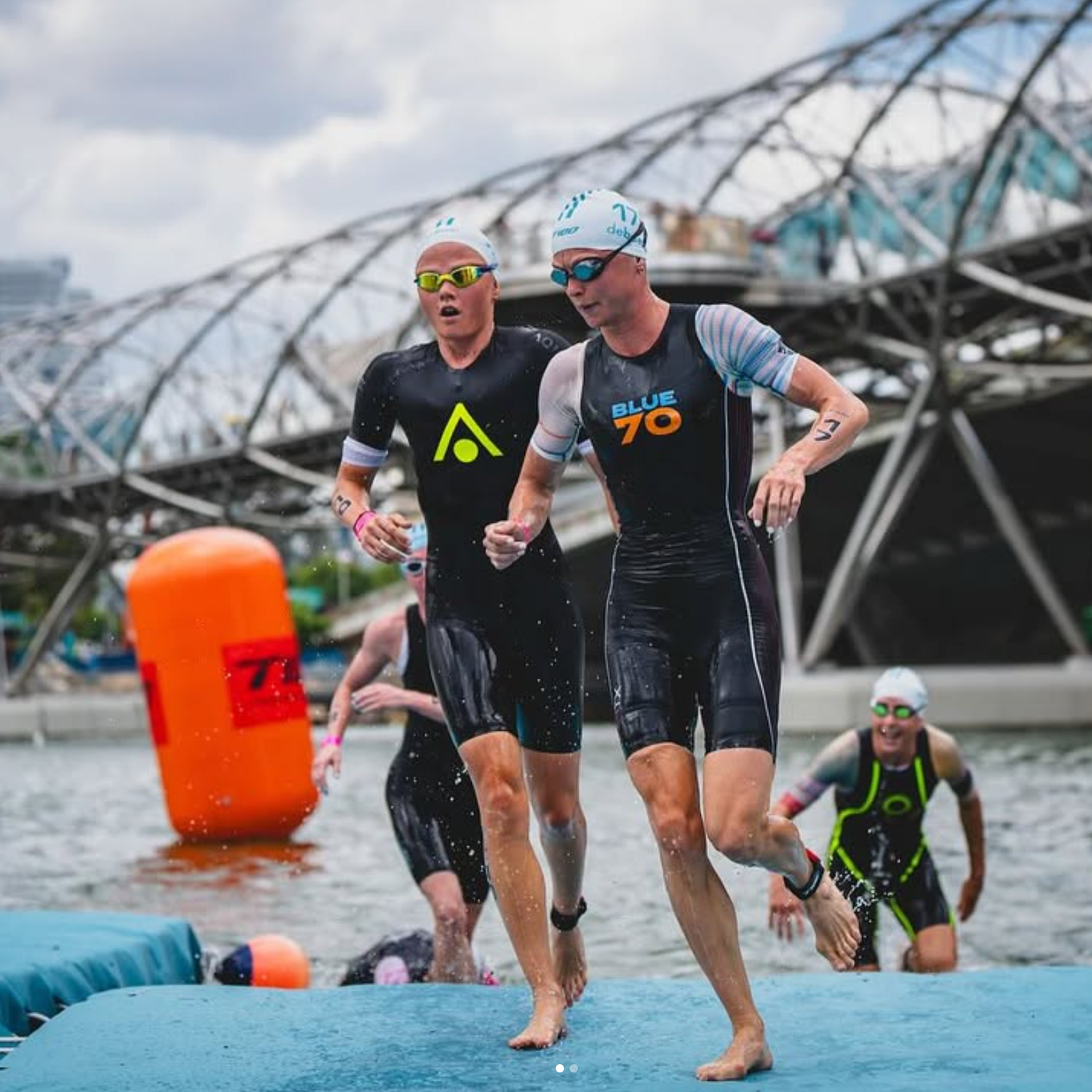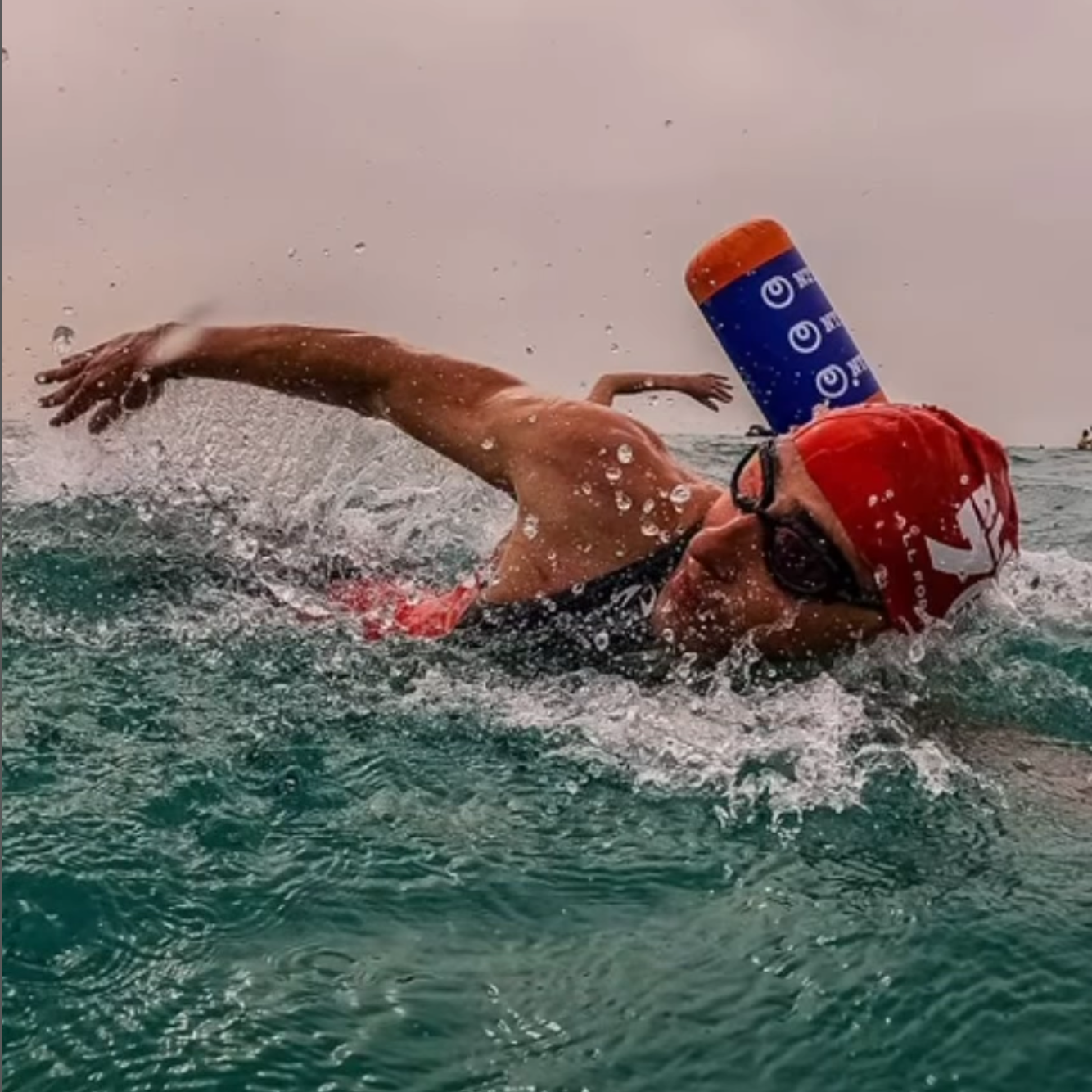



Most athletes judge shoes on the run. SwimRun forces a better test.
Once you stop changing footwear between disciplines, your shoes become part of the swim. They affect drag, body position, drainage, footing, and the first few strides after every exit. That is why the usual road-versus-trail conversation misses the real point. In SwimRun, the shoe is not a running-only decision. It is part of your race system.
From a Blue70 point of view, this matters because efficient swimming depends on small details. A suit can support body position, freedom through the shoulders, and race-day comfort, but the wrong shoe can still pull the lower body down, hold water, and make every transition feel heavier than it should. Athletes who race well in SwimRun usually figure this out early. They stop asking which shoe feels best on dry land and start asking which shoe interferes least once the race gets wet.
Why SwimRun changes the shoe question
A regular running shoe is built around land movement. It assumes dry mechanics, repeated footstrike, and a session that ends without swimming through open water. SwimRun breaks that assumption. You run in the shoe, swim in it, climb out in it, and repeat the cycle over and over.
That changes what matters. Cushioning still matters. Fit still matters. Grip still matters. But SwimRun adds a second set of demands that many athletes underestimate until race day:
- How much water the shoe holds after a swim
- How quickly that water drains on the run
- How secure the foot feels when the upper is soaked
- How stable the platform feels on wet and uneven ground
- How much resistance the shoe adds in the water
A shoe can feel smooth and comfortable in a pre-race jog, then turn clumsy the moment it comes out of the first swim. Thick padding, soft collars, and absorbent materials often sound good in the shop. In the water, they can become extra bulk attached to your feet.
Drag matters more than most runners expect
The most underappreciated part of this comparison is drag. Athletes often focus on shoe weight because it is easy to notice in the hand. Swimming tells a different story. The real issue is what that shoe does to your line in the water.
Your feet sit at the end of a long lever. If the shoe adds bulk, holds water, or resists clean movement, your legs can sit lower and your stroke has to compensate. That does not always show up as a dramatic problem. Sometimes it is a quieter cost: a higher stroke rate, a less useful kick, tighter hip flexors, or a swim that feels harder than the distance should justify.
This is where swim-specific thinking helps. Wetsuit design has always been about controlled buoyancy, mobility, and body position. SwimRun footwear deserves the same kind of analysis. A shoe that swims poorly can work against the efficiency you have built everywhere else in your setup.
Drainage beats dryness
In SwimRun, a good shoe does not stay dry. It recovers quickly after getting wet.
That distinction matters. Shoes for this sport should not be judged by how much water they keep out. They should be judged by how little water they keep in. The faster a shoe sheds water, the sooner it starts to feel normal again on land.
That first minute after a swim exit tells you a lot. A shoe with poor drainage often creates the same sequence every time:
- You stand up with extra weight in the shoe.
- Your cadence drops during the early strides.
- Your foot moves more inside the upper.
- Friction builds at the heel or forefoot.
- Your footing gets less precise on technical terrain.
A shoe that drains well settles faster. It feels lighter sooner, climbs better, and asks less from the lower leg while you are trying to regain speed.
Grip is only useful if it matches the course
Many athletes say they want good grip, but that phrase is too broad to be useful. Grip on wet rock is different from grip on hard-packed dirt. Grip on a slick boat ramp is different from grip on gravel or pavement. SwimRun courses rarely stay consistent for long, which is why the outsole question needs a closer look.
The most demanding moments often happen at the edges of each segment. You are stepping out of the water with a high heart rate, climbing over a slippery shoreline, then trying to run cleanly before the next entry. Shoes that feel fine on predictable surfaces can lose some of that confidence once the ground turns wet, angled, or irregular.
The best choice depends on the course. A route with short swims and long runnable sections may reward more run-oriented comfort. A course with frequent entries, rough footing, and slick transitions raises the value of drainage, wet traction, and stability.
Comfort means something different in SwimRun
On a normal run, comfort usually means cushioning and smooth turnover. In SwimRun, comfort starts with wet fit. The shoe has to hold the foot securely after immersion, without turning sloppy through the midfoot or rubbing once your skin has been wet for an hour.
This is why a plush shoe is not always the best choice. Extra foam and extra padding can feel appealing at the start of the day, but they often come with trade-offs in drainage, stability, and swim friendliness. In this format, more material usually means more to carry through the water.
Many athletes end up preferring a shoe that feels a little simpler than their usual run choice. Less excess. Less soak. Less movement inside the upper. More control.
Shoes work with the rest of your system
SwimRun rewards athletes who think in systems. Your shoes are not acting alone. They interact with your wetsuit, your stroke mechanics, your pacing, and the way you handle each transition between horizontal swimming and upright running.
If your suit supports a strong body line in the water, bulky shoes can still compromise it. If the footwear feels unstable after each swim, you may run more cautiously and lose momentum on technical ground. If the shoes stay heavy too long, the first part of every run leg becomes a reset instead of a chance to move.
That is why gear testing matters. Dry-land assumptions do not tell you enough. Open-water sessions do.
When regular running shoes can still work
Regular running shoes are not automatically the wrong answer. For shorter events, simpler terrain, or athletes doing their first SwimRun, a familiar lightweight shoe can be enough if it handles water well and stays secure once soaked.
But this is the part that matters: do not guess. Test it.
Take the shoes into open water and use them the way the race will use them. Then pay attention to the details that decide whether they stay manageable or become a problem:
- Does the heel stay locked down when wet?
- Does the upper stretch and allow the foot to slide?
- Does the shoe drain in the first minute, or stay heavy longer?
- Can you run confidently on wet, angled, or rough surfaces?
- Do the shoes affect how high your legs ride in the water?
Those answers matter more than how the shoe feels during a short dry jog in the parking lot.
A better way to evaluate race-day footwear
If you want a practical test, ignore the warm-up jog and focus on the transition points. Judge the shoe by the final stretch before a swim entry and the first stretch after a swim exit. Those moments expose weaknesses fast.
A shoe that feels waterlogged, unstable, or slow to settle is not just uncomfortable. It is taking energy from the part of the race that defines SwimRun. By contrast, a shoe that disappears beneath you, drains fast, and lets you regain rhythm quickly can make the whole event feel more controlled.
That is the key shift in perspective: you are not picking a running shoe that can tolerate a swim. You are picking race equipment that has to remain runnable after repeated swimming.
The Blue70 takeaway
From a Blue70 perspective, good SwimRun gear protects the swim you have worked hard to build. A suit designed for swimming can support body position, mobility, and comfort over repeated entries and exits. Your footwear should support that same goal, not fight it.
Start with the course. Test your shoes in open water. Pay close attention to drainage, wet traction, and how the shoe changes your line in the water. A regular running shoe can work in the right setting, but only if it performs once it is soaked. In SwimRun, that is the standard that counts.
If you are refining your setup, pair your footwear testing with a swim-specific suit that is built for repeated open-water efforts. The more integrated your system feels, the less energy you waste managing your gear, and the more of your attention stays on the race itself.