


The first time you swim below 55°F with a loose hood, you don't think about stroke efficiency. You inhale hard, lift your head, and shorten your stroke. That reaction starts at the neck and around the ears, where your body keeps a dense network of cold receptors close to the skin.
Those areas read sudden cold as an emergency. Your heart rate jumps and your breathing turns shallow before you can reset. A properly fitted neoprene hood adds thermal protection by slowing that cold shock response, not by eliminating it.
Why the head and neck react first
Cold water against the ears, jaw, and upper neck triggers a quicker response than cold water on your legs or arms. The blood vessels sit closer to the surface there, and the cold receptors are packed tightly. That is why a loose neck opening can leave you gasping even when the rest of your wetsuit fits well.
A hood that seals cleanly buys you time to settle into a breathing rhythm. It does not replace gradual acclimatization, but it reduces the sudden spike that makes the first 200 meters feel panicked.
The neck seal is the job
Cold water enters through the neck opening. The crown thickness does little if the seal lets water move with every breath and sighting lift. A loose neck pumps cold water past your ears and down your back. A tight neck grips your throat and shortens your rotation. Both force you to work harder than the water temperature alone requires.
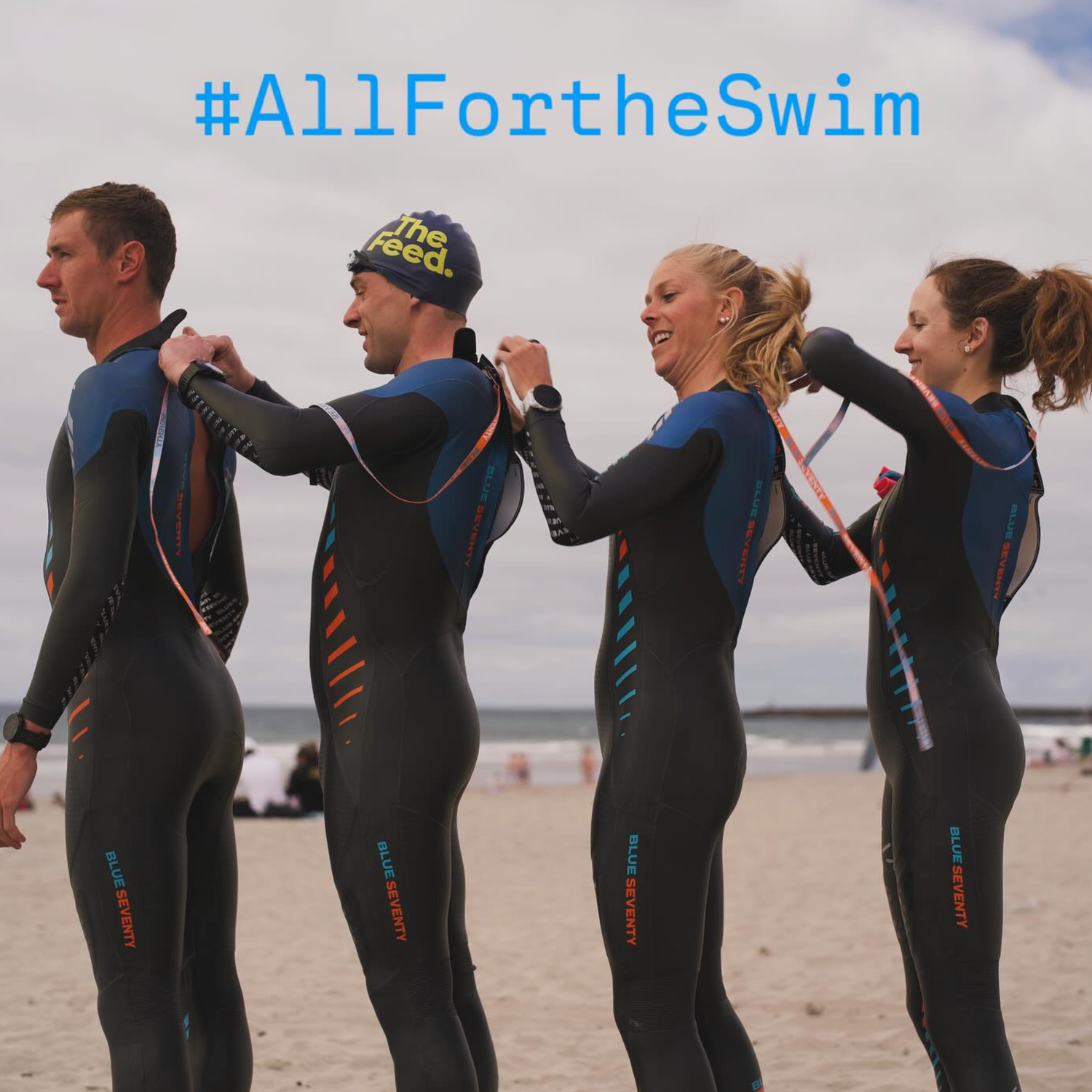
Smooth-skin neoprene around the face and neck seals better than nylon-faced panels because it lies flat against your skin and leaves fewer channels for water to enter. The lower edge or bib should tuck under your wetsuit collar before you zip up. When the hood and suit work as one system, you stop fighting the gap.
Where most swimmers get it wrong
Most hood problems start on land. You size down to stop leaks, then cannot turn your head to breathe. You leave the ear openings halfway over your ears. You tuck the bib in, then yank the suit by the shoulders and pull the hood loose. None of this means hoods are bad. It means the fit was never set.
A hood should feel snug on dry land and more comfortable in the water. That is the same rule as a wetsuit. If you can pull it on without adjusting your ears, it may be too big. If you cannot open your mouth to breathe or swallow, it is too small.
Fit checklist before you swim
- Pull the hood down until the ear openings surround your ears.
- Tuck the bib under your wetsuit collar before zipping the suit.
- Rotate your head and sight forward on land.
- Lay the chin flap flat instead of bunching it under your jaw.
Matching a hood to your swim profile
Water temperature is one input, not the whole decision. Below about 56°F, a hood becomes part of your thermal system rather than an optional accessory. Between 56°F and 70°F, wind, distance, and your own cold tolerance decide what you need. Above 70°F, most swimmers find even a thin hood too warm for a long swim. The same thresholds that guide wetsuit choice apply here.
Blueseventy built its cold water line with the Thermal Helix in 2015, the first purpose-built cold water wetsuit in the line. The design question for cold water gear is always the same: keep the swimmer comfortable without giving up freedom of movement. A race-day hood often runs thinner because race effort generates heat. A training hood for slower, longer swims can sit snugger and warmer.
Care after cold water and chlorine
Neoprene hoods tear in the same two places as wetsuits. Fingernail punctures appear near the neck opening, and small tears form where you pull too hard on the chin. Use the pads of your fingers, not your nails, when you adjust the hood.
After the swim, rinse the hood in fresh water and dry it flat out of direct sun. Do not wring it or hang it by the chin flap. Both stretch the neck opening and turn a small tear into a larger one. If a fingernail puncture appears, a neoprene cement like Aquaseal can repair it before it splits further.
Safety still leads
A hood adds thermal protection. It does not make cold water risk-free. Acclimate gradually, swim with other people, and plan how you will get warm after the swim. Afterdrop can hit once you are out of the water, so change out of wet gear quickly and layer up. If you shiver severely, feel confused, or cannot get warm, seek warmth and medical help.
Get the neck seal right and you will spend less energy managing the cold and more energy swimming. Before you buy, check the Blueseventy fit guide and take the hood for a test swim in water you know. Happy Swimming.