


If you spend enough time around triathlon and open water, you start to notice a pattern in how athletes shop for wetsuits. They read review after review looking for a winner, hoping one model will somehow reveal itself as the obvious choice. But wetsuits do not work like bike computers or sunglasses. A swim-specific wetsuit changes how your body sits in the water, how your shoulders move, how your catch feels, and how much energy the swim costs you before you even touch your bike.
That is why the usual review language can be so misleading. Words like “flexible,” “fast,” and “buoyant” sound useful, but on their own they do not tell you much. A wetsuit can feel soft in the hands and still be wrong for your stroke. It can feel impressively buoyant in the first 200 yards and still become tiring over the full swim. The better question is not, “Which wetsuit wins the review?” It is, “Which suit is built for the way I actually swim and race?”
At blueseventy, that is how we think about wetsuit design. We build for swimmers first. That means focusing on body position, freedom from restriction, feel for the water, and race-day practicality rather than reducing every conversation to a vague idea of speed.
Why most wetsuit reviews miss what matters
Most reviews begin with first impressions. How easy was the suit to pull on? How flexible did the shoulders feel on land? Did the swimmer feel quick in the first few strokes? None of those observations are useless, but none of them are enough either.
A wetsuit should really be judged in motion, after enough swimming for small problems to show themselves. A neck that felt fine at the dock may start to annoy you after fifteen minutes. Shoulders that seemed loose on land may feel restrictive once your stroke settles into rhythm. A suit that gives you a dramatic lift at the hips may either clean up your body position beautifully or throw off your timing if the buoyancy pattern does not match how you naturally move through the water.
That is why a better review starts with better questions.
- Does the suit improve your body position without distorting your stroke?
- Can you maintain a natural catch and still feel pressure on the water?
- Do your shoulders stay relaxed as the swim goes on?
- Does the suit support the kind of swim you are actually doing: racing, training, cold water, or all three?
Those questions get much closer to what matters on race morning.
The overlooked truth: a wetsuit is a fatigue-management tool
One of the most underexplored ways to think about wetsuits is this: the right suit is often the one that manages fatigue best, not the one that feels most dramatic in the first five minutes.
That is especially true in triathlon. You are not swimming in isolation. You are trying to get through the swim with good form, a controlled effort, and enough composure left to ride and run well. A suit that supports an efficient, repeatable stroke can be more valuable than one that simply feels flashy at the start.
Body position changes the cost of swimming
This is the biggest performance factor for most athletes. Wetsuits add buoyancy, and buoyancy helps improve body position. In practical terms, that usually means the hips and legs ride higher, drag is reduced, and the swimmer moves through the water more efficiently.
That is why one of the simplest truths in open-water swimming still holds: buoyancy equals speed in the water. Not as a guarantee, and not as a promise of a faster split every single time, but as a sound principle. If your body sits in a better line, swimming generally costs less energy.
This is also why newer swimmers often notice the biggest difference. If your lower body tends to sink, a swim-specific wetsuit can clean up your position in a very noticeable way. More advanced swimmers may still benefit, but often in subtler ways tied to efficiency and fatigue rather than raw sensation.
Shoulder freedom matters more the longer you swim
A lot of athletes test shoulder flexibility by trying on a wetsuit and swinging their arms around in a shop or bedroom. That can tell you something, but not enough. The real question is how your shoulders feel after sustained swimming.
Open-water fatigue has a way of exposing even small restrictions. If the suit limits shoulder movement, you may start shortening the stroke, lifting tension into the neck, or losing rhythm as the swim goes on. Those issues rarely appear in the first minute.
At blueseventy, this is why neoprene selection and panel layout matter so much. Our wetsuits use Yamamoto neoprene in 38, 39, and 40 cell constructions, with higher cell numbers offering greater flexibility. But flexibility is only one part of the equation. The intended use of the suit matters too. A highly refined race suit can feel incredibly free through the shoulders, while a more durable suit may make better sense for athletes who train in their wetsuit regularly.
Feel for the water still matters in neoprene
Stronger swimmers and more technically aware triathletes often notice this before anyone else. A wetsuit does not just change your position in the water. It can also change how connected you feel at the front of the stroke.
If you lose feel for the water, the catch can become less precise. You may still float higher, but the stroke can feel less natural. That is one reason the blueseventy Helix includes a permeable catch panel designed to help preserve feel for the water while still delivering race-day performance. That detail matters because propulsion begins with the catch, not just with how high you float.
The contrarian point: the most race-focused suit is not always the best choice
It is tempting to assume the most aggressive race suit must be the best option for every serious athlete. In practice, that is not always true.
For many triathletes, the better race-day choice is the suit that feels calm, predictable, and sustainable. That may mean a suit that breathes easier, supports better body position without overcorrecting, reduces shoulder fatigue, and comes off cleanly in T1. Those qualities can matter more than a suit that makes a dramatic first impression but asks too much of you over the full swim.
This matters most for:
- first-time triathletes
- committed age-groupers racing several times a season
- long-course athletes
- swimmers who tend to start too hard in open water
For these athletes, control is often more valuable than sensation.
How to think about the blueseventy line
Different swimmers need different balances of flexibility, buoyancy, durability, and thermal protection. That is the reason our line includes distinct options rather than one suit trying to do everything.
Helix: built for race day
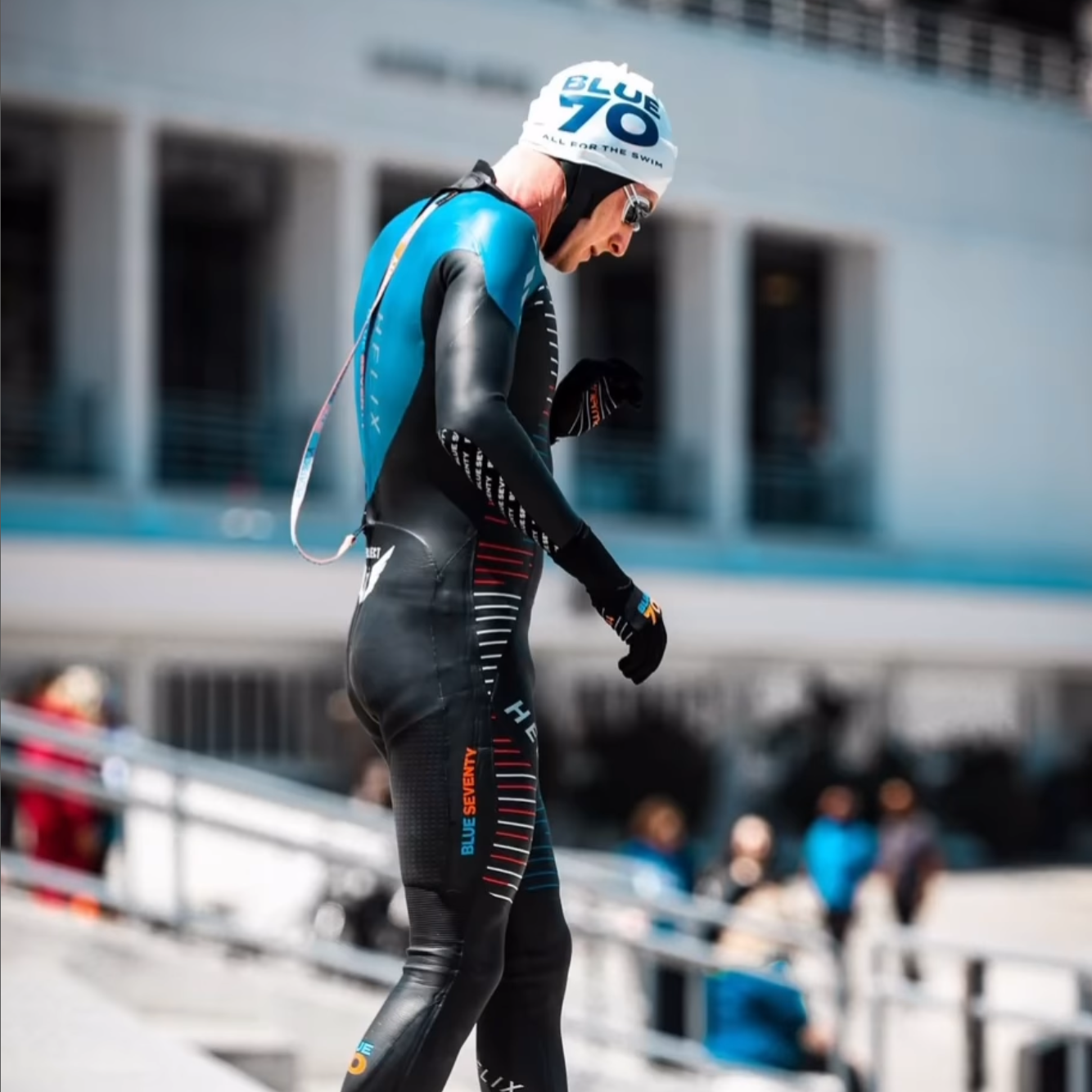
The Helix is our flagship at $995 [verified 2026-07-25]. It is built for total race-day performance, with very thin, extremely flexible neoprene in the arms and shoulders, a permeable catch panel to preserve feel for the water, and LIFT buoyancy panels to improve body position.
It is designed for athletes who want a highly refined race-day suit. But there is a real trade-off here, and it is one we are candid about: a suit built with very thin, delicate neoprene is not the ideal choice for heavy training use. If you are swimming in your wetsuit frequently, that should factor into your decision.
Reaction: the performance workhorse
The Reaction is $680 [verified 2026-07-25] and is a strong match for athletes who swim often and want performance with better practicality for regular use. It uses higher-grade neoprene than the Fusion and is recommended for frequent, longer swims.
For many committed triathletes, this is the sweet spot. It gives you a performance-oriented swim-specific suit without asking you to treat it like a race-only piece of equipment.
Fusion: comfort and repeatability
The Fusion is $420 [verified 2026-07-25] and remains one of the easiest suits in the line to recommend. The 2021 redesign added a lower-sitting neckline for comfort while maintaining a secure seal.
For athletes buying their first serious wetsuit, doing shorter frequent swims, or simply wanting a dependable option that feels comfortable and familiar, the Fusion has a lot going for it. There is a reason it is a best seller. It solves real problems without overcomplicating the choice.
Thermal Reaction: when cold water changes the decision
The Thermal Reaction is $785 [verified 2026-07-25] and is fully lined with Zirconium jersey for added warmth in cold water.
As a practical guideline, once water drops below about 56-58°F, a purpose-built thermal suit adds meaningful thermal protection. That does not mean any suit keeps every swimmer warm in every condition. Water temperature, exposure time, weather, and individual tolerance all matter. But when the water gets genuinely cold, thermal design stops being a nice extra and starts becoming an important part of the swim experience.
At the warmer end, once water rises above about 70-72°F, a full suit can become too warm over longer swims. In those conditions, a sleeveless option or a swimskin may be the better tool depending on the session or event. [VERIFY: current sanctioning-body rule]
Sleeveless and entry-level options still matter
Not every swimmer wants or needs a full-sleeve suit. For warmer water, easier fit, or a more open shoulder feel, a sleeveless design can make excellent sense.
- Reaction Sleeveless - $395 [verified 2026-07-25]
- Glide Short John - $210 [verified 2026-07-25]
- Sprint - $325 [verified 2026-07-25]
The Sprint is the entry point in the line and is described by the brand as one of the top rated entry-level wetsuits. For athletes watching budget closely, it offers a straightforward way into a swim-specific suit.
How to evaluate a wetsuit more intelligently
If you want to choose well, stop looking for a universal winner and start testing for fit, function, and fatigue over time.
1. Swim long enough to get honest feedback
The first few strokes are not the full story. Swim long enough for your body to settle and for the suit to reveal what it is really doing.
- Do your shoulders feel looser or tighter as time goes on?
- Is your breathing easy and natural?
- Does your stroke rate still feel like your normal stroke rate?
- Are you fighting pressure in the chest, neck, or underarms?
2. Pay attention to your lower body
Your hips and legs will tell you a lot. If your lower body usually drops, notice whether the suit helps you feel longer and more level. If you already swim with strong natural balance, make sure the buoyancy feels supportive rather than awkward.
3. Check the catch
During a few pickups or short changes of pace, notice the front end of your stroke.
- Can you still set the catch cleanly?
- Do you feel pressure on the forearm?
- Does the suit allow you to maintain a natural line into propulsion?
That connection matters more than many athletes realize.
4. Match the suit to how you actually use it
Be honest about your use case. That alone will save you from a lot of bad decisions.
- Are you racing only?
- Will you train in the suit weekly?
- Are you swimming in cold water?
- Are you focused on sprint and Olympic distance, or long course?
- Is this your first wetsuit purchase?
Your answers matter more than any generic review score.
Fit is still the biggest performance factor
No amount of smart design can overcome poor fit. A swim-specific wetsuit should feel snug on land and usually more comfortable once you are in the water. If it is sitting too low through the legs, hips, or shoulders, even a great suit can feel restrictive.
The most common mistakes are simple but costly.
- Not pulling enough material up through the calves and thighs
- Leaving the suit too low through the crotch and hips
- Failing to work the neoprene fully upward before setting the torso
- Not lifting enough material into the shoulders
- Judging neck comfort before the suit is properly positioned
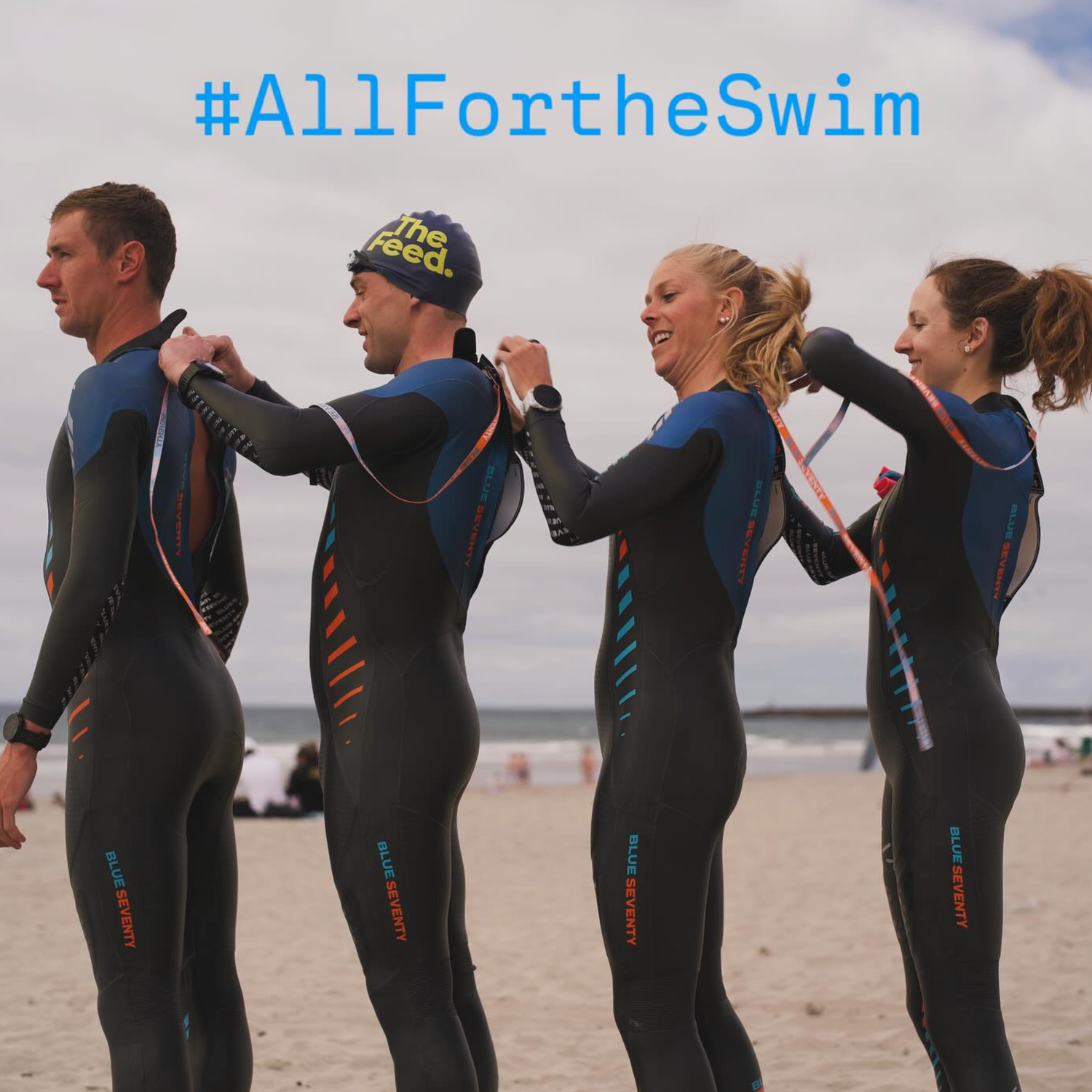
A poorly donned wetsuit often gets blamed for problems caused by setup, not design. That is why we always recommend using the fit guide and, better still, taking the suit into the water before making a final call.
Women’s fit deserves more attention
For many female athletes, the biggest breakthrough is not a different neoprene recipe. It is finally wearing a suit that is actually cut to fit.
Every women’s blueseventy wetsuit uses Femme Fit, with verified design refinements in key areas including the bust, torso, wrists, and ankles. The women’s fit also includes a lowered neckline for comfort and reduced chafing, plus an extended zipper length for easier entry, better accommodation through the hips, and faster transitions.
Those are not cosmetic changes. They affect comfort, confidence, and how naturally the suit works with the swimmer rather than against her. [VERIFY: current Femme Fit size count]
The takeaway
The smartest way to choose a wetsuit is to stop asking which one is “best” in the abstract. That question is too broad to be helpful. A better question is which suit is best matched to your body position, stroke, race distance, training frequency, and water conditions.
That is the lens we use at blueseventy because that is how swimmers actually experience wetsuits. Some athletes want maximum race-day refinement. Some need a dependable suit for frequent training. Some need added thermal protection for cold water. Some simply need a first suit that makes open-water swimming feel more manageable and less intimidating.
All for the swim starts there.
If you are narrowing down your options, Take a Test Swim or use the size tool to find your fit in 30 seconds. The best wetsuit choice is not made by reading adjectives. It is made by understanding what your swim really needs.