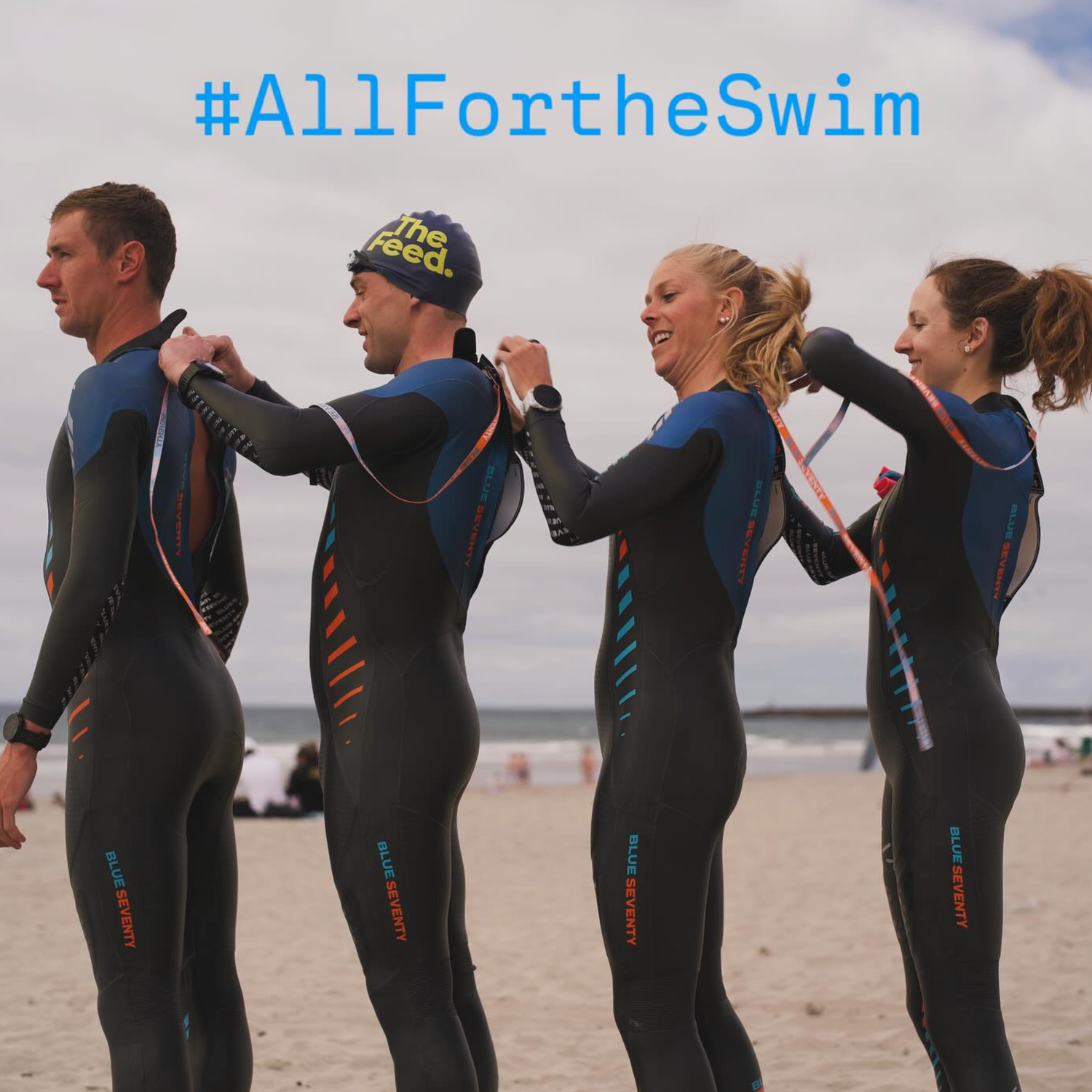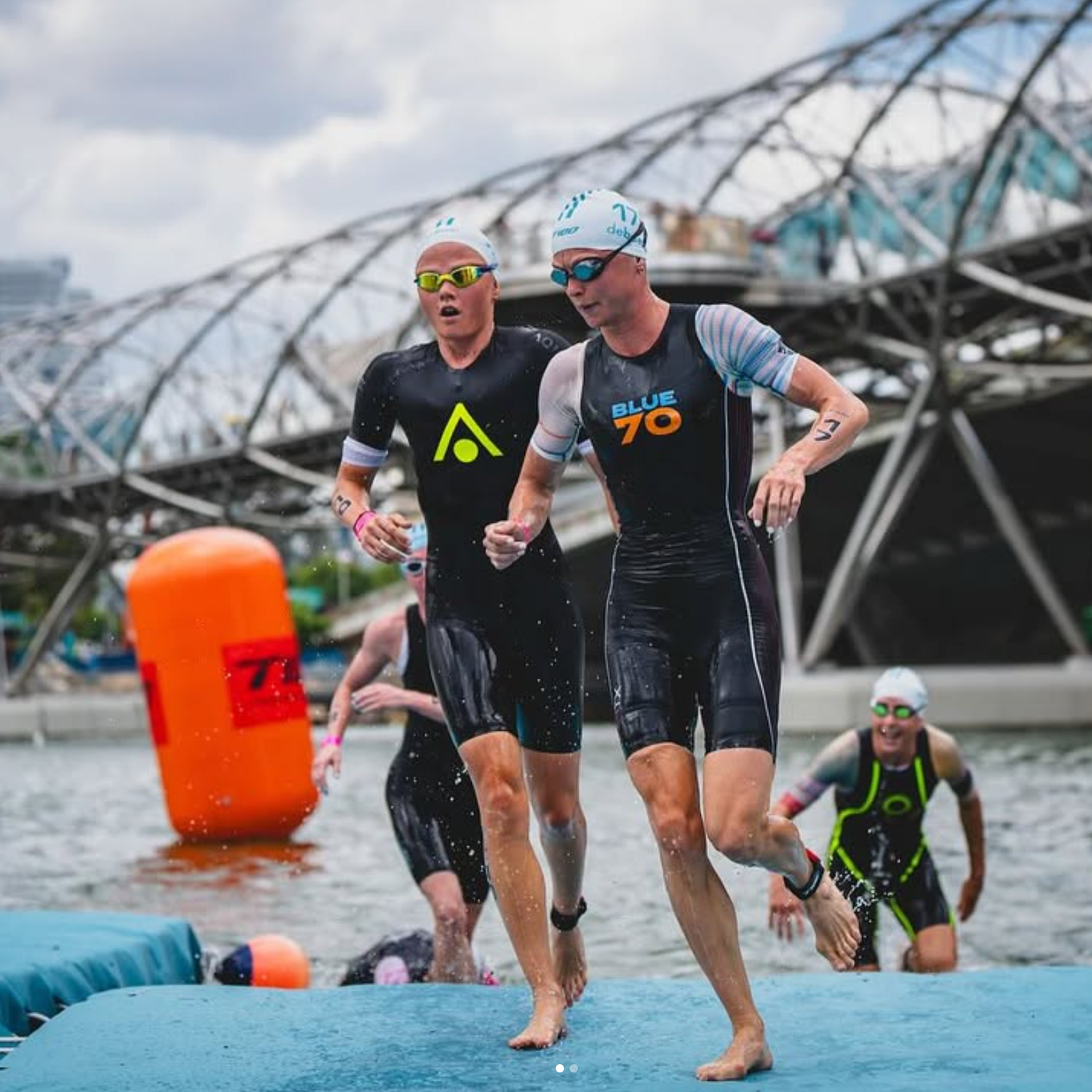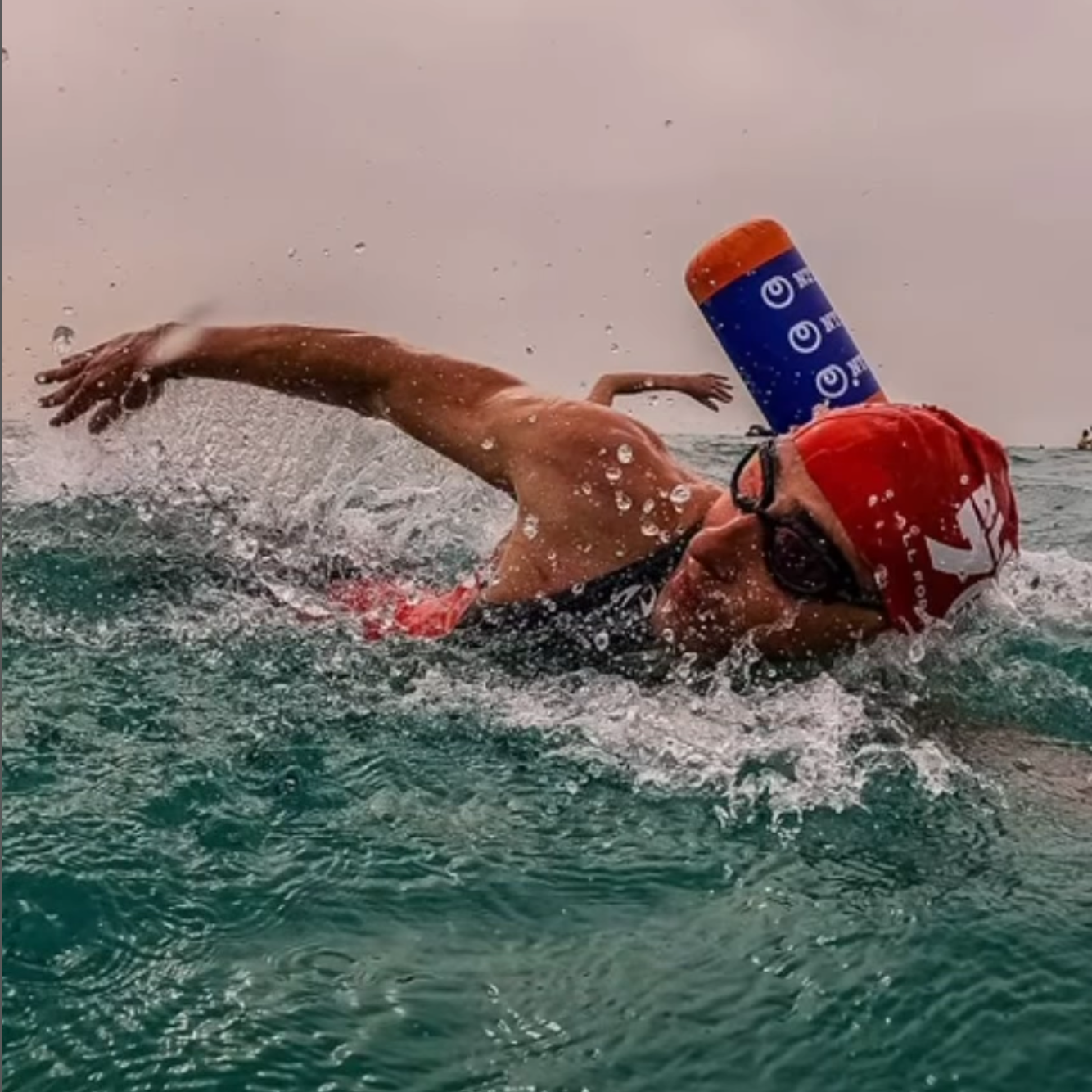



Most triathletes only buy a hood after one bad cold-water session. At that point, the hood feels like a penalty for poor planning. Open-water regulars know a different version: a hood that fits well keeps a 55°F swim smooth instead of turning it into a survival test. The gap between those two experiences comes down to fit, timing, and habit.
Cold Water Hits the Head and Neck First
Water conducts heat away from skin much faster than air at the same temperature. Once you are in a wetsuit or swimskin, your head and neck are usually the largest exposed surfaces. Cold receptors in the face are dense, and the face is a strong trigger for the gasp response that arrives in the first minute of cold immersion. A hood covers that surface before the water reaches it. It slows the rate at which cold water and wind pull heat away from the areas most likely to interrupt a swim.
Some swimmers repeat the old line about losing most body heat through the head. That generalization does not help in the water. What matters for a swimmer is that an uncovered head and neck expose a large skin surface to moving water, and water conducts heat away from skin far faster than air. A hood shrinks that exposed surface. That is the entire job.
How Hoods Moved from Grease and Wool to Stretch Neoprene
Open-water endurance swimmers covered their heads long before modern neoprene. Channel swimmers used wool caps, lanolin, and heavy grease. Those layers reduced chafing, kept hair out of the face, and slowed heat loss. They also required constant reapplication and did nothing for the neck. When neoprene hoods crossed over from diving and surfing, open-water swimmers gained a layer that stayed put and sealed more of the head and neck. Early hoods were stiff and thick. Modern swim-specific hoods use thinner, high-stretch neoprene, a smooth outer skin, and a soft lining. The pattern changed from a simple tube to a shape built around the head, jaw, and neck.
Blue70's Thermal Reaction wetsuit ($785) uses a Zirconium jersey lining throughout the suit for cold-water swimming. That lining is a synthetic wool designed to add thermal protection inside the suit. A hood extends the same principle to the head and neck, the surface the suit does not cover.
What to Look For in a Hood
Blue70 wetsuits use Yamamoto neoprene in 38, 39, and 40 cell grades. Higher cell numbers mean more flexibility. That same material logic applies to hoods. For a hood you will actually wear for a full session, look for these pieces:
- Thickness over the skull and ears to hold warmth without feeling bulky.
- High-stretch panels around the jaw and face opening so head rotation stays natural.
- A smooth outer skin that sheds wind between sets and cuts evaporative cooling.
- A lined inner surface for comfort and a little extra warmth.
- A longer neck or bib that tucks under the wetsuit collar to reduce water flushing down the back.
For long open-water sessions, a thin hood with high-stretch panels around the jaw feels less restrictive than a uniform thick hood. The goal is coverage without fighting your rotation.
Fit: The Face Seal Decides Everything
Most hood dissatisfaction comes from fit. A hood that is too loose lets water pool inside and pull at the neck. A hood that is too tight causes jaw pain, headaches, and restricted breathing. The correct fit feels snug on land and settles once you are in the water. The face opening should sit flat against the forehead, cheeks, and chin without folding inward. Water should not pour in when you push off the wall or start swimming.
To put it on, wet the inside or your hair slightly. Pull from the back, not the face edge, and use the pads of your fingers rather than fingernails. Neoprene tears most often start at fingernail pressure points along the face opening.
Women with longer hair should try a low braid or loose bun under the hood. A tight high ponytail can create a pressure point at the crown and pull the face opening out of place. Blue70's Femme Fit approach shows that small pattern changes in the bust, torso, wrists, and ankles change comfort in a wetsuit. The same logic applies to hood patterns. A shape cut for a real head and jaw beats a narrow, straight tube.
How a Hood Changes Your Head Position and Sighting
A hood adds material around the neck and jaw. If the bib is too short or the neoprene too stiff, that material can push your chin up. A raised chin drops your hips, and sighting becomes harder because your head is already tilted away from the water. Choose a hood that lets you keep your eyes down and your neck long, the same neutral head position you want without a hood. Before a long swim, do a few slow strokes and one sighting drill to check that the hood does not catch water or shift when you turn to breathe.
Triathletes Should Train with a Hood More Often Than They Race with One
Triathletes often treat hoods as open-water swimmer gear. That bias costs early-season training. When water temperatures sit in the high 50s or low 60s, a hood can be the difference between finishing a full interval set with clean sighting and quitting after a few hundred meters because your face and ears hurt. Add a hood to that same session, and repeatable work replaces the fight.
Use a hood in training to extend your season and protect stroke quality. Race-day rules vary by governing body and water temperature. Check the current rulebook before you line up with a hood. Even if your race does not allow one, the hood you wore in April helped you arrive at that start line with better cold-water experience.
Cold-water acclimatization is still the base layer of safety. A hood adds thermal protection. It does not replace a swim buddy, a visible tow float, shore support, or the judgment to shorten a session when conditions exceed your experience.
When a Hood Helps, and When It Makes Things Worse
Blue70's technical guidance places the cold-water threshold for a purpose-built thermal suit at about 56 to 58°F. That range is also where many swimmers start reaching for a hood. Above about 70 to 72°F, a full suit can feel too warm over long swims, and a hood usually makes that worse. Between those ranges, the decision depends on wind, sun, distance, and your own cold tolerance. If you are new to cold water, add layers in small steps and swim with a group. No piece of gear makes cold water risk-free.
Care That Keeps Neoprene Alive
Rinse a hood in cool fresh water after every swim. Chlorine, salt, and lake water break down neoprene over time. Wash it occasionally with mild neoprene-specific soap. Never put it in a washing machine or dryer. Turn the hood inside out to dry first, then right side out, always out of direct sun and away from heat sources. Store it flat or hanging from the face opening. Avoid folding the same crease repeatedly.
Small tears along the face or neck can often be repaired with neoprene cement, such as the Aquaseal carried by Blue70. If the tear is in a seam, clean and dry the area, apply cement to both edges, and let it cure according to the package directions.
If you are building a cold-water kit, start with the thermal collection and use the sizing tool to find your fit. Happy swimming.