


Ask most people about wetsuits and they will usually go straight to thickness. It is an understandable instinct, but it is rarely the best place to start. From a swimming and triathlon perspective, the more useful question is this: what is the suit built to help you do in the water?
That is where the difference between a spearfishing wetsuit and a scuba wetsuit becomes genuinely interesting. Both are made for immersion. Both use neoprene to add buoyancy and insulation. But they are shaped by very different movement patterns, different exposure demands, and different ideas of efficiency. For swimmers, that comparison highlights something we see all the time: wetsuit performance is about far more than warmth alone.
If your world is open-water swimming or triathlon, this matters because the body makes very specific demands in a swim. You need freedom through the shoulders, stable body position at the surface, and a suit that supports the stroke rather than interrupting it. That is why swim-specific design feels so different in the water.
Start With the Job the Suit Is Trying to Do
The clearest way to understand these categories is to look at the problem each suit is trying to solve.
Spearfishing wetsuits
A spearfishing wetsuit is generally designed around breath-hold diving and underwater movement. That usually means the suit must support quiet motion, repeated descents, finning, and long periods in the water where the athlete is not producing constant high output.
- Surface swimming mixed with dives
- Flexibility for finning and underwater control
- Thermal protection during lower-intensity effort
- A close, low-bulk fit for streamlined movement
Scuba wetsuits
A scuba wetsuit is built around a different reality. It needs to function over long exposures, often with equipment pressing against the body, and with movement that is generally slower and more managed than sustained swimming at the surface.
- Extended time in the water
- Durability around gear contact points
- Thermal protection at depth and during longer dives
- Comfort while worn with tanks, harnesses, and accessories
Neither approach is wrong. Each is simply built for its own use. The important point for swimmers is that neither category begins with the same design priority as a swim-specific wetsuit: supporting efficient, repetitive surface swimming.
Why This Comparison Matters to Swimmers and Triathletes
Even if you never plan to spearfish or scuba dive, there is a useful lesson here. Wetsuits are not interchangeable just because they are all made from neoprene. Every wetsuit is a series of design decisions, and those decisions are shaped by the movement it is meant to support.
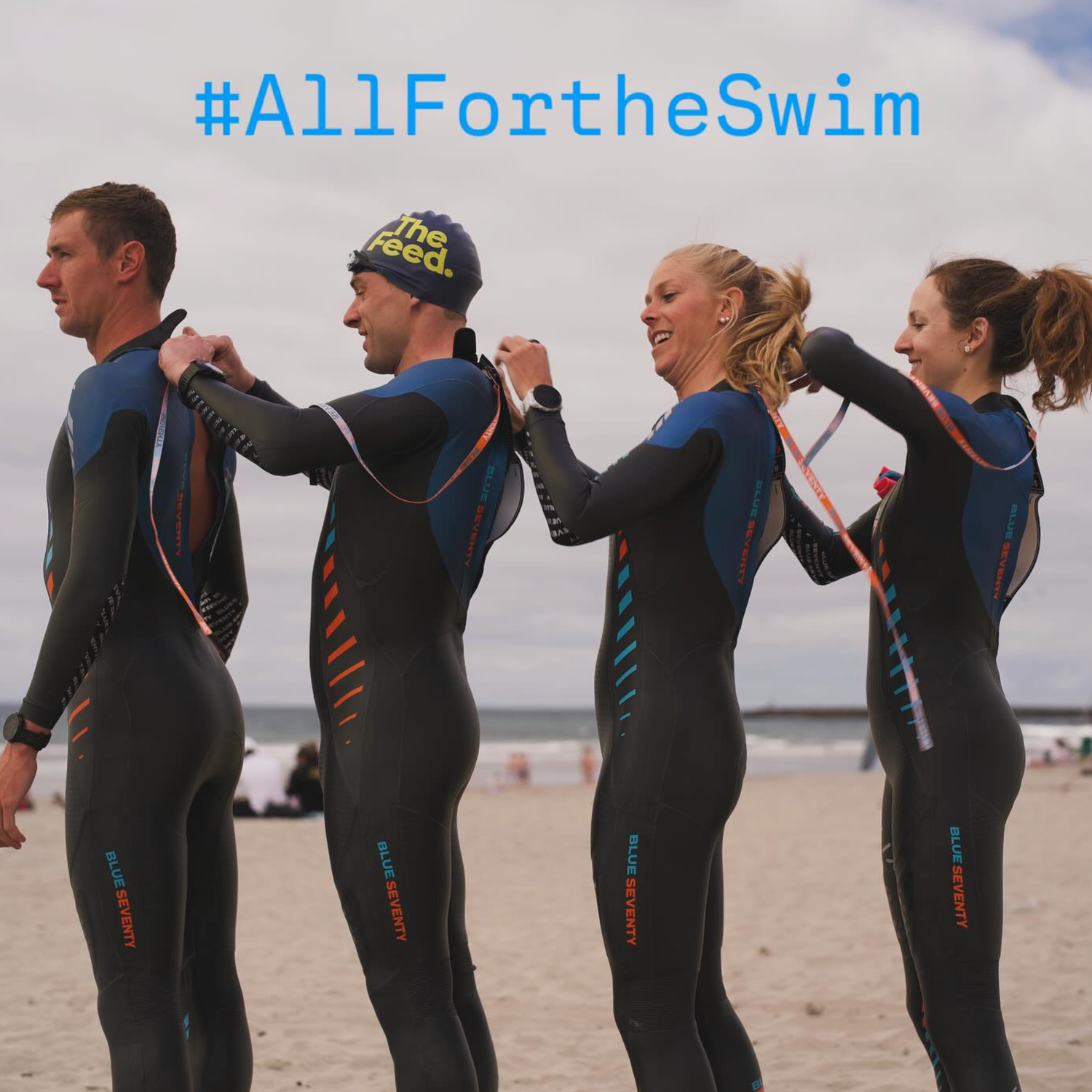
At blueseventy, that has always been the starting point. Our wetsuits are made for swimming. That means the priorities are clear:
- Freedom from restriction
- Better body position at the surface
- Feel for the water
- Comfort through repeated arm turnover
- Race-day performance and open-water efficiency
Those priorities lead to a very different suit than one designed primarily for underwater hunting or equipment-supported diving. For swimmers, that difference often becomes obvious within the first few minutes of a real swim.
The Contrarian View: Thickness Is Not the Best First Question
Thickness matters, especially when water temperature drops, but it does not tell you enough about how a wetsuit will feel once you are moving. From a performance standpoint, it is often the least interesting variable early in the conversation.
A better checklist looks like this:
- How flexible are the shoulders and arms?
- Where is the buoyancy placed?
- How does the suit affect horizontal body position?
- Was it built for sustained freestyle movement?
- How does it feel after 20 to 30 minutes of continuous swimming?
Those are the questions that matter in open water. A suit can be warm and durable and still leave you fighting your stroke. Another suit can feel comfortable while standing on shore but begin to load the shoulders as soon as you settle into rhythm. What matters is not abstract comfort. It is comfort in motion.
Movement Patterns Shape the Suit
Spearfishing movement
Spearfishing usually asks for a mix of surface travel and underwater movement. The athlete may swim on the surface, duck dive, descend, glide, and fin underwater with careful body control. Performance in that setting is often about low disturbance, mobility, and efficient movement below the surface.
That does not necessarily translate to the repetitive front-quadrant action of freestyle swimming. The shoulders are moving differently. The torso is working differently. The demands are simply not the same.
Scuba movement
Scuba places another set of priorities on the suit. Once you add tanks and other gear, the suit must stand up to pressure and contact in ways a swim-specific suit is not built around. The movement pattern also tends to be slower and less repetitive through the shoulders.
Again, that is not a flaw. It is just a different design brief.
Swimming movement
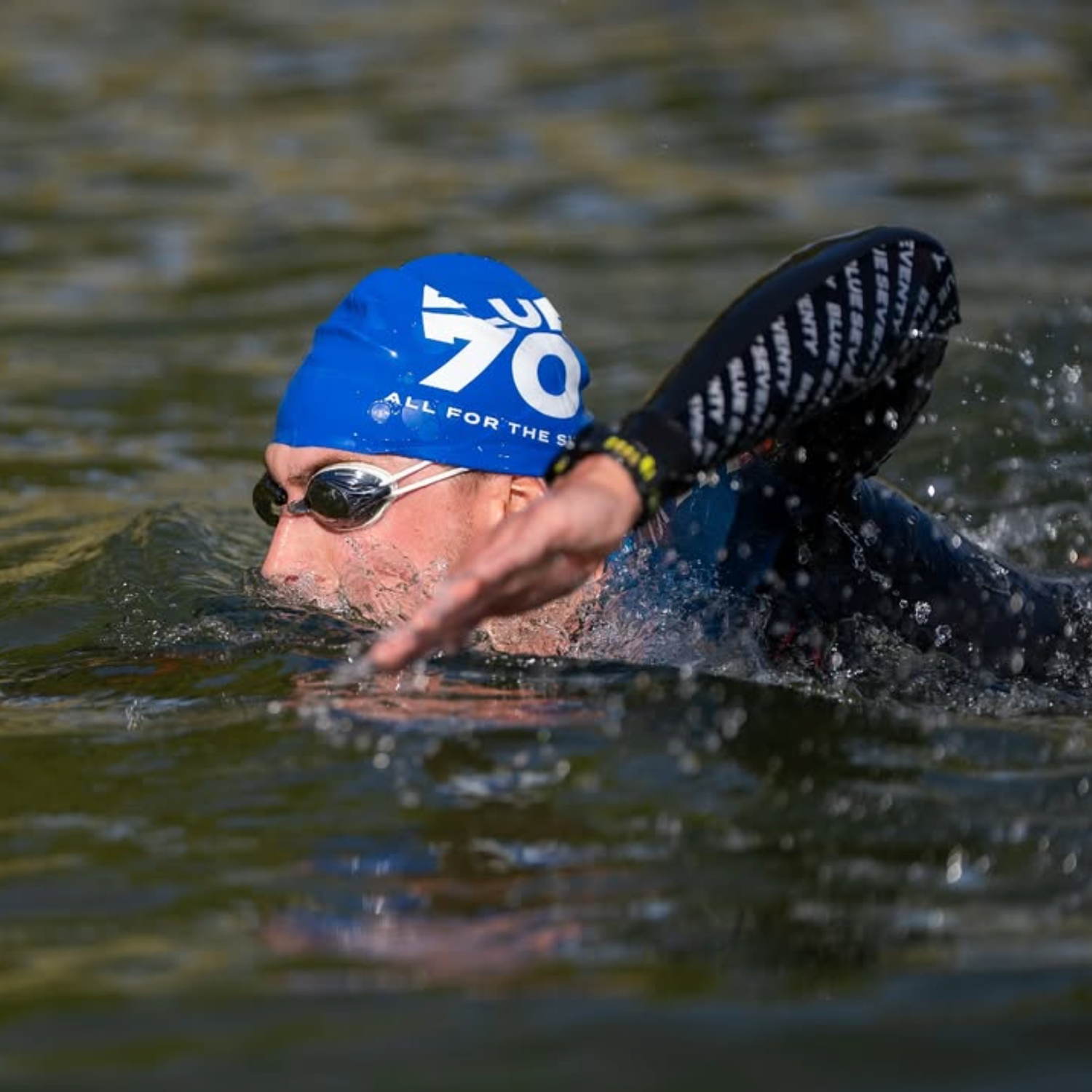
Swimming is relentless in its repetition. In open-water training and triathlon, you are asking your shoulders to cycle through extension, catch, pull, recovery, and rotation thousands of times. That is why swim-specific wetsuit design puts such a premium on flexibility and panel placement.
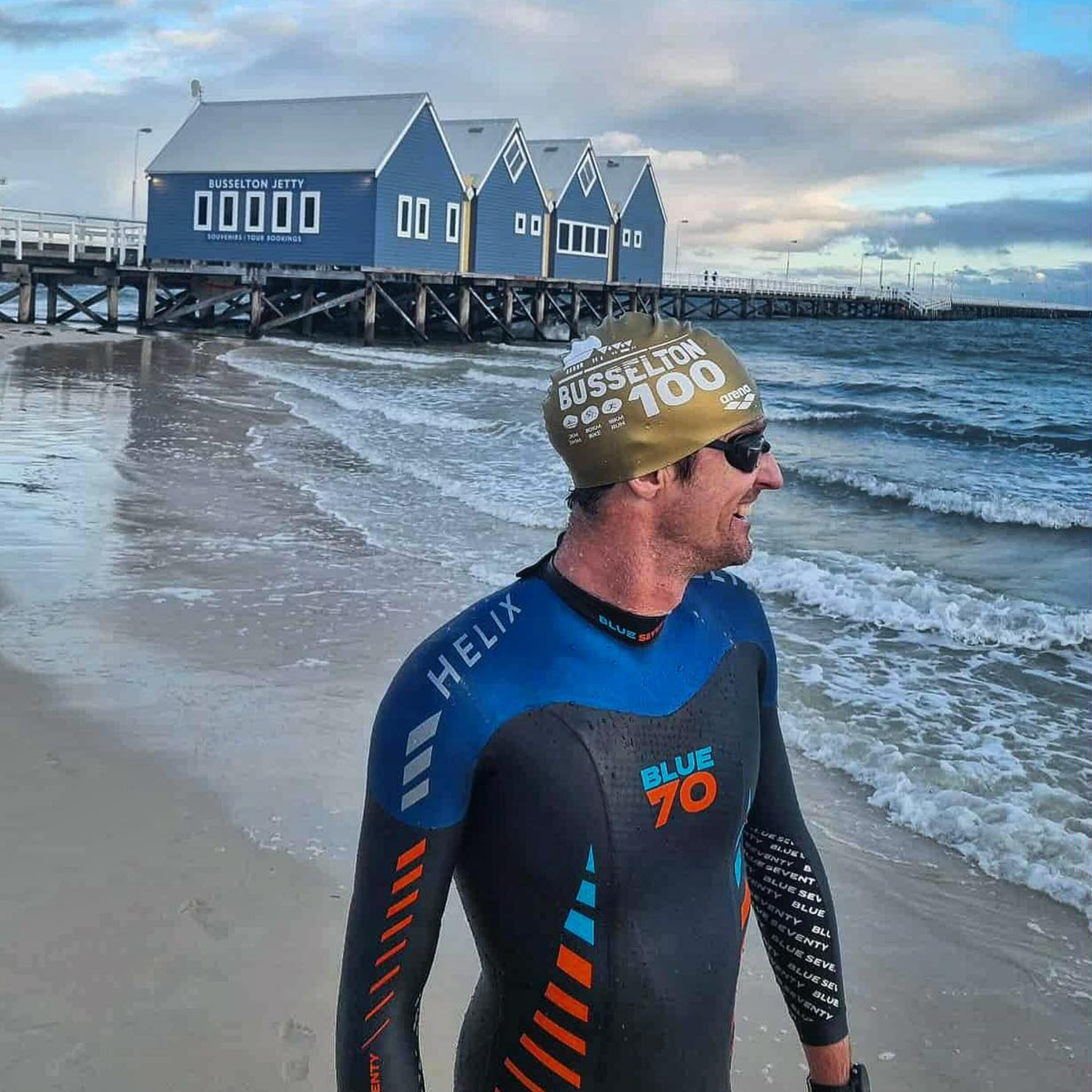
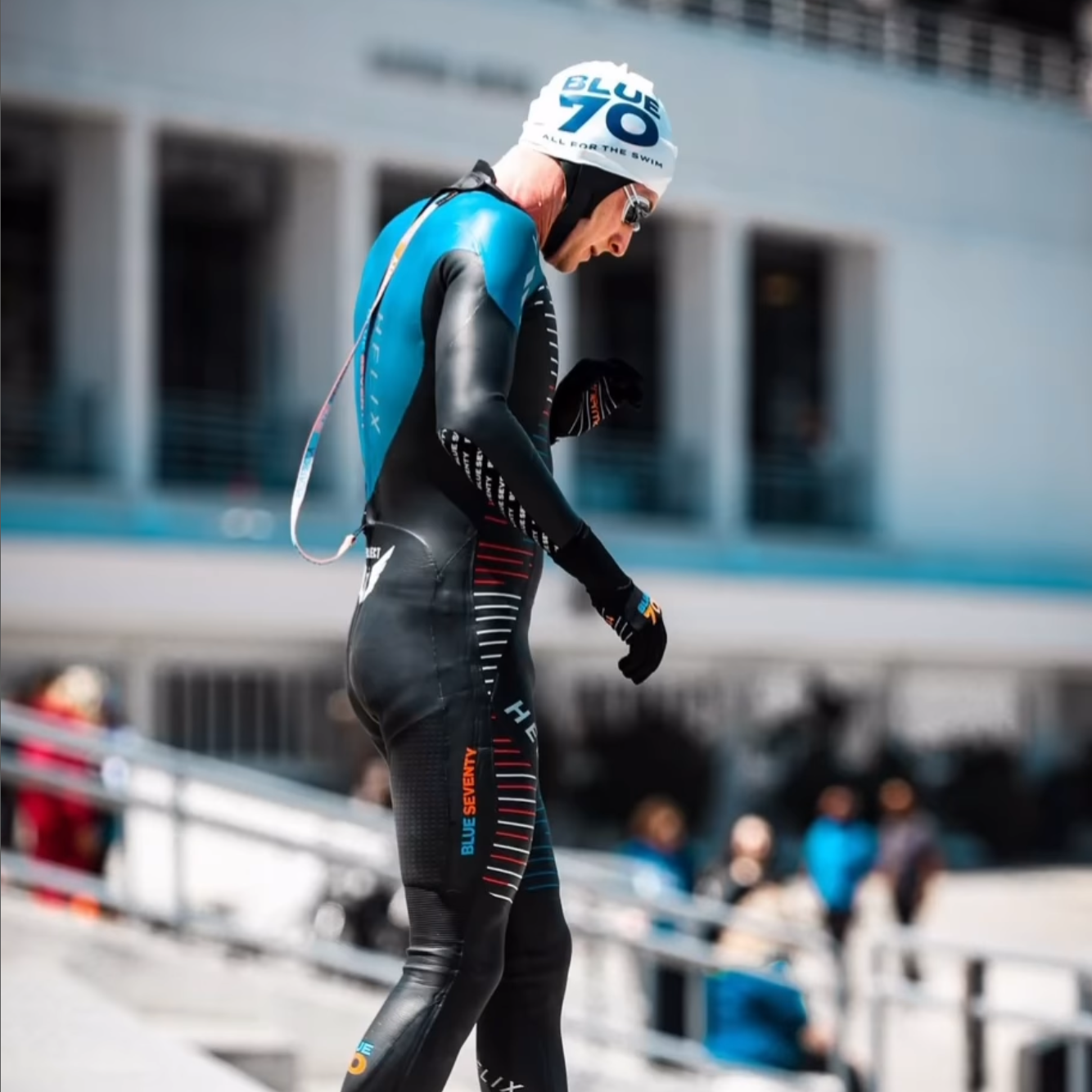
blueseventy wetsuits use Yamamoto 38, 39, and 40-cell neoprene, with higher cell numbers offering greater flexibility. In the Helix, that approach goes furthest: extremely flexible neoprene in the arms and shoulders is paired with a permeable catch panel to help preserve feel for the water, while LIFT buoyancy panels support body position. Those details are not decoration. They exist to serve the stroke.
Buoyancy Is About Position, Not Just Float
One of the most useful lessons swimmers can take from this comparison is that buoyancy should not be discussed in general terms. More buoyancy is not automatically better. What matters is how the buoyancy affects your body line.
For swimmers, the right buoyancy can help:
- Lift the hips and legs
- Reduce frontal resistance
- Lower the energy cost of staying horizontal
- Create a cleaner platform for breathing and sighting
That is why we often say buoyancy equals speed in the water. Not because buoyancy guarantees an outcome, but because improved body position helps reduce drag and supports better hydrodynamics.
This is also why newer swimmers often feel a bigger difference when they put on a swim-specific wetsuit. If a swimmer normally struggles to keep the legs high, the added support can make the stroke feel more balanced and less wasteful right away.
Thermal Protection Depends on the Activity
Another common misunderstanding is treating warmth as if it works the same way in every neoprene sport. It does not.
Wetsuits are not waterproof, and they do not keep you dry. They allow a thin layer of water inside the suit, which your body warms to provide insulation. How that feels depends on water temperature, fit, movement, time in the water, and the individual.
That means thermal needs differ by activity. In spearfishing and scuba, there may be long periods of lower-output movement, which increases the importance of insulation. In open-water swimming, continuous effort changes the picture. Too little thermal protection can be a problem in cold water, but too much suit can become uncomfortable over longer swims in milder conditions.
For swimmers, our guidance is straightforward:
- Below about 56-58°F, a purpose-built thermal suit like the Thermal Reaction adds meaningful thermal protection.
- Above about 70-72°F, a full suit can feel too warm over longer swims, making sleeveless options or swimskins more suitable depending on the session and event rules [VERIFY: current sanctioning-body rule].
That is one reason category matters so much. A suit built around long, lower-output exposure may not feel right when you are swimming continuously at training or race intensity.
The First Problem Swimmers Usually Notice: Shoulder Fatigue
When a swimmer tries a suit designed for another kind of water use, the first red flag is usually not obvious on land. It tends to show up once the swim is underway.
Most often, that red flag is shoulder fatigue.
That can come from several sources:
- Less flexible material through the shoulders
- Patterning that is not designed for freestyle mechanics
- A suit sitting too low on the body
- Neoprene not worked fully up through the legs and torso during donning
This is why fit matters just as much as category. A well-designed swim-specific wetsuit should feel snug on land and more natural in the water. If it is not properly seated, especially through the shoulders, even a high-performance suit can feel restrictive. That is also why using a proper fit guide matters. A quick fit check in the living room rarely tells the full story.
What Swimmers Can Learn From the Comparison
The big takeaway is not really about diving. It is about specialization.
As wetsuit design has evolved, the best suits have become more specific because athletes have become more specific in what they demand. Swimmers no longer ask only whether a suit will feel warm enough. They ask better questions:
- Will it preserve my stroke?
- Will it let me rotate cleanly?
- Will it help my legs ride higher?
- Can I train in it regularly?
- Is it aimed at race-day speed or durable weekly use?
That is exactly why the blueseventy line is built the way it is.
Helix
Designed for total race-day performance, with extremely flexible neoprene in the arms and shoulders, a permeable catch panel to preserve feel for the water, and LIFT buoyancy panels to support body position. It is built for athletes who want every performance advantage in the swim. We are also candid that its thin neoprene makes it less ideal for heavy, frequent training use.
Reaction
A strong option for frequent use and longer swims. It uses higher-grade neoprene than the Fusion and is often the right call for committed age-groupers who train regularly in open water.
Fusion
A best seller with a practical balance of performance, comfort, and value. The redesigned lower-sitting neckline improves comfort without losing the watertight seal, making it a dependable option for shorter frequent swims and many first-time triathletes.
Sprint
An entry point that makes sense for newer athletes, shorter races, or swimmers buying their first swim-specific wetsuit.
Thermal Reaction
Built for cold-water swimming, fully lined with Zirconium jersey for added thermal protection when the season turns colder.
A Practical Buying Framework for Swimmers
If you are evaluating a wetsuit through the lens of open-water swimming or triathlon, keep the process simple and honest.
- Match the suit to the movement. If your main goal is surface swimming, start with a swim-specific suit.
- Think about how often you will use it. Weekly training puts different demands on a suit than race-only use.
- Buy for your real water temperatures. Focus on the conditions you actually swim in most often.
- Prioritize shoulder freedom. Restriction there usually becomes fatigue later in the swim.
- Pay attention to body position. The right buoyancy can help the whole stroke feel cleaner.
- Do not judge fit too quickly on land. A snug suit that is properly donned should feel better in the water than it does dry.
Final Takeaway
The most important difference between a spearfishing wetsuit and a scuba wetsuit is not just thickness or lining. It is the movement problem each suit is built to solve.
That is the lesson swimmers should keep. If your goal is open-water confidence, freedom from restriction, and efficient race-day body position, you want a wetsuit designed around swimming mechanics from the start. That is what swim-specific design is for, and it is the standard behind everything we do at blueseventy: All for the swim.
If you are choosing your next suit, start with your water temperature, your training frequency, and how much shoulder freedom you want in the stroke. Then take the next step with the Take a Test Swim program or visit the fit guide to make sure your wetsuit works where it matters most: in the water.