


A breath-hold diver and a scuba diver ask different things from the same material. A surface swimmer asks something else again. At Blue70, we build swim-specific wetsuits for open water and triathlon, not for diving. But the variables that separate spearfishing suits from scuba suits also explain why a swim wetsuit fits, flexes, and floats the way it does. The first variable is breathing. Water is about 800 times denser than air. That single fact reshapes neoprene, lining, panel layout, and thickness across every water discipline.
The Breath-Hold Suit
Spearfishing revolves around long, still hunts and short, sharp movements. A spearfisher may stay in cool water for an hour or more while producing less steady heat than a swimmer covering distance. The suit needs to trap a thin water layer against the skin and minimize flushing.
Many spearfishing suits use open-cell neoprene inside. The inner surface is unlined, so it grips wet skin. That cuts water exchange, but it also means you need a lubricant or soapy water to get the suit on. The unlined interior is more delicate than nylon. Two-piece cuts with high-waisted pants and a beavertail are common. They let divers pair sizes and cover the lower back when loading.
Thickness often runs 5mm to 7mm. That warmth comes with buoyancy, so spearfishers add weight to reach neutral buoyancy at hunting depth. Camouflage patterns, chest loading pads, and knee or elbow abrasion panels serve the hunt. None of those features help a freestyle stroke.
The Tank Suit
A scuba diver breathes from a tank. The suit still needs insulation, but the design priority shifts to durability. Scuba suits get pulled on and off often. They rub against BCD straps and boat edges. They also compress at depth. At 10 metres, pressure is roughly twice surface pressure. Neoprene gas cells compress, so a 7mm suit becomes thinner and less insulative below the surface. Scuba suits compensate with nylon linings on both sides, tougher neoprene, and seals or hoods to reduce water movement.
Arm mobility requirements in scuba are modest compared with freestyle. That allows denser, more durable panels and heavier zippers. The goal is repeat use and easy donning, not surface speed.
The Surface Swimming Suit
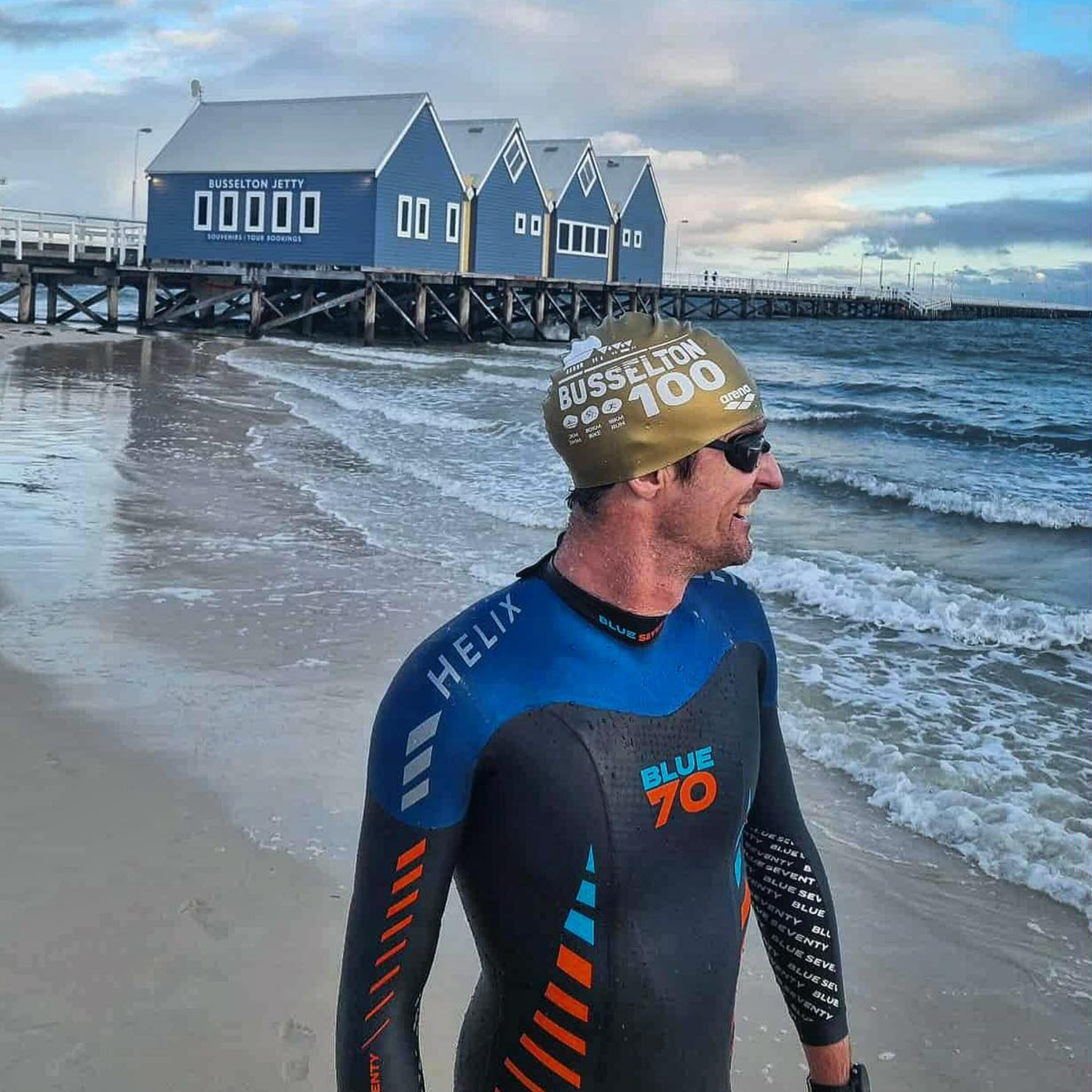
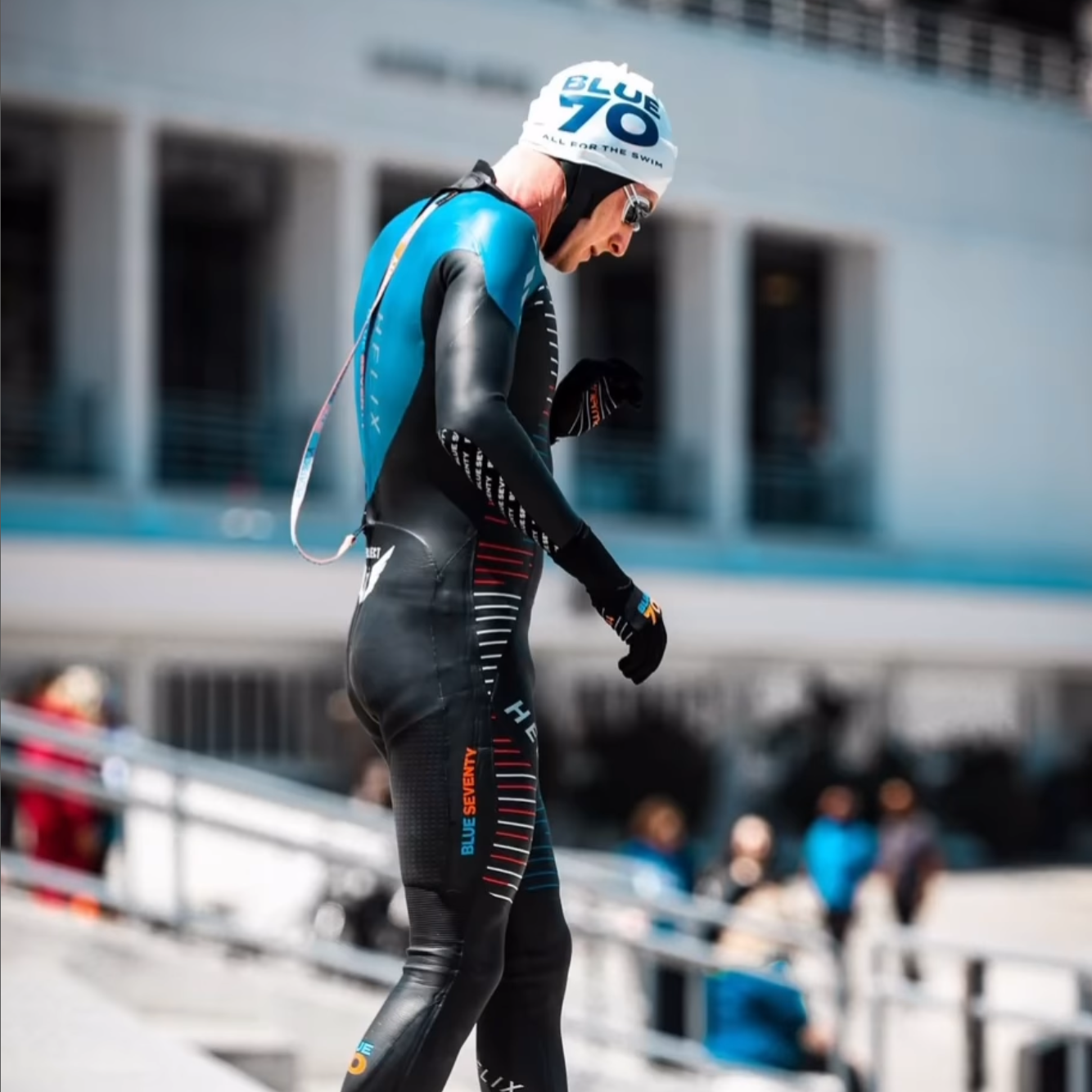
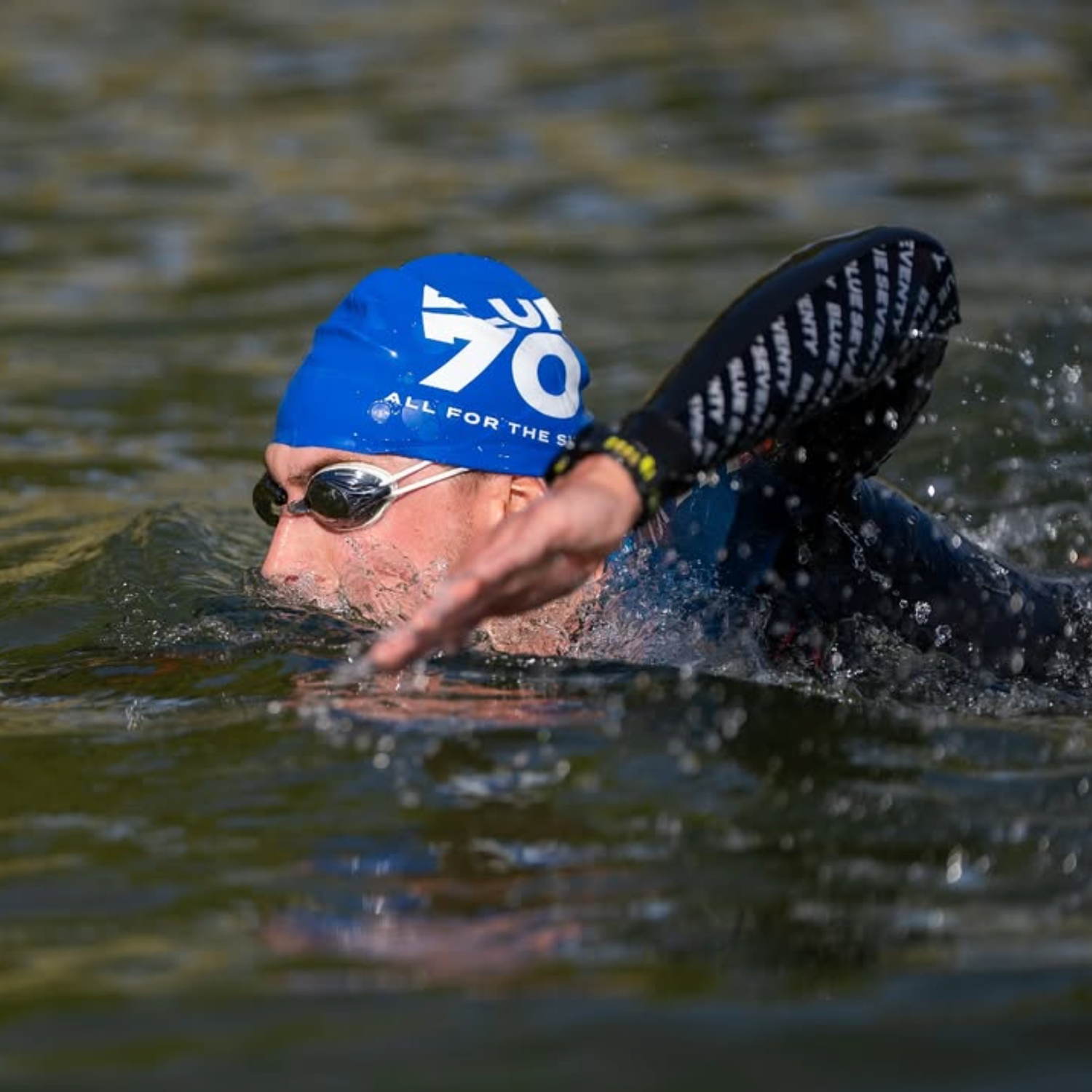
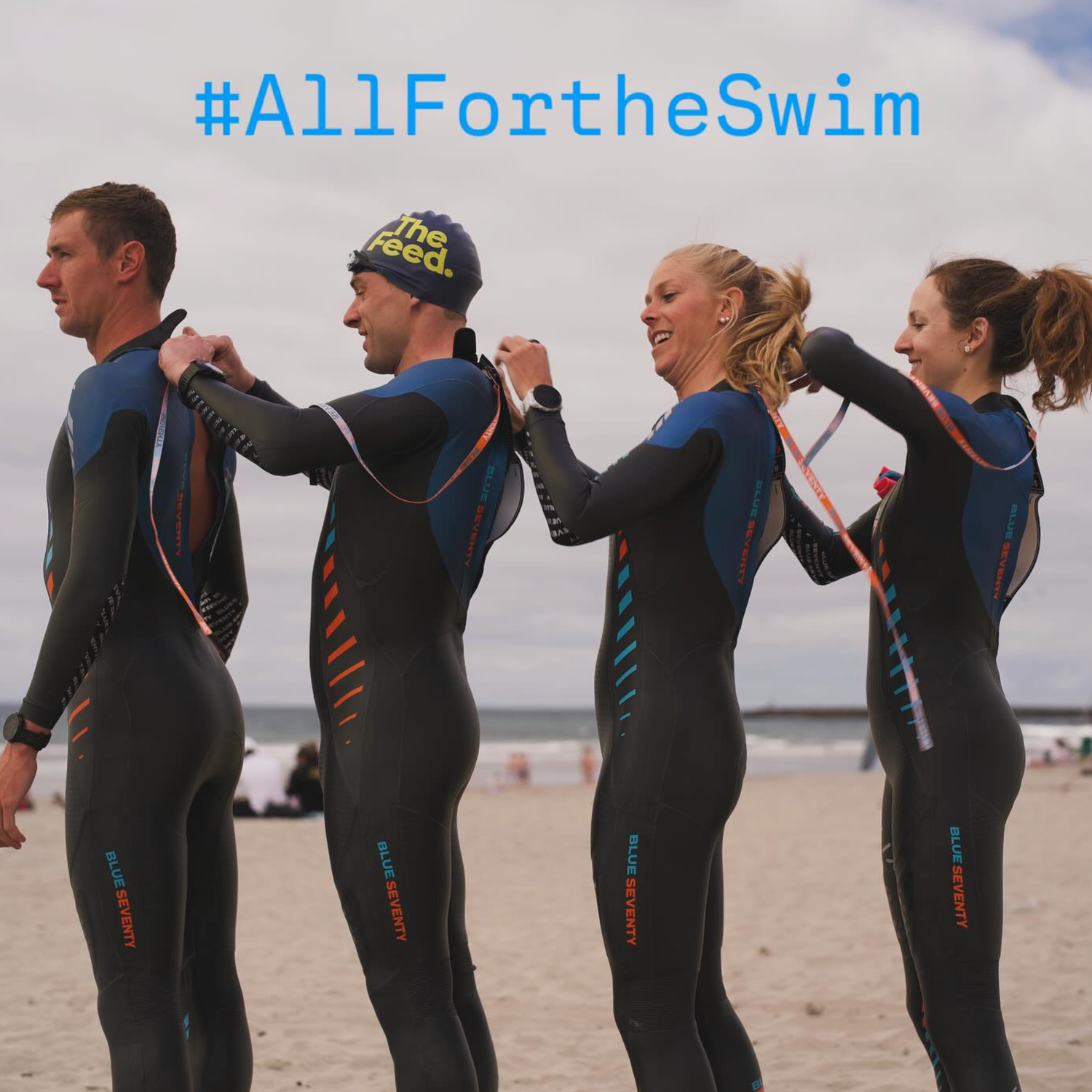
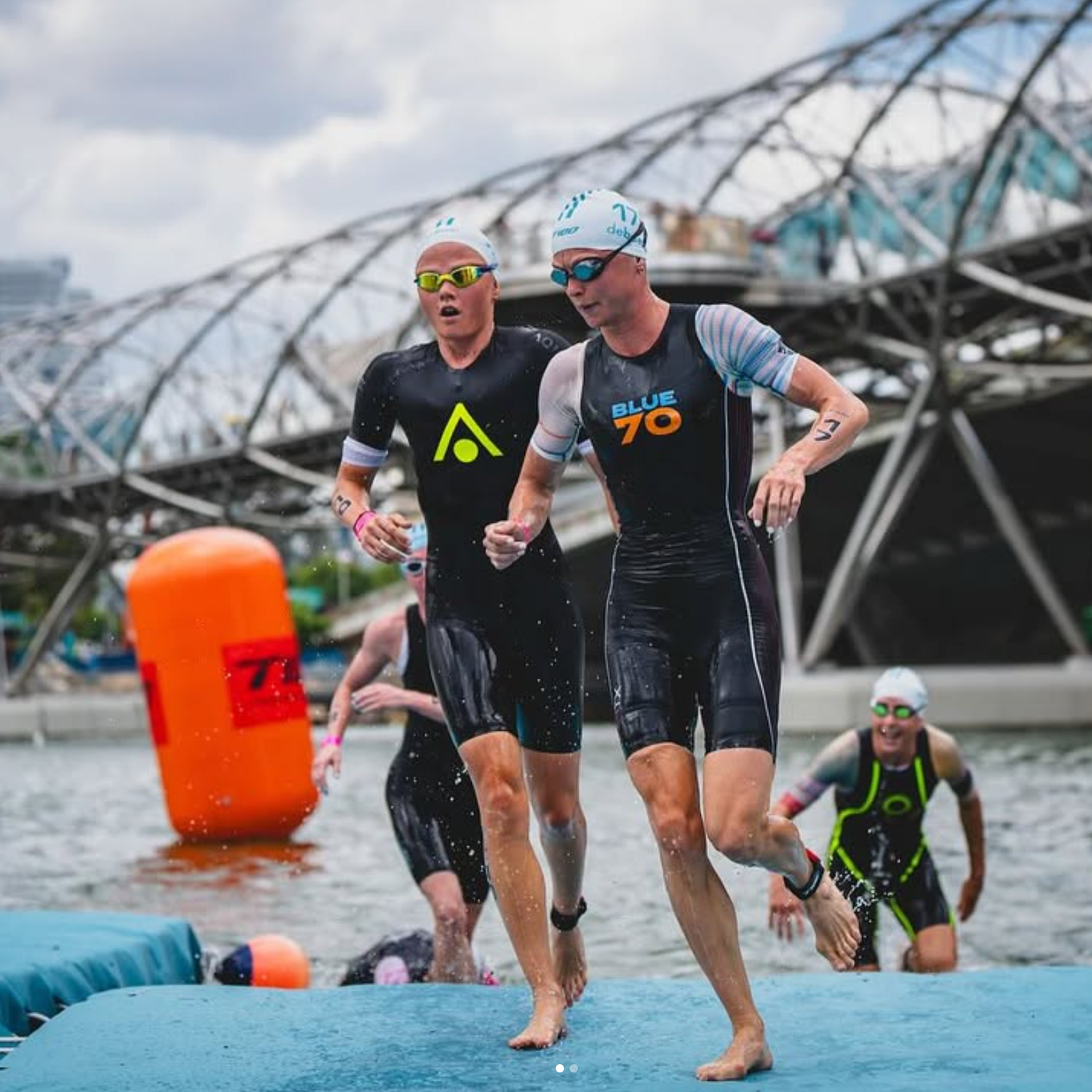
Swim-specific wetsuits solve a different problem: the athlete keeps breathing at the surface and keeps moving the arms. At Blue70, we build suits around the arm cycle, body position, and surface glide. We use thinner, more flexible neoprene in the shoulders and arms, often Yamamoto 38, 39, or 40 cell. Higher cell count means more flexibility, and flexibility in the shoulders reduces fatigue over thousands of strokes.
Buoyancy placement also changes. In a Blue70 swim or triathlon wetsuit, panels under the hips and legs raise the lower body. That improves body position and reduces drag at the surface. The same buoyancy that helps a surface swimmer would fight a diver trying to descend. Some panels use a smooth-skin outer surface to lower friction. Long zippers and stretchy cuffs help with fast transitions. None of that belongs on a reef at 20 metres.
Reading the Lining and Thickness
The fastest way to tell these suits apart is the interior. Open-cell grips skin. Nylon slides. For swimmers, the lining decision is mainly about durability and comfort, not grip. Most swim and triathlon suits line the interior for easy donning and use smooth-skin outer panels only where surface drag matters.
Thickness matters next. Surface swimming suits use targeted panels from 1.5mm to 5mm. Diving suits often run 3mm to 7mm throughout. A thicker suit is warmer but stiffer. Swimmers need warmth for the water temperature plus enough flex to keep stroke mechanics working.
Below roughly 56-58°F, a purpose-built thermal suit like the Blue70 Thermal Reaction adds warmth through a Zirconium jersey lining. Above roughly 70-72°F, a full suit can feel hot over longer swims. Sleeveless suits or swimskins then become the better call.
Fit and Donning
Fit and donning feel different by design. A nylon-lined scuba suit slides on more easily than an open-cell spearfishing suit. Both can feel bulky on land. Neither gives you the shoulder mobility you need for a relaxed freestyle catch. Open-cell spearfishing suits require lubricant and patience. Scuba suits have stiff zippers and seals. Swim suits are built for repeated donning and quick exits in transition.
A swim wetsuit should feel snug on dry land and more comfortable once you are in the water. An improperly donned suit, especially one with bunched neoprene in the shoulders, causes early fatigue.
What Carries Over
Surface swimmers can borrow one habit from spearfishing: treat cold water as a system, not just a suit. Hoods, gloves, booties, and gradual acclimatization all matter. Divers manage them. Open-water swimmers often skip them until a cold session forces the issue.
Cold water immersion carries risks. No wetsuit makes cold exposure risk-free. Get in gradually, swim with a buddy, and have an exit plan. A suit provides added thermal protection, but it does not replace judgment.
Choose the Suit for the Activity
Scuba and spearfishing suits also remind swimmers that durability has a cost. A dive suit built to rub against rocks will not feel fast on the surface. A swim suit built for arm flexibility will not survive reef abrasion.
If you're choosing a swim or triathlon wetsuit, start with a fit guide or take a test swim. A Blue70 suit should earn its place through body position and shoulder freedom. You can swim in it and still return or exchange it if it comes back clean, dry, and unmodified. All for the swim.