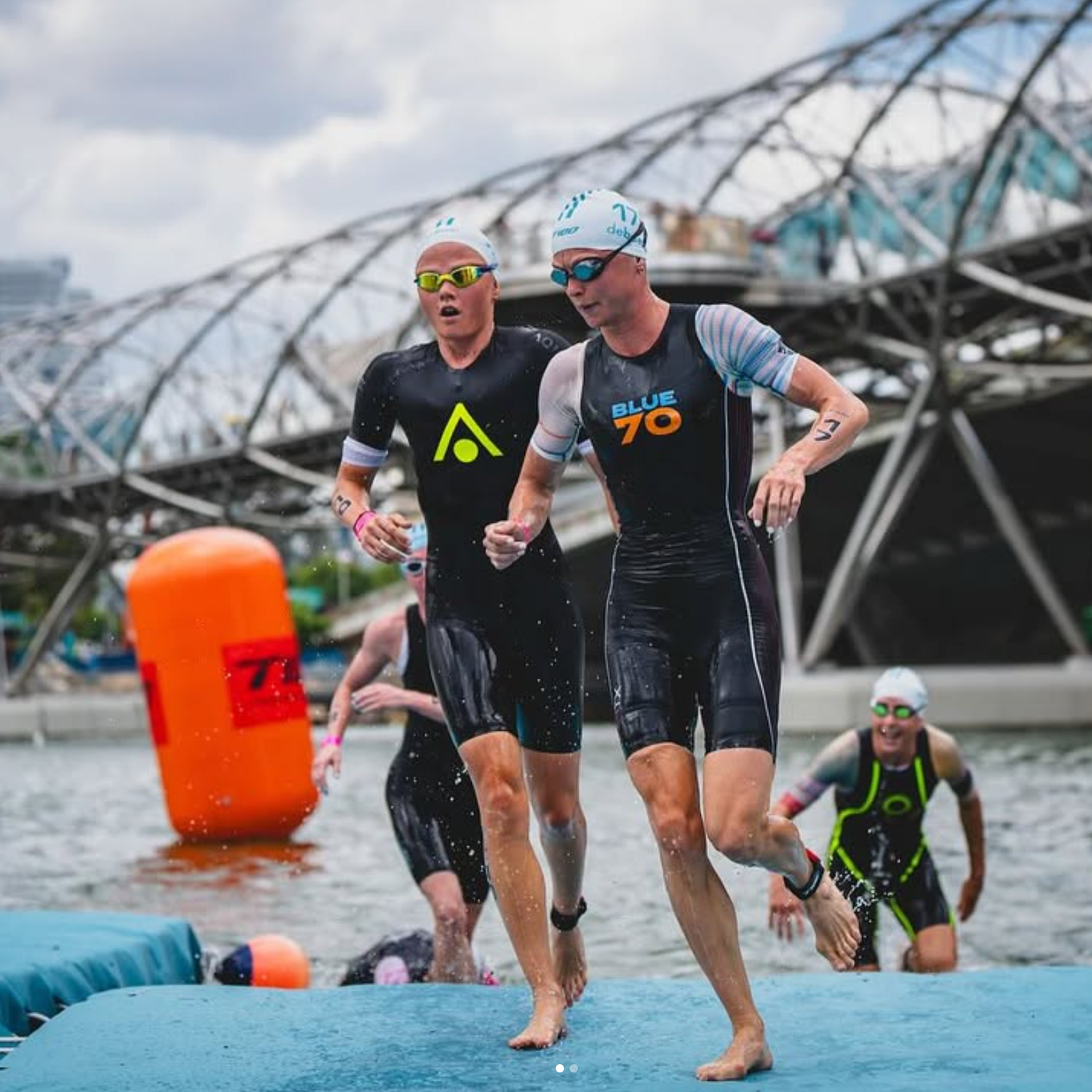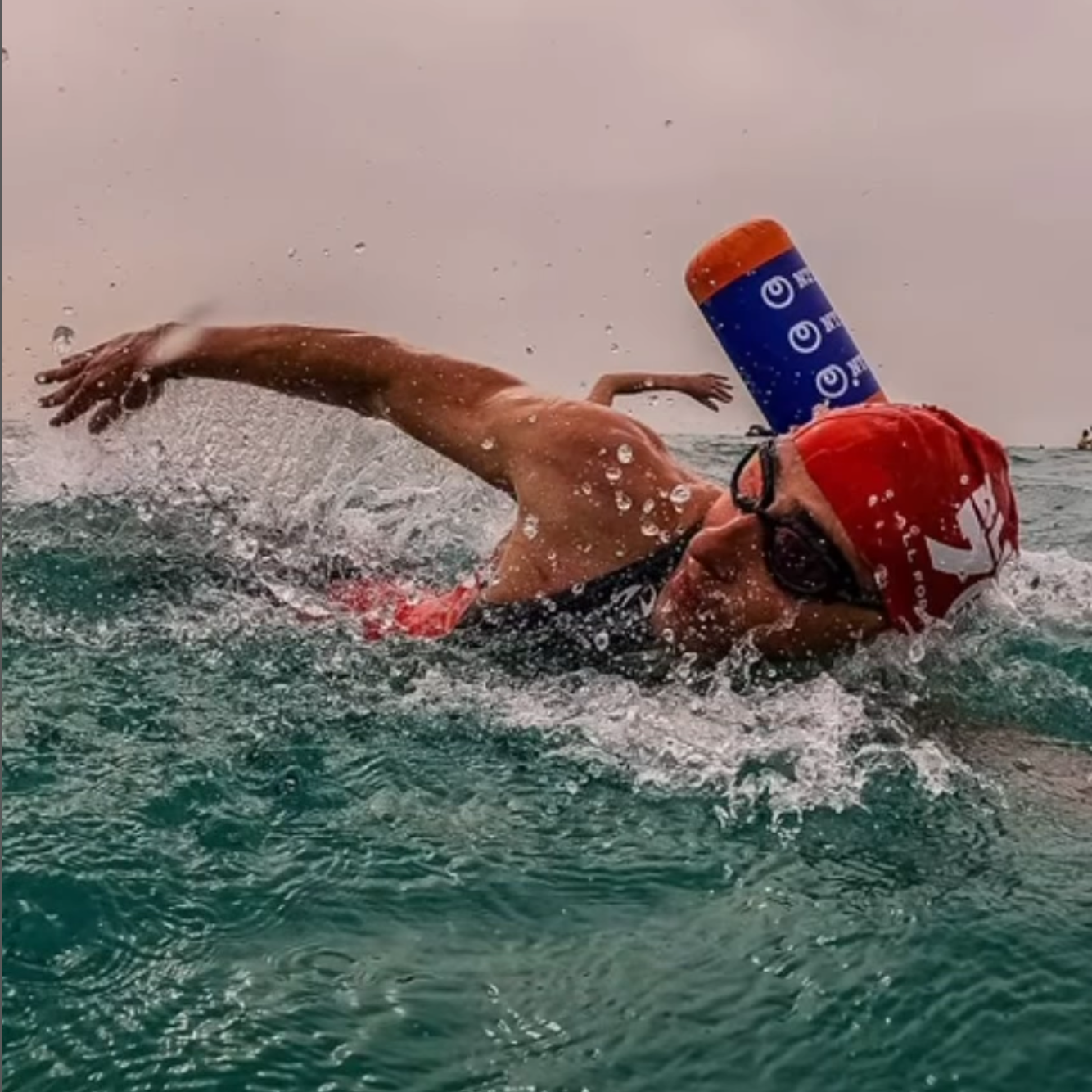



Open water swim buoys usually get discussed as a simple rule question. Bring one or do not. Require one or leave it optional. That framing leaves out the part swimmers feel in the water. A buoy does more than add visibility. It changes how you train, how far you range from shore, how calmly you handle stops, and how structured an open water session becomes.
That is why the better question is not whether a buoy should always be mandatory. The better question is what the buoy changes in the swim. For triathletes and open water swimmers, that answer often has more to do with training quality than with gear preference.
One point needs to stay clear at the start. A swim buoy is not a certified personal flotation device. It should not be treated as life-saving equipment, and it should not replace route planning, conditions awareness, or support when a swim calls for it.
Why buoys became standard gear for more swimmers
Open water swimming looks different now than it did for many swimmers a decade ago. More adult swimmers are coming into the sport through triathlon, masters swimming, and coached group sessions. More training happens in shared water where paddlers, anglers, and small craft are part of the same space. More athletes also use open water sessions with a specific purpose: sighting practice, race-pace work, start skills, or long steady swims away from pool walls.
That shift changed the role of the buoy. In many groups, it has become part of the normal kit list, right alongside a cap, goggles, and a swim-specific wetsuit. Some swimmers use one for visibility. Others use one because it gives them a place to carry small essentials on a point-to-point swim. Many use one because it makes a session feel more organized before they even get in the water.
That is less about trend than routine. Once a piece of gear becomes part of the setup, swimmers stop debating it every session and start using it with more purpose.
The real value is behavioral
A swim buoy changes behavior. That is the strongest argument for it.
Swimmers often make different choices when they have one attached. They are more likely to commit to a planned route, pause without panic to fix goggles, regroup during a drill set, or carry what they need for a longer swim. Newer open water swimmers also tend to settle down faster when they know they have a visible marker trailing behind them.
Those are training effects. They shape the session in ways that matter.
A buoy can support better habits in the water, but only if the swimmer still treats the swim like something that needs planning. The float does not create judgment. It only works well when judgment is already part of the session.
The contrarian point: mandatory rules have limits
There are plenty of settings where a buoy requirement makes sense. Coaches can track a group more easily. Shore support can count swimmers more quickly. Mixed-ability sessions become simpler to manage when every athlete has the same visible marker.
Still, mandatory rules are not automatically the best answer in every case. Some swimmers start to treat the buoy as permission. They range farther than they should, swim solo in conditions that call for company, or pay less attention to route choice because the float makes them feel prepared. That is not a gear problem. It is a judgment problem, but it shows up more often when equipment starts standing in for decision-making.
A buoy also changes the feel of the swim. Most athletes adapt quickly, but the leash and trailing float still become part of the setup. If every open water session includes one, then a buoy-free race can feel different during surges, buoy turns, and hard efforts when stroke timing matters.
The practical middle ground works best. Use the buoy when it improves the session. Do not let it become a substitute for skill or awareness.
How a buoy can improve open water training
The strongest case for a buoy shows up in training design. It can make certain sessions easier to repeat, and repeatable sessions usually produce better feedback.
Sighting practice
Pool swimmers often lose form when they start sighting in open water. The head comes up too high, the hips drop, and the stroke rhythm falls apart. A buoy can make it easier to stop, reset, and repeat the drill without rushing through mistakes.
A simple structure works well:
- Swim 2 minutes at a steady effort
- Sight every 6 to 8 strokes
- Stop briefly and check whether you drifted off line
- Repeat 6 to 8 times
The goal is not speed. The goal is to keep the sighting motion low and quick while preserving body position.
Restart control
Open water rarely gives you one uninterrupted effort. In triathlon, you surge around a turn, settle after contact, or restart after backing off for a few strokes. Swimmers who train those transitions waste less energy on race day.
A buoy can help organize that kind of set:
- 3 minutes moderate
- 30 seconds strong
- 10 to 15 seconds stopped
- Restart at moderate pace without sprinting the first strokes
That restart skill matters in crowded starts and around course turns, where poor rhythm control can cost more energy than the turn itself.
Longer route options
If the buoy includes dry storage, it can support a different type of session. Carrying a key, a small nutrition item, or a phone can make a point-to-point swim easier to organize. That does not remove the need for a route plan, but it can make logistics more manageable.
Test the storage seal before the swim. That is a small habit, but it saves a miserable surprise later.
Triathletes and open water swimmers use buoys differently
Triathletes usually approach open water with race-specific goals. They want to sight cleanly, hold pace without walls, settle after a hard start, and swim straight when fatigue builds. For that athlete, the buoy often works best in sessions built around pacing changes and technical practice.
Open water swimmers often have a different session profile. Their swims may be longer, steadier, colder, or more social. They may stop to regroup more often or choose routes that cover more water. In those sessions, a buoy often has a larger role because the logistics are different.
That distinction matters. One blanket rule does not fit every swimmer or every training goal.
The overlooked piece: how the buoy interacts with wetsuit fit
Open water gear works as a system. Swimmers feel that quickly once something in the system is off.
If a wetsuit fits well and is put on correctly, the buoy usually fades into the background after the first few minutes. If the suit is sitting low through the hips, tight across the shoulders, or not fully worked into place, the swimmer often blames the buoy for drag or awkward timing when the actual problem starts with fit.
Blueseventy’s fit guidance is simple and useful: a wetsuit should feel snug on land and more comfortable in the water. Pull the legs high, set the hips correctly, and work the material into the underarms before you judge how the swim feels. A shoulder restriction problem that starts on shore will follow you through the whole session.
Model choice matters too. The Helix is built for race-day performance, with very thin, highly flexible neoprene through the arms and shoulders, and blueseventy is clear that this type of construction is not ideal for heavy training use. Frequent open water swimmers often do better in the Reaction for longer regular sessions or the Fusion for shorter frequent swims. That is not an upsell conversation. It is a use-case conversation.
Cold water changes the calculation
Water temperature always changes the plan. Below about 56 to 58°F, blueseventy’s published guidance points swimmers toward a purpose-built thermal suit such as the Thermal Reaction for added thermal protection. In those conditions, the buoy still plays only one part in the setup. Route choice, exit access, session length, and rewarming all matter just as much.
Cold water punishes casual planning. A swimmer can get away with sloppy route choices in mild conditions and still finish the session. In colder water, the same mistakes show up faster.
Choose the route before you zip up the suit.
When a buoy requirement makes sense
Some situations justify a default yes.
- Solo swims in shared water: visibility matters more when nobody is alongside you
- Group sessions with mixed ability: coaches and support crews can track swimmers more easily
- Skills sessions with planned stops: drills, resets, and regrouping are easier to manage
- Point-to-point routes: visibility and simple storage become more useful over a longer line
When swimmers should be more selective
There are also sessions where using a buoy by default deserves a second thought.
- Race simulation: if your event swim will be buoy-free, train that way sometimes
- High-turnover speed work: some short, sharp efforts feel cleaner without anything trailing behind you
- Tight supervised loops: in a compact setting with direct support, the benefit may be smaller
The point is not to avoid the buoy. The point is to match the tool to the session.
A simple pre-swim decision process
Before every open water swim, run through these four questions:
- Who needs to see me? Shared water increases the value of visibility.
- How often will I stop? More stops usually make a buoy more useful.
- What am I carrying? A longer or point-to-point swim may change the setup.
- What is the water asking from me today? Distance, chop, current, and temperature all affect the choice.
That quick check leads to better decisions than habit alone.
Common mistakes swimmers make with buoys
Most buoy mistakes are easy to avoid once you know where they start.
- Skipping the route plan: visibility does not replace knowing your entry, turn points, and exit
- Treating the buoy like a flotation device: it is not a certified PFD
- Ignoring leash setup: poor adjustment can interfere with your kick all session
- Testing storage in the water first: always check seals before the session starts
- Letting gear replace group discipline: a buoy does not replace check-ins or smart planning
The best way to think about it
Open water swim buoys are most useful when swimmers stop treating them as a symbol and start treating them as equipment. They can make sessions more structured, improve practice quality, and simplify the logistics of longer swims. They can also encourage lazy decision-making if the swimmer starts relying on the float instead of the plan.
The best swimmers usually look unremarkable before they get in. They check the water temperature. They choose the right suit for the conditions. They know when a full suit will feel too warm over a longer swim, especially once the water gets above about 70 to 72°F. They set a route, sort their gear, and keep the whole setup simple.
The buoy fits into that same approach. Use it when it improves the swim. Leave it out when the session calls for something more race-specific. Build the decision around the water, the goal, and the equipment system as a whole.
If your open water setup still feels inconsistent, start with the foundation. A swim-specific wetsuit that fits correctly has a bigger effect on body position, comfort, and shoulder freedom than most swimmers realize. Blueseventy’s fit guide, size charts, and Take a Test Swim program make it easier to dial in that setup before race day.