


It’s one of the first questions every new open water swimmer or triathlete asks-right up there with “how tight should it feel?” and “why is it so hard to get on?” The short answer is yes, most people will be more comfortable and race-ready with a layer between their skin and the neoprene. That said, what you choose to wear underneath makes a big difference in comfort, performance, and how long your Blue70 suit lasts. Let’s break it down.
Why Wear Anything at All?
A swimming wetsuit isn’t a drysuit. It works by letting a thin film of water inside, which your body warms to provide insulation. That means the inside of the suit will be wet, and direct skin contact with neoprene can cause chafing over long distances, especially in high-movement areas like the neck, underarms, and inner thighs. A well-chosen base layer reduces friction, manages moisture, and for triathletes, solves the obvious challenge of what to wear for the bike and run.
There’s also the simple matter of hygiene and modesty. Whether you’re pulling your suit on in a crowded transition area or peeling it off after a training swim at the lake, you’ll be grateful for that extra layer.
What to Wear: Men’s Options
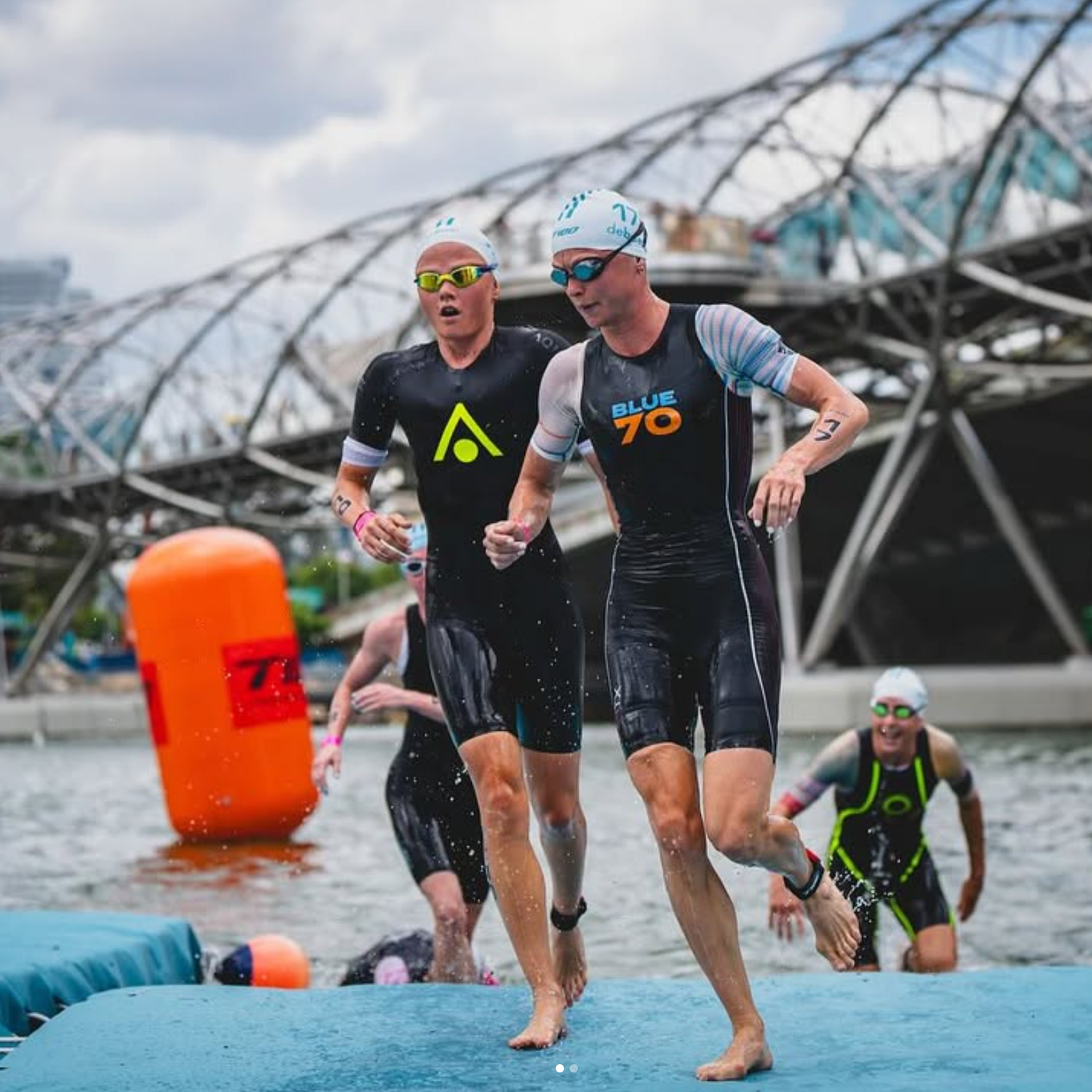
For triathlon, a purpose-built tri suit or tri shorts are the gold standard. They’re thin, fast-drying, and have a minimal chamois that won’t soak up water like a cycling bib. If you’re a pure open water swimmer without a bike leg to think about, snug-fitting jammers or compression shorts made from performance fabric work well. The key is avoiding anything that bunches, absorbs water, or creates drag. Heavy board shorts and cotton briefs are a recipe for discomfort and slow swim times-remember, buoyancy and streamlined body position equal speed, and excess fabric works against both.
What to Wear: Women’s Options
A one-piece swimsuit or a triathlon-specific top and short combo is the most common choice. The advantage of a tri top with a built-in shelf bra is that you get support without the bulk of a traditional sports bra, which can restrict shoulder mobility or trap water. If you do prefer a separate sports bra under your suit, look for one with thin, seamless straps and a low-profile design-anything thick or padded will fight against the flexible neoprene in the shoulders and upper back.
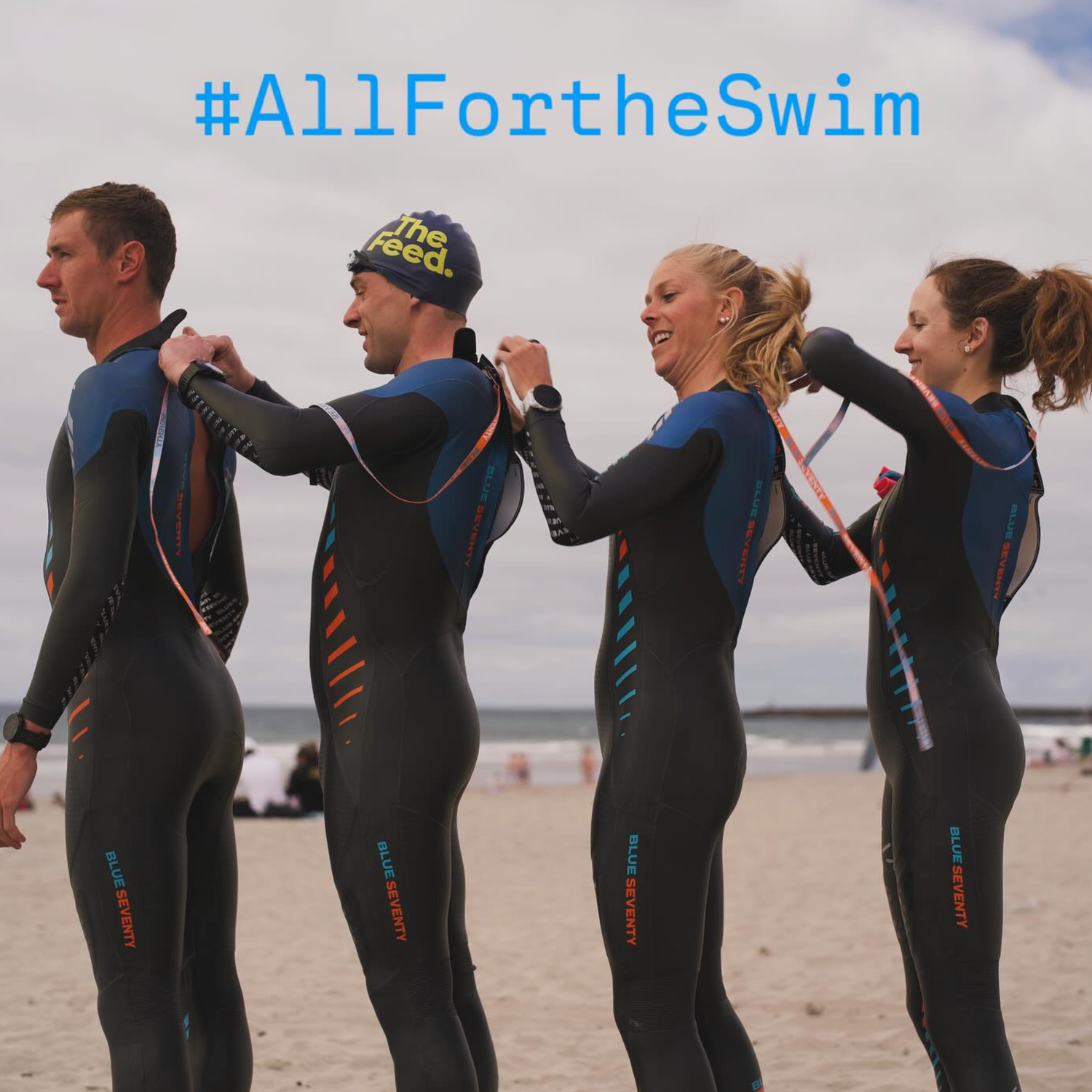
Blue70’s women’s wetsuits are built with Femme Fit patterning, which means the torso, neckline, and hip dimensions are designed specifically for women’s bodies. The lowered neckline is intentionally cut to reduce chafing, so pairing it with a swimsuit that has a similar neckline keeps the whole system comfortable. Try your complete race kit on before you hit the water, and if something feels off, a quick test swim will tell you more than any mirror can.
The Nothing-Underneath Option
Some dedicated open water swimmers prefer to go without any extra layer, arguing it gives the most direct feel for the water and eliminates any chance of seam friction. This can work for shorter training dips, but it’s not the most practical approach for a race day that ends on a public beach, and it does increase the chance of suit-related irritation over time. If you experiment with this, just be mindful that skin oils, sunscreen, and deodorant can accelerate how quickly neoprene breaks down-a quick fresh-water rinse of both you and the suit afterward is non-negotiable.
How Your Choice Affects Fit and Performance
Blue70 wetsuits are engineered for freedom from restriction, with extremely flexible Yamamoto neoprene in the arms and shoulders. That flexibility is one of the reasons you’ll hear swimmers say the suit feels like it disappears in the water. But that same thin, pliable material will telegraph every lump, seam, and wrinkle from whatever you wear underneath. If your base layer bunches at the hips or has thick seams along the lats, you’ll feel it as resistance in your stroke and possibly as a hot spot twenty minutes into the swim.
Your suit should feel snug on dry land and noticeably more comfortable once you’re floating horizontal. A bulky underlayer can make the suit feel tighter than it actually is, tricking you into thinking the fit is off. Always judge fit with the same layer you plan to race or train in. And because every Blue70 wetsuit is eligible for our 30-day test swim, you can actually get in the water, swim, and still return or exchange it if the combination isn’t working. (Just make sure the suit is clean, dry, and unmodified when you send it back.)
A Quick Care Reminder
Whatever you wear underneath will absorb salt, chlorine, or lake water, and that can transfer to the suit’s lining. After every swim, rinse your wetsuit thoroughly with fresh water and hang it to dry inside out, then right side out. Treat your base layers the same way-it’s a small habit that extends the life of everything.
All for the swim.
Ready to dial in your open water setup? Our fit guide and size charts will get you into the right Blue70 suit in under a minute. And if you’re still unsure, take advantage of our 30-day test swim policy-real water, real confidence.