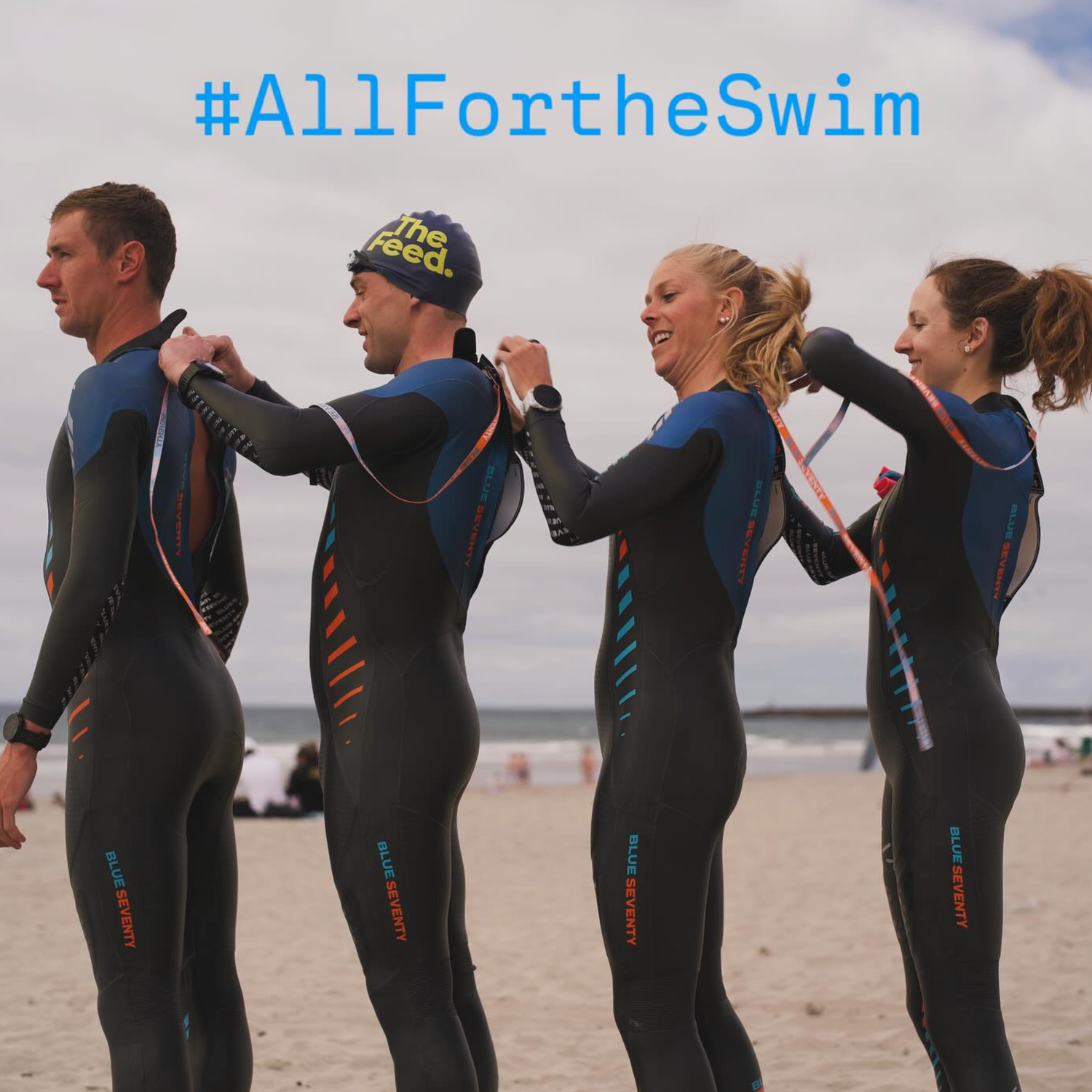



Yes. Rinse your blueseventy wetsuit with fresh water after every use.
Blueseventy makes swim-specific wetsuits, not surf or scuba suits, so the neoprene and linings are tuned for freedom of movement and feel for the water. That tuning also means the materials respond to how you care for them. Chlorinated pool water, salt water, lake minerals, sunscreen, and body oils all settle into the neoprene and lining while you swim, and a two-minute rinse flushes most of that residue out before it dries and hardens. You keep the material supple, the zipper clean, and the inside from smelling like a locker room floor.
What the rinse removes
Salt is the obvious one for ocean swimmers. When salt water evaporates, it leaves crystals inside the neoprene cells. Those crystals abrade the rubber as you flex, and they pull moisture out of the material. Chlorine is harsher still. It attacks glue seams and stiffens the outer jersey over time. Lake swimmers deal with algae, tannins, and sunscreen buildup, especially around the collar and cuffs. Fresh water clears most of that before it causes problems.
Because your suit is built from Yamamoto neoprene in 38, 39, or 40 cell construction, it is flexible by design. That flexibility is an asset in the water. It also means the material responds to neglect. A Helix, Reaction, Fusion, or Sprint all follow the same rule: fresh water after every swim.
How to rinse it correctly
Turn the suit inside out if you can, or rinse both sides at the beach shower while it is still on. The inside touches your skin and holds the thin layer of water that keeps the suit working, so do not skip it. Use cool or lukewarm water. Hot water can damage the neoprene and weaken the glue. Run water through the sleeves, across the chest, and down the legs. Pay attention to the zipper teeth, because grit collects there. If you cannot rinse at the lake or beach, bring a jug of water and rinse the suit at the car. A delayed rinse is better than no rinse.
Drying and storage
Rinsing is only half the job. A wet suit left in a gear bag or hot car will start to smell, and the liner can break down. After the rinse, hang the suit to dry in the shade. Sunlight and heat age neoprene quickly. Dry it inside out first, then turn it right side out once the inner lining feels dry. Use a wide hanger or drape it over a rail. A thin wire hanger can crease the shoulders. Do not wring the suit, and never put it in a dryer. Store it flat or on a wide hanger in a cool, dry place.
What not to do
- Do not use hot water, a washing machine, or a dryer.
- Do not leave the suit crumpled wet in a bag.
- Do not hang it in full sun to dry.
- Do not use bleach or strong detergents.
All of these break down neoprene and shorten the life of the suit. Blueseventy's one-year warranty covers manufacturing and material defects. It does not cover damage from heat, chlorine, or general wear and tear. A rinse takes two minutes and reduces that kind of premature aging.
When a rinse is not enough
Plain water handles most sessions. If you have been swimming through heavy sunscreen or the suit has picked up a lingering odor, wash it gently with a mild, bleach-free soap or a wetsuit cleaner, then rinse again. Avoid scrubbing the outer jersey hard. Small fingernail punctures and heel tears from pulling the suit on are not manufacturing defects. For a clean tear, a small dab of Aquaseal neoprene cement applied to a dry, clean area will seal it. Let the cement cure fully before you swim again.
The two-minute rinse rule
Rinse after every swim, dry it in the shade, and store it flat or on a wide hanger. Two minutes of fresh water after each session is the cheapest way to get more seasons out of your blueseventy wetsuit. All for the swim.