


Most wetsuit fit advice starts with height and weight. That is useful, but it leaves out one of the most important variables for many female swimmers and triathletes: torso length. If you have a shorter torso, a wetsuit can match your numbers on paper and still sit in the wrong place once you zip it up and start swimming.
That mismatch shows up in ways athletes know well. The collar rubs after a few hundred yards. The chest panel feels low. The waist bunches. Your shoulders tire sooner than they should. Transition feels clumsy because the suit hangs up at the hips instead of peeling off cleanly. None of that means you are in the wrong sport or that wetsuits always feel bad. It usually means the suit’s vertical proportion is off.
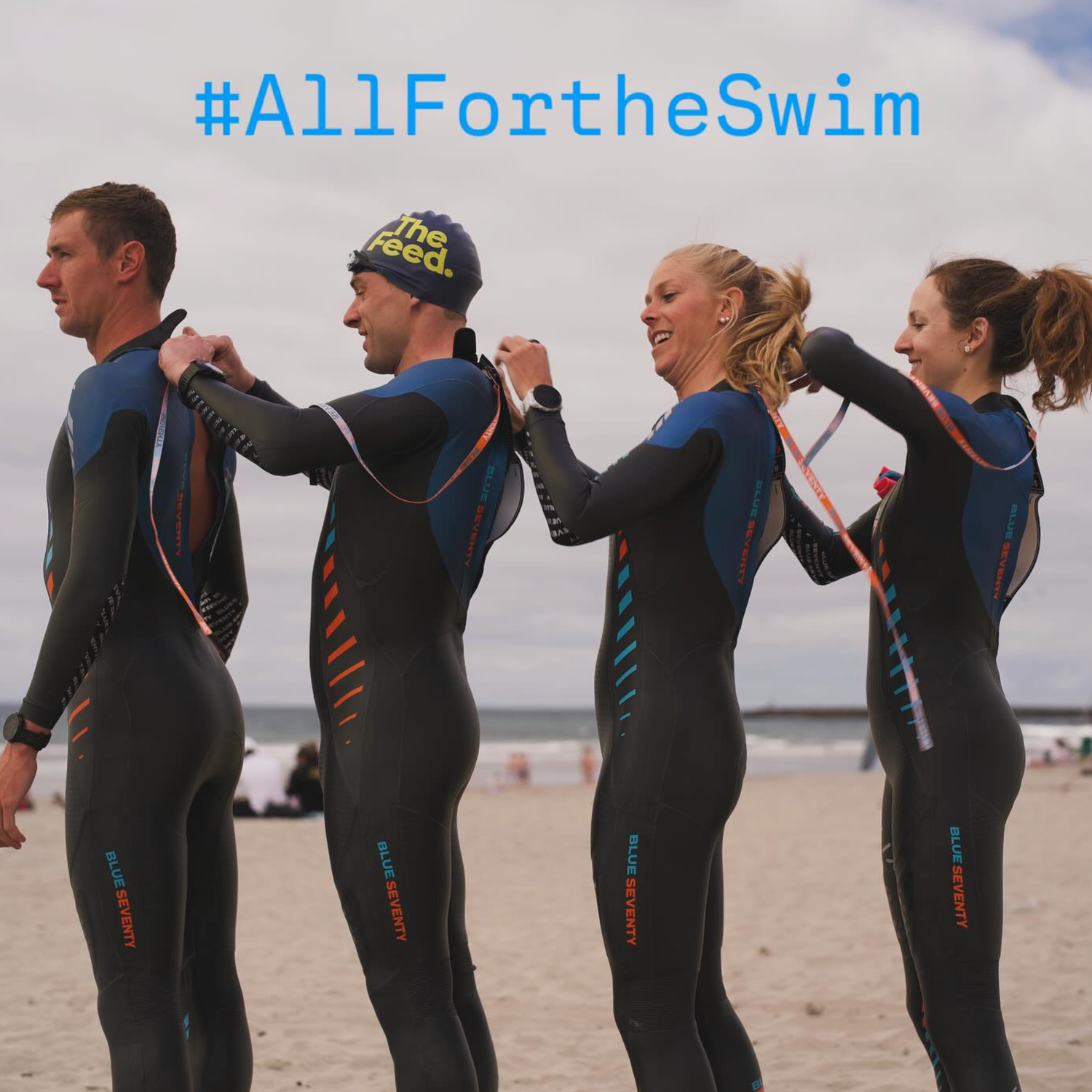
At blueseventy, we have always viewed fit as a performance issue. Women’s wetsuit design is not about making a smaller version of a generic suit. It is about building a swim-specific pattern that works with the female body in motion. That is the thinking behind Femme Fit, which refined pattern design in key fit areas including the bust, torso, wrists, and ankles, lowered the neckline for comfort and reduced chafing, and added extended zipper length for easier entry and faster transitions. In 2014, the women’s range expanded to 15 sizing options, which reflected a simple truth: more precise fit produces better swims.
Why torso length changes the way a wetsuit performs
A wetsuit works as one connected system. If the torso is too long for your frame, extra material has to collect somewhere. It often gathers through the stomach, lower back, or crotch. That bunching is not just annoying. It shifts how the suit sits across the chest and shoulders, which affects rotation, breathing, and arm turnover.
In open water, small fit problems become bigger. You are breathing under effort, sighting, dealing with chop, and asking your stroke to stay smooth under stress. A suit that sits a little low on deck can feel much worse once it fills, settles, and starts moving with your body. This is why many short torso athletes describe a suit as tiring rather than obviously too big or too small. The fatigue is real, but the root cause is often panel placement, not fitness.
Why shoulder fatigue often starts at the torso
Swimmers tend to blame the shoulders first. That makes sense because shoulder restriction is easy to feel. The mistake is assuming the neoprene in the arms is always the cause. Often, the problem starts lower.
If the torso is too long, the suit can pull from the trunk and create tension every time you reach forward. That tension changes the feel of the recovery and the catch. It may not feel dramatic. It often shows up as early fatigue, shortened extension, or the sense that you are never quite getting into rhythm. For a short torso woman, a better fit through the midsection often improves shoulder freedom without changing anything about stroke mechanics.
This is one reason swim-specific women’s patterning matters. The suit has to place its flexibility where your body needs it, not where a generic size run assumes it belongs.
What short torso women should check first
Before changing sizes back and forth, look at how the suit sits on your body from top to bottom. The best clues are usually visible before you even get in the water.
- Chest panel position: If it sits low, the torso may be too long.
- Waist and stomach bunching: Extra neoprene in the midsection often signals excess torso length.
- Crotch placement: If the suit never seems to seat fully, even after careful donning, the vertical fit needs a closer look.
- Neckline pressure: A collar that feels crowded or starts rubbing during rotation may be sitting in the wrong place for your frame.
- Wet removal: If the suit sticks through the waist and hips every time, torso mismatch may be part of the problem.
One sign by itself does not settle it. A cluster of them usually does.
The role of neckline design for short torso swimmers
Neckline shape matters more than many athletes realize. For swimmers with a shorter torso, the space between shoulder and hip is compressed, so collar height and front-neck pressure become more noticeable. A neckline that sits too high or too rigid can turn a manageable fit issue into a distracting one over race distance.
That is why blueseventy’s women’s fit work includes a lowered neckline for comfort and reduced chafing. It is not a cosmetic detail. It changes how the suit feels when you sight, breathe to the side, and settle into an open-water rhythm.
Why dry-land fitting does not tell the whole story
A wetsuit should feel snug on land. That is normal. In the water, it should feel more natural once it settles into place. This is one of the most important principles in wetsuit fitting, and it matters even more for short torso athletes because vertical fit problems often reveal themselves only when the swimmer starts moving.
Deck tests catch obvious issues. Swim tests catch the real ones.
When you try a suit, do not stop at standing in front of a mirror. Put it on properly, swim in it, and pay attention to how it behaves under motion and effort.
How to test torso fit in the water
- Put the suit on carefully. Work the neoprene up from the calves to the thighs, then the hips, before you set the arms and shoulders. A poorly donned suit can create shoulder tension that has nothing to do with true fit.
- Swim easy first. Give the suit a few minutes to settle. Notice whether the collar stays comfortable and whether the midsection stays smooth.
- Build to moderate effort. This is where false shoulder restriction usually shows up. If your shoulders load early, look again at torso length and panel position.
- Rotate and sight. Body roll and lifting the head will reveal neck friction and bunching through the waist faster than straight swimming alone.
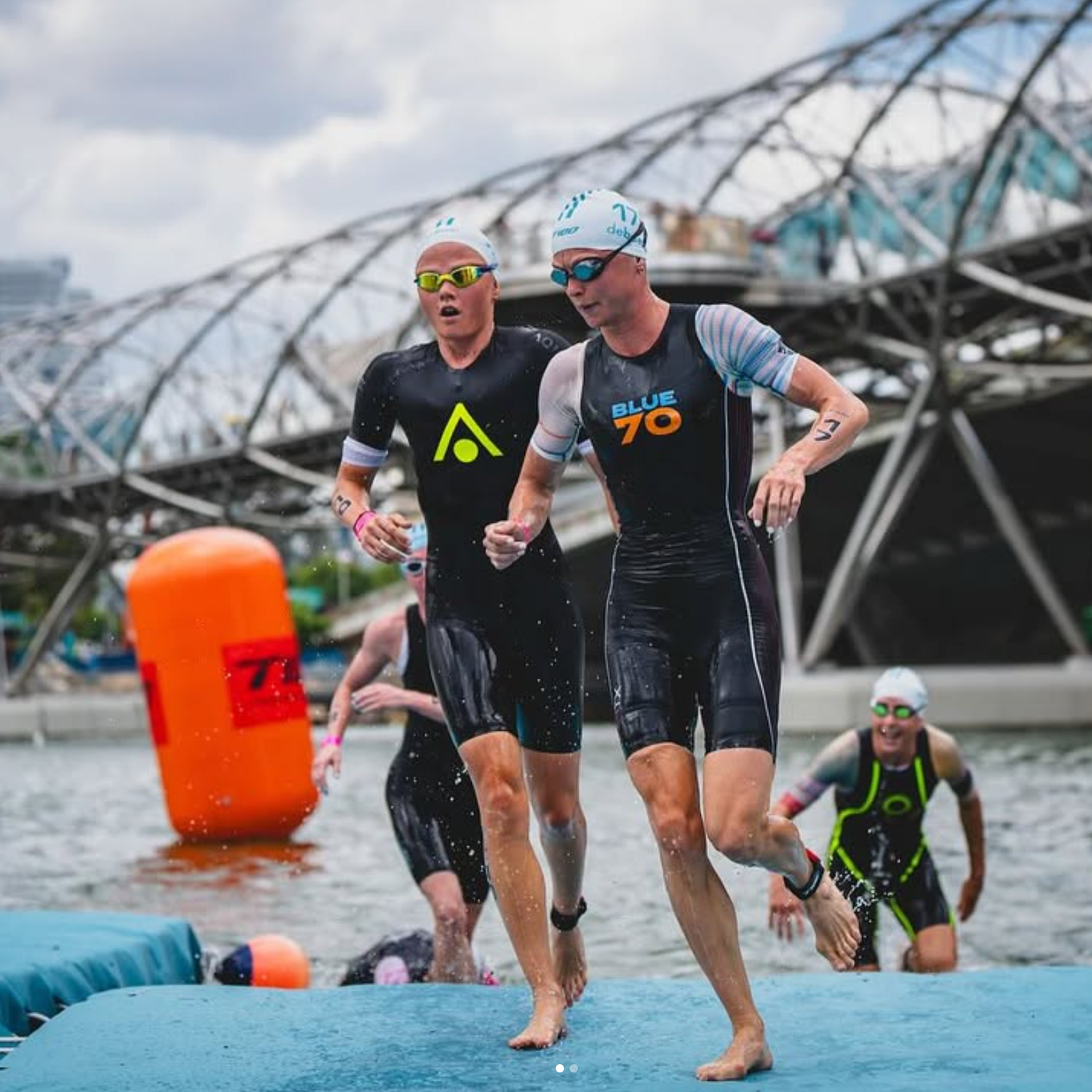
- Practice removal while wet. A short torso mismatch often appears clearly in T1 practice, when excess material bunches through the middle of the suit.
blueseventy’s Take a Test Swim policy makes this process more useful because you can swim in your wetsuit and still return or exchange it if it comes back clean, dry, unmodified, with tags and accessories. That matters because wetsuit fit should be judged where it counts: in the water.
Choosing the right blueseventy model
Once torso fit is dialed in, then model choice starts to matter in the way most athletes expect. The right answer depends on how often you swim, what temperatures you face, and whether you need a training suit, a race suit, or one suit to do both.
The Fusion is a strong starting point for many swimmers. Its 2021 redesign added a lower-sitting neckline for comfort without losing the watertight seal. For athletes who have struggled with collar pressure, that detail is worth attention.
The Reaction suits swimmers who train regularly and spend more time in open water. blueseventy recommends it for frequent, longer swims, which makes it a smart choice for athletes who want solid performance with training durability.
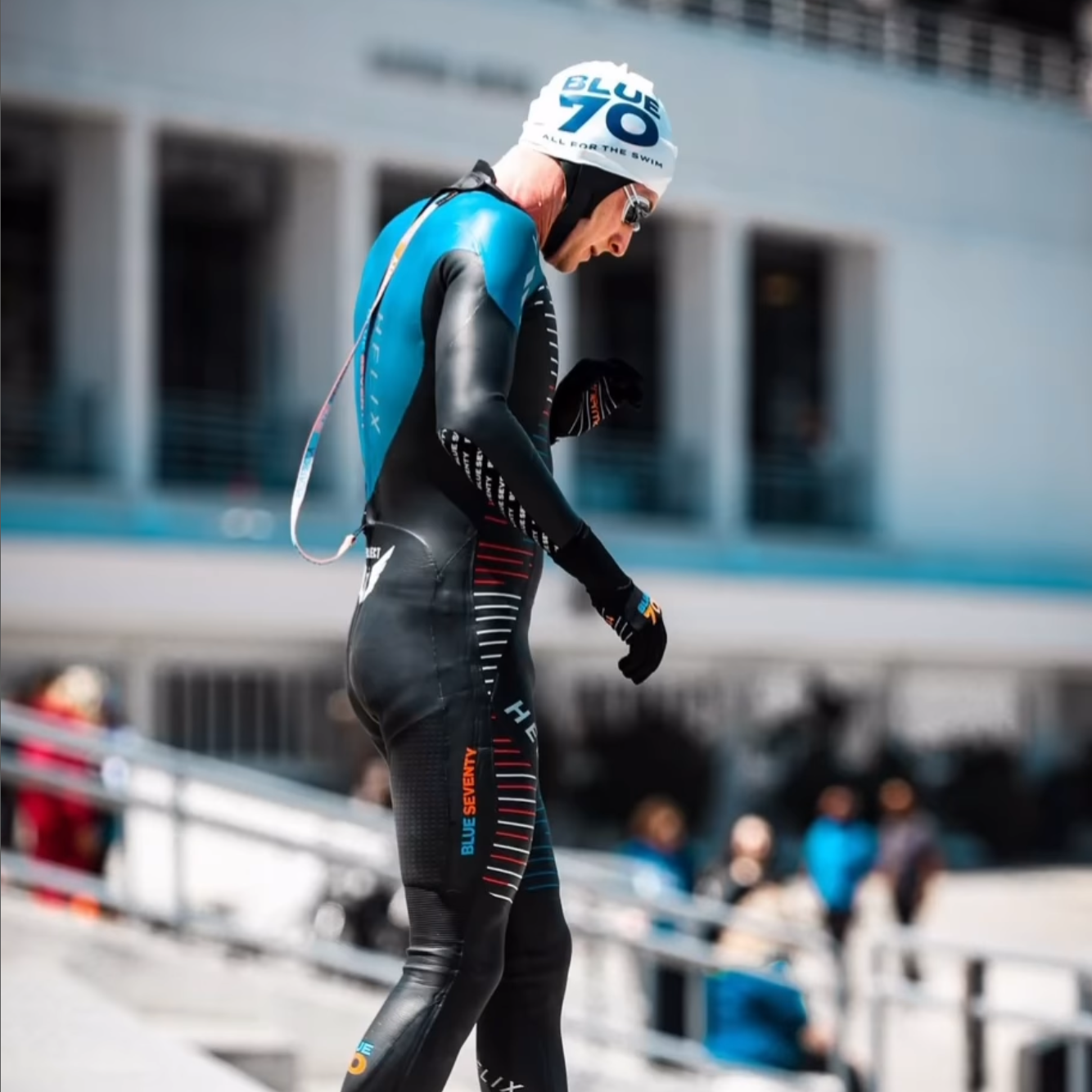
The Helix is the flagship race suit, built for race-day performance with very thin, flexible neoprene in the arms and shoulders, a permeable catch panel that preserves feel for the water, and LIFT buoyancy panels added in 2018. It is an outstanding race option for athletes who want maximum freedom through the stroke. blueseventy is also clear that its thin neoprene is not ideal for heavy training use, and that honesty helps athletes match the suit to the job.
For colder water, the Thermal Reaction is fully lined with Zirconium jersey for added thermal protection. blueseventy’s guidance places that thermal crossover below about 56 to 58°F. Above about 70 to 72°F, many swimmers find a full suit too warm for longer sessions, and a sleeveless design can make more sense.
The common mistake: treating discomfort like part of the sport
Many women have been taught to accept a poor wetsuit fit. They expect some neck rub. They expect the shoulders to burn. They expect transition to be awkward. After enough seasons, those problems start to feel normal.
They are common, but they are not the standard you should settle for.
A good swim-specific wetsuit should feel snug and purposeful. It should support body position, allow clean rotation, and preserve freedom from restriction. If you have a short torso and the suit never seems to line up with your body, the answer is not to tough it out. The answer is to get more precise about proportion.
How to shop smarter if you have a short torso
Start with women-specific fit features, not just the size chart. Look closely at the neckline, torso shape, and zipper entry. Use the chart, but do not treat it as the last word. Then confirm the fit in the water, where bunching, rubbing, and shoulder tension show up honestly.
If you have spent years thinking wetsuits just do not fit you well, there is a good chance the issue is more specific than that. For many short torso women, the difference comes from a suit that matches vertical proportion instead of forcing a compromise through the middle of the body.
If you are ready to check your fit more carefully, start with the blueseventy size charts, review the fit guide, or use Take a Test Swim to judge the suit in real swimming conditions.