


Most wetsuit size charts ask for height and weight. They don't ask where that height lives. If you carry more of it through your ribs and shoulders than through your legs, the standard chart points you toward a suit that fits one half of your body and fights the other.
Wetsuit fit has three points that matter more than the ankle: the neck seal, the shoulder panel, and the crotch. When a suit's torso is too short, all three move out of place. The collar drags at your throat. The shoulders bind when you reach. The crotch climbs. Those problems don't relax once you start swimming. They get louder with every rotation and sighting.
Why Torso Length Outranks Leg Length
If you pick a wetsuit by leg length alone, you go down a size. The legs look trim, the ankles seal, and the knees line up. Then you swim. A too-short torso pulls the suit down with each stroke, so the neckline sits lower than the pattern intended. The suit that felt snug on land now feels restrictive in the water. That is the opposite of what you want. Blueseventy's fitting guide says a suit should feel snug on dry land and more comfortable once you are swimming.
Now try the other route. Size up for the torso and let the legs carry a little extra fabric. You'll see a fold behind the knee when you kick. You'll also keep a collar that lies flat and shoulders that rotate through a full catch. For swimming and triathlon, that trade wins every time. A free shoulder matters more in the water than a clean ankle line.
Two Measurements That Tell You Where Your Height Lives
Take a tape measure and record two numbers. First, measure from the bony bump at the base of your neck to the crease of your hip. Second, measure from that hip crease to the floor along the outside of your leg. The first number tells you how much suit you need through the body. The second tells you how much extra length will gather below the knee.
Check these fit markers in order, on dry land and then in the water.
- Shoulder mobility: Raise both arms overhead. The suit should not pull the collar down or stop your elbows from reaching high.
- Crotch position: The suit's crotch should sit at your natural hip crease, not several inches lower. A low crotch means the torso is too long for the suit.
- Neck seal: The collar should lie flush without digging. A lowered neckline helps if you need a larger torso-led size.
- Ankle and knee folds: Check these last. Extra material behind the knee is common for short legs. It shouldn't drive your size choice unless it causes chafing or water entry.
If the crotch hangs more than an inch or two below your hip crease, the torso panel is too long. Start with the Blueseventy size chart and then let these markers make the final call.
How Blueseventy Patterns Cut for Proportion
Blueseventy suits are cut for the motion of swimming. The materials include Yamamoto neoprene in 38, 39, and 40 cell grades. A higher cell number means more flexibility, and flexible neoprene follows a short-legged, long-torso body better than a stiff panel that fights it.
For women, the Femme Fit pattern has been part of the line for roughly 15 years. In 2014, Blueseventy expanded it to 15 sizing options. The pattern adjusts the bust, torso, wrists, and ankles instead of shrinking a men's block. The lowered neckline and extended zipper reduce throat pressure and make entry easier across wider hips. If you're a female swimmer with short legs, those adjustments help the suit track your actual proportions.
For men, the line uses graded sizing without a separate short-leg version. That means upper-body mobility and torso fit lead the decision. The Fusion at $420 has a lower-sitting neckline from its 2021 redesign, a detail that matters when a long torso pushes you into a size where the collar would otherwise press. The Sprint at $325 is the entry point if you're new to wetsuits and want to test this fit logic. The Reaction at $680 uses higher-grade neoprene and is built for frequent, longer swims.
Take a Test Swim Before You Commit
Blueseventy allows a test swim. You can swim in the suit and still return or exchange it, provided it comes back clean, dry, and unmodified with tags and accessories. That policy changes the short-legged fit decision because you can use the water to validate your choice. Spend ten minutes swimming easy freestyle. Then swim 10 strokes with a focus on reach. If the shoulders feel free and the collar stays flush, the torso length is working. If the collar pulls or the crotch climbs, choose a size up in the body, not down.
Do not cut the legs. Trimming neoprene to reduce ankle folds changes the suit from unmodified to altered. An altered suit no longer meets the clean, dry, unmodified standard for returns and can complicate a warranty repair. Use neoprene cement for sealing small nicks and tears, not for reworking a panel length. If the leg folds bother you after a test swim, exchange for another size or a different cut within the 30-day window from the ship date.
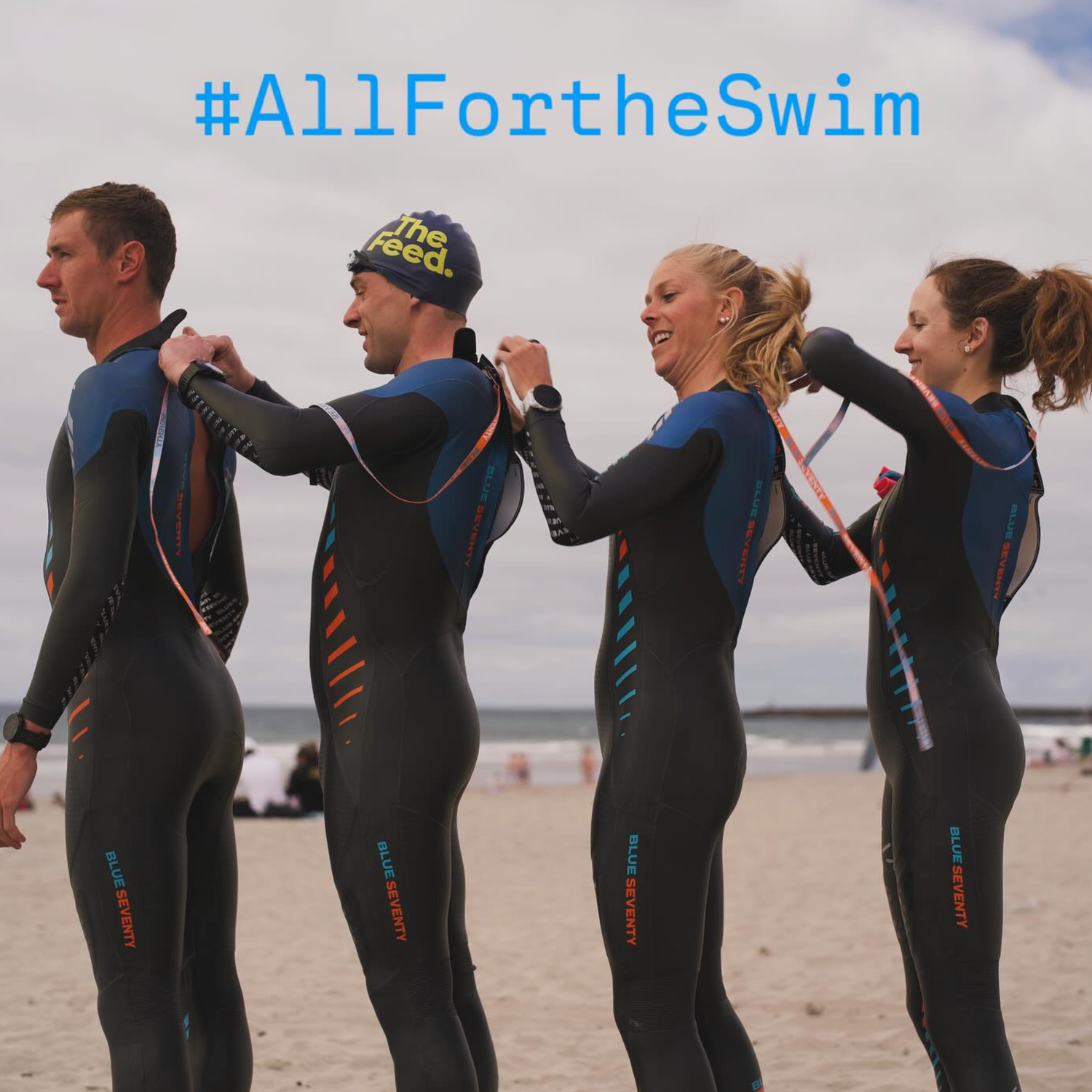
If you already own a suit that fits your torso but bunches at the legs, donning technique helps. Pull the suit up in stages. Start at the ankles, work fabric up over the calves, and bring the torso up before inserting your arms. This sequence moves excess material out of the leg and toward the torso, where a little extra length is less of a problem. Use the pads of your fingers, not fingernails, to slide the suit. Fingernails puncture new suits more often than people expect.
Short Legs Mean Torso-First Sizing
Short legs change how a wetsuit fits because they make torso length the primary fitting variable. Pick the size that keeps your collar flush, your crotch at the hip crease, and your shoulders free through a full reach. Accept a fold behind the knee if that is the trade. Then take the suit for a test swim and confirm the fit in water. If it doesn't work, exchange within 30 days and try the next torso-led size.
All for the swim.