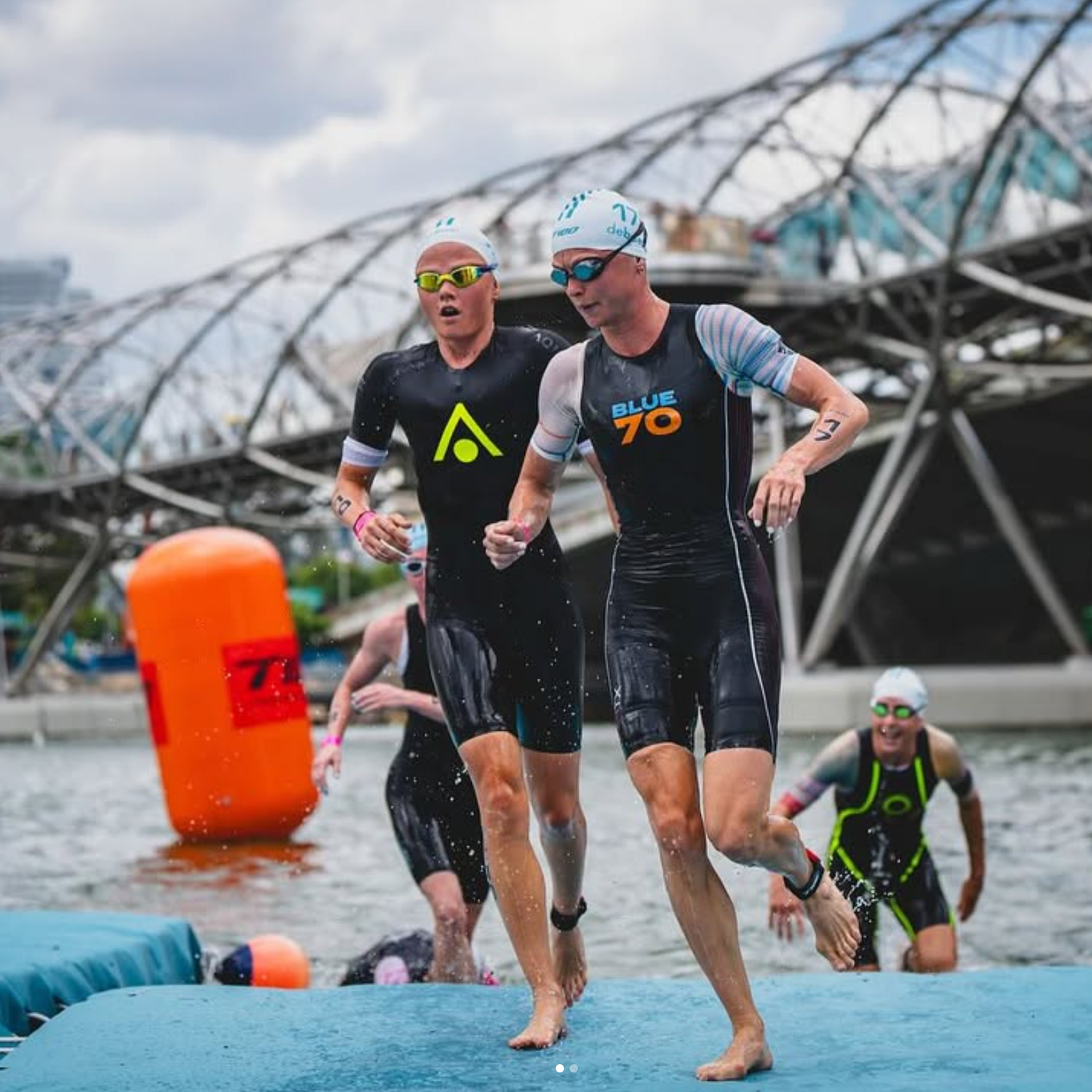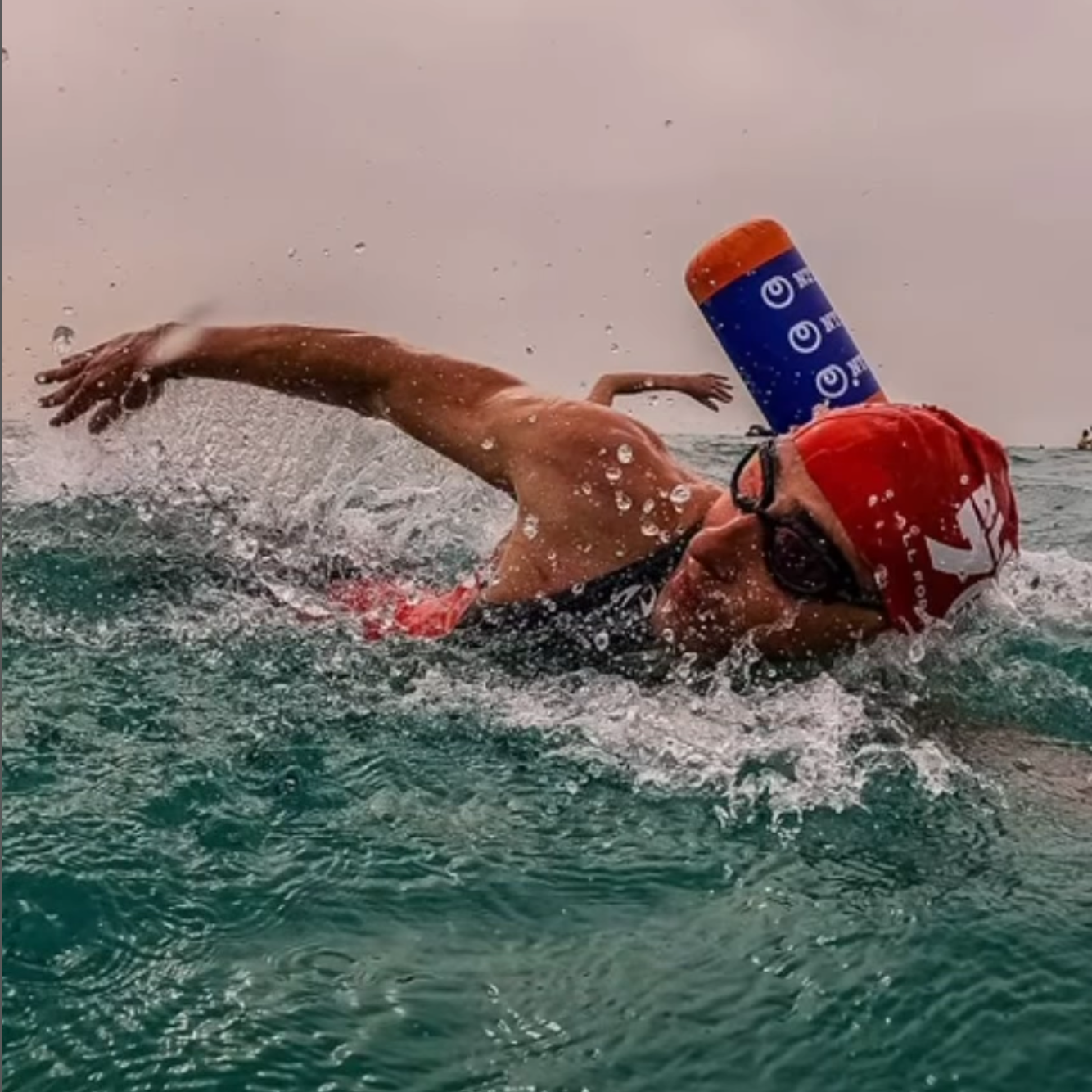



Neoprene is neoprene. That's the assumption a lot of swimmers make when they're shopping for a wetsuit, and it's wrong in a way that actually costs stroke efficiency. A wetsuit built for catching waves and one built for freestyle swimming start with the same base material and end up solving almost opposite problems. One has to survive impact and hold up against a surfboard. The other has to disappear from your shoulder rotation entirely, stroke after stroke, for the length of a race.
What Surfing Actually Demands From Neoprene
Surfing means paddling, sitting upright waiting for a set, catching a wave, and absorbing impact when a wipeout drives you into the board, the reef, or the sand. The wetsuit has to handle a specific set of stresses:
- Abrasion resistance against wax and fiberglass
- Tear resistance on impact
- Durability through months of sun and saltwater exposure between sessions
Meeting those demands usually means denser, thicker neoprene through the torso, often reinforced at the knees, seat, and chest. Shoulder flexibility takes a back seat. A paddling stroke is short and shallow, and it never asks the joint to move through anything close to the range a swimming stroke requires. Some stiffness in the shoulder is a fair trade for a suit that survives a season of wipeouts.
What Swimming Actually Demands From the Same Material
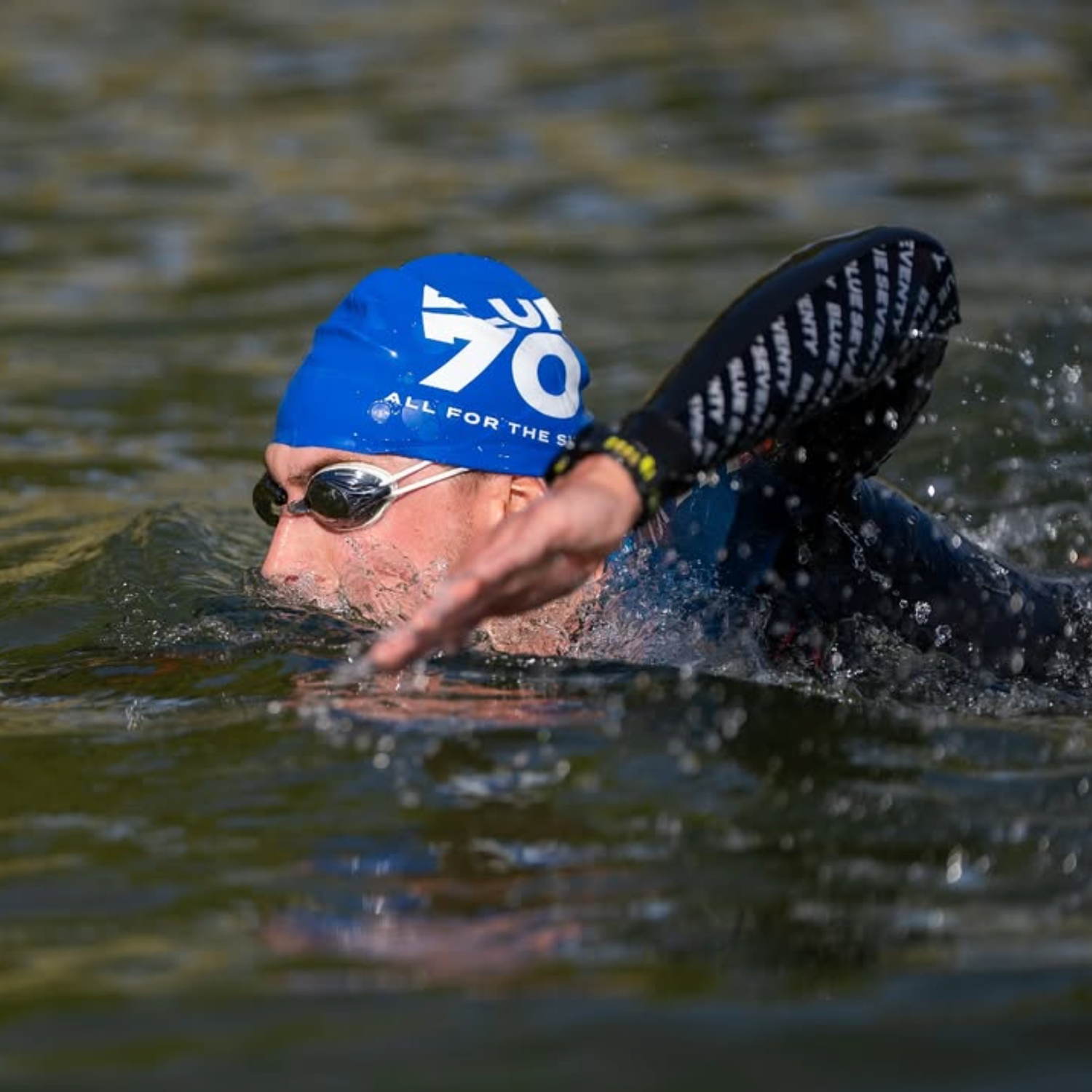
Freestyle is a different story. It asks the shoulder to rotate through nearly its full range, over and over, without a break. A swimmer holding 60 strokes per minute across a 1,500-meter open water leg completes somewhere around 1,500 to 1,800 shoulder rotations by the finish. Even a small amount of resistance at the joint compounds across that volume into real fatigue.
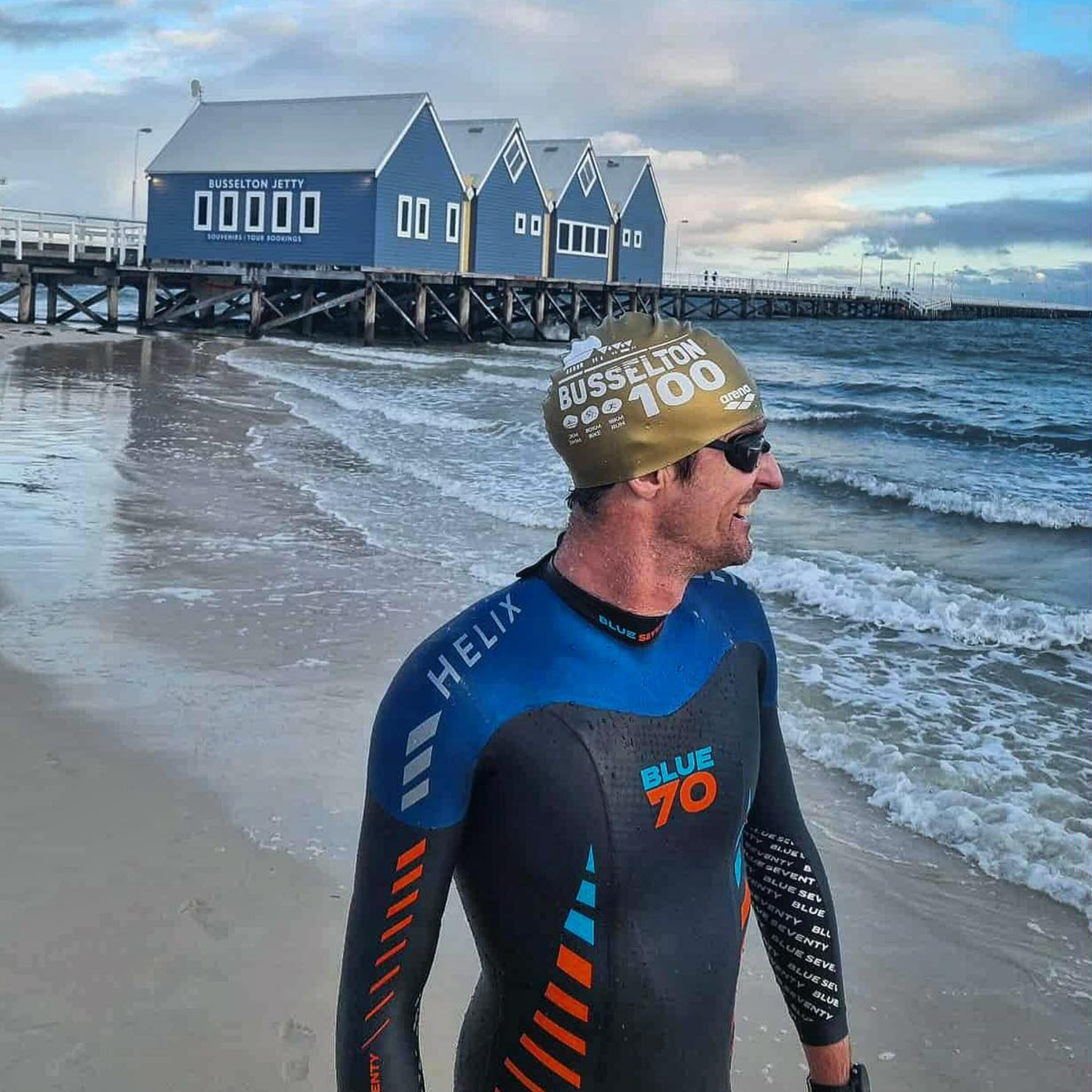
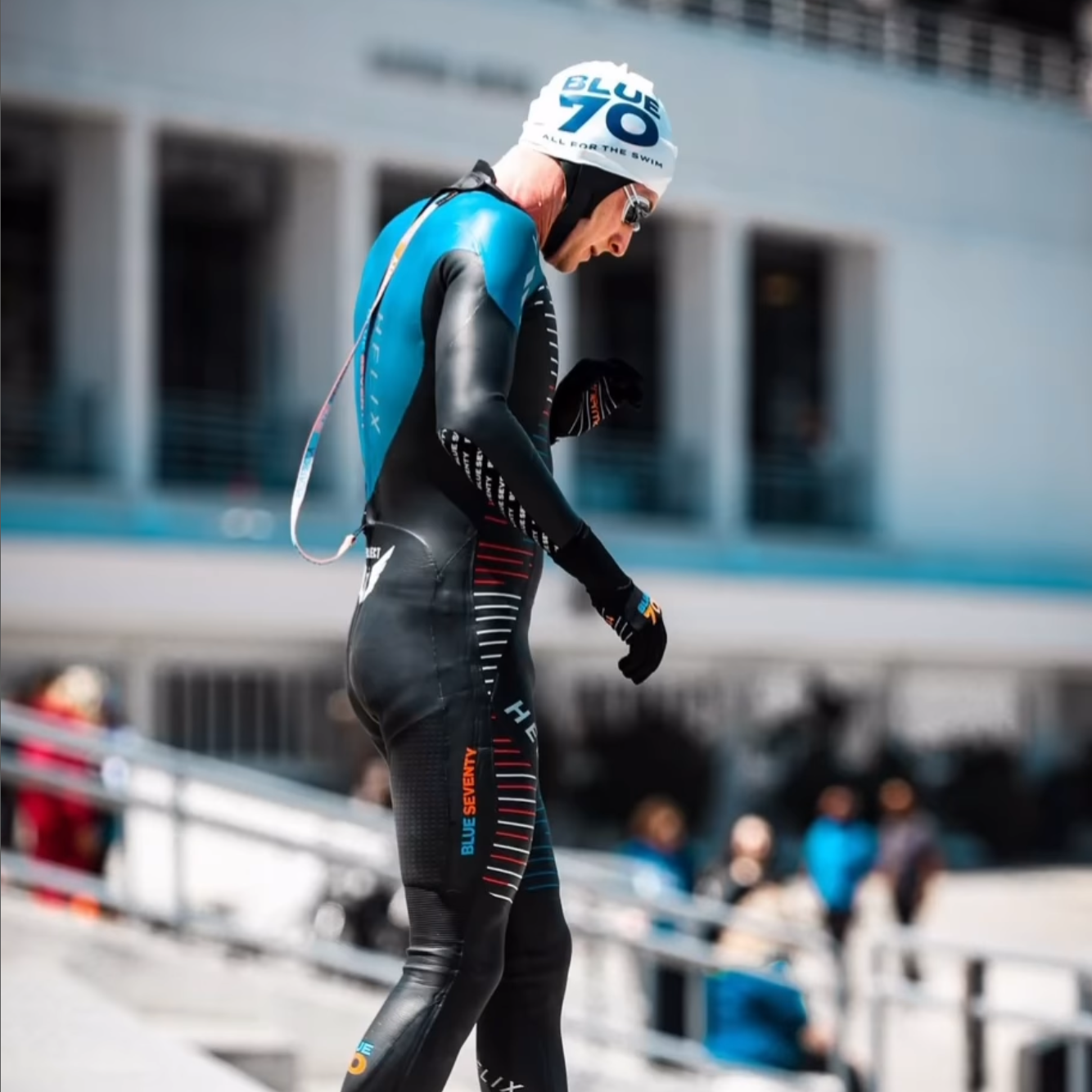
This is why swim-specific wetsuits, including Blue70's Helix and Reaction lines, use Yamamoto neoprene graded at 38, 39, and 40 cell specifically in the shoulder and arm panels. A higher cell count means more flexibility, because the internal cell structure compresses and rebounds more easily under repeated movement. A surf suit is built around the opposite priority: lower-cell, denser neoprene that resists compression damage from paddling friction and board contact.
Put a surf suit on a swimmer and the restriction shows up exactly where it hurts: at full extension during the catch, right when good technique depends on an unrestricted reach.
Buoyancy Isn't a Question Surfing Needs to Answer
A surf wetsuit exists to keep a rider warm while lying prone on a board or sitting upright between sets. The board handles flotation. Buoyancy distribution through the suit itself never really enters the design conversation.
Swimming without a board underneath you turns buoyancy into a central question. Body position in the water determines drag, and drag determines how much energy goes toward moving forward versus fighting the water. A swimmer whose hips sit low creates more frontal resistance and works harder just to stay level. Buoyancy equals speed, and swim-specific wetsuits are built around that principle directly. Blue70's LIFT panels, part of the Helix line since 2018, place buoyant material through the hips and legs to lift the lower body into a more horizontal position, without adding bulk through the shoulders where flexibility matters most.
There's no reason for a surf suit to solve this problem. Uniform-thickness neoprene through the torso and legs works fine when a board does the flotation work for you. In open water, that same uniformity becomes a drag penalty instead.
A Feature With No Real Surf Equivalent
Since 2010, Blue70's Helix has used a permeable catch panel on the forearm. It's a section of the suit designed to let a small amount of water pass through so a swimmer keeps feel for the water during the pull phase of the stroke. There's no real counterpart to this in surf wetsuit design, because a paddling motion doesn't rely on the same tactile feedback through the forearm and hand that an efficient swim catch requires.
That one feature says a lot about the underlying split between the two categories. Surf wetsuits treat water as something to keep outside the suit wherever possible. Swim wetsuits treat controlled water contact at specific panels as functional, not a flaw to design away.
Zippers Built for the Beach vs. Zippers Built for Transition
Surf wetsuits commonly use back-zip, chest-zip, or zip-free entry systems, designed around getting in and out of the suit on a beach, often cold and in a hurry, but without any real time pressure attached to the process.
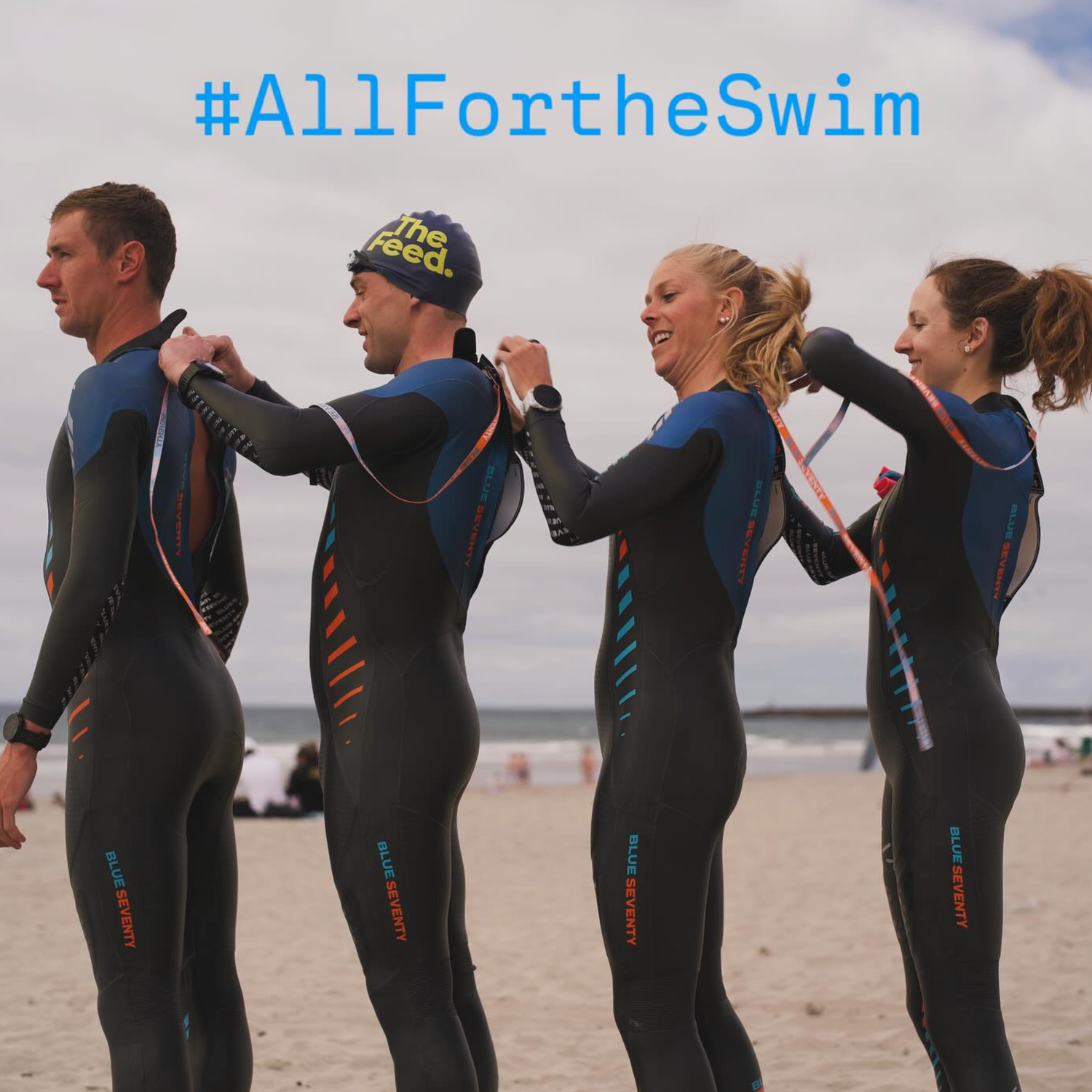
Triathlon wetsuits build entry and neckline design around transition speed instead. Blue70's 2021 Fusion redesign lowered the neckline specifically to reduce chafing while keeping a watertight seal, a change made with T1 speed and comfort in mind, not beach convenience. Every extra second spent wrestling a suit off in transition is a second not spent on the bike.
Durability Cuts Both Ways
Here's the trade-off worth being honest about: the thin, flexible neoprene that makes a swim wetsuit fast also makes it more delicate. The Helix's very thin shoulder and arm panels will break down faster under frequent training use than a suit like the Reaction, which uses a higher-grade neoprene built for repeated, longer swims. That's part of why frequent trainers usually do better in Reaction or Fusion, saving the Helix for race day itself.
A surf wetsuit's thicker, more abrasion-resistant neoprene holds up better against reef contact and board rash for the same reason a swim suit doesn't. Neither suit is more durable in any absolute sense. Each one holds up against the specific stress it was built to handle.
Why the Gap Grows With Distance
Over a short, casual swim, the difference between a surf-cut suit and a swim-specific one is noticeable but forgivable. Stretch that distance out to 1,500, 1,900, or 3,800 meters at race effort, and small inefficiencies start to stack up fast. A shoulder meeting even slight resistance at full extension, repeated thousands of times, adds up to fatigue that shows up later on the bike and the run. A body position sitting a few degrees lower in the water because of flat, undifferentiated buoyancy adds drag across the entire swim leg, not just part of it.
This is also part of why less experienced swimmers often notice a bigger difference from a properly fitted swim wetsuit than advanced swimmers do. Weaker body position leaves more room for buoyancy placement to actually help.
Matching the Suit to What You're Actually Doing
If you surf, a surf wetsuit is the right tool for the job. It's built for impact, paddling posture, and long sessions where the board handles flotation for you.
If you're training for open water swims or triathlon, the right choice depends on how often you swim, how far, and in what water temperature, not just how warm a suit feels standing on land. A few starting points:
- Racing and chasing every marginal gain: look at a suit like the Helix, with thin, highly flexible neoprene and a permeable catch panel
- Training multiple times a week: the durability of the Reaction or the value of the Fusion tends to hold up better over time
- Cold water below roughly 56 to 58°F: a purpose-built option like the Thermal Reaction adds a Zirconium jersey lining for extra warmth without giving up shoulder flexibility
- Warm water above roughly 70 to 72°F: a full suit can be more than you need over a longer swim, which is where sleeveless designs earn their place
The word "wetsuit" covers two genuinely different engineering problems. Once you know which one your suit was actually built to solve, choosing the right gear for your sport stops being a guess.
Not sure which model fits your training and racing plan? Blue70's size charts and fitting guide can help you land on the right fit, and every Blue70 wetsuit comes with the option to take a Test Swim before you commit, so you can feel the difference for yourself before deciding.