


Most swimmers can tell you exactly how they rinse a wetsuit, dry it, and treat the zipper. Ask what they do with it for the six days between swims, and the answer is usually a shrug. It gets stuffed in a gear bag, hung on a hook, or folded the same way it always is. That gap between swims, not the swim itself, is where a surprising amount of neoprene damage starts.
Yamamoto neoprene, the material behind every Blue70 wetsuit, is a closed-cell foam. Each cell holds a small pocket of gas, and that structure is what gives the rubber its stretch, its recovery, and its buoyancy. Crease that foam sharply along the same line, over and over, and you're loading the cell walls at that exact point with compression they don't fully bounce back from. Nothing happens after one fold. Something starts to happen after the fortieth.
Why Neoprene Remembers Creases
Neoprene is built to snap back. Stretch it through a stroke cycle and it returns to shape the instant the load releases. That's the whole point of the material.
Recovery isn't unlimited, though. Fold the same panel along the same crease dozens of times across a season, and the foam at that line takes a compression cycle it never quite reverses. The cell walls thin. The spring fades a little. Eventually you get a pale crease line across the chest, a stiff patch behind the knee, or a spot that feels thinner under your fingers than the neoprene around it.
This isn't a wetsuit quirk. Any closed-cell foam behaves this way under repeated sharp folding, which is why bicycle inner tubes get stored in loose coils instead of tight figure-eights, and why gymnastics mats are rolled rather than accordion-folded for storage. Concentrate a bend at one point and that point absorbs the damage. Spread the same bend across a curve, and no single spot takes more than it can handle.
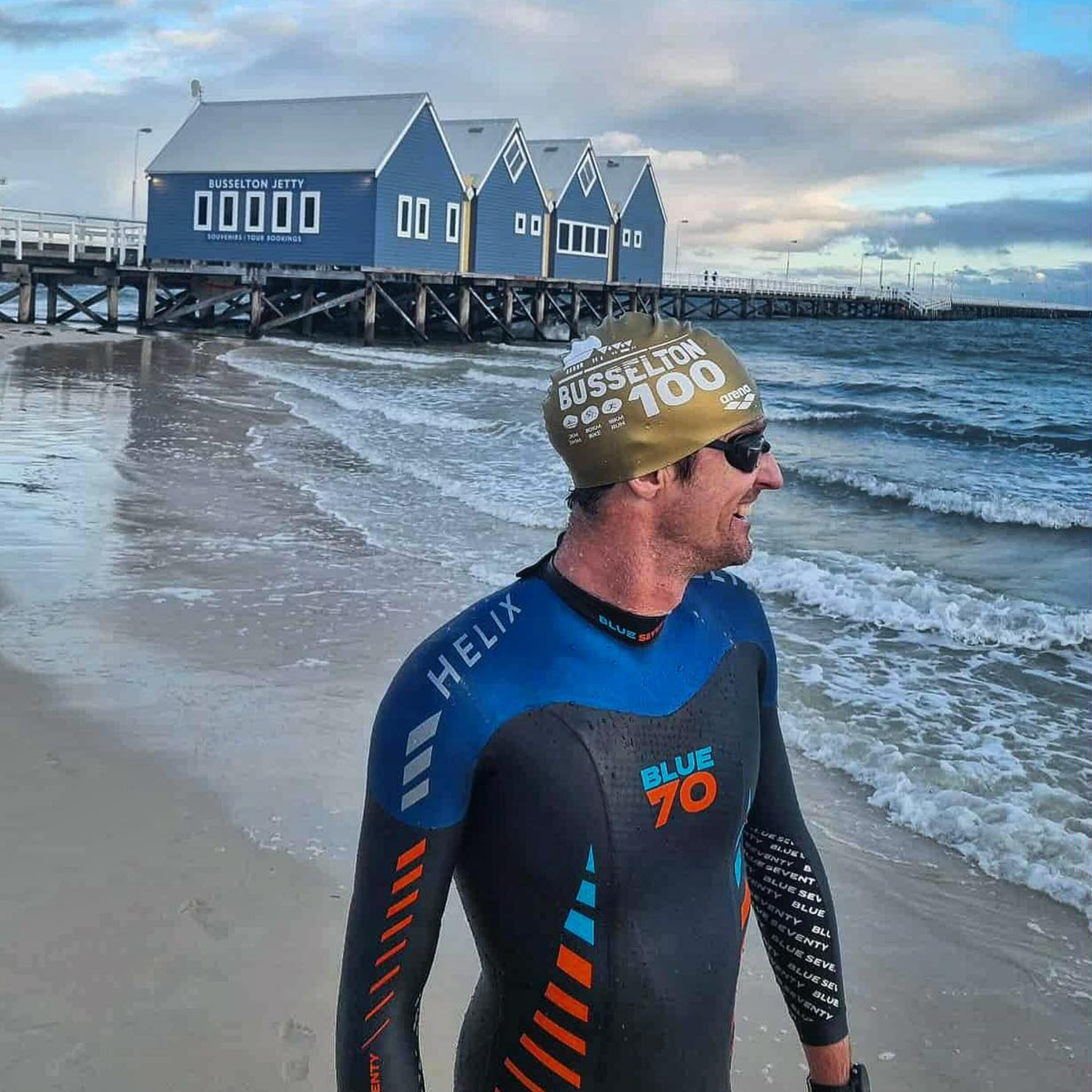
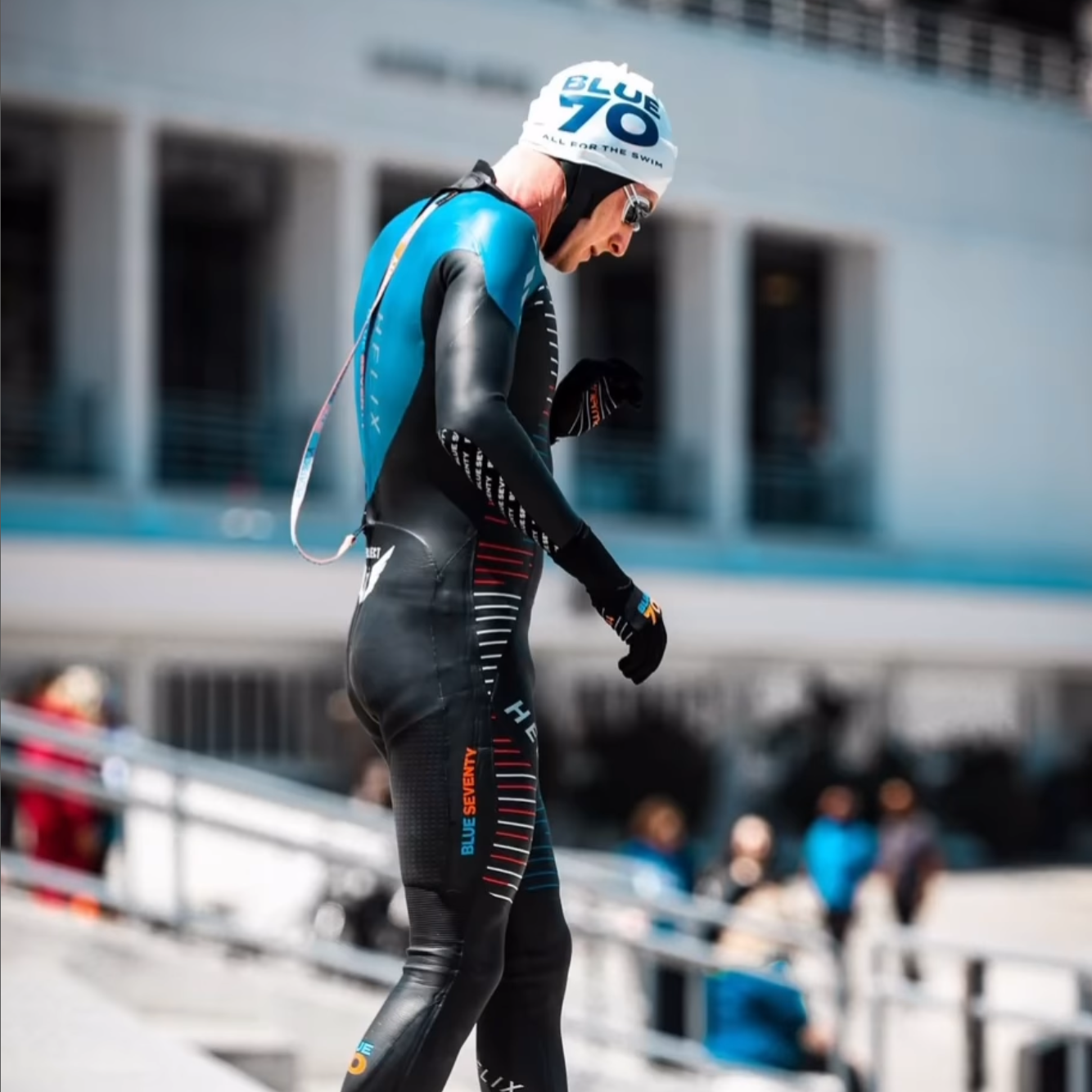
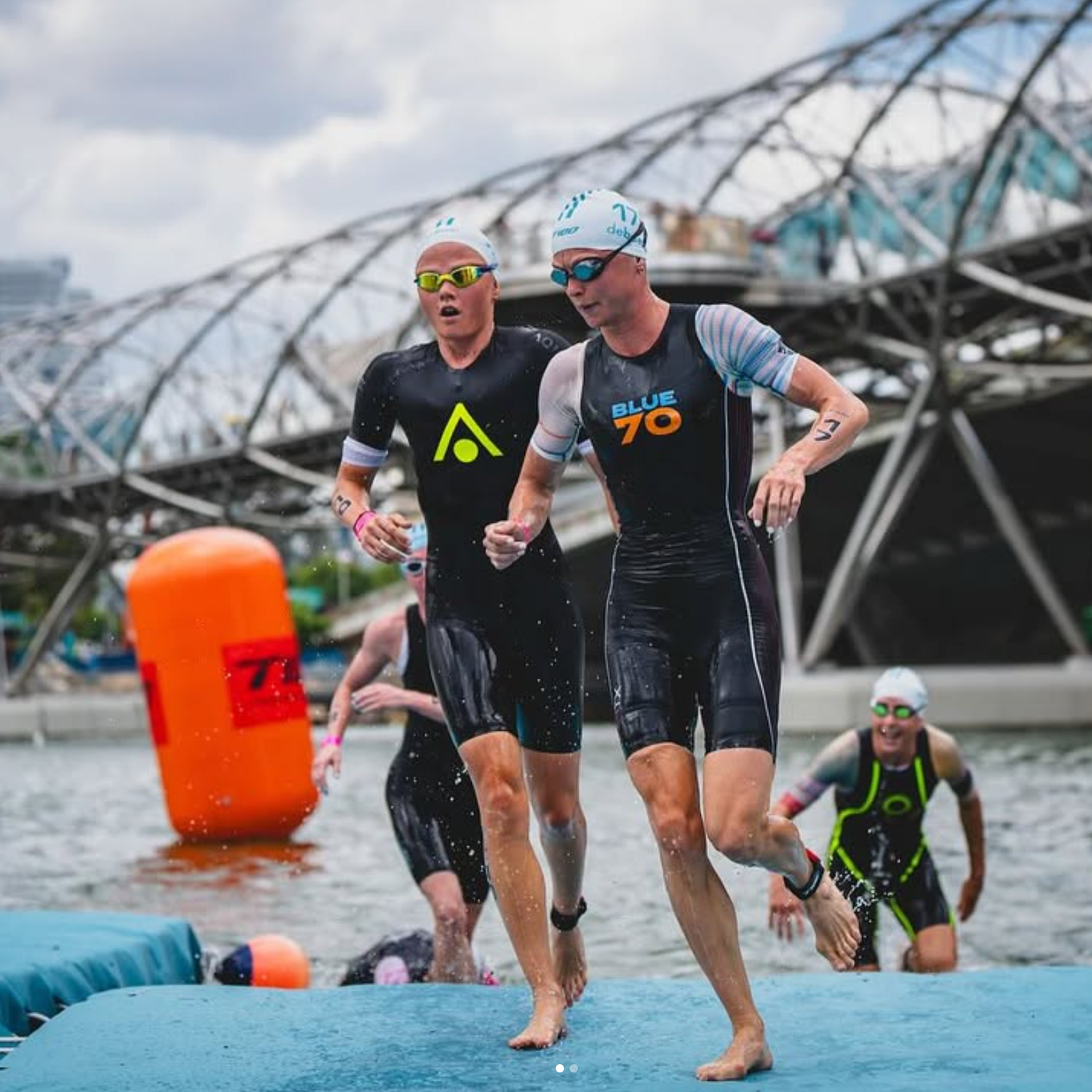
The stakes are higher on some models than others. The Helix uses thinner, more flexible neoprene through the shoulders and torso to maximize feel for the water and range of motion in the catch. Blue70 has always been upfront about the trade-off: the same thinness that makes the Helix feel almost weightless through a stroke also makes it more delicate under repeated stress, whether that stress comes from heavy training mileage or from being crushed into the same shape in a bag for months. Own a Helix for race day, and your storage habits carry real weight.
The Roll Method
The fix takes about thirty seconds after each swim.
- Lay the suit flat, back panel down, legs extended, arms out to the sides.
- Fold the arms in toward the torso instead of crossing them over the chest, which avoids a sharp diagonal crease across the shoulder panel.
- Starting from the feet, roll upward toward the neck, the way you'd roll a sleeping bag. Keep it loose.
- Store the rolled suit flat, or loosely coiled, somewhere breathable rather than stuffed vertically into a narrow bag pocket.
That's it. No special gear, no extra products. Just a different motion than the one most swimmers default to without thinking twice.
Three Habits That Cause Damage Nobody Notices
A handful of everyday routines account for most of the crease-related wear Blue70 hears about from swimmers puzzled over why a two-season-old suit suddenly feels different.
- Folding at the knee to make the suit fit a smaller bag. The knee already takes stress during every kick cycle. A repeated fold at rest, in the same spot, compounds wear that swimming alone would take much longer to cause.
- Hanging a wet suit by the shoulder straps. Wet neoprene is heavier and more pliable than dry neoprene, so hanging it lets gravity slowly stretch the shoulder line while the material is at its most vulnerable. Drape it over something wide and rounded instead, a pool noodle threaded through the torso works well.
- Packing the suit identically every time. Even a loose fold becomes a problem if it lands on the same line for months. Vary how you roll or coil the suit between sessions and you spread the wear instead of concentrating it.
None of these habits feel careless in the moment. That's exactly why they're so common.
What the Warranty Covers, and What It Doesn't
Blue70 backs every wetsuit with a one-year warranty against manufacturing and material defects. It's worth knowing upfront that this doesn't extend to wear from folding, packing, or general use. Fingernail punctures, heel tears, and ordinary wear and tear all fall outside the warranty, no matter how careful you are otherwise.
A permanent crease line isn't a manufacturing flaw. It's the result of a storage habit. That makes it one of the few forms of wetsuit damage you have full control over, and one that costs nothing to prevent.
Packing for Race Day
Travel adds a variable everyday storage doesn't: compression time. Check your wetsuit in luggage or bury it in a transition bag next to your helmet, shoes, and nutrition for a twelve-hour trip, and it's going to hold some shape no matter how well you rolled it.
Two things help. Pack the suit last, on top of everything else, so it isn't the layer other gear gets stacked and compressed against for the whole trip. Then, once you arrive, unroll it and let it lie flat for twenty to thirty minutes before your warmup swim. A suit that's spent two days rolled tightly in a bag will hold a bit of that shape at first. Give it time to relax before race morning, and you get full shoulder range of motion when it counts.
Thirty Seconds, Two or Three Extra Seasons
This isn't about turning wetsuit care into a ritual. It's about recognizing that a wetsuit is engineered foam doing a specific job: trapping a thin layer of water your body warms for insulation, flexing through a full stroke cycle, and returning to shape between swims. That return-to-shape property degrades gradually under mechanical stress, and storage accounts for a lot more of a suit's total stress cycles over a season than most swimmers assume. It happens every time the suit gets put away, not just during the swim itself.
Rolling instead of folding, varying your pack pattern, and drying the suit over a wide, rounded surface instead of a hanger are small changes. A wetsuit stored this way through two or three seasons will hold its flexibility and fit noticeably better than one folded the same way in a gym bag for a year. For a suit like the Helix, where the neoprene is thin by design to preserve feel for the water, that difference in longevity matters.
Still finding the right fit? Take a Test Swim in a Blue70 wetsuit before you commit. Once you've found your suit, start the roll habit on day one, before the creases do.