


“Recycled wetsuit” sounds like an easy win until you judge it the way swimmers judge every other piece of gear: by what happens in the water. That is where the conversation gets more interesting. A swim-specific wetsuit has to support body position, let your shoulders move freely, provide added thermal protection for the conditions, and stand up to repeated use. If recycled content enters that equation, it has to answer to those same demands.
That is the part many athletes skip. Material sourcing matters, but in open-water swimming and triathlon, a wetsuit is not a tote bag or a casual jacket. You feel every design decision in your stroke. A slightly tight shoulder panel changes your catch. A collar that sits badly can turn into neck irritation halfway through a long swim. A suit that loses shape after repeated use stops feeling like the suit you bought.
Why wetsuits are a tougher sustainability category than standard apparel
Most performance apparel has some room for small material changes. Wetsuits do not offer much of that margin. In a proper swim-specific suit, the material has to stretch, recover, seal, and hold its shape while you rotate, reach, and pull through thousands of stroke cycles. If any one of those traits drops off, swimmers notice fast.
Blue70’s design philosophy has always been rooted in that swim-first standard. The company builds wetsuits for swimming, not for general watersports use, and that distinction matters. Across the line, Blue70 uses Yamamoto neoprene in 38, 39, and 40 cell, with higher cell numbers delivering more flexibility. For swimmers, flexibility is not an abstract comfort feature. It affects stroke rhythm, shoulder fatigue, and how well you maintain form when the pace rises.
That is why the best question is never just, “Is the wetsuit recycled?” The better question is, which part of the wetsuit uses recycled material, and what does that change in the water?
A wetsuit is a system, not one material
Swimmers sometimes talk about wetsuits as if they are one uniform slab of neoprene. They are not. A wetsuit is a collection of parts that each do different work:
- outer jersey
- inner lining
- foam structure
- coatings
- seam construction
- zipper hardware
- panel layout
A recycled lining and a recycled shoulder panel are not the same engineering decision. One may have little effect on stroke feel. The other could change how the suit behaves every time your arm enters the water. That is why broad environmental claims are less useful than clear construction details.
The underused lens: longevity
The strongest sustainability argument in wetsuits is often not the label. It is service life. A suit that stays in rotation for seasons, gets cared for properly, and matches the swimmer’s actual training pattern usually makes more sense than a suit with a good materials story that gets replaced too early.
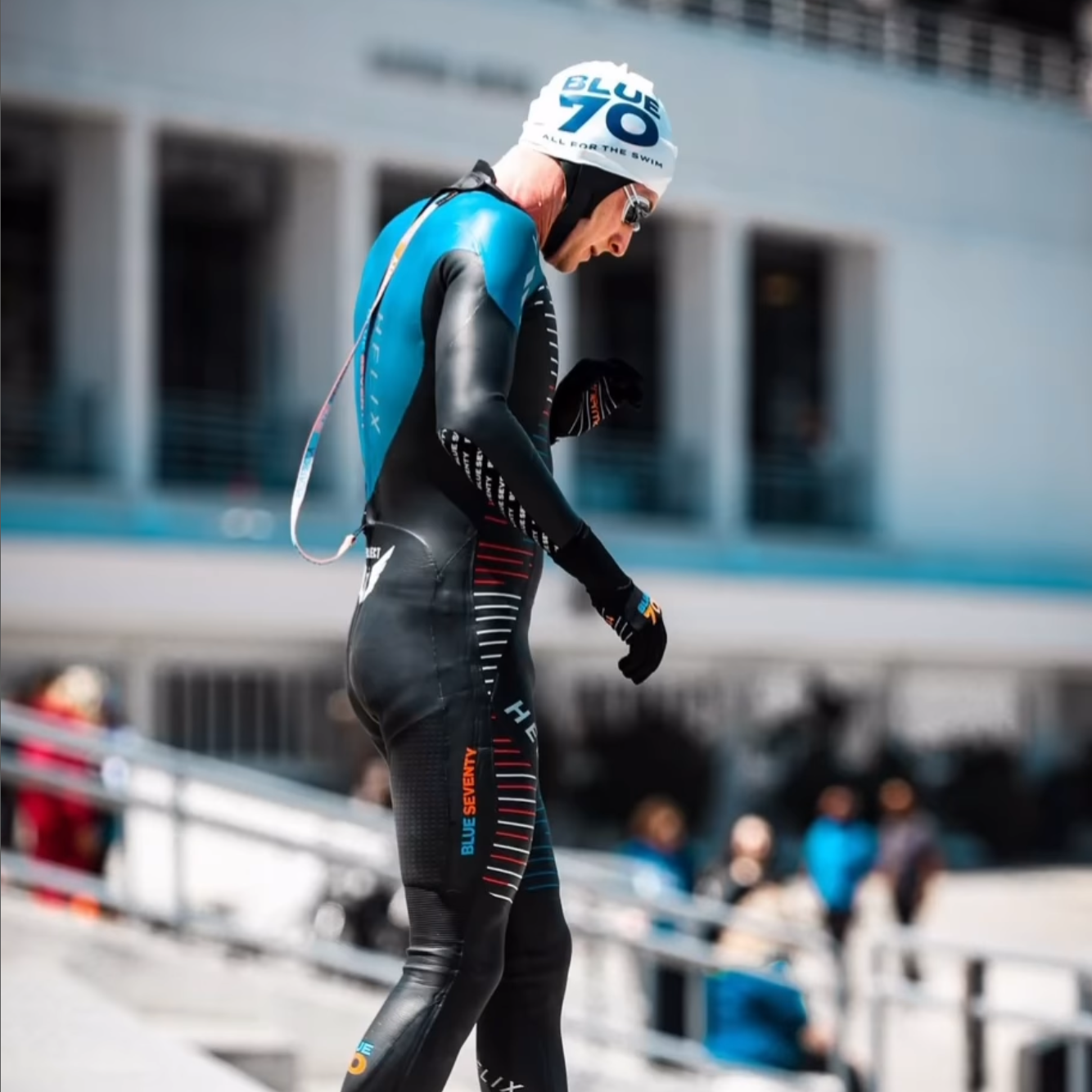
This is where honest product positioning matters. Blue70 is refreshingly direct about the trade-offs in its own line. The Helix is built for total race-day performance, with very thin, highly flexible neoprene through the arms and shoulders, a permeable catch panel that preserves feel for the water, and LIFT buoyancy panels added in 2018. Those features serve a clear purpose. Blue70 also states that the Helix’s thin neoprene is not ideal for heavy training use.
That kind of candor helps swimmers make better decisions. If you swim open water regularly, using a pure race suit for every weekly session can shorten the life of a suit designed around maximum flexibility. A better match for frequent use is often the Reaction for longer swims or the Fusion for shorter frequent swims. Blue70 redesigned the Fusion in 2021 with a lower-sitting neckline for comfort without losing the watertight seal, which is the kind of detail swimmers appreciate after repeated sessions.
Where recycled materials face the hardest test
Not every panel in a wetsuit lives the same life. Some zones are forgiving. Others are exposed to constant stress. If you are trying to judge any wetsuit that includes recycled materials, these are the places that deserve the closest attention.
Shoulders and underarms
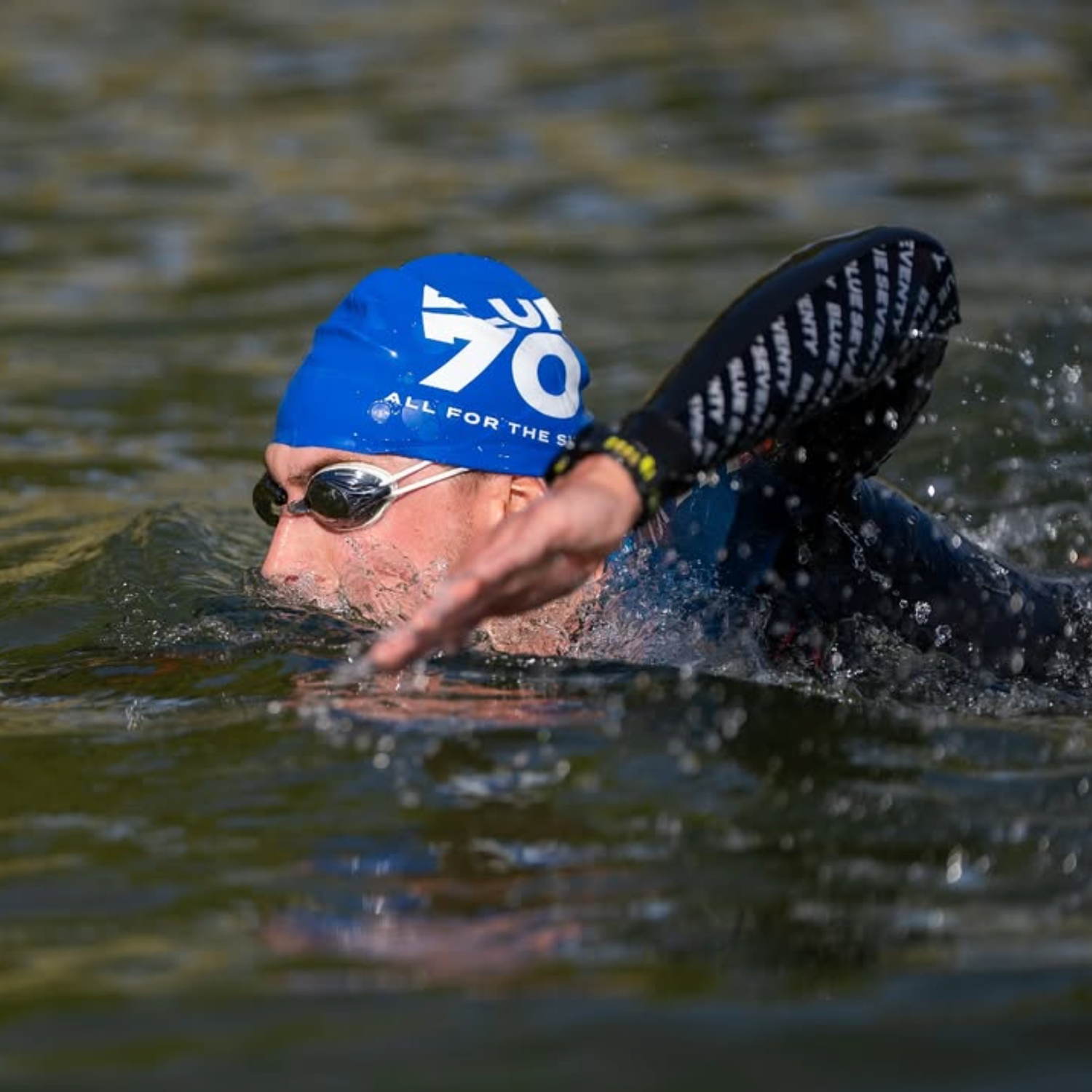
This is the most demanding area of the suit. It stretches on entry, recovers through the pull, and repeats that motion for the full swim. If elasticity or recovery slips here, you feel shoulder fatigue earlier.
Forearms and catch zones
These panels influence feel for the water. That is one reason Blue70 has used a permeable catch panel in the Helix since 2010. Swimmers with a refined front-end stroke notice when the forearm surface changes how they connect with the water.
Neckline and upper chest
Collar design has to balance comfort and seal. Too high and it can feel restrictive. Too loose and water movement increases. Blue70’s lower-sitting Fusion neckline shows how small pattern changes can improve comfort without giving up function.
Hips and legs
Buoyancy placement is not random. It shapes body position, and body position shapes speed. Blue70’s swim-first design approach reflects a simple principle: buoyancy equals speed in the water. Extra lift in the right place can help many swimmers hold a better line. Lift in the wrong place can make the stroke feel unnatural.
Ankles and wrists
These openings take abuse before the swim even starts. Athletes step through them, pull on them, and rip them off in transition practice. Durability matters here in a way that often gets overlooked during the buying process.
How swimmers should evaluate a recycled wetsuit claim
If a brand says a wetsuit includes recycled materials, you do not need a vague sustainability promise. You need a few direct answers.
- Ask what component is recycled. Lining, jersey, trim, foam, and panel construction are different claims.
- Ask where that component sits in the suit. Placement matters as much as content.
- Ask what the suit is built for. Race day, frequent training, occasional use, and cold water all create different design priorities.
- Ask how the material affects stretch and long-term shape retention. A suit has to feel right after repeated swims, not just on day one.
- Ask what care routine the suit needs. Good care extends lifespan, and lifespan is part of the sustainability equation.
Those questions keep the conversation useful. They move it away from packaging language and back toward actual swim performance.
Fit still decides whether the suit gets used
A wetsuit that hangs in a closet has no practical sustainability value. Swimmers keep using the suits that fit well, feel right in the shoulders, and match the water they swim in.
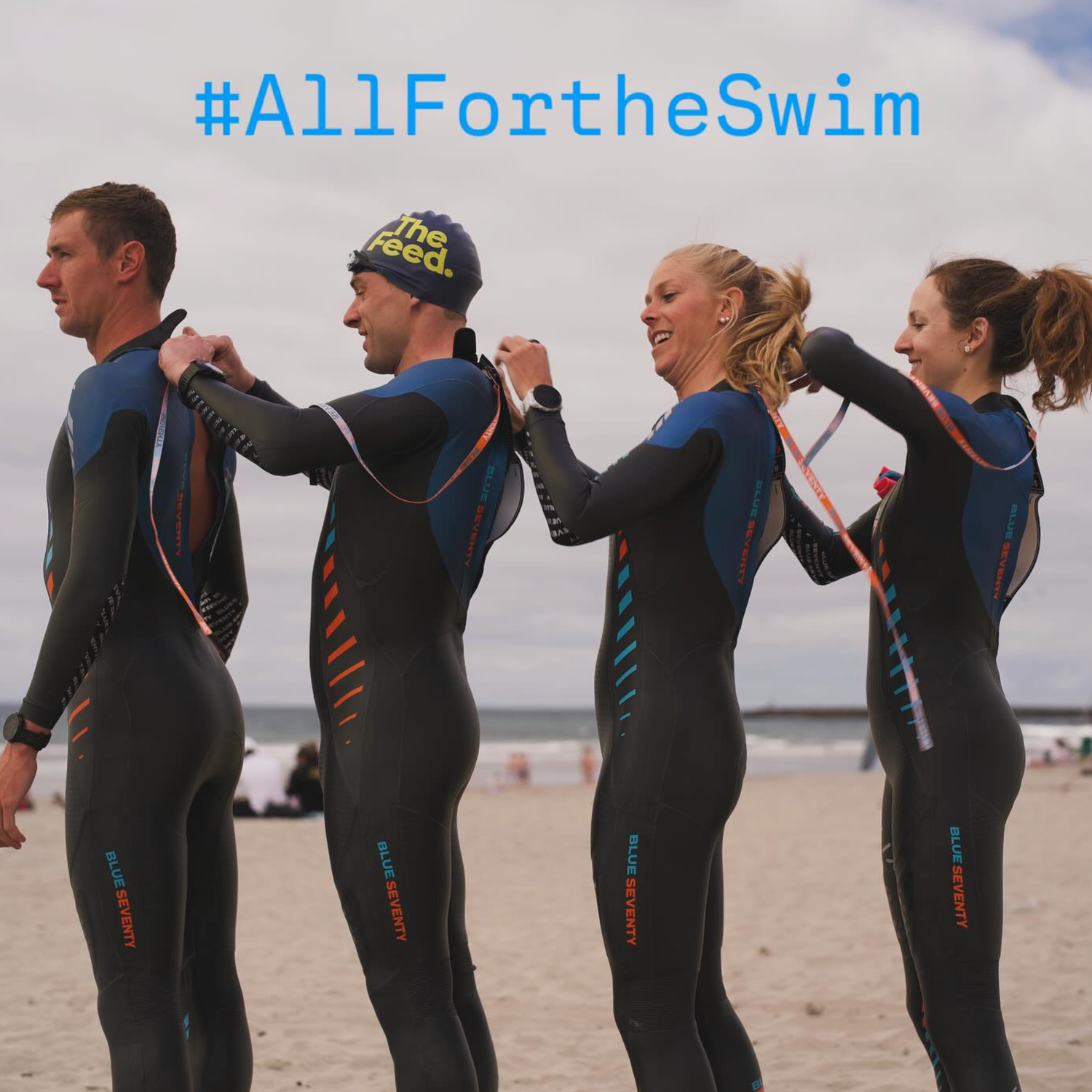
Blue70’s fit doctrine is simple and accurate: a wetsuit should feel snug on dry land and more comfortable in the water. A badly donned suit, especially one with material sitting low through the shoulders, can create fatigue that has nothing to do with the actual pattern. Many fit complaints are really donning problems.
That is why test-swim policies matter. Blue70’s Take a Test Swim option lets swimmers get in the water and judge fit where it counts. That reduces guesswork and helps athletes keep the suit that truly works for them.
For women, fit often gets even more specific. Blue70’s Femme Fit pattern design refines key areas like the bust, torso, wrists, and ankles. It also uses a lowered neckline for comfort and reduced chafing, plus an extended zipper length that makes entry easier, accommodates wider hips, and supports faster transitions. Those are practical design details, not side notes.
The smartest low-waste move for many triathletes
Many athletes use one wetsuit for every purpose. That is simple, but not always smart. If your training volume is high enough, separating race use from weekly training use can extend the life of both suits.
Blue70’s lineup already supports that logic:
- Helix for race-day performance
- Reaction for frequent, longer swims
- Fusion for shorter frequent swims
- Sprint for entry-level use
- Reaction Sleeveless or Glide Short John for warm water and easier fit situations
- Thermal Reaction for cold-water swimming, especially below about 56 to 58°F
That is a good equipment strategy. It is also a good sustainability strategy because it reduces the odds of wearing out the wrong suit for the wrong job.
Repair matters more than most swimmers think
Wetsuits rarely fail all at once. More often, a small nick becomes a split, or a rough zipper pull becomes a bigger problem a few sessions later. Early repair changes that.
Blue70’s warranty guidance is clear about the most common damage points. Fingernail punctures, heel tears, zipper damage from force, heat damage, chlorine damage, and wear from non-swimming use are not covered as manufacturing defects. That tells swimmers something useful: much of wetsuit life comes down to handling and care.
The habits that preserve a suit are not complicated:
- rinse it after ocean or chlorinated swims
- dry it away from direct heat and sun
- store it flat or on a wide hanger
- use the pads of your fingers, not your nails, when pulling it on
- avoid forcing the zipper under tension
- repair small nicks before they spread
Blue70 carries Aquaseal neoprene cement in its wetsuit care range, which gives swimmers a straightforward way to handle minor damage before it becomes a larger tear. In practical terms, repair is part of the recycled conversation because it keeps a suit in service.
Cold water changes the equation
Cold-water swimmers ask more from a wetsuit than athletes doing short warm-water sessions. As water temperature drops, thermal design becomes a larger part of the buying decision. Blue70’s published guidance points to about 56 to 58°F as the range where a purpose-built thermal suit adds meaningful warmth. The Thermal Reaction addresses that need with a full Zirconium synthetic wool jersey lining.
In those conditions, broad material claims mean less than fit, warmth, and swim function. Exposure time matters. The individual swimmer matters. The suit has to match the conditions you actually face.
What the next phase likely looks like
The most realistic path forward is selective improvement, not one dramatic material breakthrough. Recycled content makes the most sense where designers can add it without compromising the way a wetsuit swims. Lower-stress panels, linings, trims, and packaging give more room to improve. High-mobility areas like shoulders and underarms remain the strict test because that is where swimmers feel change first.
That is a good thing. It keeps the standard high. In a swim-specific wetsuit, sustainability claims still have to answer to stroke mechanics, body position, comfort, and durability.
A better standard for judging the category
A recycled wetsuit should meet the same standard as any other wetsuit built for swimming. It should fit correctly, support a natural stroke, help the swimmer maintain body position, provide added thermal protection for the conditions, and hold up to the kind of use it was designed for.
That is the standard worth keeping in view. If you are choosing your next suit, start with fit, water temperature, and how often you plan to swim. Then look at panel design, durability, and the care habits that will keep the suit working well over time. That is how swimmers make a smart choice, and it is how a wetsuit earns its place in your training and race setup.
If you want to confirm fit before you commit, take a look at Blue70’s fit guide, browse the size charts, or Take a Test Swim and judge the suit where it matters most: in the water.