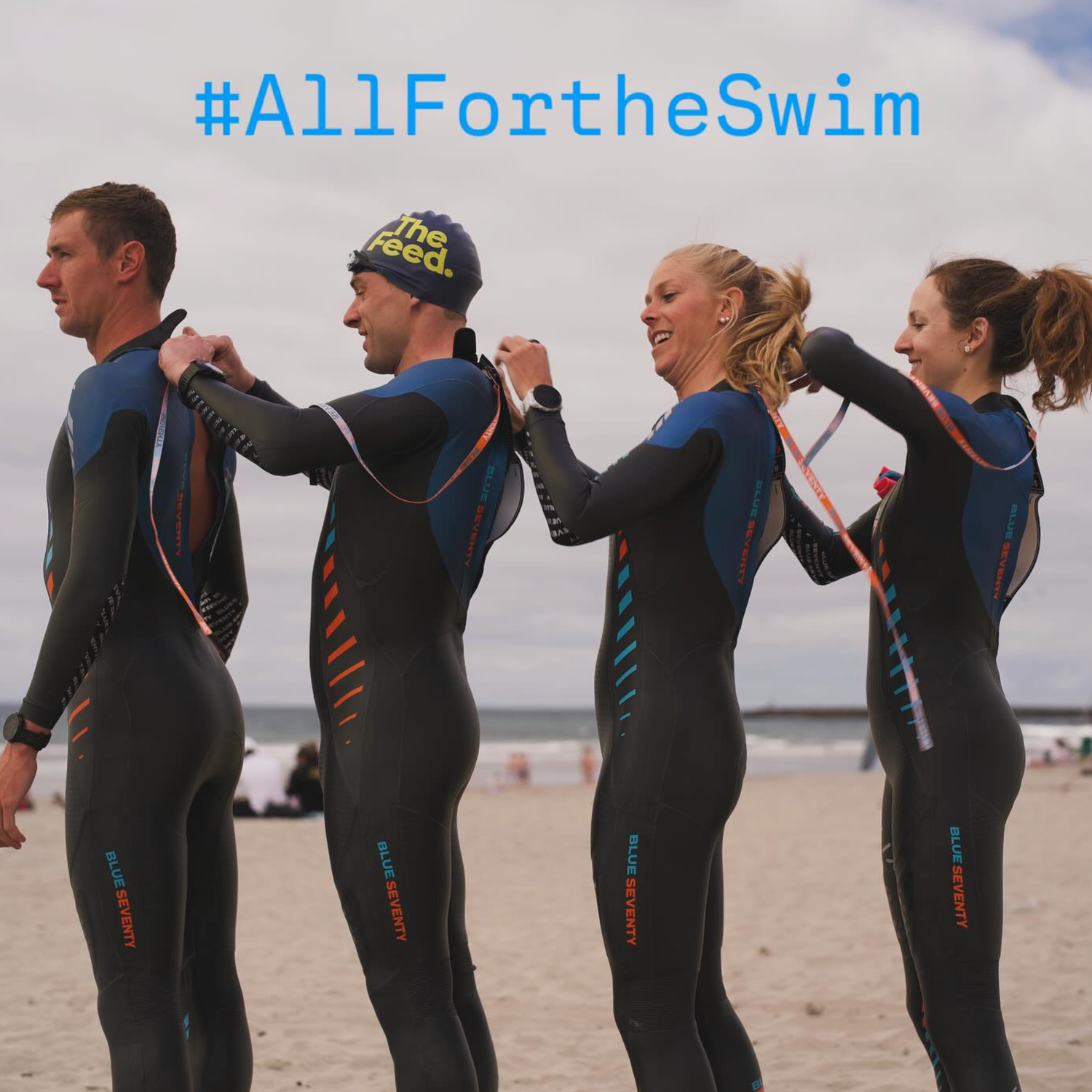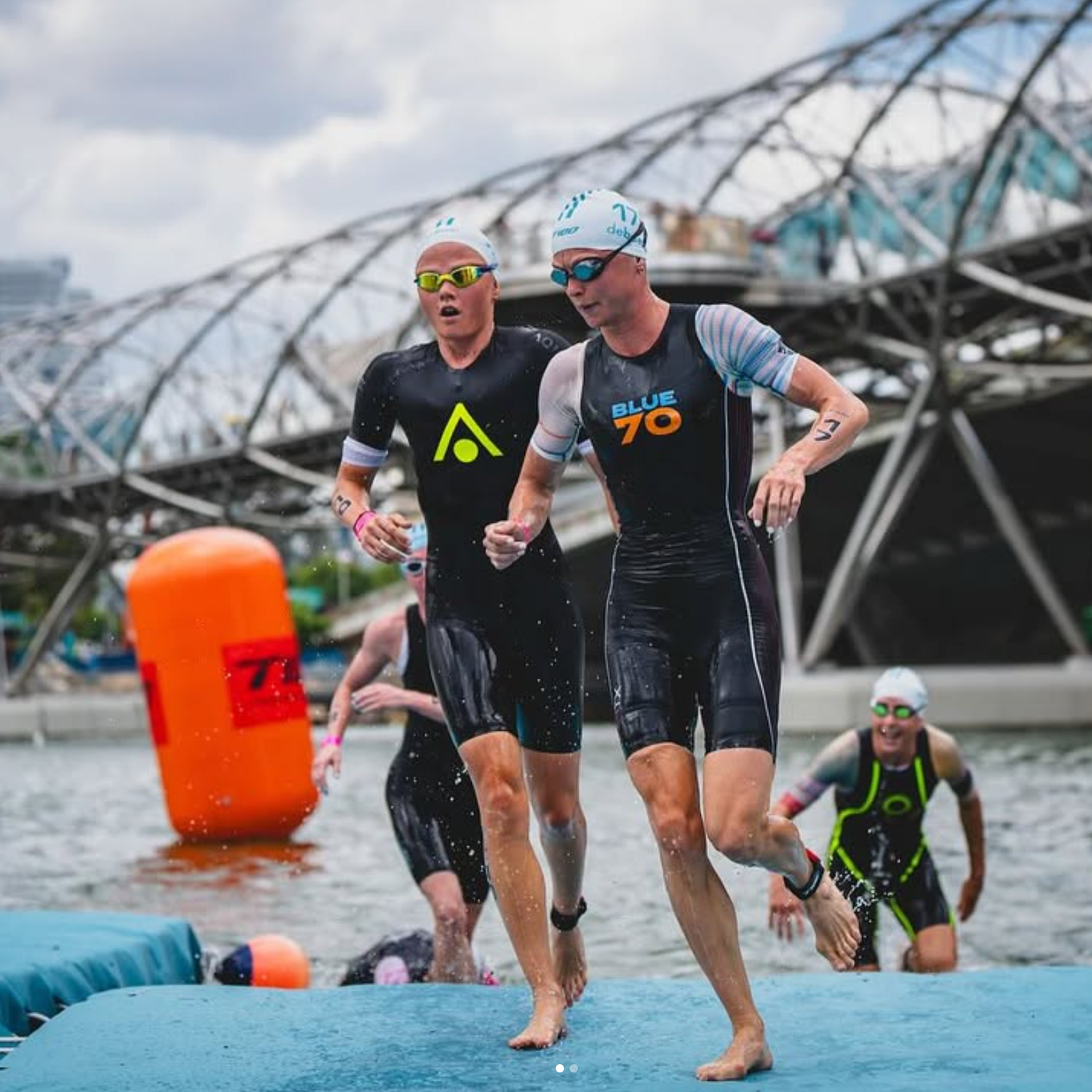



You are standing in transition with wet neoprene at your ankles, fighting to peel the suit off before your bike mount while the seconds tick down, and somewhere nearby a freediver is slowly working a two-piece suit on with soapy water, patience, and no clock at all. Neither of you is wrong. One problem is doffing, which means getting the suit off. The other is donning, which means getting it on. You are just asking your wetsuit to solve opposite problems at the moment the suit meets your body.
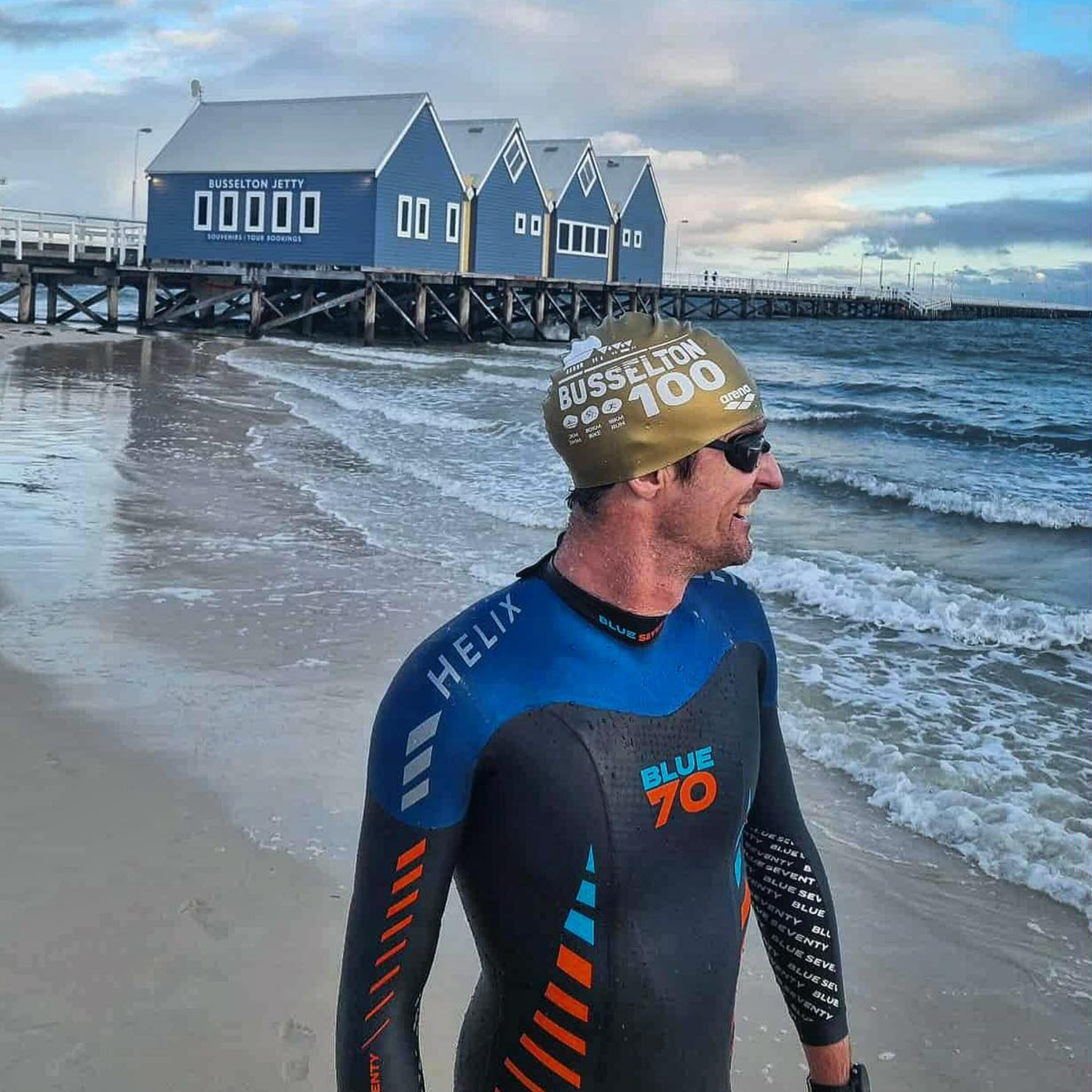
At Blue70 we build wetsuits for swimming and triathlon, which means every panel, zipper length, and lining choice gets tested against two questions: does it help you swim strong, and does it let you get out of the suit without wasting time in transition? Our triathlon and open-water suits use Yamamoto neoprene in 38, 39, and 40 cell, and a higher cell number gives more flexibility in the arms and shoulders. We keep the neckline lower and the zipper longer because removing the suit fast is part of the race. The lining is smooth enough to peel off damp skin, but it does not grip like a seal.
Triathlon Suits Solve a Doffing Problem
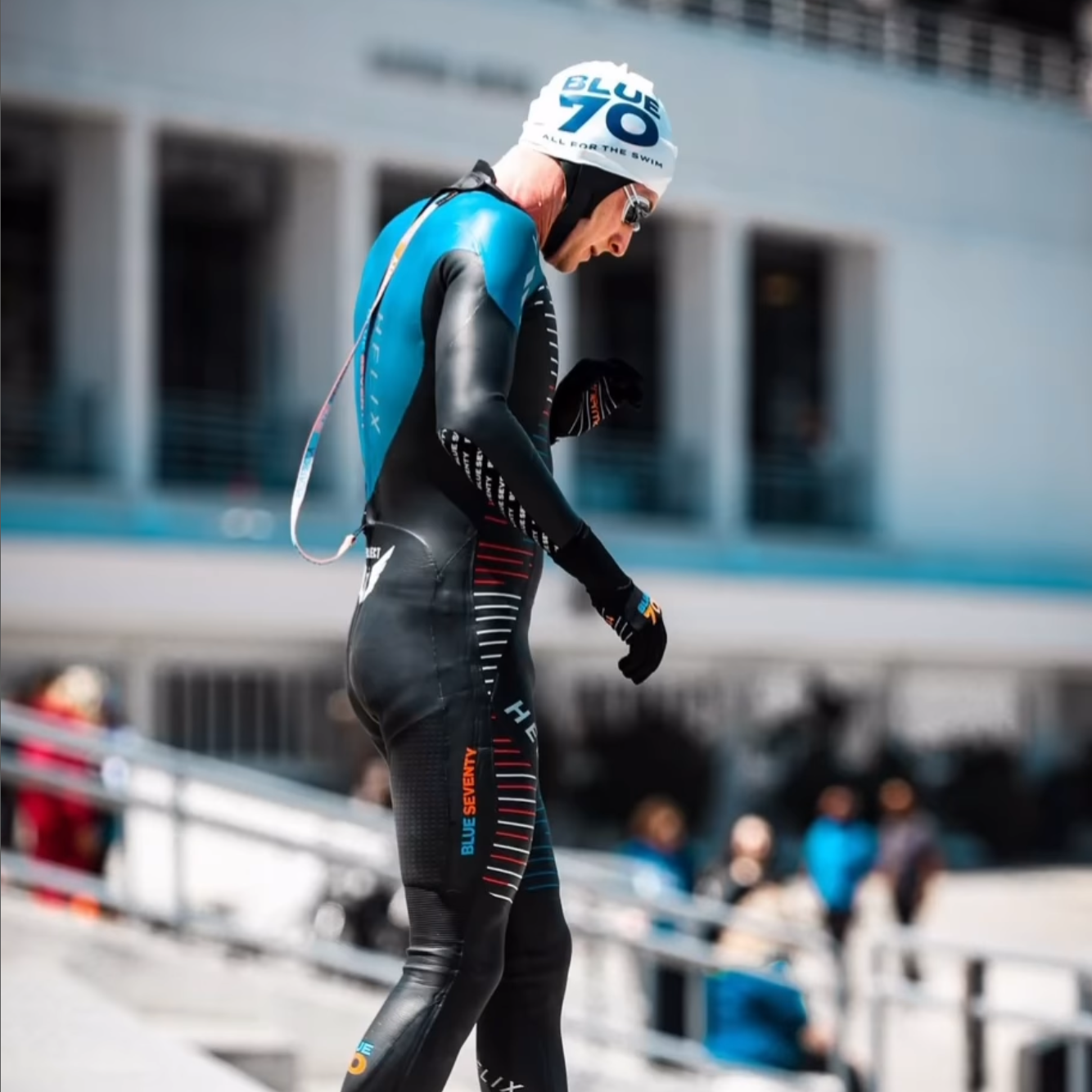
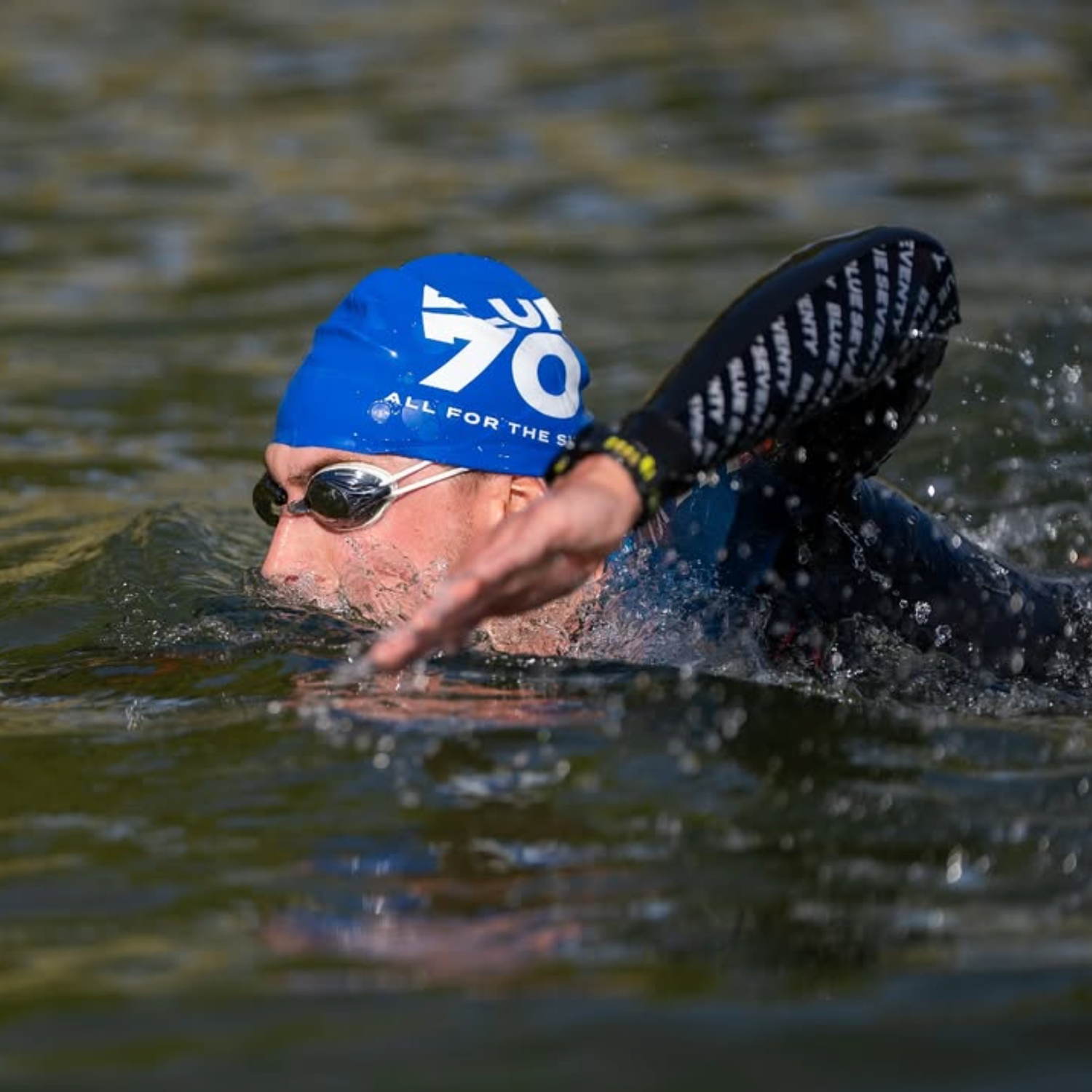
The clock does not stop when you exit the water. That reality shapes the suit. Blue70 builds arms and shoulders from the thinnest, most pliable neoprene in the suit because every stroke has to move through full range without resistance. Chest and leg panels carry extra lift. That buoyancy keeps your hips and legs high near the surface, which improves body position. The neck sits low, the zipper runs long, and the lining releases cleanly from damp skin. Every one of those choices serves the same land-based moment: get the suit off fast.
Freediving Suits Reverse the Priority
Freedivers often choose two-piece suits with open-cell neoprene against the skin. Open-cell neoprene is not slick. It grips wet skin, so divers add water and a little mild soap before pulling the suit on. The process takes time, and that time is accepted because the seal matters below the surface. An open-cell lining lets less water move between skin and suit, which reduces flushing and helps the suit hold thermal protection. These suits often add a hood, high-waisted pants, and a long-sleeved top. The neck, wrists, and ankles fit tighter for a reason. That suit is not built to come off quickly in a race.
Pressure Changes What Your Suit Does
No wetsuit is waterproof. A thin layer of water enters and sits between your skin and the neoprene. Your body warms that layer. Neoprene is full of tiny gas bubbles. As you go deeper, water pressure compresses those bubbles. At 10 meters, ambient pressure is about two atmospheres, double what you feel at the surface. The neoprene gets thinner, loses some insulation, and loses some buoyancy. Freediving suit makers choose denser neoprene, open-cell linings, and thicker panels where depth warmth matters. A triathlon wetsuit is not built for that repeated compression. Its lift is tuned for the first meter or two below the surface.
This difference explains why the two suits cannot trade jobs. A surface swim suit keeps you horizontal by lifting the hips and legs. At depth, that lift changes as the material compresses. A wetsuit adds buoyancy, but no wetsuit is a Coast Guard-approved flotation device. Freediving still requires a trained buddy and proper safety habits.
Fit Feels Different for a Reason
Blue70 tells swimmers a suit should feel snug on dry land and settle once water enters and your body warms the thin layer. It should not restrict breathing or shoulder movement. Freediving fit treats the suit as a second skin. A good freediving suit often feels too tight on land and hard to pull on without lubricant. Both fits work for their sport. Swap them and you get trouble. Swim an open-water race in a freediving suit and you fight the shoulders while overheating near the surface. Freedive in a triathlon suit and water flushes through the neck and zipper, warmth leaves faster, and a back zip sits poorly under a hood.
What Swimmers Can Borrow from Freediving Practice
The freediving focus on flushing teaches cold-water swimmers something useful. The less water moving through the suit, the warmer you stay. Two habits help:
- Check the neck seal. Pull the suit up carefully and remove air gaps around the lower back and hips before the water flushes through.
- Settle your breath. Freedivers train to stay calm before a dive. Open-water swimmers need the same skill when cold water hits the face and the heart rate spikes. Exhale slowly and let the first 200 meters settle.
The Blue70 Thermal Reaction uses a Zirconium jersey lining designed for added thermal protection in cold water. That lining still depends on a close fit. A suit that flushes too much lets heat escape no matter what it is made from.
Choose the Suit for the Sport
If your goal is freediving, choose a freediving wetsuit with the hood, seals, and two-piece cut that the sport requires. If your goal is triathlon or open-water swimming, choose a swim-specific suit built for the stroke, the surface, and the transition. Blue70 makes the second kind. That line is a design decision, not a marketing one. A company that builds a suit quick to remove and a suit slow to put on serves two different bodies, two different pressure environments, and two different clocks.
If you are choosing a swim-specific wetsuit, start with the Blue70 fit guide. Happy swimming.