


Ask most swimmers what open water gear they need and you’ll usually get a quick list: wetsuit, goggles, cap, maybe earplugs, maybe anti-chafe. That answer isn’t wrong. It’s just incomplete.
Open water gear does much more than help you arrive prepared. It affects how you breathe in the first two minutes, how high you ride in the water, how well you sight, how much tension builds in your shoulders, and how steady your pace feels when conditions are less than perfect. In real terms, your gear is part of your swim strategy.
That’s the angle too many athletes miss. They shop for gear as if they’re packing a bag, when they should be thinking about how they want to swim. The best setup is not the one with the longest feature list. It’s the one that helps you hold good form, make better decisions, and stay composed when open water starts asking harder questions than the pool ever does.
Why Open Water Changes Everything
In the pool, the environment is predictable. The lane is straight. The water temperature is stable. The walls show up exactly when you expect them. Even when a set gets hard, the swim itself remains familiar.
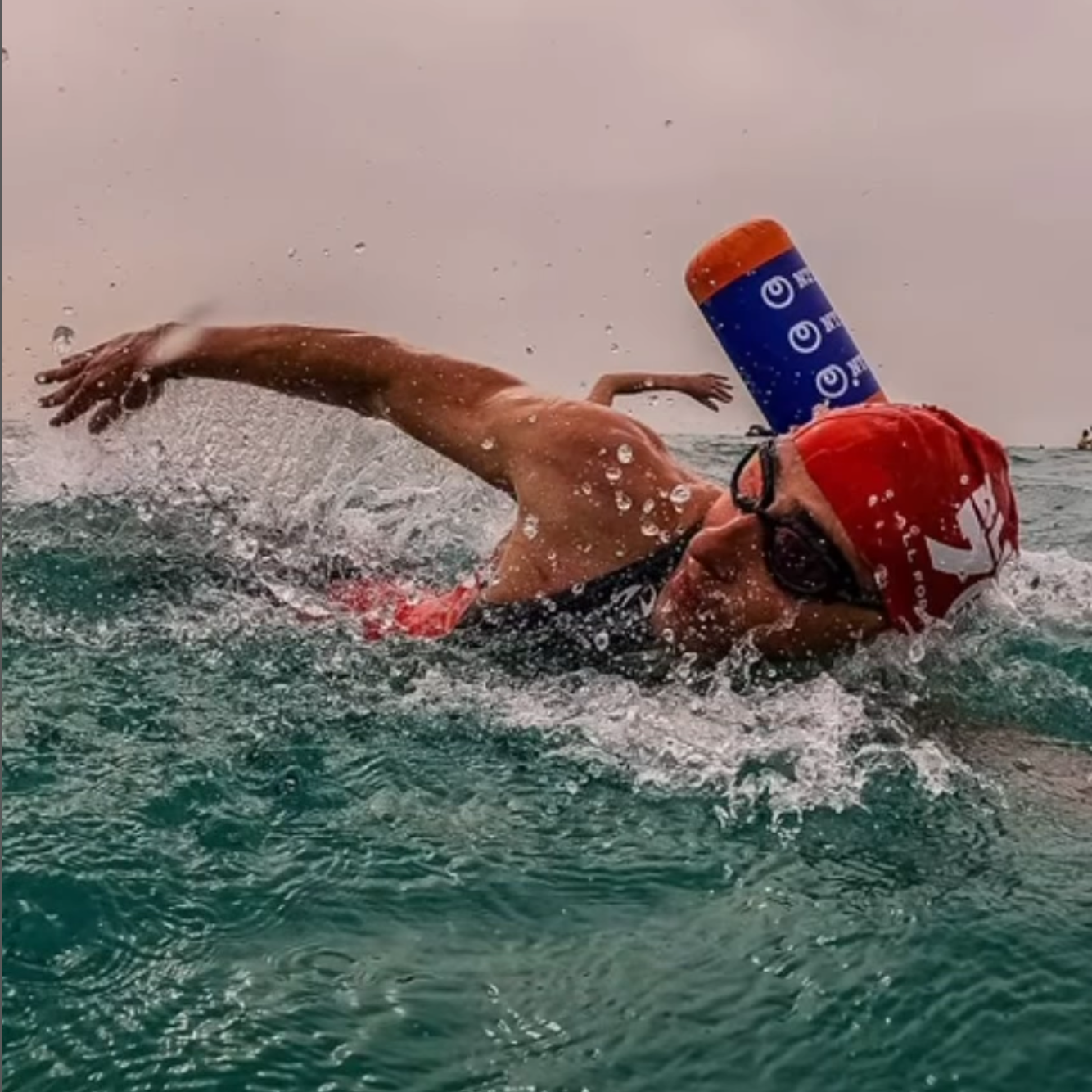
Open water strips away that predictability. Now you’re dealing with glare, chop, current, changing temperatures, crowded starts, and the mental noise that comes from swimming without lane lines. That’s why gear matters more outdoors. It’s not just about comfort. It’s about reducing the number of problems you have to solve while you’re swimming.
A swim-specific wetsuit can help improve body position and reduce drag. Goggles influence visibility and navigation. Thermal accessories can make cold water more manageable. Buoyancy tools can help teach better alignment in training. Each piece has a job, and when those jobs are done well, your energy can go toward swimming instead of compensating.
The Best Gear Protects Your Stroke
There’s a simple standard I like to use when evaluating open water gear: does it help you preserve your stroke when the swim gets harder?
That’s a more useful question than asking whether something is more technical, more advanced, or packed with more features. If a piece of gear supports your mechanics, helps you stay long through the stroke, and lets you hold your line with less wasted effort, it’s doing its job.
This is especially true with wetsuits. Shoulder flexibility is not just a comfort feature. It’s a fatigue-management feature. Buoyancy is not just about floating higher. It’s about helping you maintain a cleaner body line through the water. Neckline comfort is not just a fit detail. It can affect how calm your breathing feels at the start of a swim.
That’s why blueseventy has always focused on swim-specific design. Comfort, freedom from restriction, and competitive advantage in the water are not separate ideas. They work together.
Your Wetsuit Has the Biggest Influence on the Swim
For most swimmers and triathletes, the wetsuit is the most important piece of open water gear because it changes several things at once: body position, thermal protection, stroke freedom, and how much fatigue builds over time.
All blueseventy wetsuits use Yamamoto neoprene in 38, 39, and 40 cell constructions, with higher cell numbers delivering more flexibility. That matters because flexibility in the arms and shoulders directly affects how natural the stroke feels once the swim settles in.
But choosing the right wetsuit is not about assuming the top race suit is automatically the best answer. The real question is how you’ll use it.
Race-day focus vs. regular training use
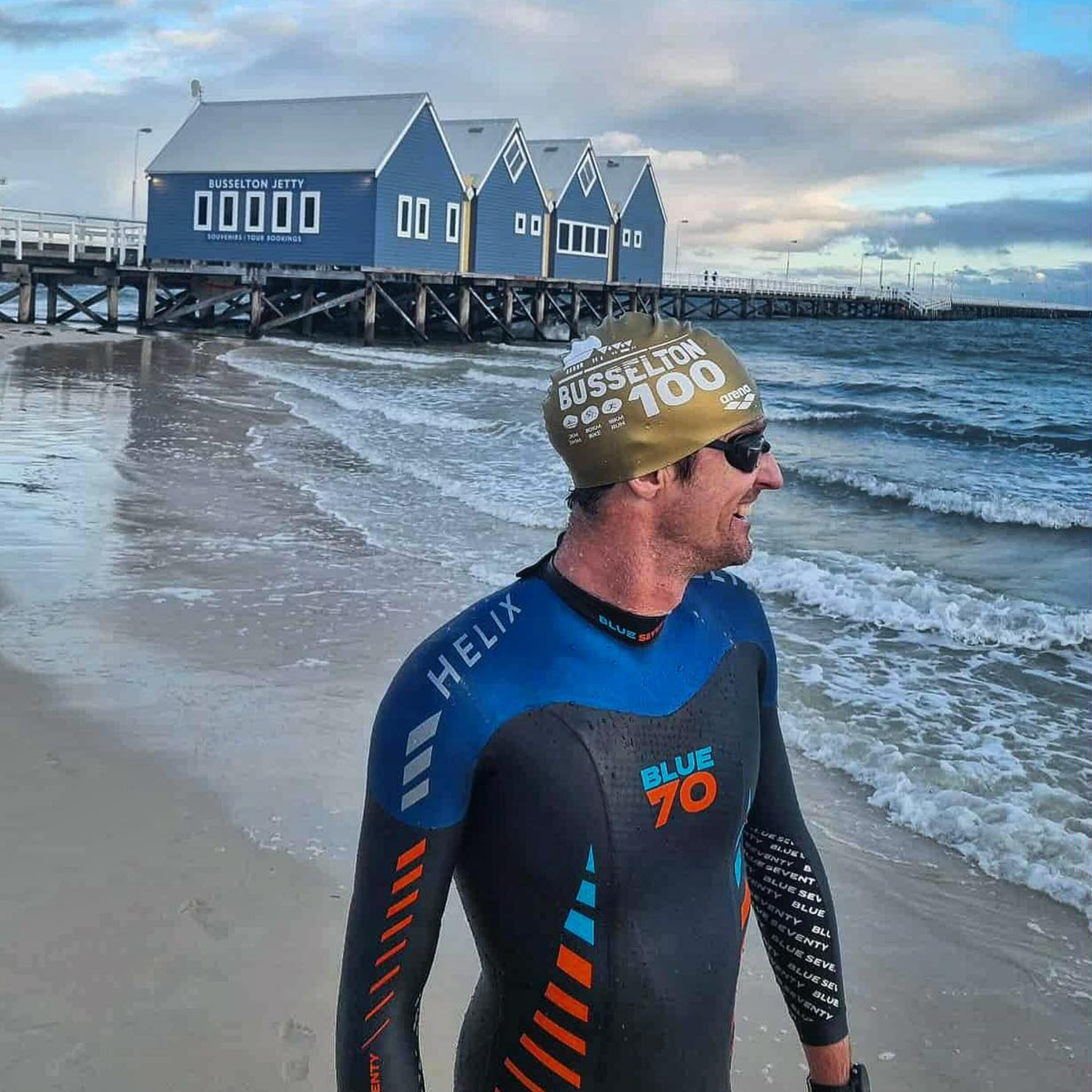
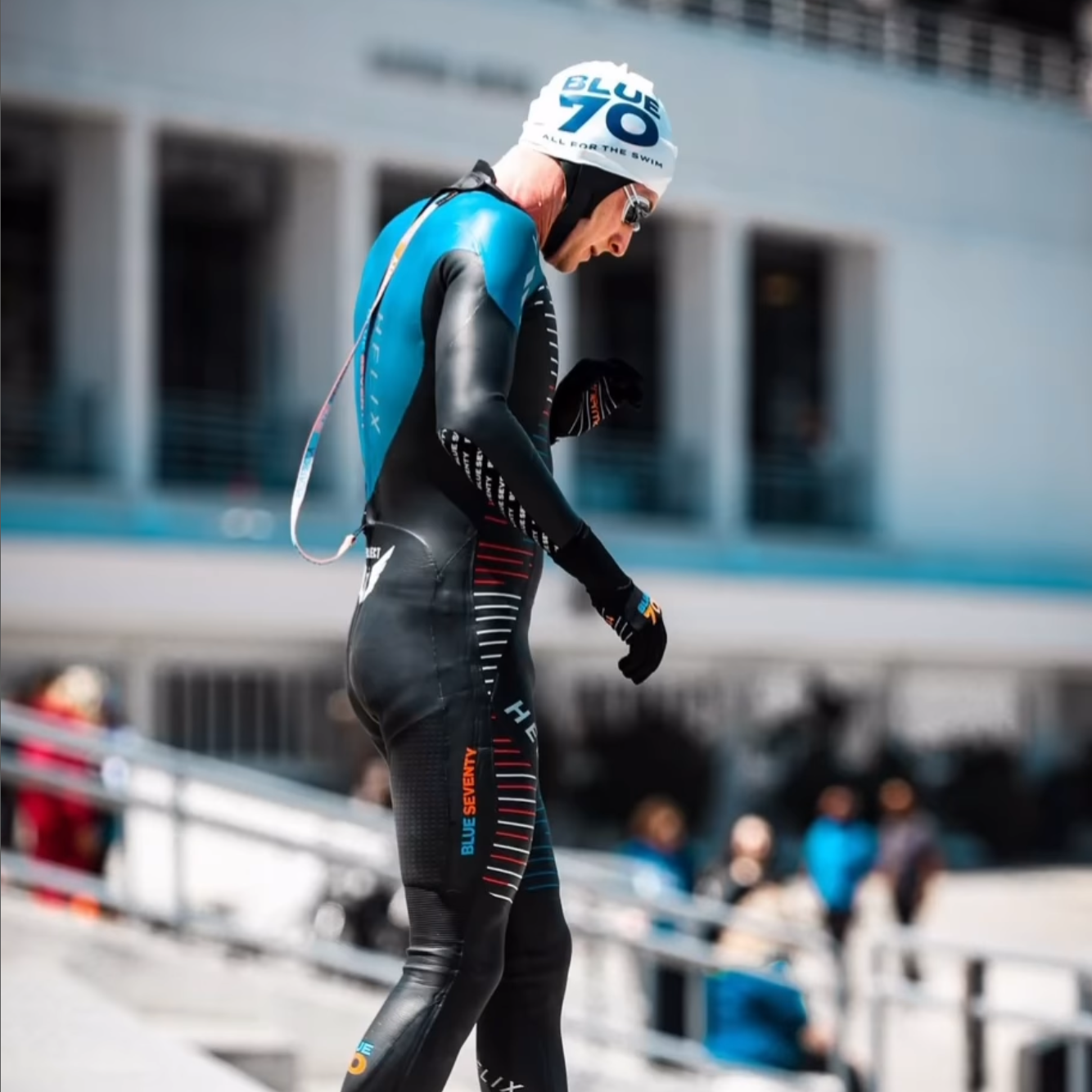
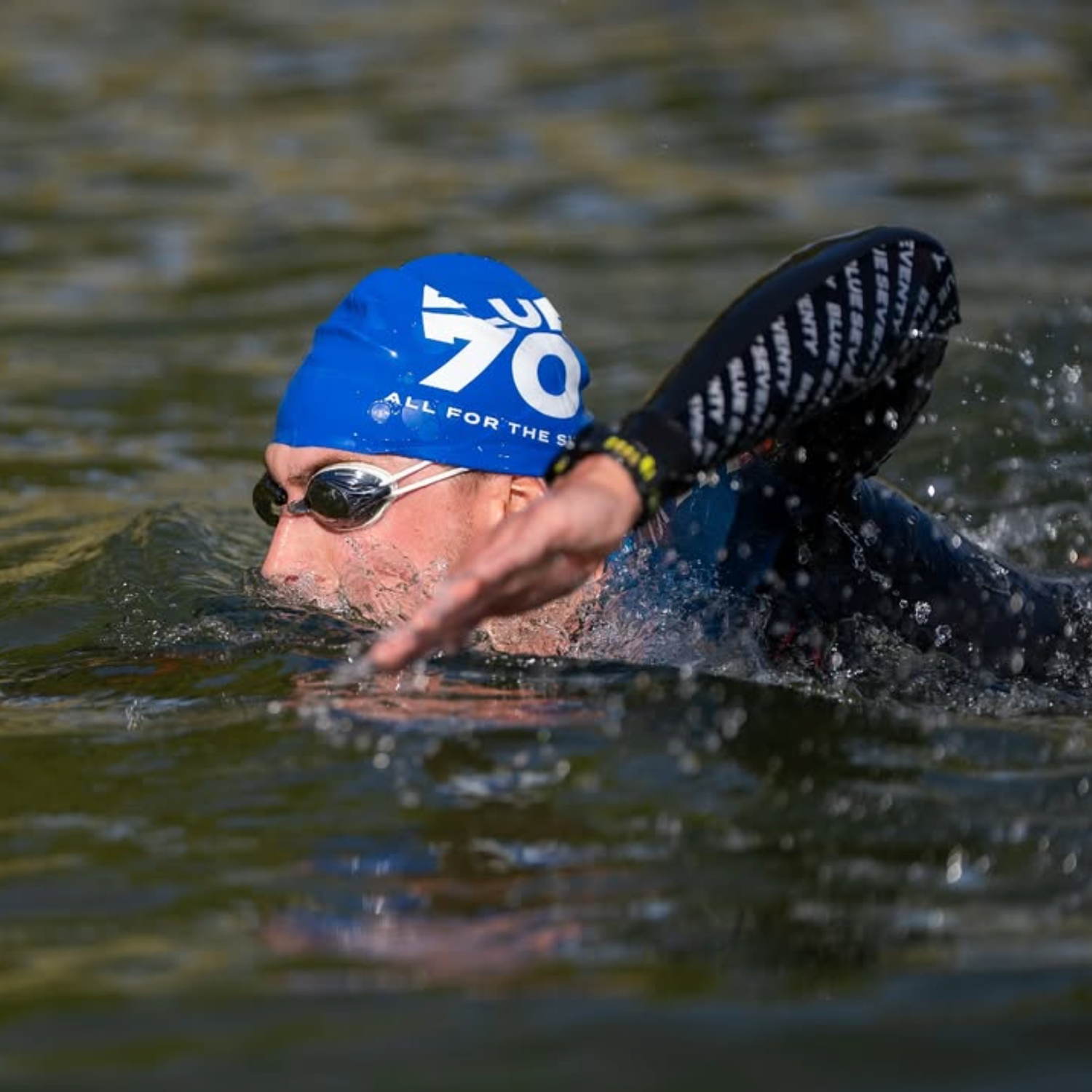
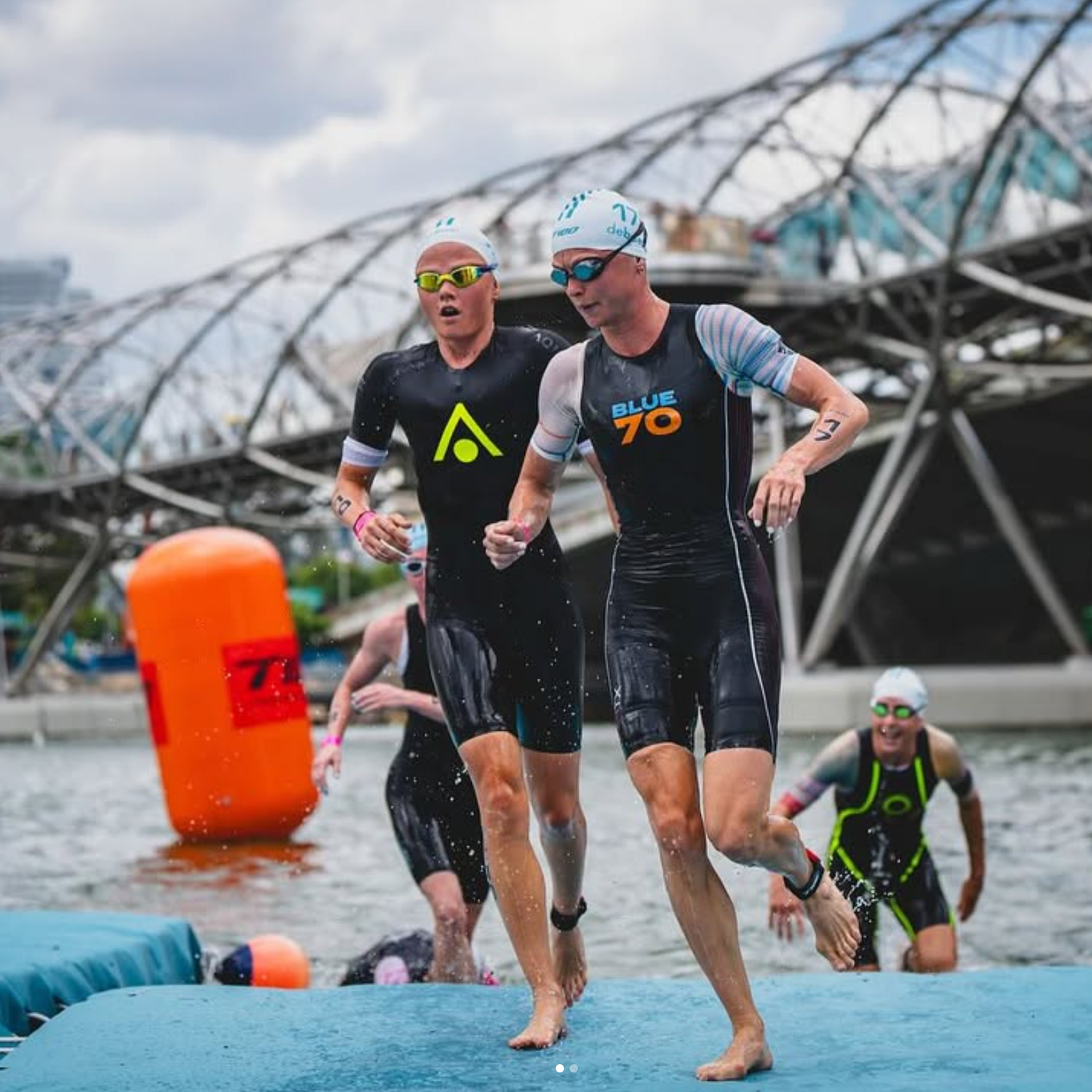
If your priority is race-day performance, the Helix is built for that job. It uses very thin, extremely flexible neoprene through the arms and shoulders, includes a permeable catch panel to preserve feel for the water, and features LIFT buoyancy panels added in 2018. It is designed for total race-day performance.
There’s also a trade-off, and it’s worth stating clearly. A highly flexible, thin neoprene race suit is not the ideal tool for heavy, repeated training use. If you’re swimming in your wetsuit regularly, especially for longer sessions, a more practical choice is often the Reaction. For shorter, frequent swims, the Fusion continues to be a smart option, especially with its lower-sitting neckline redesign that improved comfort without losing the watertight seal.
That is one of the most important gear lessons in open water: buy for the way you actually train, not just the version of yourself you picture on race morning.
Water temperature should shape the decision
Water temperature is one of the clearest filters for choosing open water gear well.
- Below about 56-58°F: a purpose-built thermal suit adds meaningful warmth.
- Above about 70-72°F: a full suit can feel too warm over longer swims, and sleeveless options or swimskins may be the better fit depending on the session.
- Between those ranges: swim duration, effort, and individual cold tolerance all matter.
For swimmers training in colder conditions, the Thermal Reaction is fully lined with Zirconium jersey for added thermal protection. That makes a real difference when you’re trying to extend the season or make cold water sessions more manageable.
It’s also worth being precise about what a wetsuit does and does not do. A wetsuit is not waterproof, and it does not keep you dry. It allows a thin layer of water in, and your body warms that water to create insulation. Thermal performance depends on the swimmer, the conditions, and the length of time in the water.
Fit Is Where Good Gear Starts Paying Off
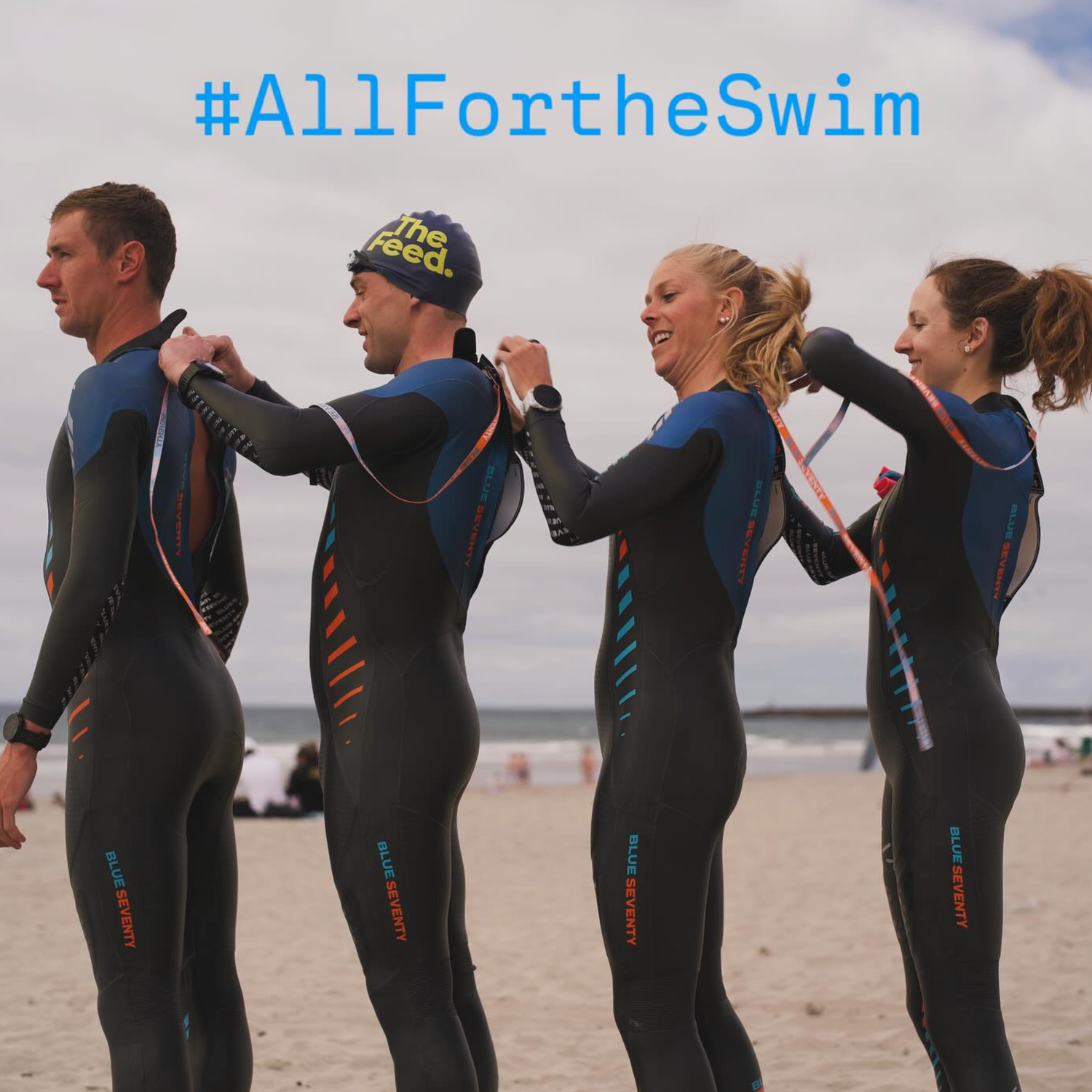
One of the biggest mistakes open water swimmers make is judging a wetsuit the way they would judge a jacket. A swim-specific wetsuit should feel snug on land. That’s normal. In the water, it should feel more natural and less restrictive.
What often gets overlooked is that many fit problems are actually donning problems. If the suit is sitting low through the hips or shoulders, the swimmer ends up fighting tension that shouldn’t be there in the first place.
A correctly fitted and properly positioned wetsuit should support all of the following:
- Clean rotation through the stroke
- Natural reach in front
- A high, aligned body position
- Comfortable breathing at the neckline
- Minimal chafing over the course of the swim
If your shoulders feel cooked too early, don’t assume the suit is wrong. First check whether the material is fully pulled up through the legs, hips, and upper body. A little extra care before the swim can completely change how the suit feels twenty minutes later.
For women, fit details matter even more. Femme Fit sizing refines key pattern areas including the bust, torso, wrists, and ankles, and pairs that with a lowered neckline for comfort and reduced chafing. The extended zipper length also makes entry easier and helps with faster transitions. These aren’t cosmetic touches. They change how the suit behaves in motion.
Goggles Do More Than Keep Water Out
In open water, goggles are part of your navigation system. If you can’t see well, you can’t sight well. And if you can’t sight well, your line through the water gets worse.
That matters more than many swimmers realize. A drifting line adds distance. Added distance increases effort. Increased effort changes pace. Suddenly a gear choice is affecting the swim in a very real way.
When choosing goggles, think about conditions rather than habit. Bright glare, flat morning light, overcast skies, and choppy reflections all create different visual demands. It also helps to remember that anti-fog performance changes over time, so careful handling and regular rinsing are part of the equation.
If you have a pair you trust, keep them in the rotation. Familiar gear removes one more variable from race day and one more distraction from training.
Small Thermal Accessories Can Make a Big Difference
Some of the most useful open water gear decisions are not the big ones. They’re the small additions that make the swim more manageable, especially in colder conditions.
Extra thermal support around the head, for example, can make the first minutes of a cold swim feel less abrupt. That matters because the opening phase is often where breathing feels most unsettled. When those first few minutes go better, the rest of the session usually follows.
None of this removes the need for caution. Cold water always deserves respect, gradual acclimatization, and sensible planning. But the right accessories can make good decisions easier to carry out consistently.
Buoyancy Shorts and Better Body Position
One of the more interesting training tools in swimming is the buoyancy short because it gives swimmers immediate feedback on posture in the water.
The blueseventy LIFT Buoyancy Short was launched in 2020 as the first buoyancy short built with NBR foam for maximum buoyancy. Its value is not just that it lifts the hips and legs. It helps swimmers understand what a cleaner body line feels like.
That can be useful for several kinds of athletes:
- Swimmers learning to reduce drag through better alignment
- Triathletes preparing for the body position changes a wetsuit brings
- Athletes doing technique work without wearing a full wetsuit
- Swimmers building confidence before their first open water race
The key is to use buoyancy shorts as a training tool, not a substitute for skill. They can help you feel a better position, but they work best when paired with good technique habits and deliberate practice.
Match the Gear to the Session
One of the smartest shifts an open water swimmer can make is to stop using the exact same setup for every swim. Session purpose matters.
Confidence sessions
If the goal is simply to settle in, stay calm, and build familiarity, choose comfort-first gear. That usually means your most reliable wetsuit, goggles you trust without question, and conditions that let you focus on rhythm rather than stress.
Technique sessions
If the goal is body position or sighting practice, use gear that helps you feel those details clearly. This may mean a full wetsuit, or it may mean buoyancy shorts if you’re trying to isolate posture and line.
Race-specific sessions
If the goal is preparing for an event, train in the setup you expect to use. That includes your wetsuit, goggles, cap arrangement, and any transition practice that fits the day. Familiarity lowers decision load, and that is always valuable when the gun goes off.
How to Think About Gear Based on Your Swimming Background
The first-time triathlete
Keep the decision framework simple. Prioritize fit, comfort, and confidence. A Sprint or Fusion is often a smart starting point depending on your budget and how often you expect to swim in your suit. The best first suit is the one that gets you into the water consistently.
The committed age-grouper
Think about frequency of use. If your wetsuit is part of your regular training week, durability matters just as much as flexibility. The Reaction is often a strong match for swimmers who want a high-performance suit that also makes sense for repeated use.
The podium-focused racer
At this level, details really matter. Shoulder freedom, catch feel, buoyancy placement, and transition efficiency all start carrying more weight. That’s exactly where the Helix earns its place, provided the fit is dialed and the suit is used for the purpose it was designed for.
The dedicated open water swimmer
Think seasonally and practically. Temperature, duration, and repeatability should lead the decision. Long swims expose small problems quickly, so comfort, thermal planning, and reliable visibility become more important with every extra minute in the water.
A Better Pre-Swim Gear Check
Before your next open water session, skip the basic “did I pack it?” checklist and ask better questions:
- Does my gear match the water temperature?
- Does my setup match the purpose of today’s swim?
- Will my goggles work in this light and these conditions?
- Can I hold good form in this gear?
- Have I tested this exact combination before?
Those questions are far more useful because they focus on how the gear will behave once the swim begins, not just whether it made it into your bag.
The Real Job of Open Water Gear
The real purpose of open water gear is simple: reduce the gap between your fitness and your ability to use it well in real conditions.
When your setup is right, you spend less energy fighting drag, restriction, visibility issues, temperature stress, and avoidable distractions. You settle earlier. You stay smoother. You make better decisions when the water gets less cooperative.
That’s why open water gear deserves more thought than a standard packing list. It’s not just equipment. It’s part of how you train, part of how you race, and part of how you bring your best swimming into an environment that rarely gives you anything for free.
If you’re ready to dial in your fit, take a test swim or explore the size charts and fitting guide. The best gear decisions are the ones that make sense in the water.