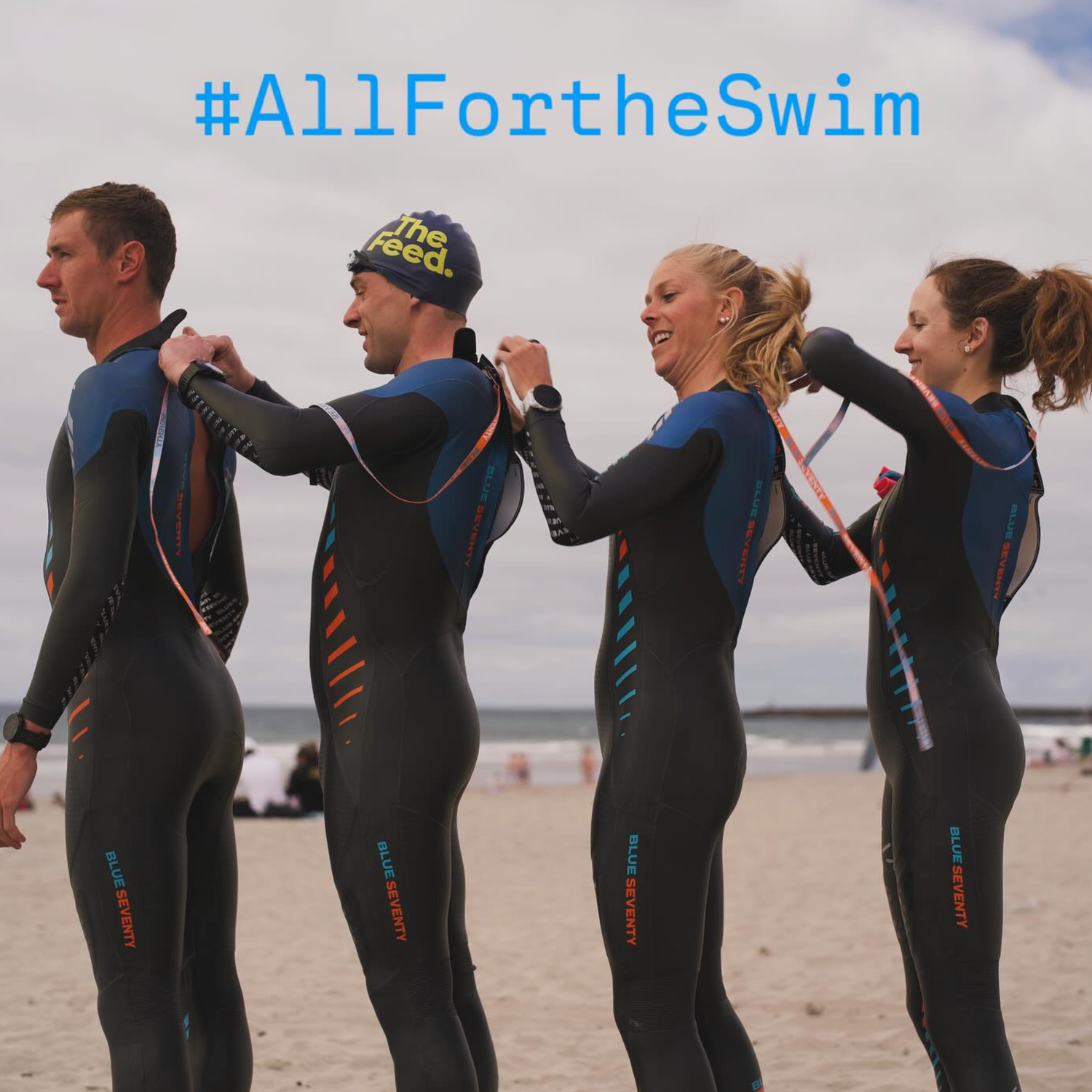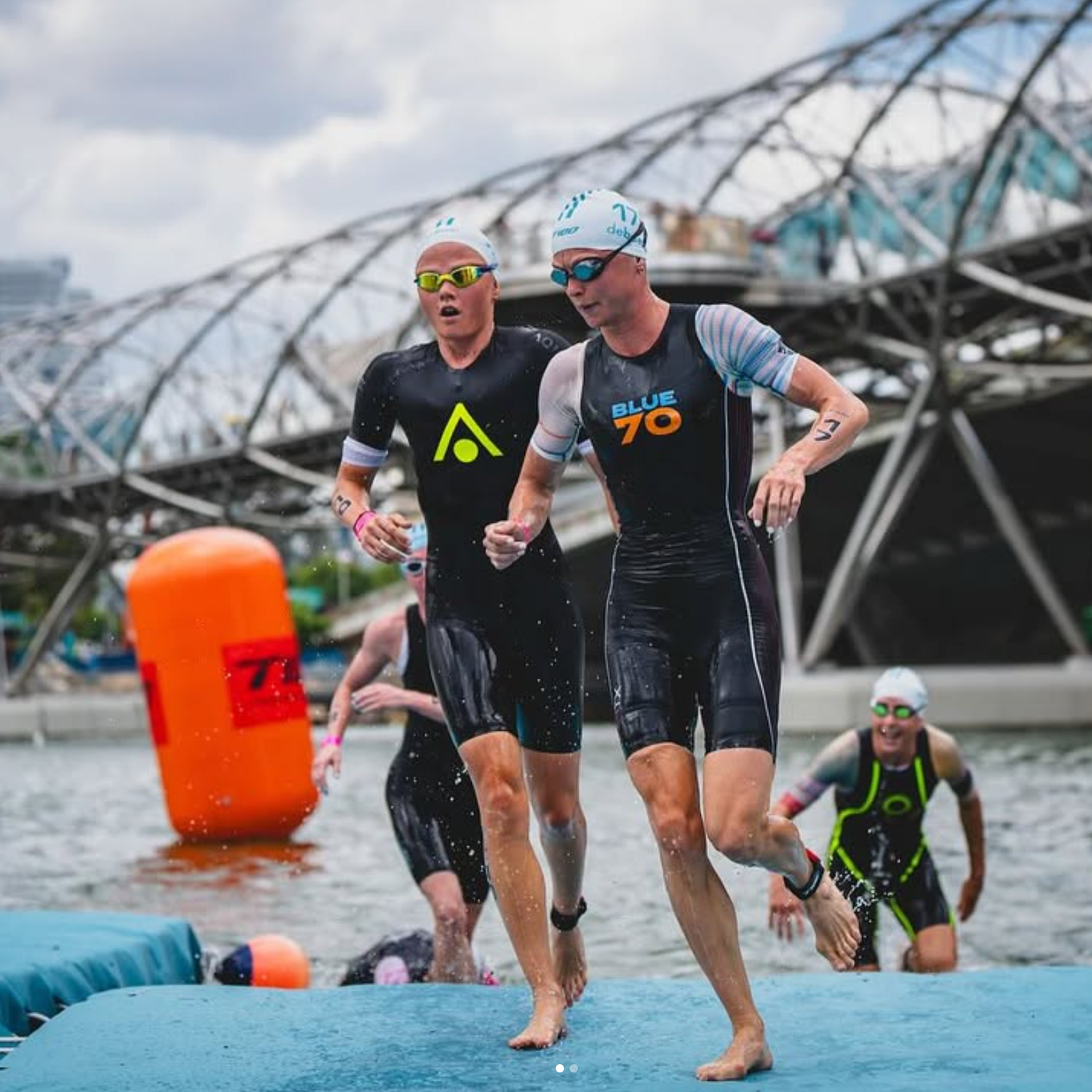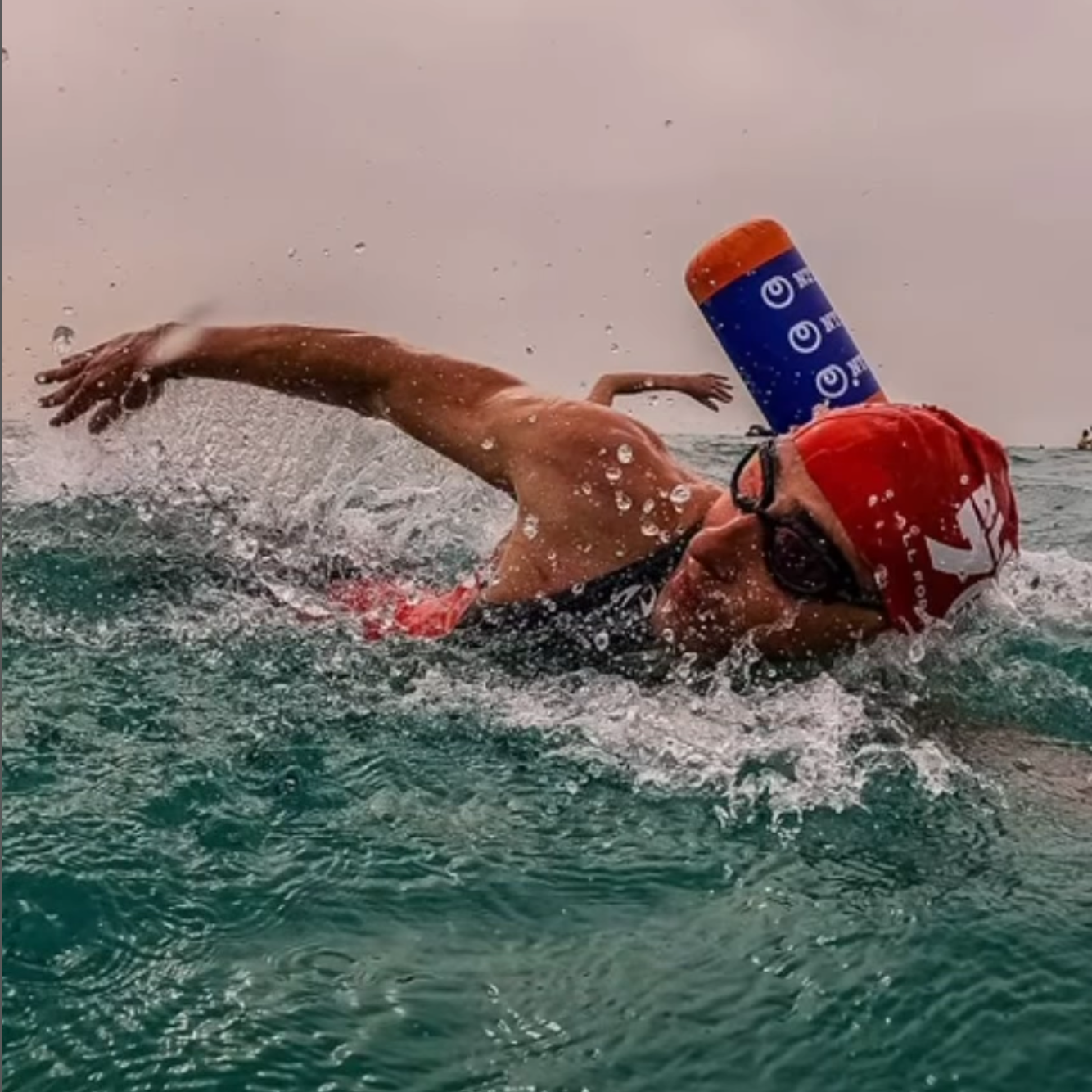



Walk into any transition area before a race and you’ll spot them - athletes tugging plastic grocery bags over their feet, hoping the slick surface will help them shimmy into their wetsuit a little faster. That trick has been around for decades, and honestly, it’s understandable. Early triathlon wetsuits were thick, stiff, and clingy, and a bag felt like a cheat code. But the suits we swim in today? They’re a different species entirely. Modern, swim-specific wetsuits are engineered with materials so smooth and flexible that the bag isn’t just unnecessary - it can actually work against you. If you’ve got two dry hands and about three minutes of patience, you can pull on a suit without a single tear, puncture, or frantic wrestle.
At blueseventy, we build every wetsuit from scratch for swimming - not surfing, not diving, not paddling around in the shallows. That means everything from the neoprene cell structure to the inner lining is chosen to make entry as painless as possible, provided you work with the suit instead of forcing it. The plastic bag? It encourages exactly the kind of yanking that kills high-performance neoprene. Let’s talk about why, and more importantly, what to do instead.
Why the Plastic Bag Trick Hung Around
Years ago, many triathlon wetsuits were cut from denser, less refined neoprene. Their inner surfaces weren’t exactly friendly to damp skin, so athletes turned to anything slippery to cheat the friction. The classic grocery bag became standard issue. It worked - sort of - but it also masked a bigger problem: poor donning technique. Instead of learning how the suit wanted to be put on, people just pulled harder. And pulling harder is the number one way to put a fingernail through the thin, stretchy rubber that makes a race suit fast.
Today, we use high-grade Yamamoto neoprene in 38, 39, and 40-cell densities. Higher cell counts mean more flexibility, and our suits are lined with purpose-built materials that glide easily across dry skin. The Thermal Reaction, for example, has a full Zirconium jersey lining that’s warm to the touch and so slick that your leg slides in almost by itself once you know the sequence. Even our Sprint entry-level suit uses smooth inner panels that make the bag feel like a leftover habit rather than a necessity.
The Real Culprit Is Your Fingernails
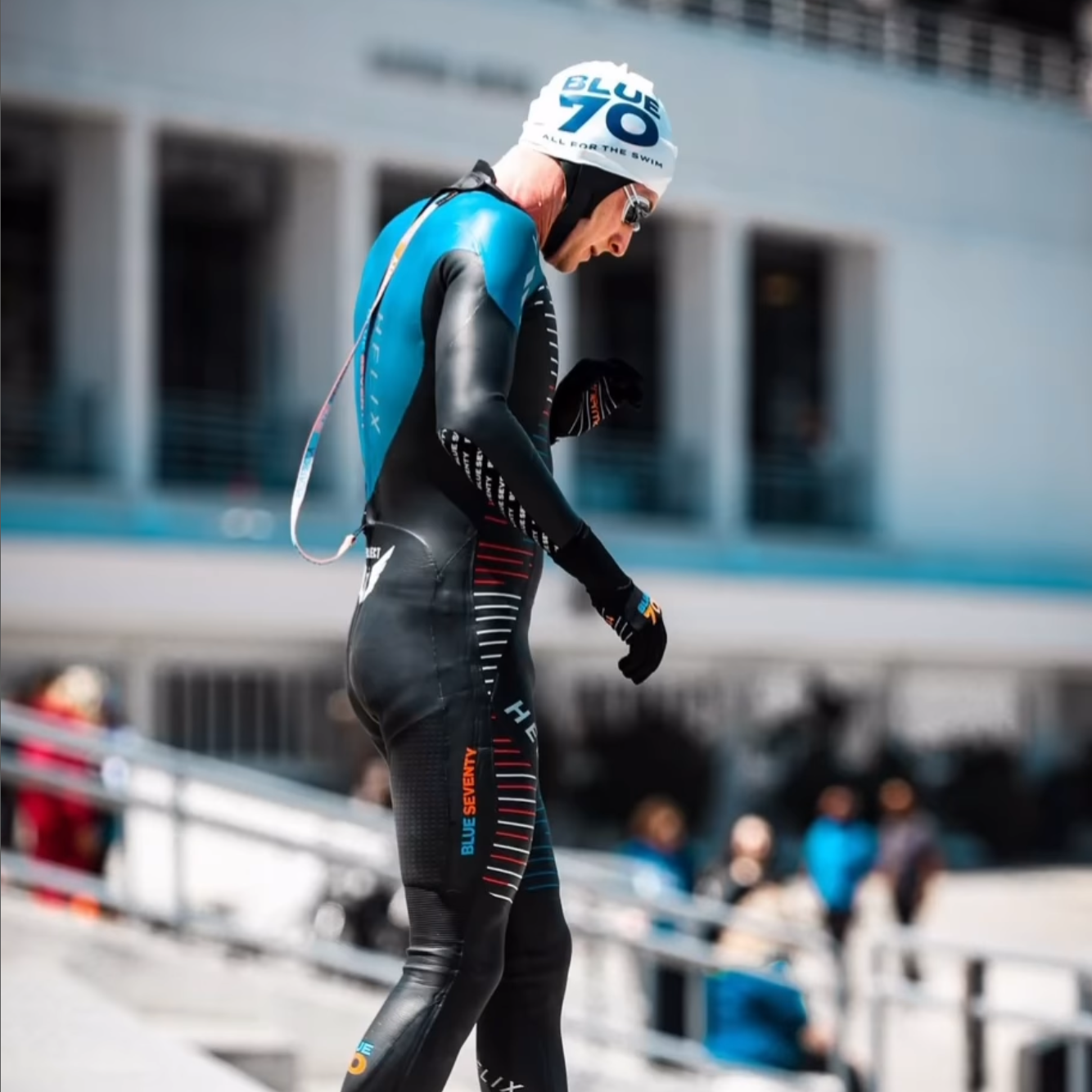
Ask anyone who repairs wetsuits for a living what ends a suit’s life early, and they’ll tell you about fingernail slices. On a suit like the Helix - where we use ultra-thin 40-cell neoprene through the arms and shoulders - a sharp edge can leave a nick in an instant. That thinness is what gives the suit its remarkable freedom, but it also deserves some respect. When you use a plastic bag, your fingers are pinching through the plastic, nails first, straight into the neoprene. Without the bag, you can use the flats of your fingers and the palms of your hands to inch the material up gradually. No nail contact, no damage.
And this isn’t just about longevity. Every tiny puncture lets water flush through, compromising the thermal seal and shifting buoyancy away from where we designed it. For a racer relying on the Helix’s LIFT buoyancy panels to keep their hips high, a few unnoticed nail holes can quietly steal speed.
The Inchworm Method: No Tools, No Tears
We teach an approach that costs nothing and uses only the suit’s own engineering. It’s not flashy, but it works. Here’s the sequence, broken down for any full-sleeve suit like the Fusion or Reaction.
1. Dry Off Completely
Water is a lubricant only after the suit is on. Before that, even slightly damp skin creates drag. Towel off your feet, calves, and hands until they’re bone-dry. Start dry, stay smooth.
2. Invert the Legs
Turn each leg inside-out down to the knee. This puts the slick outer face of the neoprene against your skin as you step in. Your foot and shin will slide without resistance, and you won’t have to push against any liner friction.
3. Inch, Don’t Yank
Slide one foot in, then use your palms - with your thumbs tucked outward, nails safely away - to gather the suit and move it up in two-inch increments. Think of an inchworm: bunch the material, push it up, smooth it out, repeat. Never grab the top edge and haul; that’s how stress lines form and panels tear. Once the leg is seated just below the knee, roll the inverted portion up and repeat on the other side.
4. Torso and Arms With Patience
For the lower back and hips, pat and smooth the suit upward rather than yanking from the neckline. A suit like the Fusion, with its redesigned lower-sitting neck, doesn’t need to be hiked to its absolute limit to seal. When you get to the sleeves, invert each cuff halfway and guide your arm through with an open palm. The thin shoulder panels on the Helix especially appreciate this - they’re built for fluid movement, not clawed fingers.
5. Shrug, Squat, Settle
Once you’re fully zipped, do a few shoulder rolls and a gentle squat. This lets the suit find its natural position, removes any binding, and helps the seals settle flat against your skin. You’ll feel the difference immediately.
Design That Meets You Halfway
One reason this method works so cleanly with a blueseventy suit is that we build specific features to lower the donning drama:
- Zirconium jersey lining (Thermal Reaction): This synthetic-wool interior glides on effortlessly and adds warmth for cold-water sessions where you’re already fighting chill outside the water.
- Extended zipper and Femme Fit cut (women’s suits): A longer zipper combined with patterns truly cut for female athletes makes entry smoother and reduces friction across the hips - no contortions required.
- Lower neckline (Fusion): Since the watertight seal sits a touch lower, there’s no need to wrench the whole suit upward hoping to close a gap at the neck.
- Permeable catch panels (Helix): While this feature is about stroke feel, it’s also a reminder to treat the material gently. A careful donning keeps that “feel for the water” intact instead of stretching the panel unnecessarily.
If your feet still feel like they need a little glide, skip the plastic and pull on a thin, dry cotton sock. It gives you just enough slip without any nail-snagging risk. But honestly, after a handful of bag-free sessions with the inchworm method, you probably won’t reach for the sock either.
Practice Without Pressure
No one learns this in the chaos of race morning. Find a quiet afternoon, towel off, and go through the sequence slowly. A suit that feels suffocatingly tight on dry land almost always relaxes into a second skin the moment you submerge. That’s why our Test Swim policy matters so much: you can swim in your suit and still return or exchange it as long as it comes back clean, dry, and unmodified. That means you can build your donning rhythm without any risk, turning a pre-race stressor into muscle memory you’ll trust on race day.
The plastic bag isn’t a sin - it’s just a relic. Modern wetsuits, a bit of technique, and some dry-handed patience give you everything you need to slide in smoothly and keep your suit performing season after season. Next time you’re gearing up, leave the bag at home. Your suit will thank you, and your transition times won’t notice the difference.
Find your size in 30 seconds, then take it for a swim. All for the swim.