


Most swimmers file neoprene gloves under diving gear and move on. That shortcut leaves out a useful lesson. Divers have spent decades refining cold-water accessories around one basic problem: your hands need to stay functional in the water, not just covered. For swimmers and triathletes, that same problem shows up in a different way. Once your hands get cold, stroke quality starts to slip.
That is the angle worth exploring. Gloves are usually discussed as a comfort item, but for open-water swimming they are often a technique-preservation tool. Cold hands do more than feel unpleasant. They change how you enter the water, how you set the catch, and how long you can hold a controlled stroke before the session turns into a grind.
From a swim-specific point of view, that makes gloves more interesting than they first appear. They sit right at the overlap between physiology, mechanics, and cold-water planning. That is where smart gear decisions get made.
Cold hands change your stroke before they end your swim
Most athletes notice cold hands as a comfort problem. In practice, the first loss is often precision. Your hands are your first point of contact with the water on every stroke. If they become stiff or numb, small technical errors start piling up.
- Hand entry gets less precise.
- The wrist can lose shape through the catch.
- Pressure on the palm and forearm becomes harder to read.
- Stroke timing gets less consistent as fatigue builds.
In the pool, you can often stop, reset, and finish the set. Open water does not give you that option. If the second half of a cold swim arrives with numb hands, you are not just less comfortable. You are swimming with worse information. That loss of feel matters because good swimming depends on pressure awareness. You need to sense the water to hold shape against it.
The trade-off is simple: more warmth, less raw feel
Neoprene gloves solve one problem and create another. They add thermal protection, but they also put material between your skin and the water. Some swimmers adapt to that trade quickly. Others notice the loss of tactile feedback on the first few strokes.
The useful question is not, “Do gloves feel warm?” The better question is, what fails first for you in cold water?
- Hand warmth
- Dexterity
- Stroke feel
- Confidence over the planned distance or duration
If your hands go numb early, gloves can preserve better overall stroke control across the full swim, even if they dull feedback a little. If the water is only cool and your hands still function well, gloves may feel unnecessary and clumsy. That difference is why some swimmers swear by them and others leave them in the gear bin.
What diving glove design teaches swimmers
Diving is useful here because it forced gear design to focus on function under exposure. Warmth alone was never enough. A diver still needs to use their hands after time in cold water. Swimmers should judge gloves the same way.
Wrist fit matters
A clean fit at the wrist helps reduce flushing, which supports warmth over time. For swimmers, wrist fit also affects how the glove sits with a wetsuit cuff. If that junction bunches or gaps, you feel it all session.
Finger position matters
A glove that forces your fingers into an awkward spread or stiff curl can change hand entry and the start of your catch. That may be tolerable for general water use. It is a problem when you repeat the same stroke hundreds of times.
Palm thickness matters
Extra material through the palm can mute feel for the water. In very cold conditions, that may be a fair trade. In moderate conditions, it can leave your stroke feeling blunted for no good reason.
Seams matter
A seam that feels minor on shore becomes obvious after twenty or thirty minutes of repetitive movement. Swimmers should pay attention to any point that rubs, pinches, or changes hand posture.
Gloves are often a better answer for training than for racing
Open-water swimmers and triathletes do not always need gloves for the same reason. A distance swimmer logging winter miles may use them to hold stroke quality through a steady aerobic session. A triathlete may use them in training because they make a cold-water workout more productive, even if race rules would not allow them on the day that counts. [VERIFY: current sanctioning-body rule for neoprene gloves in triathlon competition.]
That distinction matters. Training gear has one job: make the session useful. If gloves keep your hands functional long enough to hold good form, they have done their work.
Where gloves fit in a cold-water system
Gloves should not be the first fix you reach for. A swimmer’s cold-water setup starts with the wetsuit because core warmth, body position, and shoulder range shape the whole session. If the suit is wrong for the conditions, hand accessories will not solve the larger problem.
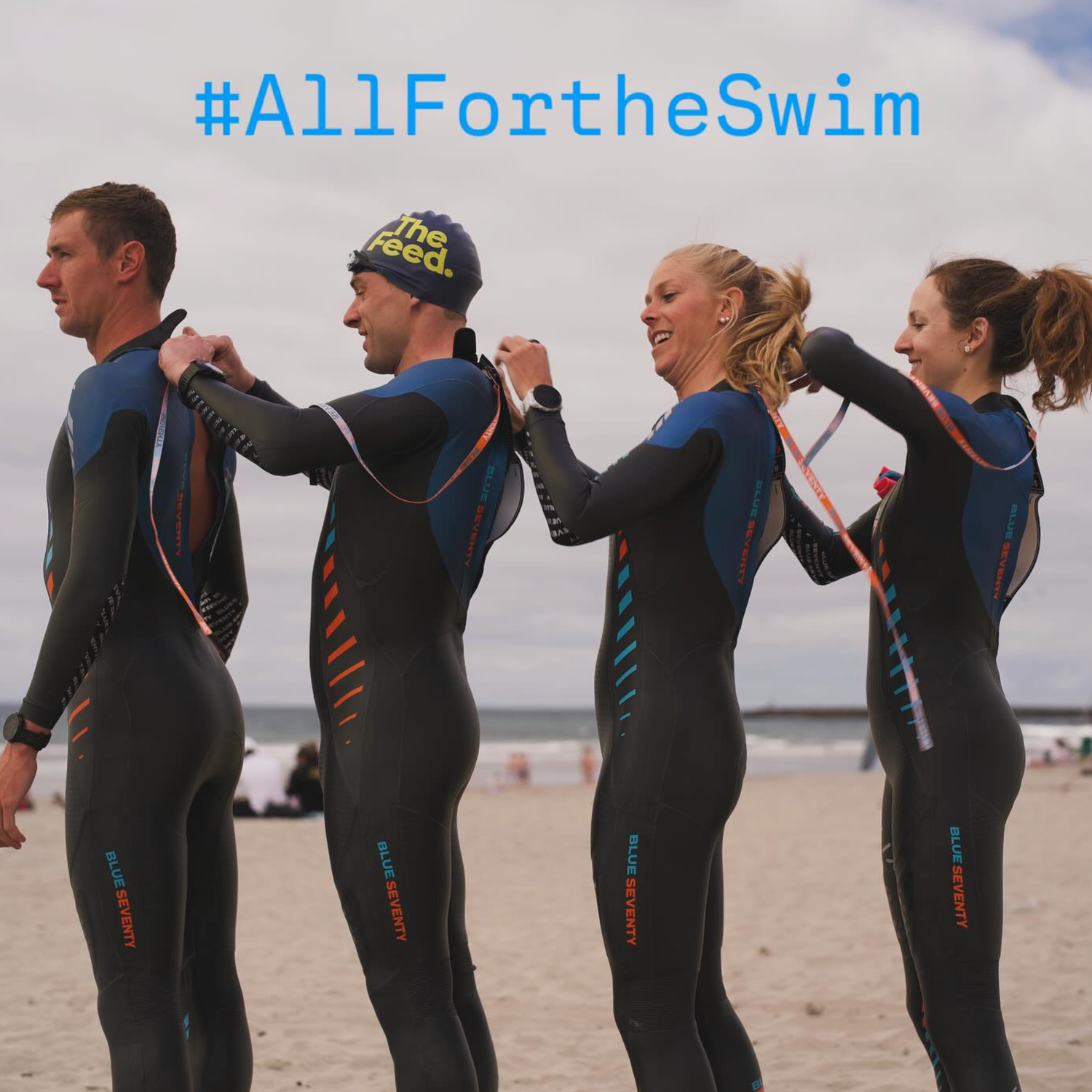
Blueseventy approaches cold-water swimming from that starting point. A properly fitted swim-specific wetsuit should feel snug on land and more natural in the water. Shoulder placement matters because a poorly positioned suit creates fatigue quickly. In colder water, the Thermal Reaction adds a full Zirconium jersey lining for added thermal protection. Even then, extremities often become the limiting factor before the torso does.
For many swimmers, water below about 56 to 58°F is where a purpose-built thermal suit starts to make much more sense. At that point, gloves become part of a full-system decision, along with your cap, route, exposure time, and acclimatization.
How cold hands affect pacing and judgment
Cold hands do not only change mechanics. They can change decision-making. Once dexterity drops, small tasks get harder. Adjusting goggles, handling zippers, sorting gear, or managing nutrition all become less reliable. That matters at the shore, and it matters in any training session where conditions shift faster than expected.
It also changes pacing. If you go out too hard in cold water, effort can hide the early warning signs from your hands. Later in the swim, when dexterity is gone and fatigue has built, the session can unravel quickly. Starting a little calmer gives you more room to assess what the water is doing to your stroke.
When gloves make sense
Gloves are usually worth testing if your hands are the first thing to give out.
- Your hands lose dexterity early.
- Your catch falls apart before your aerobic system does.
- You are already using a thermal wetsuit and need better extremity protection.
- Your goal is a steady aerobic swim in cold water.
- You want more consistency across winter or shoulder-season sessions.
In those situations, gloves are not an extra. They are a way to protect the quality of the work.
When gloves get in the way
There are also clear cases where gloves can be more trouble than help.
- The water is cool, but not cold enough to compromise hand function.
- You are doing fine technical work where raw tactile feedback matters most.
- The glove changes your hand position too much.
- You are preparing for an event where gloves are not permitted. [VERIFY: current sanctioning-body rule.]
- Your larger issue is poor overall thermal setup, not your hands alone.
They also do not change the basic demands of cold-water swimming. Neoprene adds buoyancy and thermal protection, but it does not make cold exposure risk-free. Acclimatization, conservative route choices, and sound judgment still matter.
How to test neoprene gloves for swimming
Do not save your first glove test for your longest swim of the season. Keep the first session short and close to shore. Then judge the gloves by what they do to your stroke, not just by how warm your hands feel.
- Notice the first few strokes. Your hands should still enter naturally.
- Check your catch after ten to fifteen minutes. This is where cold usually starts changing mechanics.
- Pay attention to dexterity at the end of the swim. Can you handle gear cleanly?
- Watch for any new fatigue pattern in the hands, forearms, or shoulders.
You are looking for a clear result: better hand function over the length of the swim, with an acceptable trade-off in feel for the water. If the gloves make your stroke feel awkward from the start, that answer is useful too.
The best lesson from diving gear
The diving world got one thing right early: hand protection has to preserve function, not merely add coverage. Swimmers should use the same standard. A glove earns its place when it lets you hold a stroke you still recognize late in a cold swim.
That is the real value. Not warmer fingers by themselves. Better control, better dexterity, and a session that stays purposeful longer.
If you are building out your cold-water setup, start with the foundation first: a swim-specific wetsuit with the right fit and thermal profile for your conditions. From there, add accessories where your body tells you the system is breaking down. If you need help dialing that in, take a look at the fit guide or Take a Test Swim to sort out the base layer before adding cold-water extras.