


Most swimmers think about wetsuit performance in terms of fit, buoyancy, and shoulder flexibility. Those are the right priorities. But a small repair decision can shape how a suit feels in the water, how cleanly it comes off in transition, and how long it holds its intended shape through a full season of training and racing.
That is why neoprene cement deserves more attention than it usually gets. For triathletes and open-water swimmers, it is not only a repair product. It is part of keeping a swim-specific wetsuit working the way it was designed to work.
Why small damage matters
A wetsuit is not one uniform sheet of neoprene. It is a pattern of panels, each placed to balance buoyancy, flexibility, and freedom through the stroke. Blue70 wetsuits use Yamamoto neoprene in 38, 39, and 40 cell grades, with higher cell numbers bringing more flexibility. That matters in the shoulders, underarms, and other areas where the suit needs to move with you instead of fighting every reach and recovery.
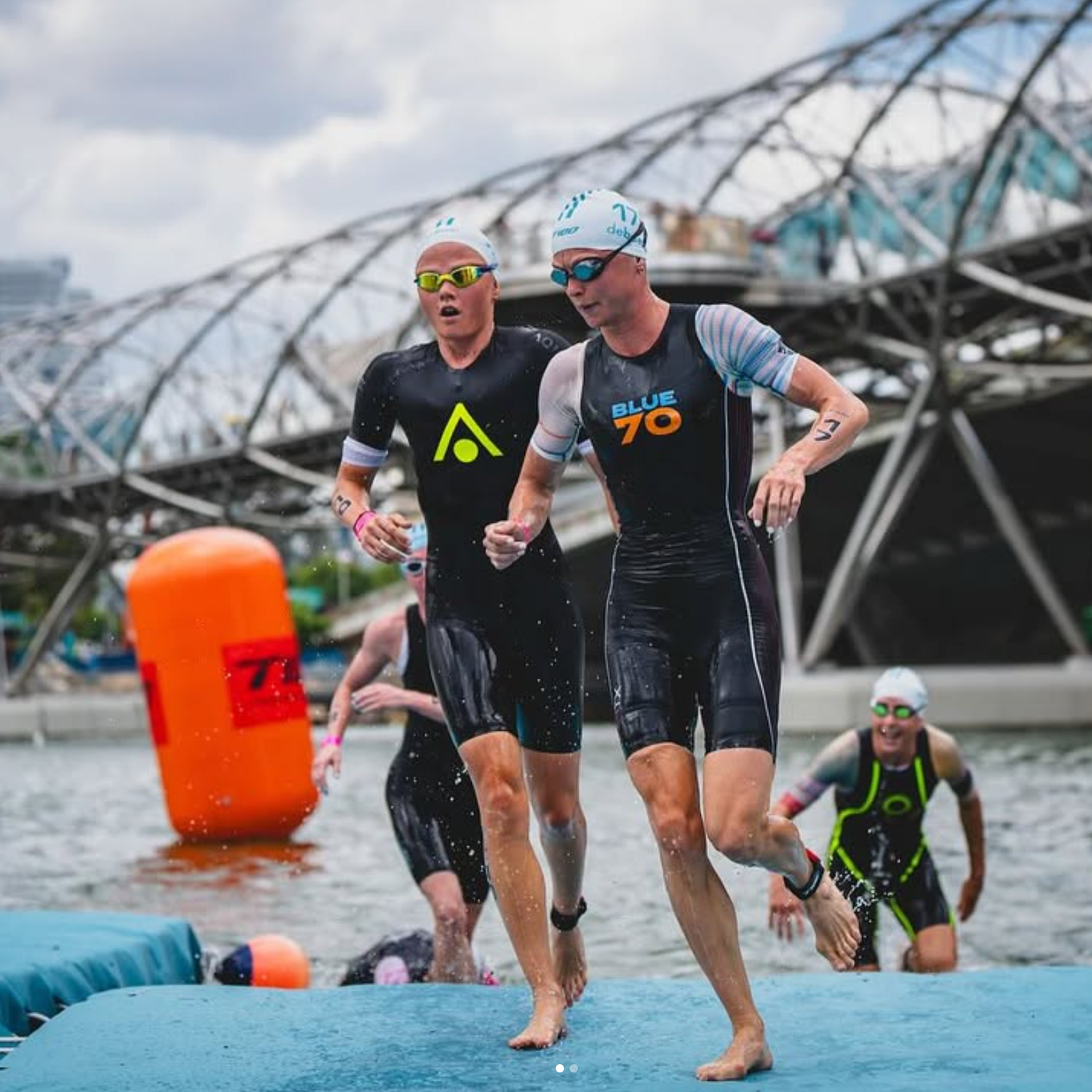
When a small cut opens up, the problem is not limited to appearance. A nick near the ankle can turn into a larger tear when you pull the suit off in T1. A puncture near the shoulder can spread with repeated stretching during training. A damaged panel does not tension the same way an intact one does, and that can change how the suit sits on the body once you are swimming.
Small tear, small issue is a bad assumption.
What neoprene cement actually does
Neoprene cement is designed to bond neoprene edges back together. Its best use is for minor cuts, punctures, and clean tears before they spread. It works well when the damage is limited, the edges line up naturally, and the surrounding material is still in good condition.
It is less useful for larger structural problems. If stitching has pulled out, a seam has opened over a longer section, or the zipper base is involved, the repair moves beyond a simple glue fix. In that situation, forcing a home repair can leave the suit stiffer, messier, or harder to address properly later.
Most wetsuit damage starts on land
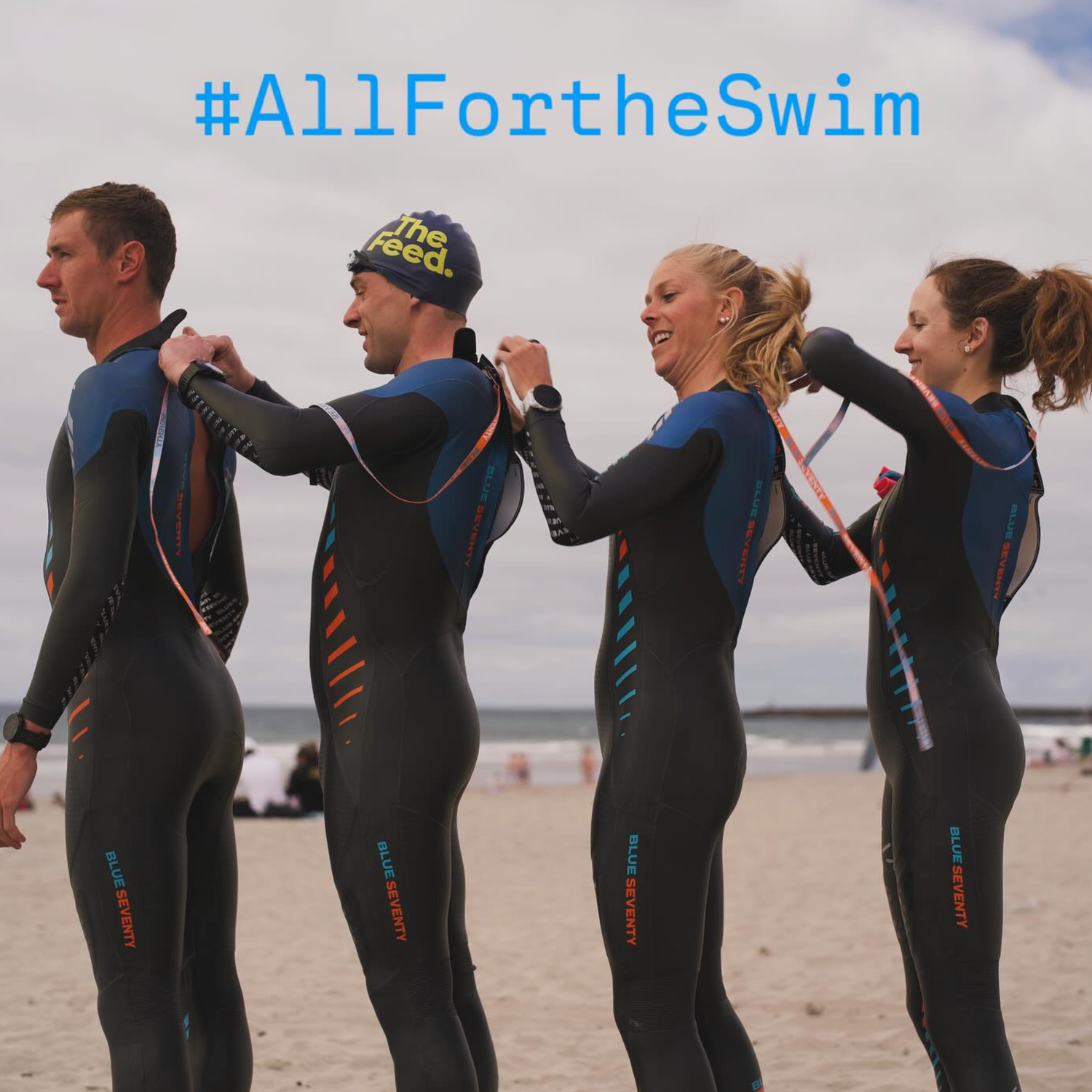
Many athletes assume wetsuit wear happens in the water. Most of the damage I see starts before the swim or after it. Putting the suit on too aggressively, stepping on the lower leg during removal, or changing on rough ground does more harm than a steady swim set ever will.
Common trouble spots
- Fingernail punctures: usually caused by pinching and pulling the neoprene with the tips of the fingers instead of using the pads of the fingers.
- Heel tears: often happen at the ankle opening when the suit is forced on or stripped off too quickly.
- Lower-leg nicks: common after transition practice, dock entries, or changing on rough surfaces.
- High-stretch panel damage: underarms, shoulders, and side panels deserve quick attention because those areas move through every stroke.
Blue70’s warranty policy excludes fingernail punctures and heel tears. That is useful context because it reflects the kind of wear that comes from handling, not a defect in the suit itself.
Repair quality affects swim feel
This is the part that often gets missed. A wetsuit repair is not only about stopping a tear from growing. It is also about preserving how the suit moves.
A swim-specific wetsuit helps support body position in the water. Blue70’s design approach has always centered on that point. Buoyancy matters, and so does flexibility where the stroke needs it. If a repair leaves behind a stiff patch or a panel that no longer sits cleanly, you can feel it in the water even when the suit looks acceptable on land.
You might notice one shoulder getting tired sooner. You might feel bunching under the arm. You might find the lower leg catching when you strip the suit in transition. None of those issues guarantee a slower swim split, but each one points to the same problem: the suit is no longer moving the way it was built to move.
Warmth, sealing, and realistic expectations
A repaired tear can help restore the structure of the panel and reduce extra water movement through a damaged area. It does not make a wetsuit waterproof, because wetsuits are not meant to keep you dry. They allow a thin layer of water in, and your body warms that layer to provide insulation.
That distinction matters in colder conditions. When panel damage gets worse, water exchange in that area can become less controlled, which can make a cold swim less comfortable. Blue70’s general guidance is that below about 56 to 58°F, a purpose-built thermal suit such as the Thermal Reaction adds meaningful thermal protection. Suit condition still matters, especially if you spend long stretches in open water.
How to decide when a repair should move to the top of your list
Inspect the suit dry, laid flat, and in good light. Start at the ankles and cuffs, then move to the underarms, shoulders, side torso, and zipper area.
Move quickly on the repair if you notice any of the following:
- the tear is getting longer
- the edges pull apart when you stretch the panel lightly
- the damage sits in a high-movement area
- the suit now wrinkles or pulls unevenly nearby
- the lower leg feels less smooth during removal
- one side of the suit feels tighter or less natural in the water
If the issue involves a seam, zipper, or a section that no longer lines up cleanly, treat it as a bigger repair question.
How to use neoprene cement well
Good repair work is patient work. The goal is to preserve the panel, not just stick two edges together and hope for the best.
- Dry the suit fully. Do not start with damp neoprene.
- Clean the damaged area. Remove salt, sand, sunscreen, and any residue that will interfere with adhesion.
- Align the edges in their natural position. Do not stretch the panel to force a match.
- Apply neoprene cement sparingly. A thin, controlled bond is better than excess glue.
- Let it cure completely. Do not wear, fold, or stuff the suit into a bag too soon.
- Test it in training. Use the suit in the water before trusting the repair for a race.
That final step matters. A repair that looks fine on a table still needs to prove itself during swimming, rotation, and removal.
Why this belongs in race-week prep
Most triathletes would never ignore a worn tire or a loose bottle cage in race week. A wetsuit deserves the same level of attention. Small damage has a way of becoming obvious only when the suit is under stress, and race morning is a bad time to discover that an ankle tear has widened or a shoulder cut no longer sits flat.
A simple race-week check
- Seven to ten days out: inspect the full suit and deal with small damage while there is still time to test it.
- After the final open-water swim: check the forearms, underarms, and lower legs again.
- The night before the race: avoid last-minute repair work unless the issue is minor and straightforward.
- Race morning: keep the suit off rough ground and take your time pulling it on.
Those habits do not take long. They prevent a lot of avoidable problems.
Prevention still does the most work
Neoprene cement is useful, but the best repair is the one you never need to make. A few handling habits reduce most common damage.
- Use the pads of your fingers, not your nails, when pulling the suit up.
- Work the suit gradually from the ankles to the hips before setting the shoulders.
- Take extra care at the cuffs and lower-leg openings.
- Stand on a towel or clean surface during transition practice.
- Rinse the suit after saltwater swims.
- Dry it fully before storage.
- Avoid unnecessary heat exposure and avoid letting chlorine sit in the material.
If you swim in your wetsuit often, those details matter even more. Frequent training creates more chances for small handling mistakes, and those small mistakes add up over a season.
Care is part of performance
Neoprene cement sounds like a maintenance topic, but for swimmers and triathletes it is also a performance topic. A swim-specific wetsuit only works as intended when the panels hold their shape, the stretch zones still stretch, and the lower legs still come off cleanly when it matters.
Take care of small tears early. Repair them cleanly. Test the suit before race day. That approach protects fit, movement, and confidence in the water.
If you need help with sizing, wear guidance, or general wetsuit care, Blue70 offers a detailed fit guide and support resources at /pages/fitting-wearguide. For athletes working through minor wetsuit maintenance, Blue70 also carries wetsuit care products, including Aquaseal neoprene cement.