


A small tear near the knee doesn't have to end a wetsuit's season. What ends it is reaching for the wrong glue.
Most swimmers who patch their own gear grab whatever adhesive sits closest at hand. Maybe it's rubber cement from a home repair kit, or a tube of contact adhesive left over from fixing a shoe. That instinct is understandable. But neoprene doesn't behave like the rubber, vinyl, or fabric most household adhesives were built for, and the gap between those two chemistries decides whether a repair lasts a season or fails on the next swim.
Why Neoprene Resists Ordinary Glue
Neoprene is a closed-cell foam made from polychloroprene rubber. That closed-cell structure is what gives a wetsuit its buoyancy and warmth, trapping small pockets of air throughout the material. It's also what makes the foam tricky to bond. The surface is naturally low-friction, and the material never sits still. It flexes with every stroke: shoulders rotating, hips driving the kick, knees bending at every entry and exit.
An adhesive designed for something rigid, a shoe sole or a vinyl patch, doesn't expect that kind of movement. It sets hard, sits on top of the foam, and eventually cracks right at the edge where flexible neoprene meets stiff, dried glue. This is why wetsuit repair specialists point swimmers toward neoprene-specific cement rather than a general-purpose adhesive, even though the two products often look nearly identical in the tube.
What Neoprene Cement Does Differently
Neoprene cement bonds chemically with polychloroprene rubber instead of just sticking to its surface. During application, it softens the outer layer of the foam slightly, letting the two repaired edges fuse rather than simply stack on top of each other. Once cured, the bond flexes along with the surrounding neoprene instead of fighting it.
That difference matters more than it sounds. A repaired seam doesn't absorb one load and hold steady. It goes through thousands of stretch-and-release cycles over the course of a single swim. A rigid bond turns into a stress point: it cracks first at the edges, then peels, then fails outright, often mid-swim, in open water, well past the point where a quick fix is possible. A flexible bond spreads that stress out instead of concentrating it in one spot.
Neoprene cement also holds up better against saltwater, chlorine, and sun exposure, the three conditions that break down adhesive bonds fastest and that every open-water swimmer and triathlete exposes their gear to constantly.
Where General Contact Adhesive Falls Short
Rubber cement and most all-purpose adhesives are built for materials that stay relatively still once bonded. Applied to neoprene, two problems tend to show up.
- The bond stays on the surface instead of fusing into the foam, so the repair sits on top of the material rather than becoming part of it.
- The repaired spot stiffens, creating a hard patch that resists the flex happening all around it, and that resistance is exactly where the next crack starts.
None of this makes general adhesive a bad product. It's simply the wrong tool for a material that has to keep moving after it's repaired.
Seam Repair vs. Panel Tear: Two Different Jobs
Not every repair carries the same risk. A seam separation, where two panels have pulled apart along a stitched or glued line, is a fairly low-stress fix if it's caught early. A thin, even line of neoprene cement along the seam, pressed and held per the cure instructions, typically lasts for the rest of the suit's usable life.
A panel tear is a different problem entirely. These usually start with a fingernail catch or a heel snag during donning, and they're higher-stress repairs because there's no factory seam to rejoin. You're asking the adhesive to hold two raw edges of foam under the same repeated flex that caused the tear in the first place. It's also the kind of damage most wetsuit warranties exclude outright, since it comes from handling rather than a material defect. Blue70's own warranty terms, for instance, don't cover fingernail punctures or heel tears, which makes getting the repair right the swimmer's job, not a manufacturer's.
The Repair You Never Have to Make
The adhesive question is really a downstream problem. The better fix is cutting down how often you need the tube at all.
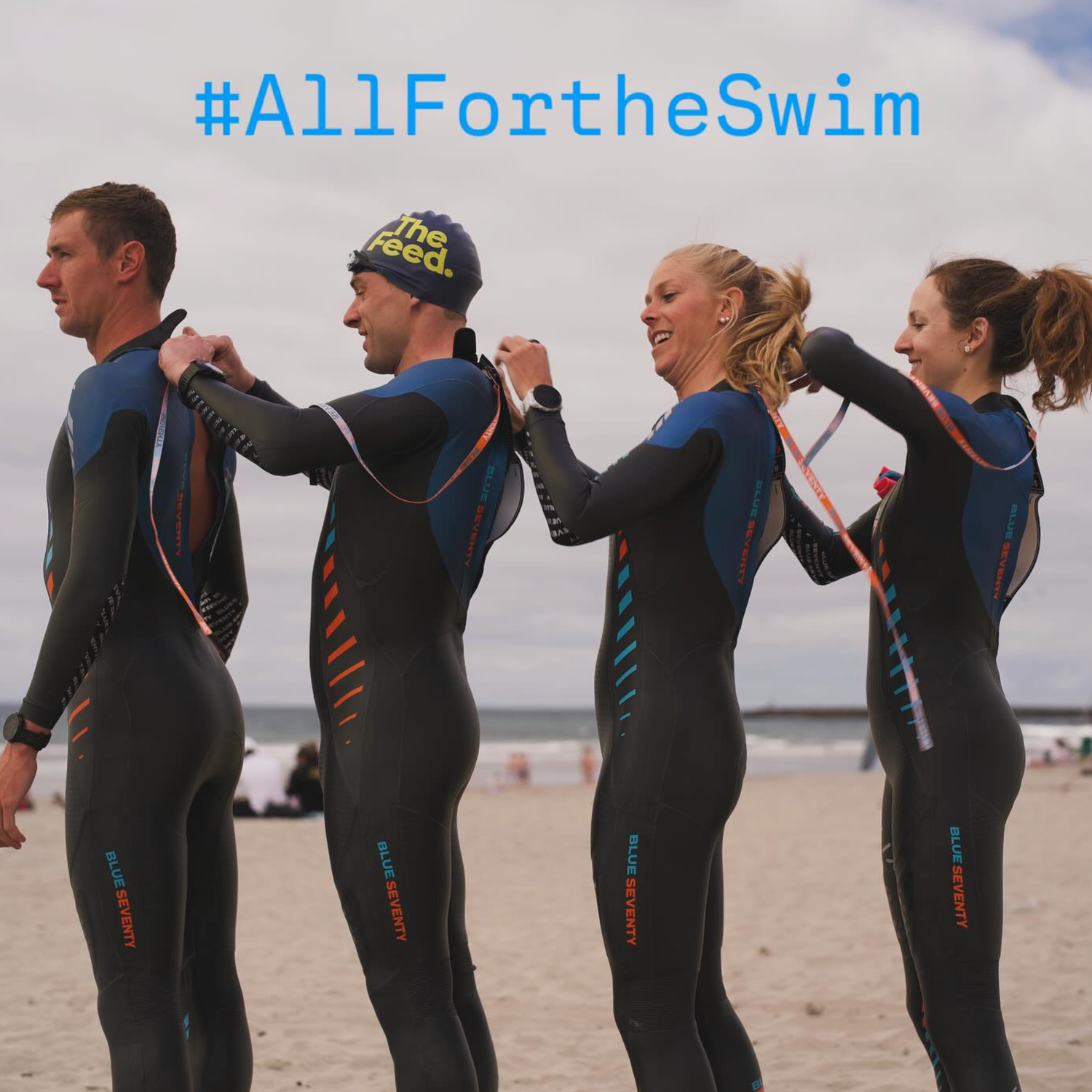
Fingernail punctures and heel tears are the two most common ways swimmers damage a new wetsuit, and both happen during donning, not during the swim itself. A few habits go a long way:
- Trim nails before pulling the suit on, on both hands and toes.
- Slip a plastic bag or glove over your foot before working the leg through, then pull it out once your foot clears the ankle.
- Work the material in small handfuls, gathering fabric and pulling gradually rather than yanking a full panel up in one motion.
Ten seconds of care going into the suit saves twenty minutes of repair work later, and it keeps the neoprene intact in spots that cement can't fully restore once torn.
Adhesive Storage: The Detail Most Swimmers Skip
Neoprene cement has a shelf life, and poor storage shortens it fast. Heat causes the solvent base to evaporate or the formula to thicken past the point of usefulness. A tube left in a hot car trunk after a race can be unusable by the next repair, even if the cap looks sealed and the label looks fine. Store it at room temperature, keep the cap tight between uses, and check the consistency before you trust it with a repair. A partially dried tube gives you a partial bond, and a partial bond tends to fail at the worst possible time.
Knowing When to Repair, and When to Retire
Cement extends a wetsuit's life. It doesn't reset it.
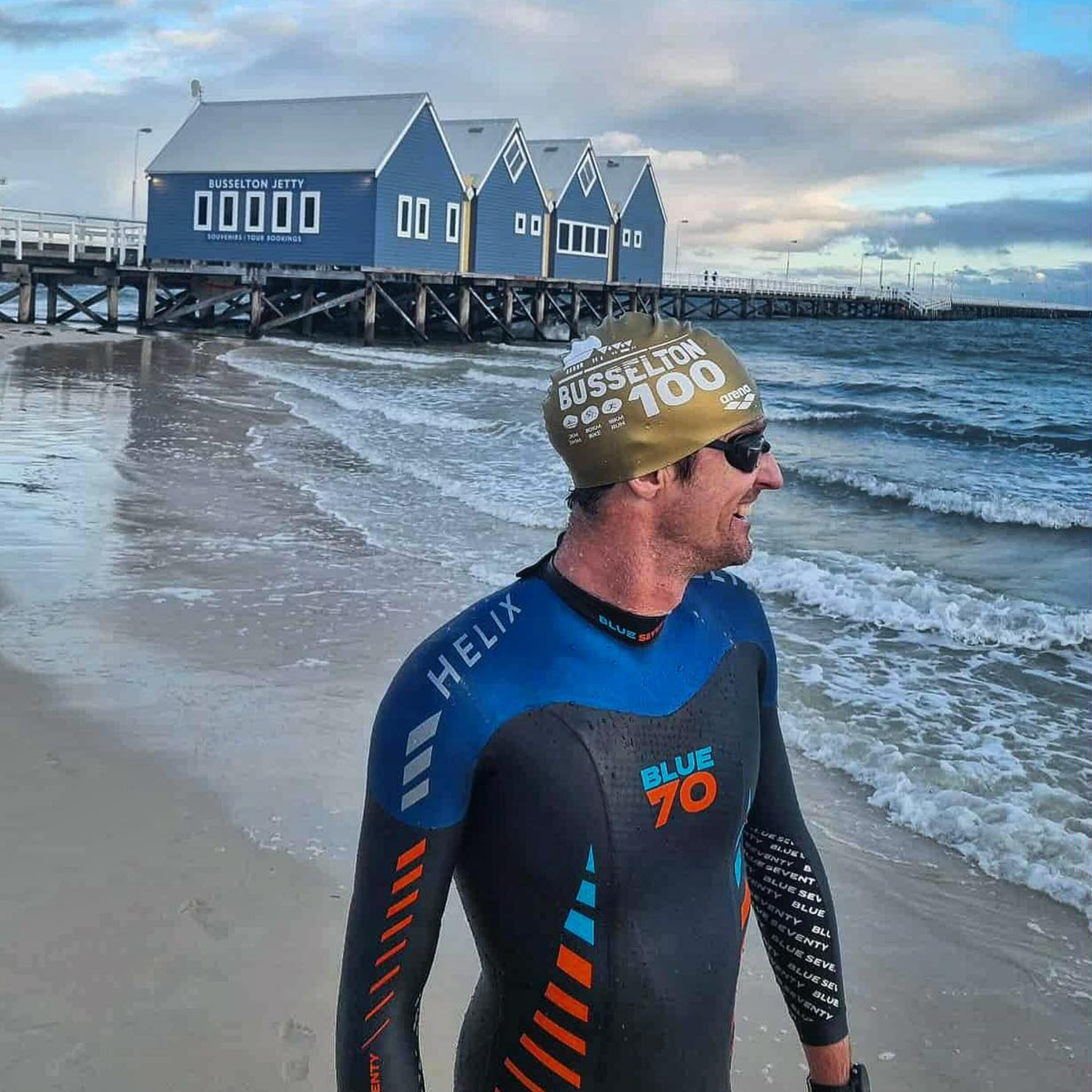
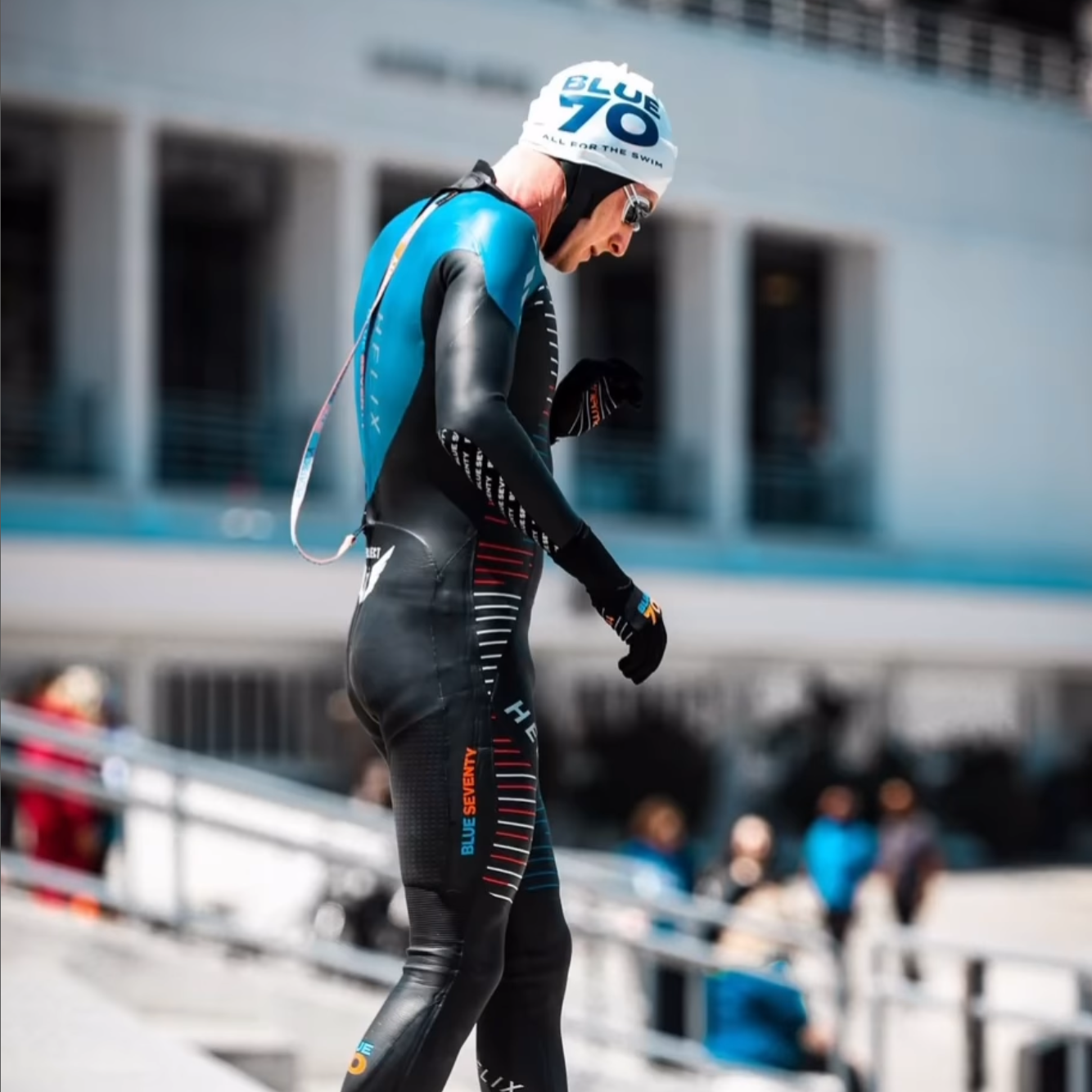
Blue70 wetsuits use Yamamoto neoprene across 38, 39, and 40-cell grades, with the higher cell counts delivering more flexibility, particularly in the shoulder panels of a race suit like the Helix. That flexibility comes with a tradeoff Blue70 is upfront about: thinner neoprene wears faster under frequent training use, which is why the Helix is built with race day in mind, while swimmers training multiple times a week are better matched to the more durable Reaction or Fusion.
A well-executed repair on a seam or small tear can add real mileage to any of these suits. But a suit collecting repair after repair, especially around the shoulders or underarms where flex never stops, is telling you something a tube of cement can't fix. The neoprene itself is fatiguing, not just the bond holding it together.
Building a Repair Kit Worth Keeping
For any swimmer maintaining a wetsuit through an open-water season, the basics are simple: neoprene-specific cement, a small brush or applicator, and the patience to let the bond cure fully before the suit goes back in the water. Rushing the cure is one of the most common reasons a repair fails on its first swim instead of its fiftieth.
Getting the chemistry right isn't a footnote. It's what separates a wetsuit that finishes out its intended lifespan from one that lets you down mid-lake, mid-race, at the exact moment you needed it to hold.
If you're unsure whether your wetsuit needs a repair or a replacement, Blue70's support team can help you figure out which one makes sense for your suit and how it's been used.