


Most wetsuit fitting advice focuses on shoulders and hips. If you have muscular calves from cycling, running, or years of kicking, the lower leg deserves just as much attention. A suit that slides on easily through the hips can still bind across the calf. Before you order a larger size, look at the ankle. Calf tightness frequently starts with an ankle cuff that sits too low or folds under.
The gastrocnemius sits high and gives the upper calf its bulk. The soleus sits underneath and continues toward the ankle. Because the shape changes from wide calf to narrow ankle over a short distance, a wetsuit's lower leg panel has to fit a sharp taper. During a swim kick, the calf muscles drive plantar flexion. A leg panel that binds across the soleus adds resistance you feel on every single kick.
Blue70 swim-specific wetsuits use Yamamoto neoprene in 38, 39, and 40 cell grades. Higher cell numbers mean more flexibility. That flexibility matters when a suit wraps a strongly tapered muscle like the calf. A suit with the ankle cuff in the right place lets the calf move through the kick and push-off without the leg panel having to stretch against a fold.
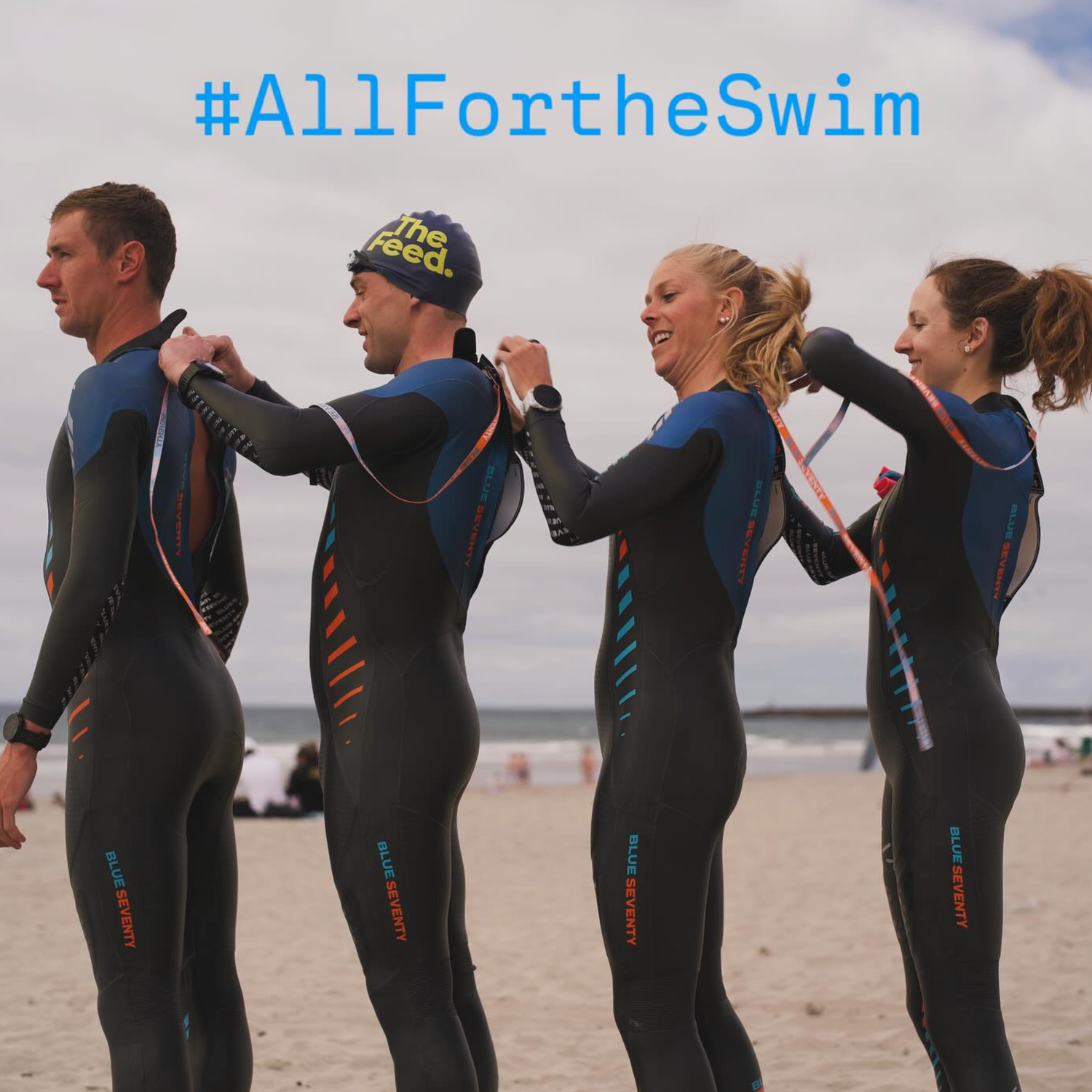
How to Put On the Suit When You Have Big Calves
Calf complaints often start before the suit is seated correctly. This sequence prevents the most common mistake.
- Turn each leg panel inside out to the knee before you step in. This stops the suit from binding as it passes over the widest part of your calf.
- Slide a thin plastic bag over your foot and heel. The slick plastic lets the neoprene move over your skin without grabbing. Remove the bag once the ankle cuff is up.
- Stop when the cuff is above your ankle bone. Pinch the neoprene with your fingertips and feed it upward in small gathers. Do not pull from the top of the leg panel.
- Smooth the area behind your knee. A fold there shortens the leg and drags the cuff down.
- Check the ankle cuff. It should lie flat directly above the ankle bone, not rolled under or pushed halfway up the calf.
That last step is the one most swimmers skip.
The Ankle Seal Does More Than You Think
A swim wetsuit is not a drysuit. It allows a thin layer of water inside, and your body warms that layer. The ankle cuff is a main point where fresh water enters and exits. A loose or folded cuff lets water exchange more often during kicks, push-offs, and turns. The suit still works, but thermal comfort becomes less consistent.
Here is the trade-off. If you size up to give the calf more room, the ankle often becomes too loose. Measure your ankle and calf with a soft tape before you pick a size. Compare both to the size chart and your height and weight range. If the calf points to one size and the ankle to another, email us@blueseventy.com before ordering.
Choosing a Blue70 Wetsuit for Muscular Calves
Your model choice depends on how often you swim and the water temperature. The Fusion at $420 is the mid-range best seller and suits shorter frequent swims. The Reaction at $680 uses higher-grade neoprene than the Fusion and is built for frequent longer swims. A muscular calf puts repeated stretch through the lower leg, so the extra durability in the Reaction makes sense for a full season of training. The Sprint at $325 is the entry point and still swim-specific. The Helix at $995 is the race-day suit with thin, flexible neoprene in the arms and shoulders. Blue70 notes that the Helix's thin neoprene can break down more quickly with frequent training use, so it fits race days better than daily training.
For women with muscular calves, Femme Fit includes refined wrist and ankle patterning plus an extended zipper length for easier entry. Femme Fit is available on every women's Blue70 wetsuit.
Caring for the Ankle and Calf Panels
Rinse the suit inside and out after every swim. Chlorine and salt both dry out neoprene over time, and the ankle and calf are areas where water and sand collect. Hang the suit to dry away from heat and direct sun. Fold or roll it after it is dry, and avoid sharp creases at the ankle. For small nicks from brushing against a rough pool edge, Aquaseal neoprene cement repairs the tear before it grows. Heat and chlorine damage fall outside the warranty, so the post-swim rinse protects the ankle and calf panels.
Fit Checklist Before You Decide
- The calf feels snug but not numb. You can point and flex your foot without a fold behind the knee.
- The ankle cuff sits flat directly above the ankle bone.
- There is no roll or gather behind the knee.
- You worked the neoprene up in small pinches with a plastic bag over your foot.
- If the ankle is loose or the calf still binds after a proper donning sequence, check the size chart or email us@blueseventy.com before ordering.
A practical next step is to use the Blue70 size chart and then take a test swim. The Test Swim policy lets you swim in a wetsuit and still return or exchange it within 30 days of the ship date, as long as it comes back clean, dry, unmodified, and with tags attached. Find your size, then take the suit for a swim.
All for the swim.