

A men's wetsuit size chart narrows the field quickly. Height and weight describe a general body envelope. Torso length, shoulder mobility, and how weight sits between chest and hips decide the rest. Most fit failures start when a swimmer treats the chart as a t-shirt label. A better approach treats it as a starting point, then verifies the suit in the water.
blueseventy traces its wetsuit heritage to 1993, when the company that would become the brand developed one of the first triathlon wetsuits. Today, sizing follows the neoprene grades, panel layouts, and intended use of each model. A swim wetsuit is cut for a horizontal body position and a repeated overhead stroke, so the size chart has to account for those demands. The Sprint, Fusion, Reaction, and Helix use different neoprene grades and panel layouts, so a medium in one can fit differently from a medium in another. Check the chart for the model you're considering.
What the Chart Lists
A size chart lists height and weight. Those two inputs correlate with overall body volume, and body volume predicts how much neoprene you need to cover without deep folds. That correlation weakens once you're down to two adjacent sizes. At that point, you've narrowed the options with the chart. The remaining decision depends on how you're built.
Two swimmers at the same height and weight can carry that mass differently. One has a longer torso and shorter legs. The other has broader shoulders and a slimmer waist. Those two builds need different fit adjustments despite matching chart numbers. A test swim exposes the difference.
Torso Length: The Measurement Most Men Skip
Torso length is the measurement that tells you whether the neck will sit flat and the groin panel will stay put. If your torso is longer than the pattern expects, the suit pulls down at the shoulders and up at the legs. If it's shorter, you get folds across the stomach that trap extra water. Neither problem shows in a height-and-weight table.
Measure from the C7 vertebra at the base of the neck to the top of the hip bone. Swimmers whose measurement sits far outside the range expected for their height should try the adjacent size from the chart recommendation before committing.
Shoulder Fit Decides Stroke Efficiency
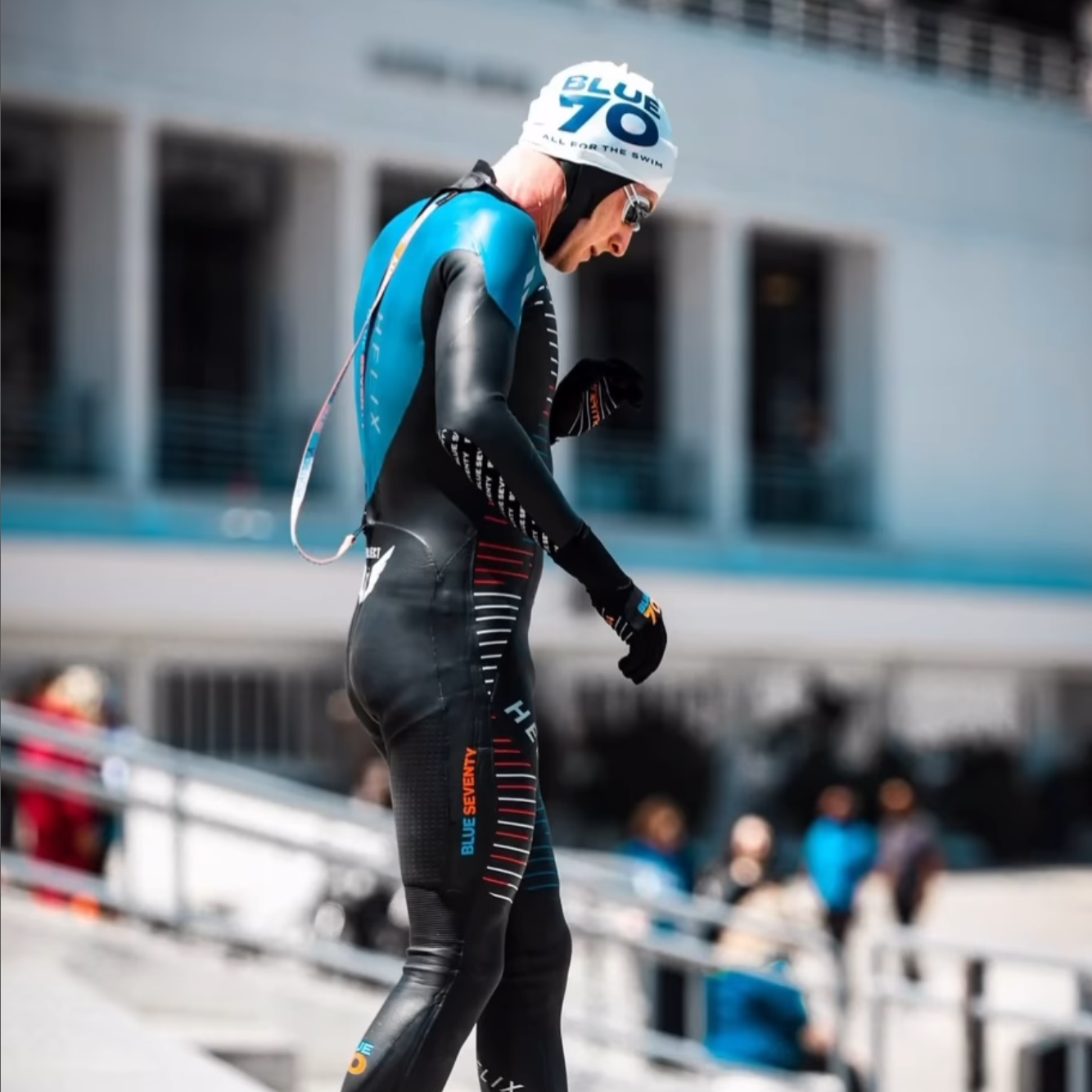
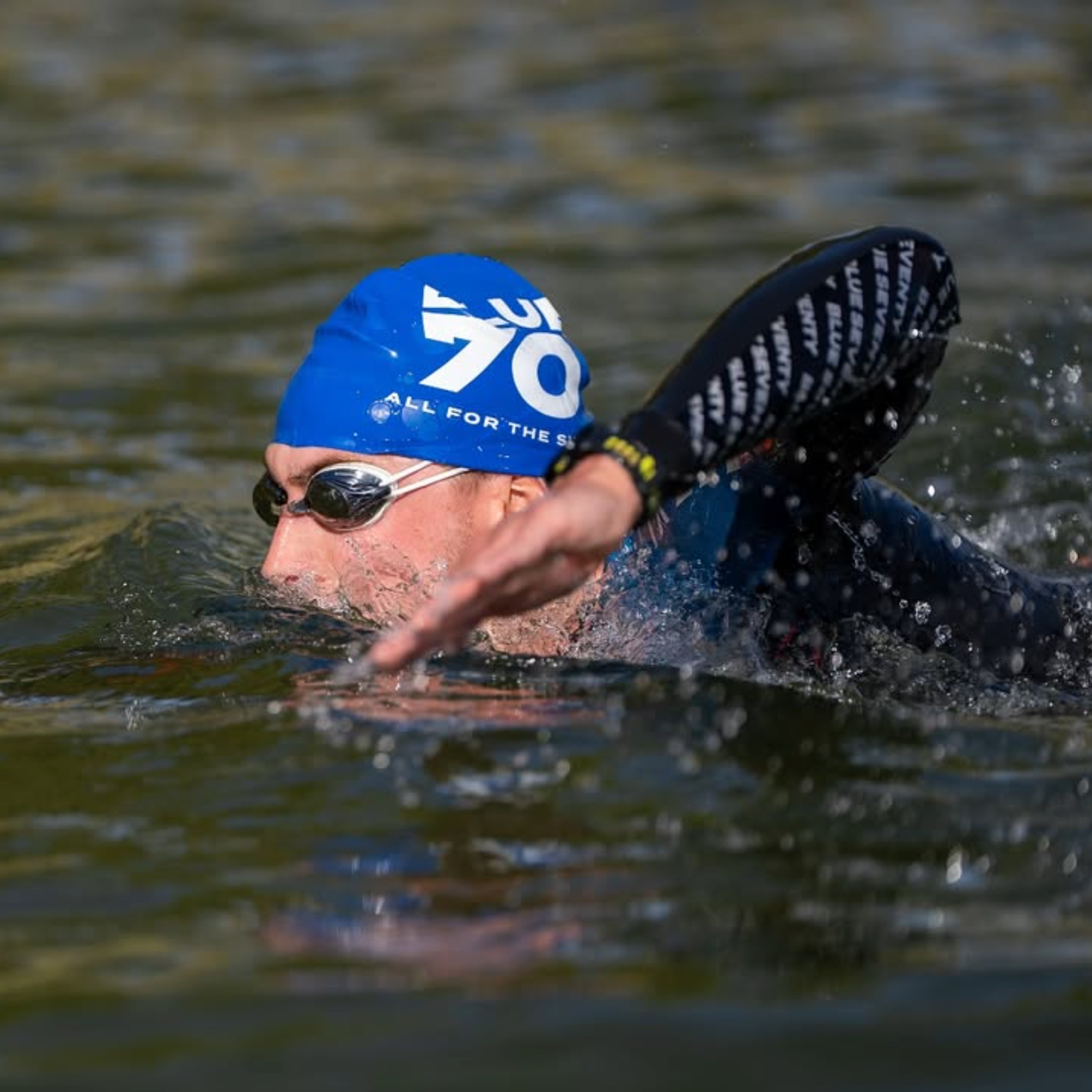
Shoulder fit matters because every freestyle stroke requires repeated overhead reach. A suit that feels snug when your arm hangs at your side can pull when you extend. That tension increases fatigue and shortens the catch. blueseventy uses Yamamoto 38, 39, and 40 cell neoprene across the men's line, and higher cell numbers mean more flexibility in the arms and shoulders. The Helix uses thin, flexible neoprene in the arms and shoulders and includes a permeable catch panel to preserve feel for the water, but that flexibility comes with a durability trade-off because thin neoprene wears faster with frequent training. If you swim once a week or more, Reaction or Fusion gives you more longevity while still allowing a full stroke.
Snug on Land, Comfortable in the Water
A common instinct is to size up because the suit feels tight on dry land. That instinct works against the wetsuit. The suit needs light contact with the skin to trap the thin water layer that your body warms. A loose suit lets water flush through, which reduces thermal protection and disturbs body position. A correct fit preserves the buoyancy that keeps your hips high. Buoyancy equals speed.
If the suit feels roomy on dry land, expect it to feel looser once you swim. The right suit feels snug on land and more comfortable in the water.
Use the Test Swim to Confirm Your Size
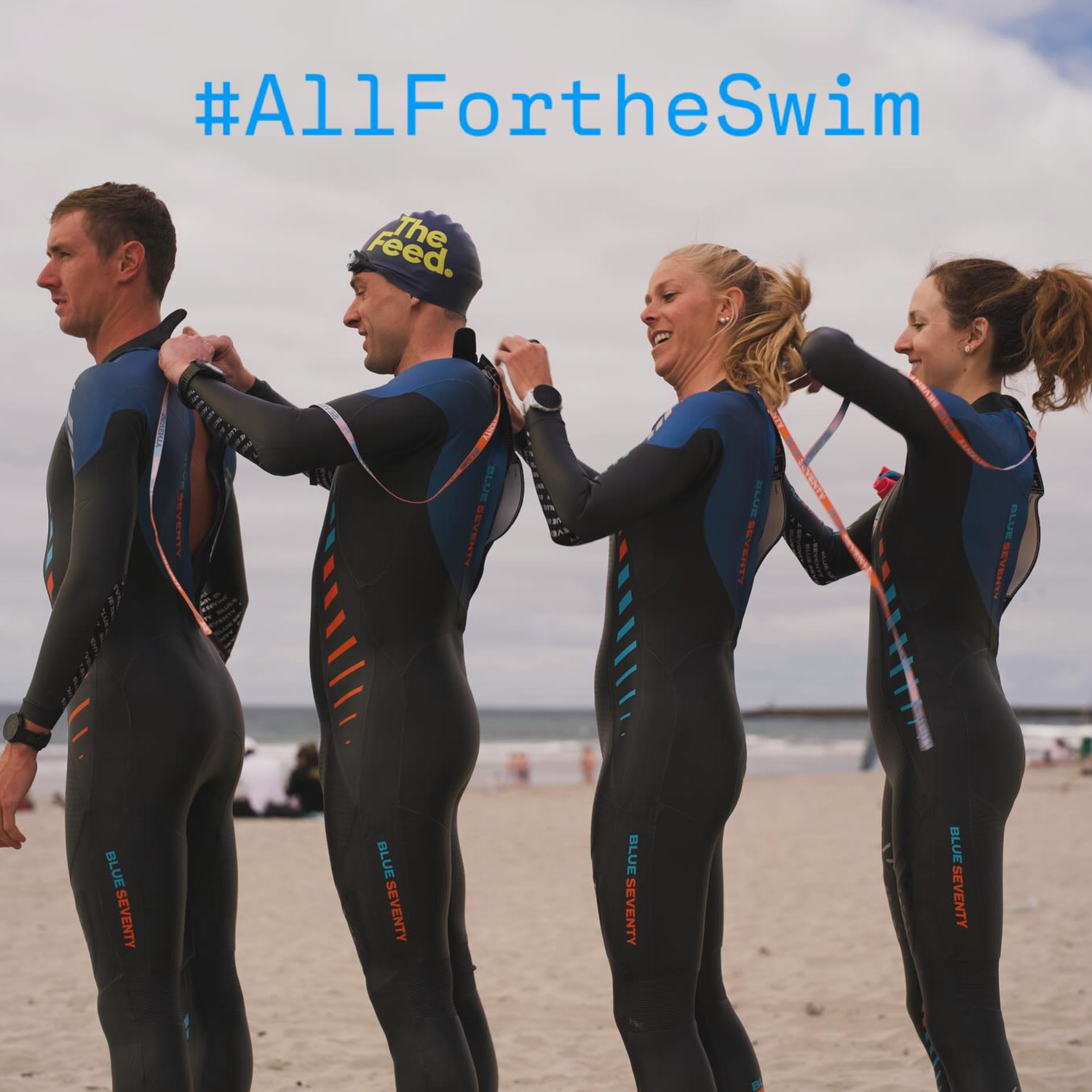
blueseventy's Test Swim policy lets you swim in a wetsuit and still return or exchange it within 30 days if it's clean and dry. That policy changes the order of operations. Use the size chart to choose a starting size. Then swim in the suit before making a final decision. After a few hundred meters, check the neck, shoulders, torso, and legs. A suit that felt snug on land feels better in the water. If the neck digs, water pools in the chest, or the shoulders pull during a normal stroke, that feedback tells you to try the adjacent size. You won't get that feedback from the chart.
Fit Checkpoints for Men
- Neck: The collar sits flat with no large gap when you look down. A small gap at the back is acceptable; a gap that lets water flush through is not.
- Shoulders: Raise both arms overhead. You shouldn't feel the neck pull down or the armpit dig.
- Torso: No deep horizontal folds across the stomach. Light bunching at the waist is fine.
- Legs: The openings sit above the ankle bone and seal without pinching.
- Zipper: It can take a partial reach to close the last inch. If the zipper cannot close without strain, the suit is too small.
Common Sizing Mistakes
- Sizing up for land comfort. A looser suit lets water flush through.
- Ignoring torso length. It is the overlooked variable in men's sizing.
- Reading only height or only weight. You need both, plus the fit checks.
- Skipping the test swim. The policy exists so you can verify fit without losing your return option.
What the Chart Still Does Well
The chart quickly narrows eight sizes to two, and it gives you a starting point that is more accurate than guessing. blueseventy's men's charts are specific to each model, so you should always check the chart on the Sprint, Fusion, Reaction, or Helix product page. If you're between sizes, use torso length and shoulder fit to decide. If you're a first-time open water swimmer, the Sprint or Fusion gives you an easier entry point. If you train weekly, Reaction or Helix matches higher use.
Find your size in 30 seconds with the sizing tool on any product page, then take the suit for a Test Swim. If the neck, shoulders, torso, or legs do not feel right, exchange it within 30 days as long as it is clean and dry. Happy swimming.