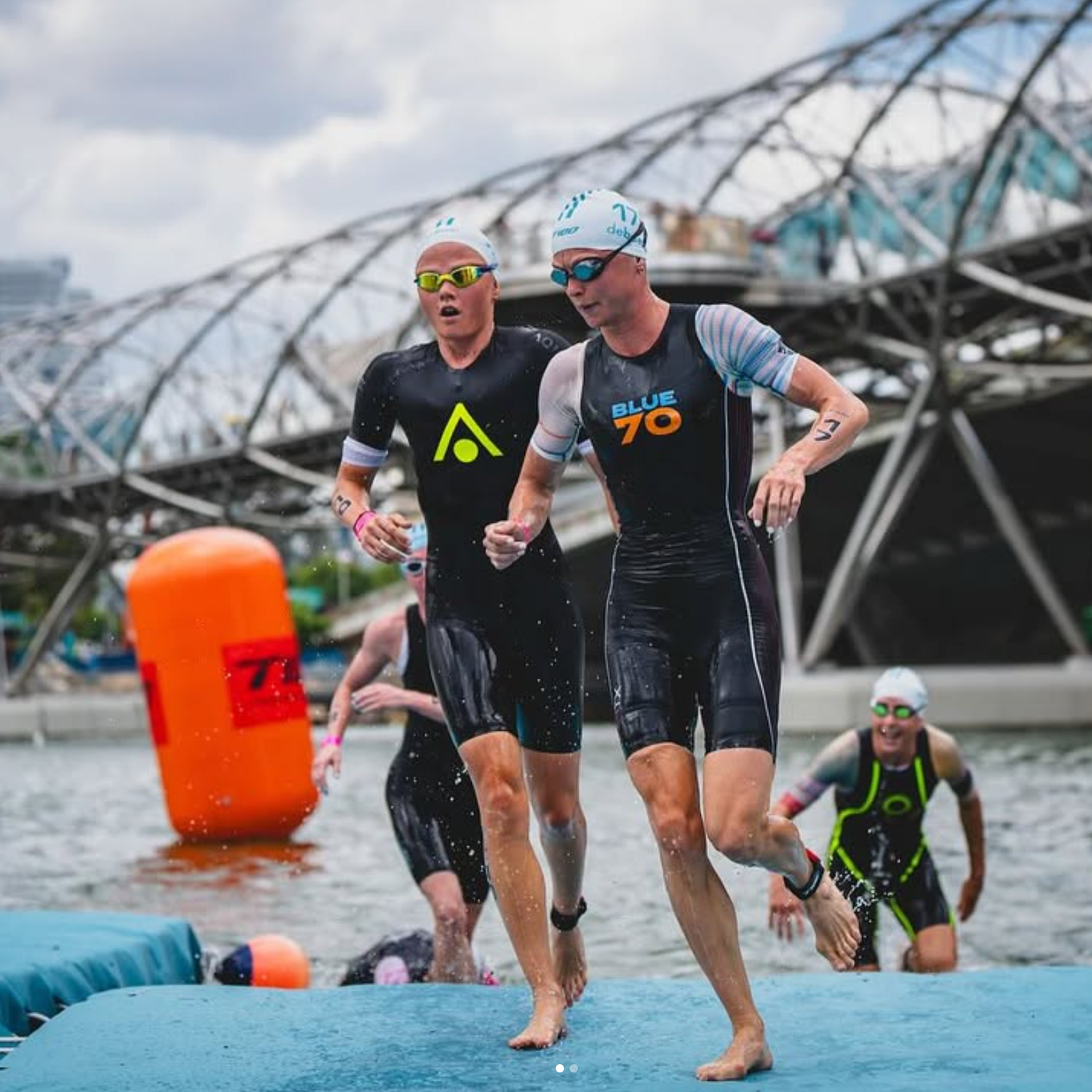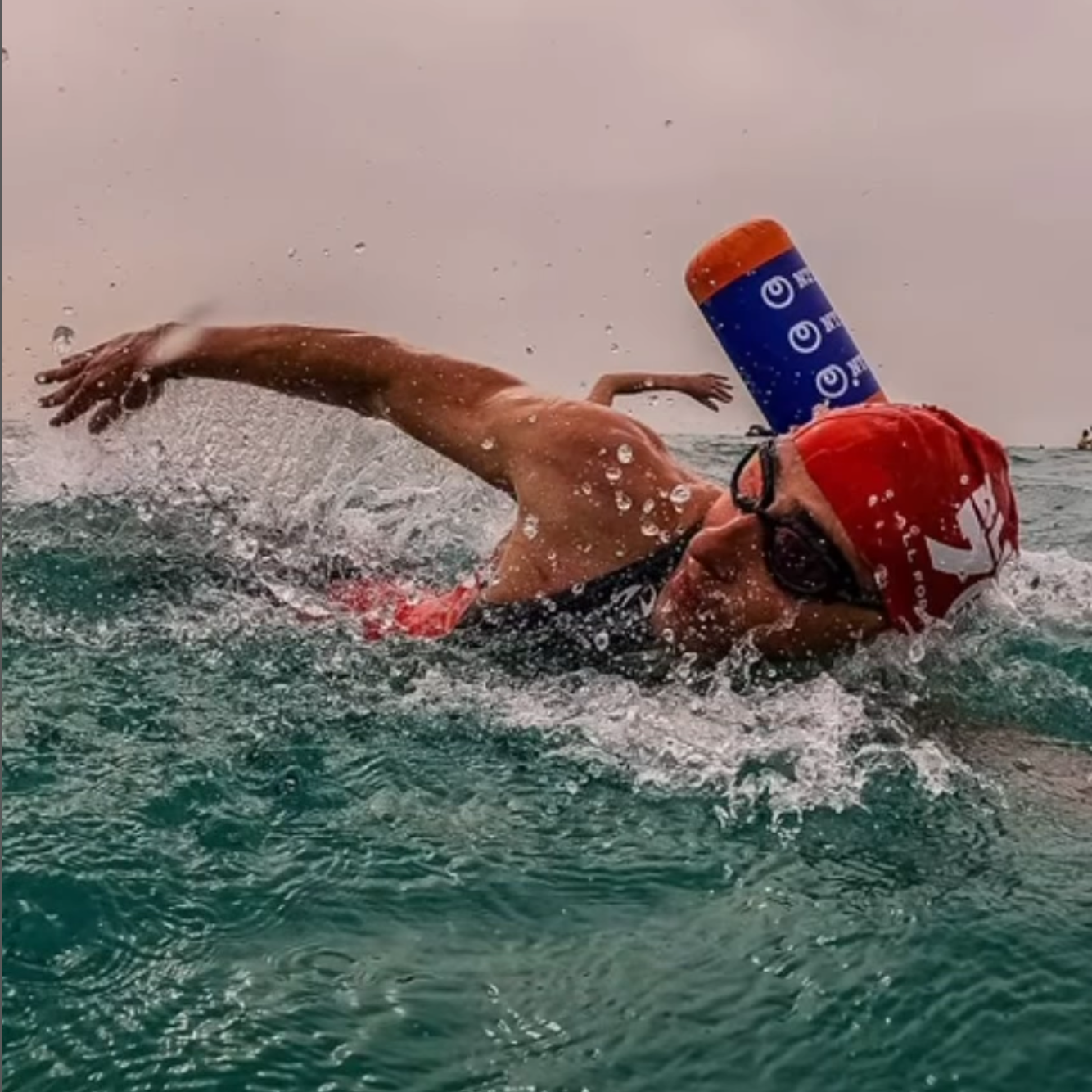



Pick up a wetsuit tag and you'll usually see the word "limestone" somewhere in the material description, followed by a quick sustainability blurb before the copy moves on. That's a missed opportunity. The path from limestone to neoprene explains a surprising amount about how a wetsuit behaves on your body: why one shoulder panel bends freely through your catch, why another holds buoyancy at your hips for years, and why the neoprene under your arm usually wears out first.
The real driver is cell structure, something you can feel the moment you pull a suit over your shoulders.
From Limestone to Rubber
Neoprene is the common name for polychloroprene, a synthetic rubber. Manufacturers can build it from petroleum feedstocks or from limestone, which gets processed into calcium carbide and converted into the chloroprene monomer that forms the polymer chain. Yamamoto Corporation, the Japanese manufacturer behind the neoprene in every Blue70 wetsuit, uses the limestone path. The chemistry matters less to a swimmer than the outcome: a foaming process that produces a finer, more consistent cell structure in the finished sheet.
Consistency is the detail worth sitting with.
What's Inside the Rubber
Neoprene isn't solid. It's rubber foamed with gas, which fills the sheet with millions of tiny sealed pockets. Each pocket stays closed off from its neighbors, so water can't migrate through the material the way it would through an open sponge. Two things fall directly out of that structure: how the suit flexes, and how much lift it adds.
Flex depends on how uniform those cells are and how fine they run. A sheet with inconsistent or oversized cells bends unevenly, creating stiff zones right where you need give most, the shoulder and underarm, exactly where your arm rotates through the catch and recovery phases of your stroke. A sheet built from fine, evenly distributed cells bends more predictably. Less of your energy goes toward compressing and releasing neoprene on every stroke cycle.
Lift comes from the same gas-filled cells. Trapped gas is less dense than water, so any panel built from closed-cell neoprene adds buoyancy to whatever body part it covers. That's why thicker panels sit at the hips and legs, where open-water swimmers and triathletes need the most help holding a horizontal body position, while thinner panels sit at the shoulders, where range of motion matters more than lift.
Reading the Cell Count
Blue70 wetsuits use Yamamoto neoprene rated in 38, 39, and 40 cell. That number describes the density and configuration of the closed-cell structure. The relationship to performance is straightforward: a higher cell number means more flexibility at a given thickness. A 40-cell panel in the shoulder flexes with less resistance than a 38-cell panel of the same thickness, which is why the most flexible zones of a race-day suit concentrate the highest-cell neoprene exactly where your arm needs freedom during recovery.
There's a trade-off. Finer, higher-cell-count neoprene is also more delicate. It tears more easily under a fingernail, abrades faster against a zipper pull, and breaks down sooner under the mechanical stress of repeated donning, training, and drying. A suit built around top-end shoulder flexibility uses that delicate neoprene on purpose, because it's built for race day rather than for four training sessions a week across a full season. A suit built for frequent training uses a different balance of neoprene grades, because durability under repeated handling matters more to that swimmer than shaving off the last degree of shoulder flex.
The Shoulder Mechanics Behind the Spec Sheet
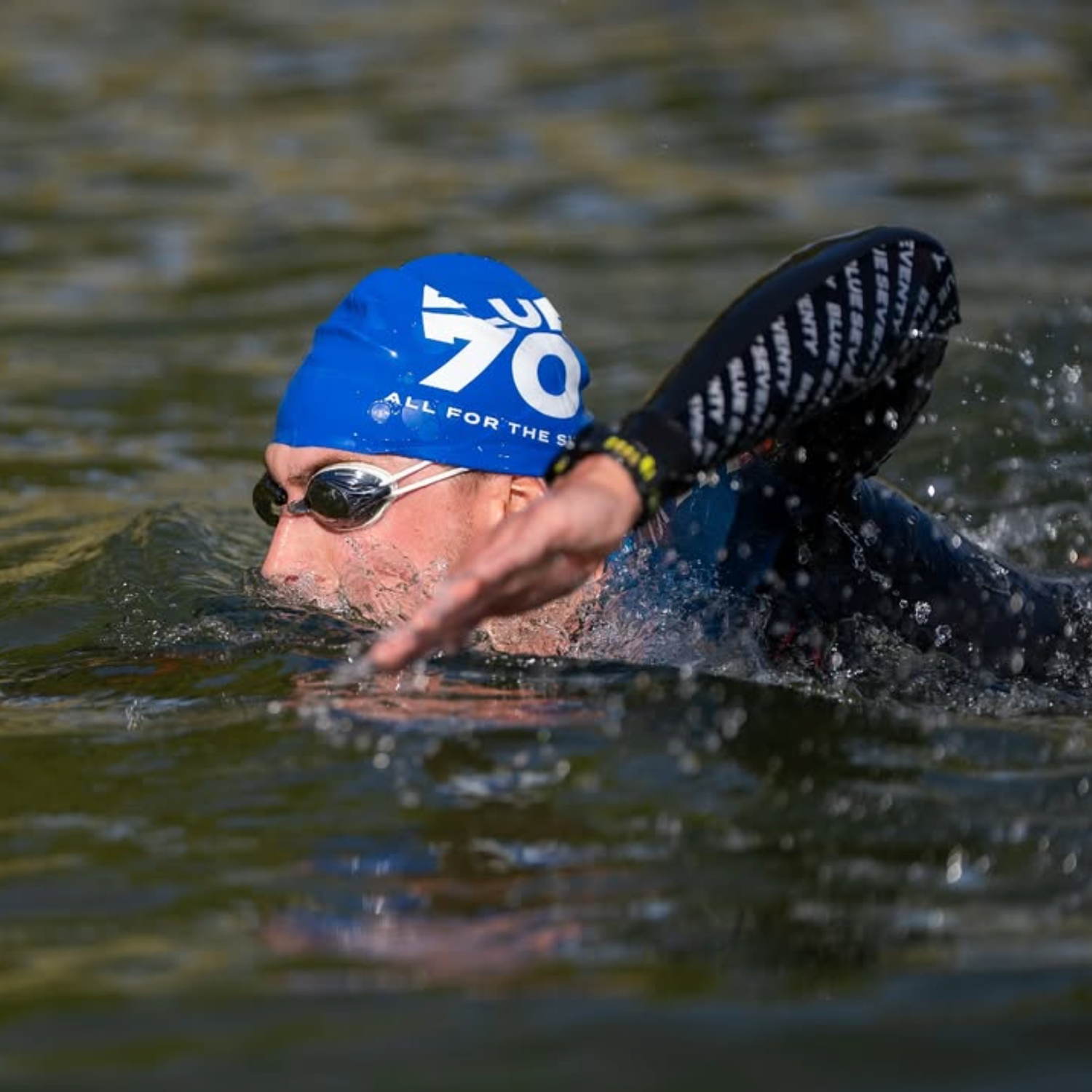
This is where the spec sheet meets your stroke directly. During the catch, your hand and forearm press back against the water while your shoulder rotates internally and your elbow stays high. If the neoprene at your shoulder resists that rotation, part of your effort on every stroke goes toward fighting the suit instead of moving water. Over a 1,500-meter swim, that resistance adds up to real fatigue, regardless of your fitness level.
A fine, uniform closed-cell structure at the shoulder cuts down on that drag, giving the joint room to rotate through its full range, stroke after stroke, for the length of the swim leg.
Material alone doesn't solve this. A shoulder panel cut from excellent neoprene still restricts motion if the suit runs small or the sleeve pattern doesn't match your shoulder girdle. Fit and material have to work together, every time.
Why the Same Suit Wears Unevenly
Limestone-based neoprene breaks down through a few specific mechanisms. UV exposure degrades cell walls. Chlorine and salt residue left to dry on the suit speeds that process up. Repeated compression from stretching the suit on and off gradually collapses cells near high-stress zones like the underarms and groin. A collapsed cell loses its trapped gas, so that section of the suit permanently loses some flexibility and buoyancy. This happens slowly. Neglect it, and it happens a lot faster. Either way, it's largely preventable.
A few habits protect the cell structure for the life of the suit:
- Rinse the suit in fresh water immediately after every swim, inside and out, before chlorine or salt has a chance to dry into the neoprene.
- Dry it inside out, away from direct sun, on a wide hanger rather than a wire one, to avoid UV damage and shoulder creasing at once.
- Skip the dryer and any direct heat source. Heat speeds up the same cell breakdown that sunlight causes.
- Store the suit flat or on a wide hanger for long stretches rather than folded. Sharp folds stress the same cells in the same spot every time.
- Keep your nails trimmed, and take your time pulling the suit over your hands and feet, where fine-cell neoprene tears most easily.
None of this takes much time. Skip it consistently, and a suit built for 40 or more swims can lose its shape and flex in a dozen.
Matching Neoprene Grade to Your Season
The real decision comes down to whether the neoprene grade matches how often the suit goes on your body, not whether a higher cell count wins outright. A swimmer racing once or twice a year wants maximum shoulder flexibility and can live with a suit that demands careful handling. A swimmer training in open water every week for six months wants a suit that trades a small amount of shoulder flex for neoprene that survives daily donning and drying, plus the occasional close call with a fingernail near the zipper. Both swimmers are working with the same limestone-based Yamamoto neoprene. They need it configured differently across the suit.
If you're not sure which balance fits your training week, a spec sheet won't tell you as much as ten minutes in open water. Take a Test Swim in the wetsuit you're considering. It won't affect your ability to return or exchange it, as long as it comes back clean, dry, and with the tags attached, so you can feel the difference in shoulder rotation and torso compression before you commit to a season in that suit.