


Most wetsuit size charts ask for two numbers: height and weight. Neither tells you how the suit will fit through your hips, quads, and hamstrings. If you have larger thighs, the lower half of the suit decides how freely you kick, how fast you get through T1, and whether the suit stays put for an entire open water swim.
Take a minute and measure your thigh circumference at the widest point. Write it down next to your hip measurement. These two numbers matter more than the chart suggests.
Height and Weight Are a Starting Point, Not a Fit Guarantee
A size chart sorts. It does not fit. Two athletes can stand 5'8" and weigh 165 pounds with completely different lower-body shapes. One carries that weight through a narrow pelvis and long torso. The other has thick quads and a broader hip shelf. Neoprene doesn't stretch like spandex. The suit either matches your proportions or it binds.
When a suit binds through the legs, you see horizontal pull lines across the quads. The crotch creeps up. The neckline gets dragged down with every kick. Dry-land fit misses most of this because a wetsuit should feel snug before you get wet. You won't know the real story until you swim in it.
Your Kick Starts at the Hip
Most swimmers judge wetsuit fit at the shoulders. That makes sense for the stroke, but the lower half controls body position from the hip down. A suit that restricts hip flexion shortens the kick before the foot finishes its range. The kick stabilizes the torso and keeps the legs near the surface. When the neoprene over the quads and hip crease has no give, you lose that range and burn extra energy trying to hold your hips up.
blueseventy builds its wetsuits with Yamamoto 38, 39, and 40 cell neoprene. Higher cell numbers mean more flexibility, and that matters where the suit crosses the hip joint. The phrase we use internally is simple: buoyancy equals speed. That only works when the lower half can sit in the right position without fighting the suit. A wetsuit adds buoyancy, but it is not a personal flotation device.
The Extended Zipper Helps More Than You'd Think
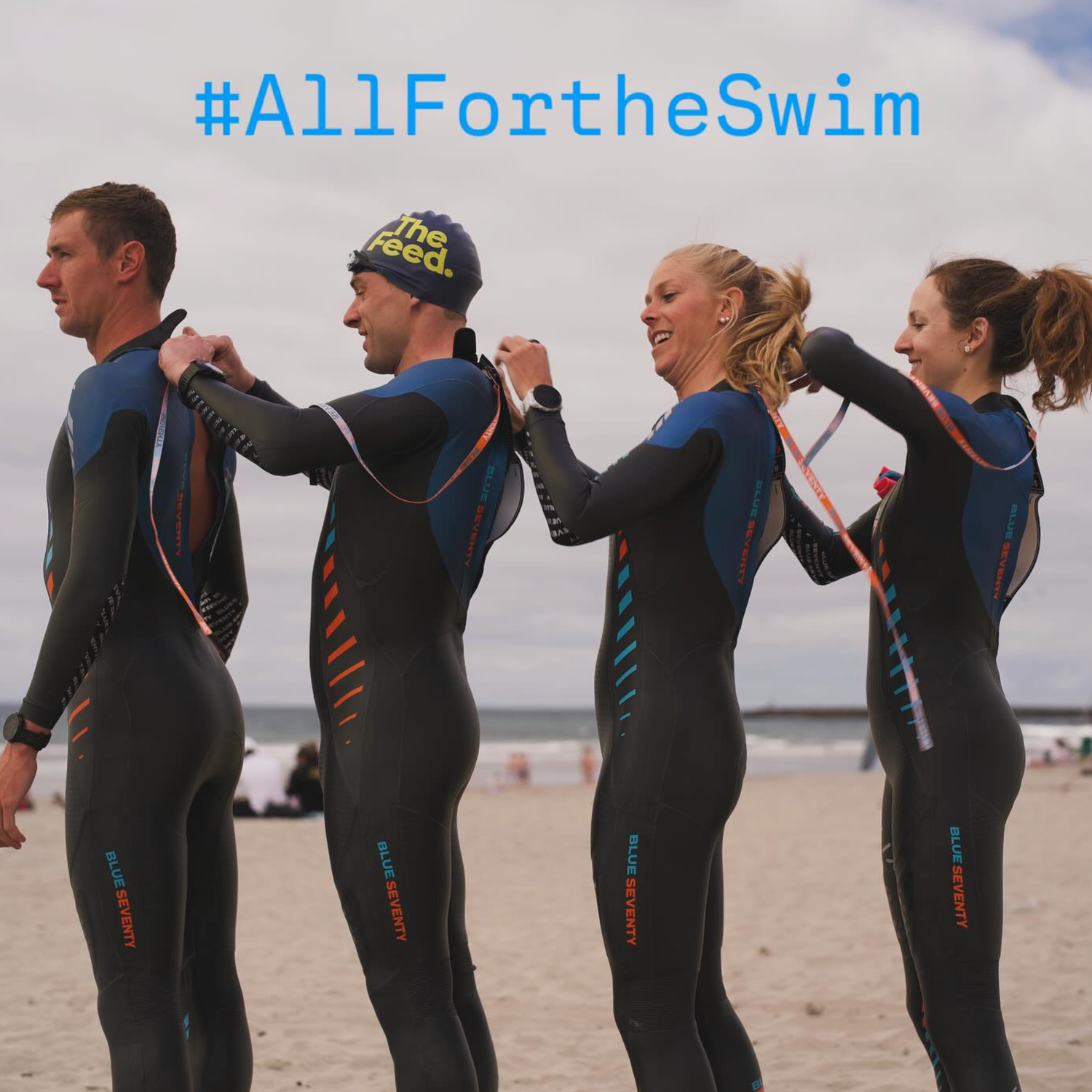
On women's suits, blueseventy uses Femme Fit across the entire wetsuit line. The pattern refines the bust, torso, wrists, and ankles, lowers the neckline, and extends the zipper. That zipper change is the detail large-thighed swimmers notice first. A longer zipper opens the suit wider at the hips, which makes entry easier and transitions faster. If you have wider hips or bigger quads, that extra length means less pulling and less stress on the neoprene.
Femme Fit expanded to 15 women's sizing options in 2014. Men with muscular legs run into the same problem. A suit that opens wider through the hips is easier to put on and less likely to overstretch the neoprene over time.
Muscle Density Changes How the Suit Sits
Thigh size alone doesn't tell you how much buoyancy you need. Muscle is denser than fat. Two swimmers can share the same thigh circumference and still sit at different depths. Muscular thighs tend to ride lower, so the lower half of the suit works harder to lift them. If the suit is also too tight, it compresses the muscle and limits range of motion. That can make the legs feel heavy and slow.
For swimmers who want extra lower-body lift outside a wetsuit, the LIFT buoyancy short ($150) uses NBR foam to add lift at the hips and thighs during training. It works as a training tool rather than a wetsuit replacement. It's useful when a full suit feels too warm or when you want to focus on body position without adding upper-body coverage.
How to Pick a Wetsuit for Larger Thighs
Start with your measurements. Wrap a tape measure around the widest part of each thigh and around your hips. Keep those numbers next to the size chart. If your lower-body measurements point to a larger size than your chest or height does, let the lower body lead. A suit that feels slightly loose in the chest is easier to manage than one that binds through the hips.
For frequent swimmers with larger legs, the Reaction wetsuit ($680) uses higher-grade neoprene than the Fusion ($420). That extra flexibility through the legs helps the suit stretch over bigger quads and still return to shape. If you train often and your typical swim runs longer than a sprint-distance effort, Reaction is the better lower-body choice. If you swim shorter sessions and want a lower price, Fusion can work, but check the lower body carefully before you commit.
What to Check After the Suit Is On
Get the legs fully seated before you zip. Pull the neoprene up in small, hand-over-hand movements. Don't yank from the top. Once the suit is on, run through this list:
- No horizontal wrinkles across the quads or hip crease.
- You can lift one knee toward your chest without the neckline pulling down.
- The suit sits flat at the hip crease instead of cutting into the skin.
- You can walk for a minute without the legs riding up.
- In the water, the suit feels less tight than it did on land.
If any of those checks fail, the lower half is the wrong cut for your build. Forcing it won't fix the problem.
The Test Swim Is the Real Answer
Fit is the first speed feature. If the lower half doesn't fit, the rest of the suit can't do its job. Use the size chart as a starting point, measure your thighs, and take the suit for a swim. blueseventy lets you swim in the wetsuit and still return or exchange it within 30 days if it's clean, dry, and unmodified. That policy matters for large-thighed swimmers because dry-land fit tells only part of the story. Find your size with the size charts, then take a test swim.
All for the swim.