


A jellyfish warning changes the way parents think about a child's open water swim. The instinct is to buy the first full-length stinger suit in the child's size and call it done. That approach often leads to a suit that gaps at the wrists, binds at the shoulders, or bunches at the crotch. Those fit problems matter more for kids than for adults because children move through the water with shorter, quicker strokes and less tolerance for chafing over a long swim.
This guide walks through the fit, coverage, and care details that make a stinger suit work for a young swimmer. It also explains what a stinger suit does not do, because that part matters just as much.
A stinger suit is not a wetsuit, and not a flotation device
A stinger suit is a thin, full-body garment usually made from nylon and spandex. It covers the arms, legs, torso, and often part of the neck. The fabric reduces the amount of bare skin that jellyfish tentacles can touch. It does not make a child waterproof, and it does not keep a child dry. Water still moves through the fabric. That is normal and expected. It also does not provide buoyancy. A stinger suit is not a personal flotation device and will not hold a child at the surface. Any child swimming in open water needs supervision and, where appropriate, separate flotation support.
Stinger suits grew out of tropical and subtropical ocean swimming communities where dangerous jellyfish species were a daily reality. Lifeguards and surf lifesavers started wearing full-length spandex suits to reduce sting contact during rescues and training. Open water swimmers and triathletes later adopted the same idea for training and races in jellyfish season. Parents began using them for kids once ocean swim programs and youth triathlons expanded. The basic concept has not changed much: cover more skin, reduce the chance of a tentacle finding bare flesh. What has changed is the recognition that children need a different fit approach than adults.
Start with the shoulders, not the size chart
Kids' size charts are built on height and weight, but a child's shoulder width, torso length, and hip shape vary enough that two kids the same height can need different suits. The first test is overhead reach. Have the child stand with arms overhead in a streamline position. The suit should not pull down on the shoulders, ride up at the neck, or expose the lower back. Then ask for a full windmill motion with both arms. If the child cannot complete the rotation without the neck opening shifting or the armpit seams digging in, try the next size up or a different cut.
Neck fit matters next. The collar should sit flat against the skin without gaping. A gap lets water and tentacles in. A collar that is too tight can press on the front of the neck and make breathing feel restricted, especially when the child looks up to sight. Check that the child can look left, right, and up without the collar pulling.
Wrist and ankle openings are the places where kids' suits most often fail. They should lie close to the skin without leaving red marks. Thumb loops and stirrups help keep sleeves and legs from riding up during active swimming. If the suit does not have them, the openings need to be snug enough to stay put. Baggy fabric at the wrists and ankles is both a sting exposure point and a drag problem.
Crotch and torso length cause the next common issue. Too short a torso pulls the suit down at the shoulders when the child kicks. Too long a torso creates folds at the stomach and chafing at the inner thighs. Have the child squat, sit, and do a streamlined stretch on land. Any sharp tug at the shoulders or bunching at the hip means the suit length is off for that child's body, even if the height chart says it should fit.
Zipper placement is worth checking before you buy. Front zips are easier for children to open and close on their own. Look for a zipper guard or flap that sits between the zipper and the skin. It prevents pinching and keeps hair from catching. A back zip can work, but it often requires help and is harder to check for gaps.
Here is a quick fit check you can run in a few minutes at home:
- Overhead reach with a streamline position
- Full windmill arm rotation
- Neck mobility in all directions
- Wrist and ankle seal check
- Squat and seated torso length test
Fabric, coverage, and water temperature
Most kids' stinger suits are made from nylon-spandex fabric. That fabric is thin, quick-drying on land, and much more flexible than neoprene. It offers no meaningful thermal insulation. Children lose heat faster in water than adults because they have more surface area relative to body mass. A stinger suit will not keep a child warm in cool water, even if it covers the whole body. If the water is below roughly 56 to 58°F, a child needs a swim-specific neoprene wetsuit for thermal protection. In water above roughly 70 to 72°F, a stinger suit is enough for sting coverage over a shorter swim, but a full-length suit can feel hot on the beach. Wetting the suit before entering the water helps with that.
Coverage varies. Some suits stop at the wrists and ankles with a high neck. Others add integrated hoods, gloves, or foot coverage. Regions with box jellyfish or other high-risk species often have local guidance on the minimum coverage recommended. Always check the beach or local public health advisory for the species in your area. No suit covers the face, and no suit eliminates all sting risk. Tentacles can still contact skin through gaps, and some species can sting through thin fabric if the tentacle presses against it. The suit reduces exposure; it does not erase it.
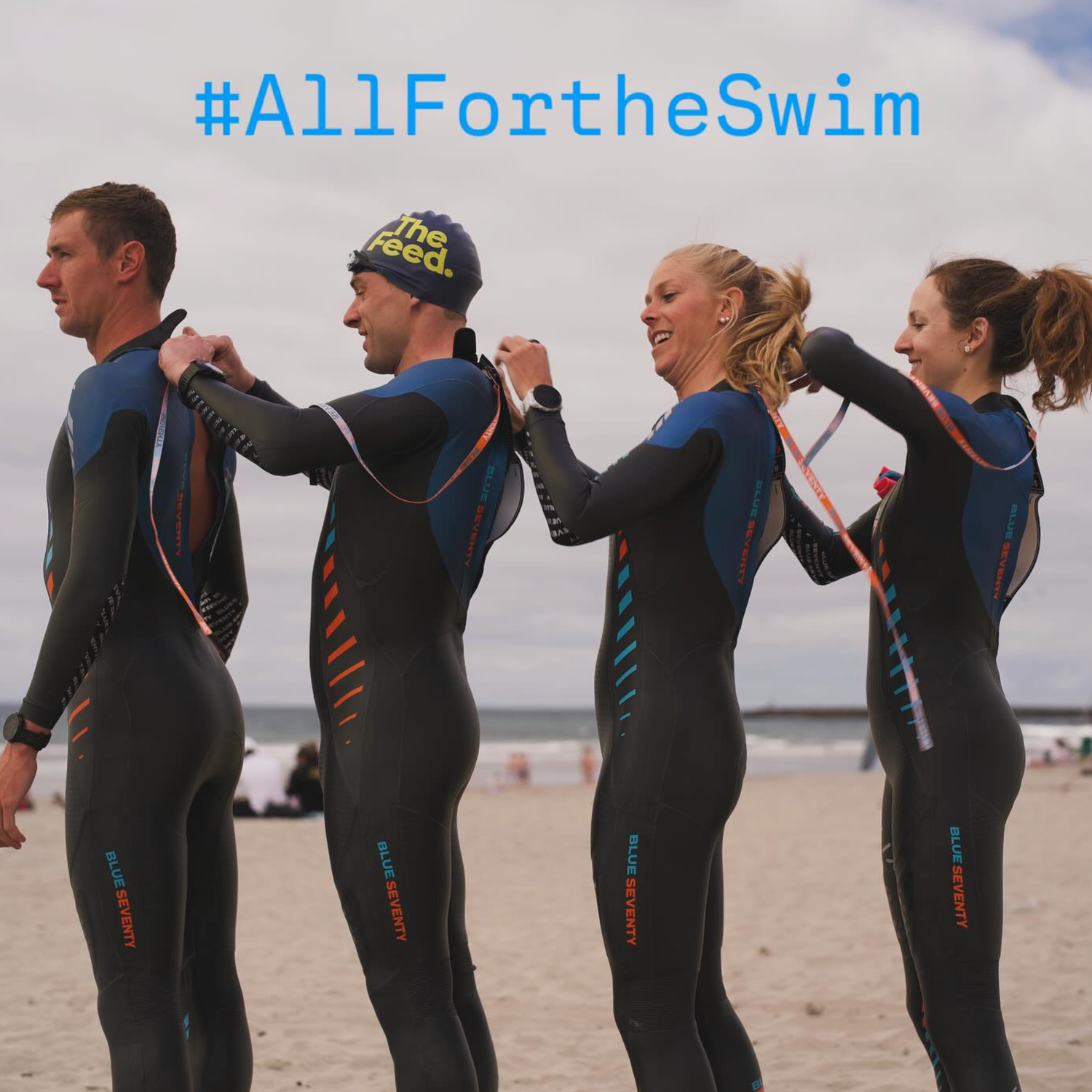
If a child needs both cold-water warmth and sting protection, layering is an option. A thin stinger suit can be worn under a kids' wetsuit, and the stinger suit adds a smooth layer against the skin, which can reduce neoprene chafing, but it does not add warmth. The wetsuit provides the thermal layer and some buoyancy. For that cold-water layer, a swim-specific kids' wetsuit like the blueseventy Torpedo Kids is designed around swimming movement rather than surf sitting. It is still not a flotation device, and it is not a stinger suit. The two pieces solve different problems.
Care after saltwater and sand
Rinse the suit in fresh water after every ocean swim. Salt crystals and sand abrade the spandex fibers and shorten the suit's life. Turn it inside out and rinse both sides. Use cool or lukewarm water, not hot. Hot water breaks down spandex. Wash the suit with a mild soap or swimwear cleaner every few uses, then rinse again.
Dry the suit flat in the shade. Direct sun and heat degrade spandex and fade the fabric. Do not wring it out, and do not put it in a dryer. Wringing stretches the fibers unevenly. Hang drying by the straps can leave the suit misshapen. Flat drying on a towel is the gentlest option.
Check for holes at the knees, seat, elbows, and wrists before the next swim. Small tears in a spandex stinger suit can be stitched with polyester thread. Larger tears or blown-out seams usually mean it is time to replace the suit, because a stretched or torn area no longer covers skin reliably. Store the suit flat or loosely rolled in a cool, dry place. Same rinse and shade habits apply to any neoprene wetsuit your child uses.
When to skip the stinger suit
A stinger suit adds drag and can trap heat, so it is not the right choice for a pool session or a swim with no jellyfish risk. For a child who is still building open water confidence, the extra fabric can feel restrictive and make stroke mechanics harder. If a child is learning to sight, start with a well-fitting regular swimsuit or a simple rash guard in safe water. Move to a full stinger suit only when the local conditions call for it.
Watch for chafing at the neck, armpits, and groin during the first few wearings. A suit that feels fine for ten minutes can become painful after forty. If a seam rubs, try adjusting the fit or adding a thin layer of swim-safe lubricant at the contact point. If the suit still chafes, it is the wrong cut for that child.
Jellyfish blooms are seasonal and often localized. Check water quality reports and beach advisories before you go. No suit replaces adult supervision or lifeguard advice. If a child is stung, get them out of the water and follow the posted first aid instructions for that beach. Do not rely on a stinger suit to prevent all stings, and do not let the suit give a false sense of security.
Select a kids' stinger suit the same way you select a kids' running shoe: by how the child moves in it, not just by the number on the box. Start with overhead reach and neck comfort, check the wrist and ankle seals, and verify that the torso length works when the child squats and kicks. The suit reduces sting risk; it does not provide warmth or flotation. Use it for the right water conditions, rinse it after saltwater, and pair it with a swim-specific wetsuit when cold water is part of the day. If cold water is part of the equation, a swim-specific kids' wetsuit like the blueseventy Torpedo Kids is worth a look; use the same shoulder and torso checks before you buy. All for the swim.