


No. For most warm-water open water races, a full wetsuit is not necessary. In water above roughly 70 to 72°F, a full suit can hold too much heat during longer swims. That heat can make you slower and less comfortable than you need to be.
What to check before you decide
The answer turns on three factors: water temperature, race distance, and the official wetsuit rules. A 750-meter sprint in 73°F water is different from a 5K in 71°F water. The first can feel too warm in full neoprene. The second can still feel fine if you run cold or swim at a steady pace. Race directors follow sanctioning-body cutoffs, and those cutoffs change over time. Check the current rule for your race before you commit to any suit.
Why a full suit works against you in warm water
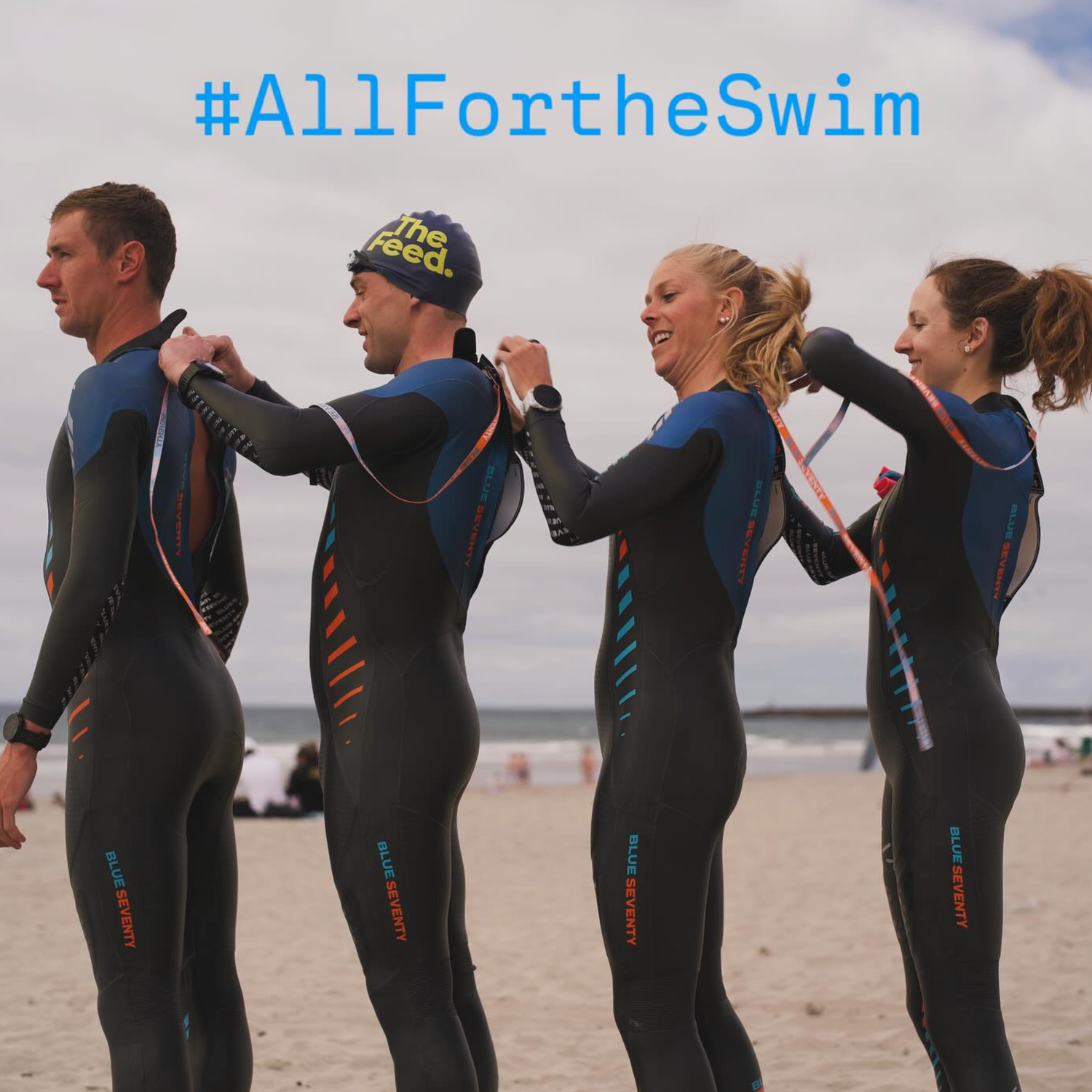
Neoprene works by trapping a thin layer of water between your skin and the suit. Your body warms that layer. In cold water, that is useful insulation. In warm water, the same layer becomes a heat trap. Blue70's own temperature guidance says a full suit can be too warm over longer swims above about 70 to 72°F. On a hot day, full-arm, full-leg coverage can feel heavy and sticky, and you can hold back your effort without realizing it.
Blue70 warm-water options
If you want neoprene lift without full coverage, start here.
- Reaction Sleeveless, $395. Keeps buoyancy through the torso and legs and leaves your arms free. The open shoulders reduce coverage and heat.
- Glide Short John, $210. A short john cut covers even less. It is easy to put on and works well for shorter warm-water races and newer swimmers.
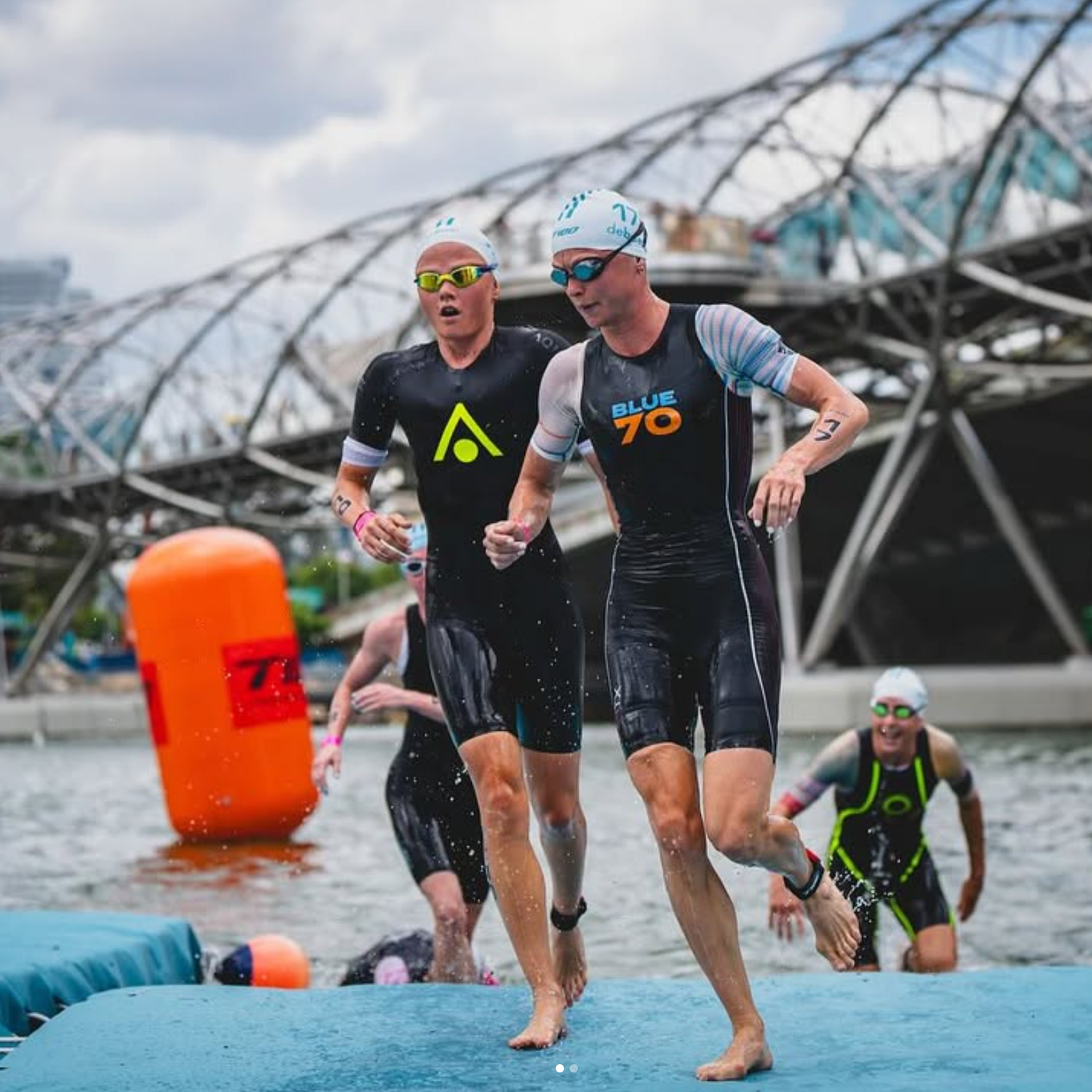
- Swimskin. If the race is non-wetsuit legal or simply too warm for neoprene, a swimskin is the better tool. It is a thin race suit designed to reduce drag without adding buoyancy or insulation. Blue70's swimskin lineage runs from the pointzero3 through the PZ4TX line and includes the first short-sleeved swimskin in the industry in 2016. That category exists for exactly this situation.
Why you might still wear a wetsuit
Buoyancy equals speed in the water. Beginners gain proportionally more from a wetsuit than advanced swimmers because the lift corrects hip and leg drop. If you are new to open water and your race is wetsuit legal at 71°F, a sleeveless suit can still improve your body position while keeping you cooler than a full suit. Some swimmers also run cold and prefer full coverage even when the water feels warm to the field. That choice is valid as long as you test it in training first.
Fit and test swim
Any Blue70 wetsuit should feel snug on dry land and more comfortable once you are in the water. A suit that is too tight across the shoulders can cause fatigue. A suit that is too loose lets water flush through and loses its body-position benefits. Use the size charts and take advantage of the Test Swim policy. Blue70 allows you to swim in a suit and still return or exchange it within 30 days if it comes back clean, dry, unmodified, and with tags and accessories.
A note on safety
Neoprene lift helps your body position. A wetsuit is not a personal flotation device. Warm water does not replace race support, swim buoys, or the event's safety plan.
Your warm-water plan
A swimming wetsuit is not necessary for most warm-water open water races. Above about 70 to 72°F, a swimskin or sleeveless suit usually matches the conditions better than a full suit. Check the race rules, test your gear in training, and choose based on how you actually swim when the water is warm.