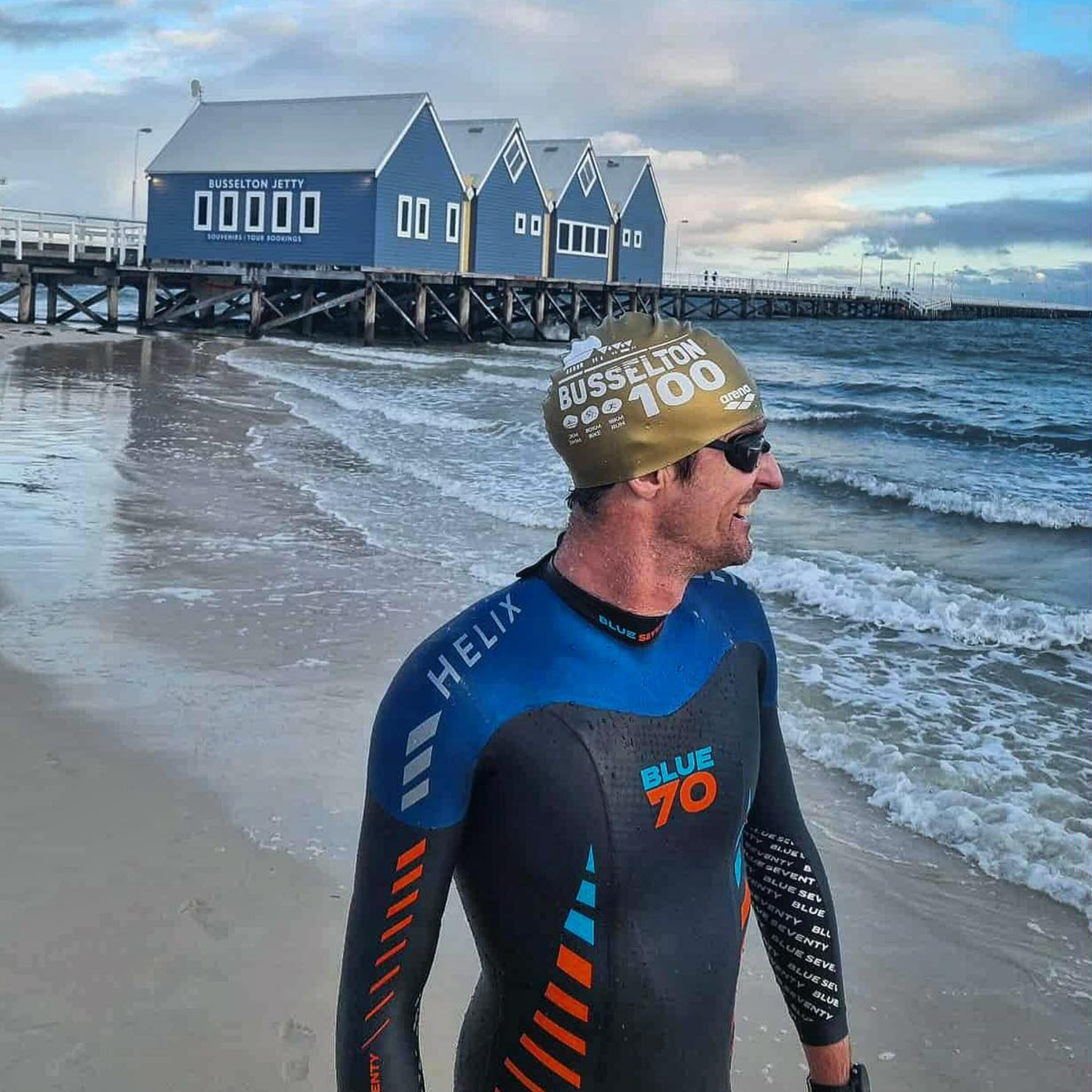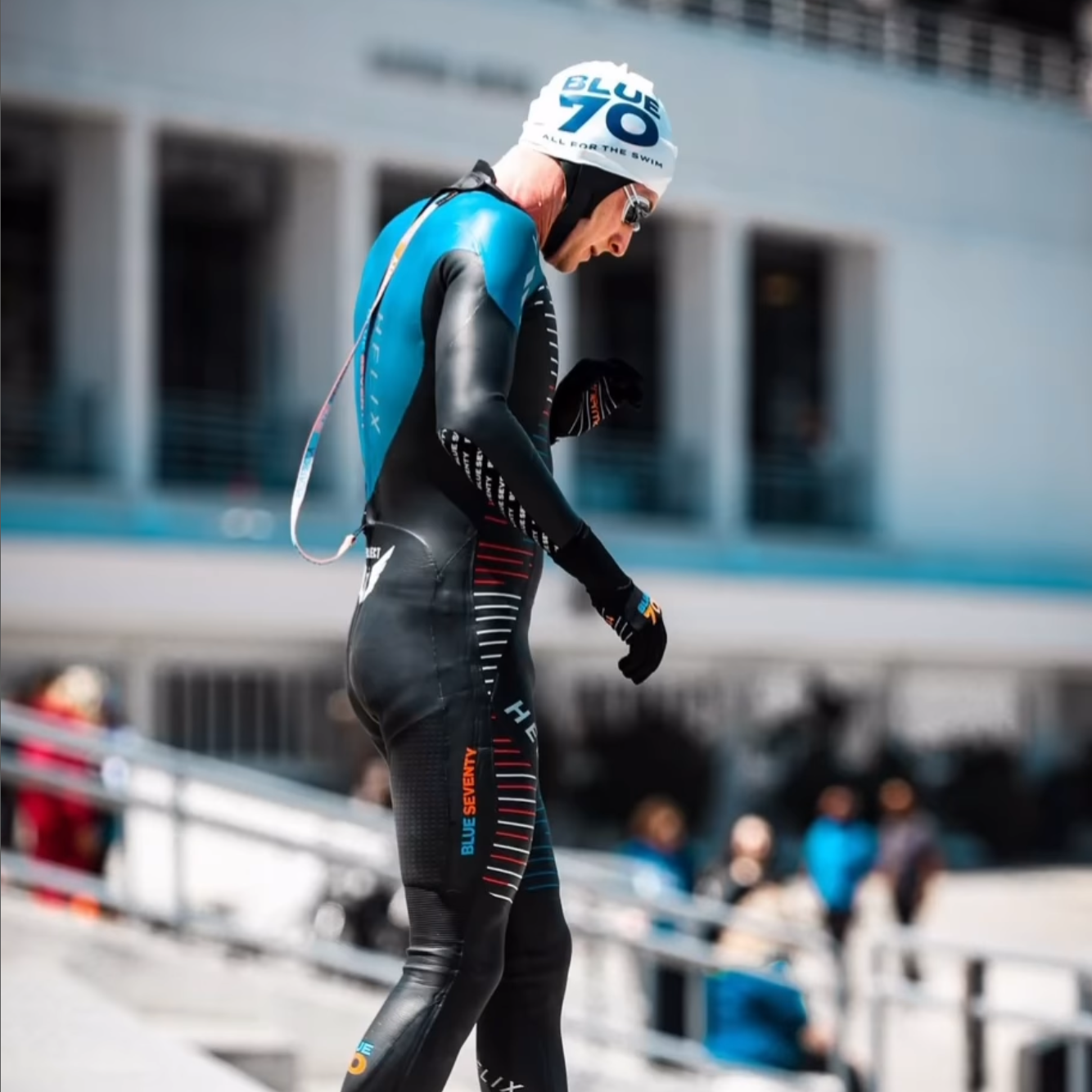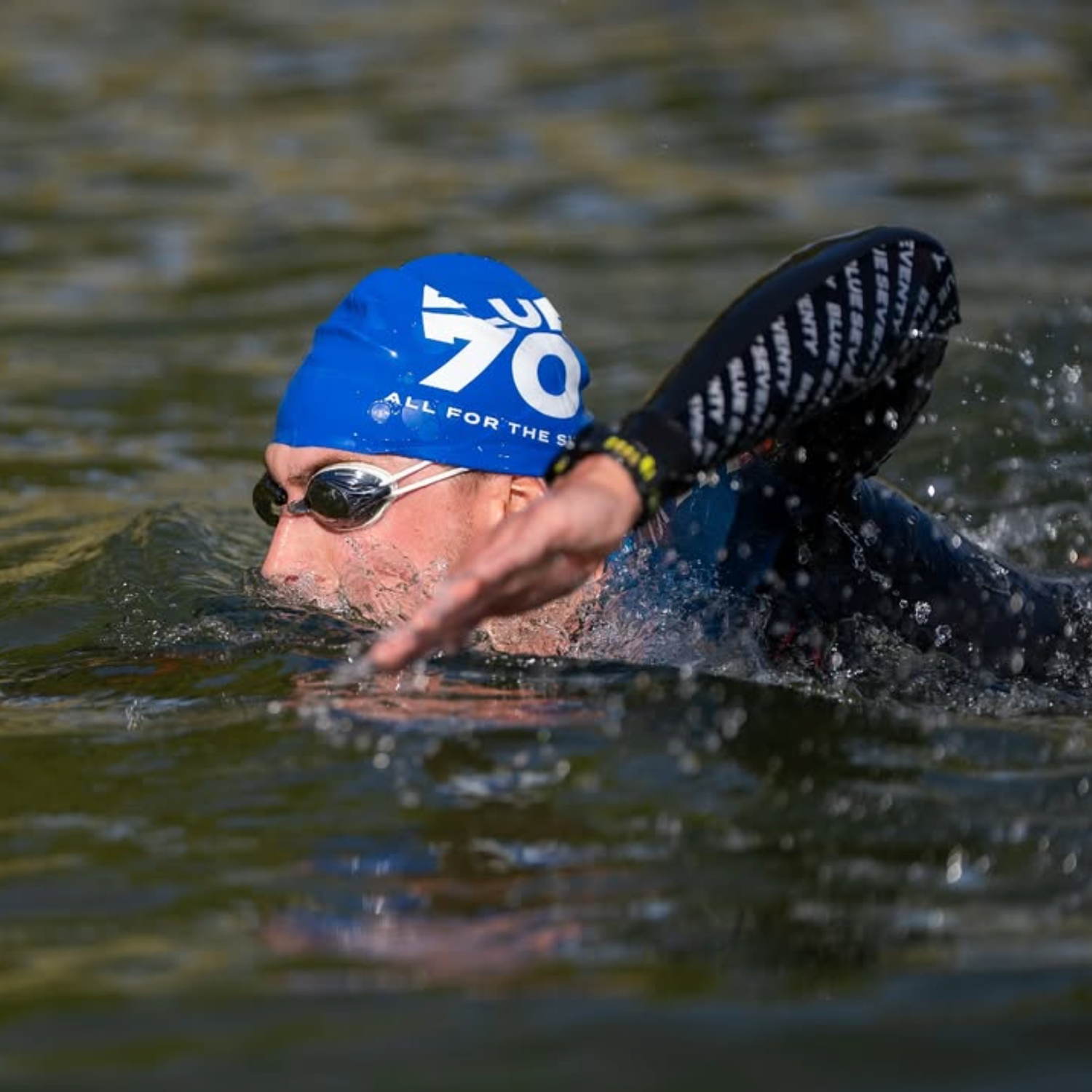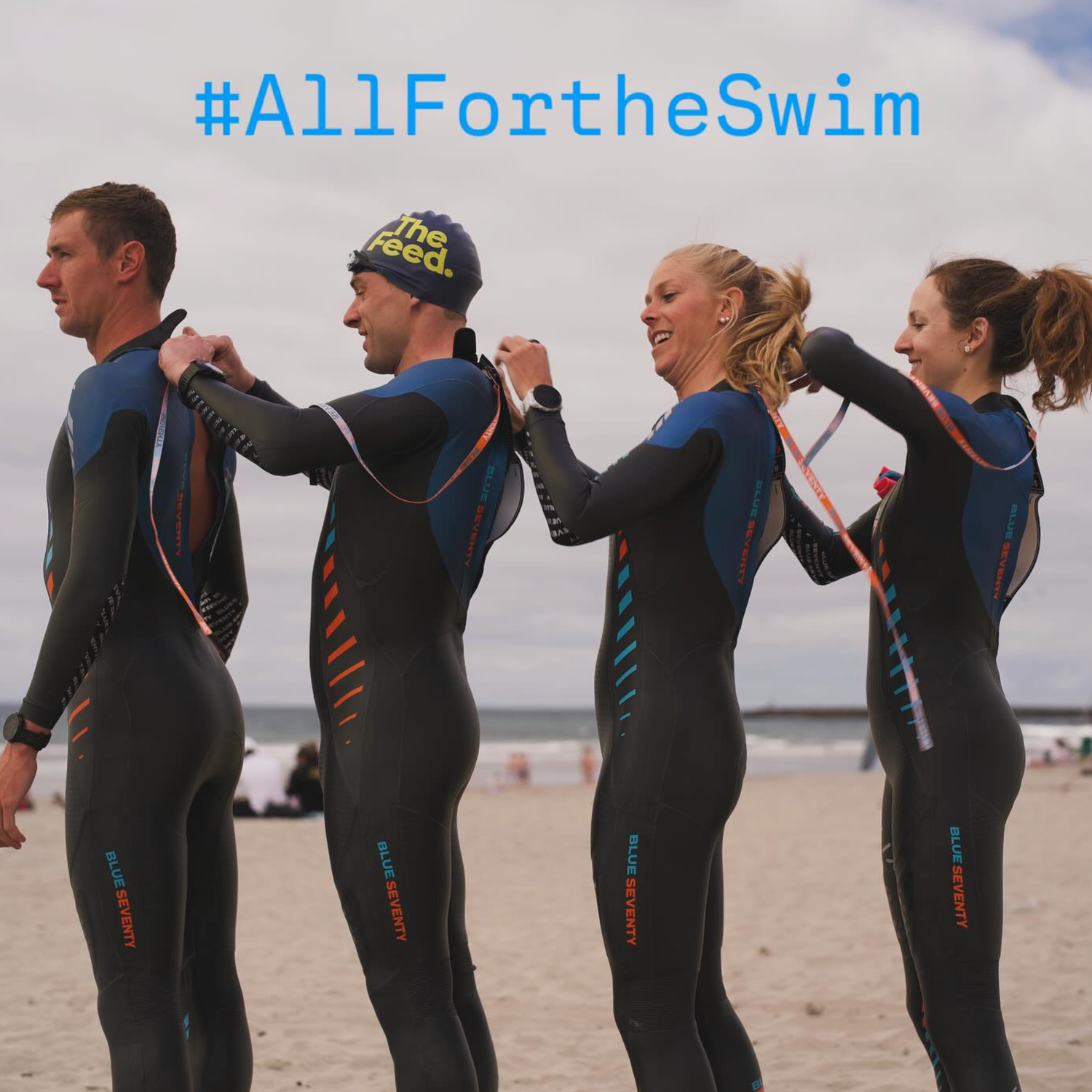



Most swimmers rinse their wetsuit after every session. A fair number own a bottle of neoprene-safe shampoo. Some even remember to hang the suit in shade instead of leaving it on a hook in direct sun. Then, without thinking twice, they fold that same suit into a tight ball, shove it in a gym bag, and let it sit that way for the drive home or the flight to a race.
That's the gap worth looking at. The care routine tends to stop the moment a suit stops dripping and starts getting packed. That's exactly where some of the quiet damage happens.
Closed-Cell Foam Has a Long Memory
Yamamoto neoprene, the material used across Blue70's wetsuit line in 38, 39, and 40 cell grades, is a closed-cell foam. Each cell is a sealed pocket of gas. That structure is what gives the material its stretch and its buoyancy. It's also why neoprene responds badly to two specific things: sustained compression and heat.
Fold a wetsuit tightly and leave it that way for hours in a warm trunk, and you're asking those gas cells to hold a crease they didn't choose. Neoprene remembers. Do it once, nothing happens. Do it every weekend for a season, especially at the shoulders and behind the knees where the suit already flexes hardest with every stroke and kick, and you're speeding up fatigue in exactly the zones that need to stay flexible the longest.
This matters more on a suit built with thinner, more flexible shoulder panels, the kind of construction Blue70 uses in the Helix to preserve feel for the water. That thinness is part of what makes the suit fast. It's also what makes it less forgiving of getting crushed flat in a duffel bag for months at a time.
The Twenty Minutes Nobody Plans For
Wetsuit care advice almost always covers what happens after you get home. Rinse. Hang. Dry away from the sun. Good advice, all of it. What it skips is the window that happens first, in transition, on race morning, while your suit is still soaked.
You strip the suit off after the swim leg and it goes wherever's closest, usually on top of shoes, a phone, and a race belt in whatever bag you grabbed on your way out the door. That bag then rides in a hot car for the drive home. You've just built a small, sealed, humid environment. Neoprene itself resists mildew reasonably well. The glued seams and interior linings don't, and a suit like the Thermal Reaction, with its Zirconium jersey lining for cold water, holds moisture even longer.
A storage bag with mesh or drainage panels solves a problem a standard duffel doesn't. It lets the suit breathe on the drive home instead of stewing in its own dampness for three hours.
Fold Versus Roll: A Question of Geometry, Not Preference
Ask around long enough and you'll find strong opinions on the right way to pack a wetsuit. The physics behind it isn't complicated once you picture where the stress actually lands.
A fold creates one sharp crease, a single point where the material bends close to 180 degrees. A roll spreads that same length of neoprene across a gradual curve, with no single point taking the full load. Think about the difference between folding a yoga mat and rolling it.
Rolling a wetsuit from the ankles up toward the neck, keeping the zipper track flat instead of doubled over on itself, puts far less repeated stress on the shoulder and knee panels than a tight fold does over time. This isn't specific to one brand or one suit. It's a property of closed-cell foam under load, and it applies to any swim-specific wetsuit built the way Blue70 builds them.
Race Morning Is Where a Good Bag Earns Its Keep
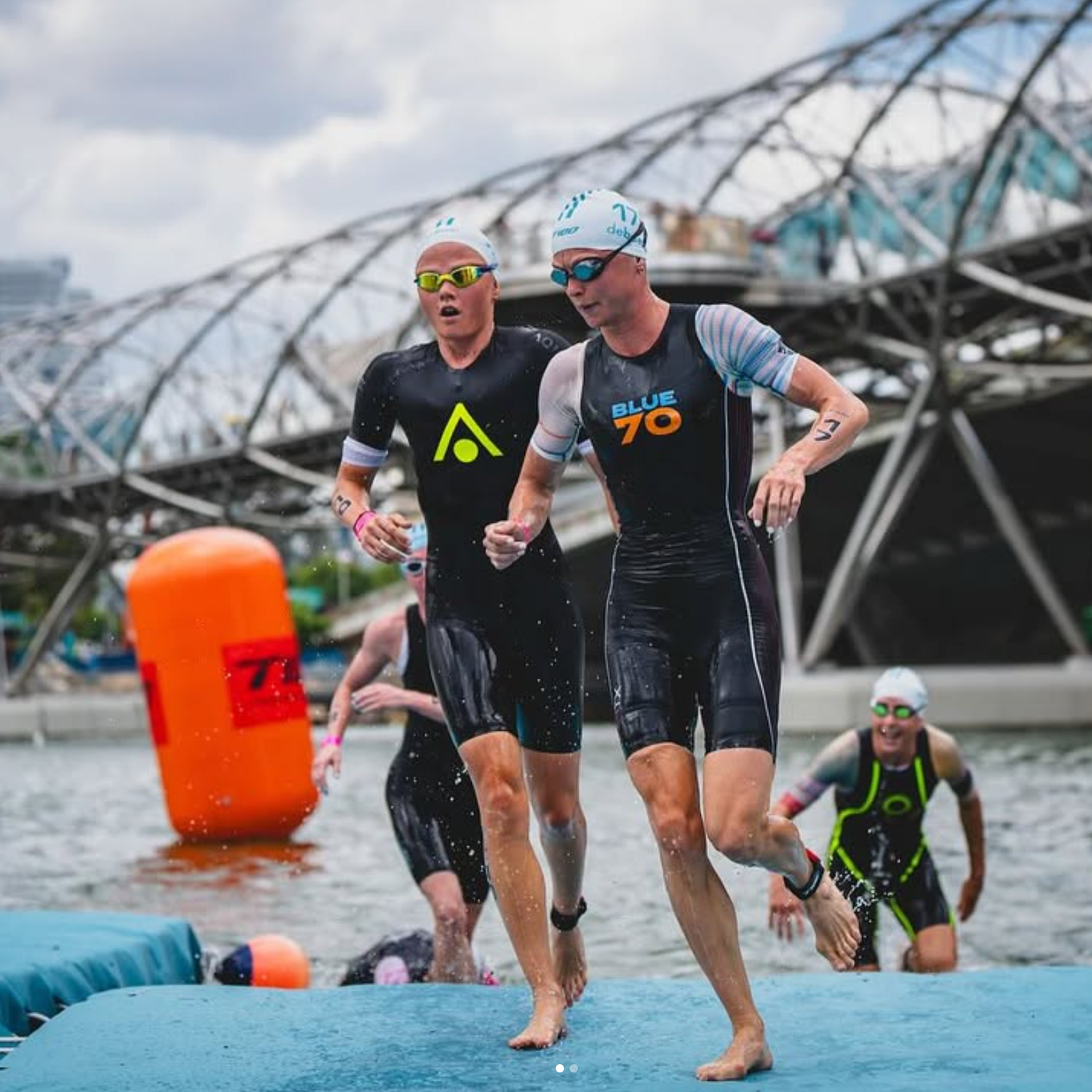
Stand in a crowded transition area at any triathlon and you'll see the same small scramble play out. Athletes need their wetsuit within arm's reach before the swim start. Then they need somewhere for it to go the instant they peel it off in T1, without it becoming a tripping hazard or getting trampled by the next wave coming through.
A wetsuit-specific bag, one wide enough to grab the suit in a single motion and keep it separate from dry gear like goggles, a cap, or run shoes, removes a small source of friction on a morning that already has plenty. It follows the same logic as laying out your transition bag the night before: fewer decisions to make when your heart rate is already up.
For an age-grouper racing eight or ten times a season, that's eight or ten transitions where a system for wet gear either saves seconds or costs them.
Air Travel Compresses a Wetsuit in Ways Home Storage Never Will
Fly to a destination race and your wetsuit ends up either checked or crammed into a carry-on next to everything else you packed for the weekend. Airlines don't handle luggage gently. A wetsuit stuffed loose into a suitcase can spend eight hours folded against a shoe, a laptop corner, or a race belt buckle, and none of that is under your control once the bag leaves your hands.
A bag with even modest structure, some padding or a semi-rigid base, protects against this kind of incidental compression. It has nothing to do with how carefully you treat the suit at home and everything to do with how a baggage handler treats your suitcase.
The Fundamentals Still Come First
None of this replaces the basics, and it shouldn't. Rinse in fresh water after every swim, whether you were in saltwater or a chlorinated pool. Dry the suit out of direct sunlight on a wide hanger rather than a thin wire one that concentrates weight on a narrow strip of fabric. Keep it away from heat sources: car dashboards, radiators, direct sun through a windshield. Use a neoprene-specific cleaner now and then instead of regular soap, which can weaken the glue at the seams.
- Rinse in fresh water immediately after any open water or pool swim
- Roll, don't fold, starting from the ankles toward the neck
- Store in a bag with ventilation if the suit is still damp
- Keep the bag out of direct heat during transport, especially on race day
- Let the suit fully air dry before it goes back into a closed bag for the season
Why This Matters Over the Life of a Suit
For anyone logging real miles in a Fusion or Reaction across a full season of weekly open water swims, storage and transport are one more piece of a bigger picture. Buoyancy equals speed, and a suit that holds onto its flexibility and shape stays fast further into the season than one that's spent the summer folded flat in a beach bag.
Treat your wetsuit bag the way you already treat your goggles case. Purpose-built. Used every time. Not something you grab from under the sink thirty seconds before you leave. It costs almost nothing in effort and protects a piece of gear that's doing real work for your body position every time you're in the water.
If you're not sure how your current suit is holding up, or you want guidance on fit and care heading into a new season, Blue70's fitting and wear guide is a good place to start. Happy swimming.